Drift Experience in Japan: Complete Guide for Beginners & Enthusiasts (2026)
Japan is the birthplace of drifting. What began as an underground technique on mountain passes in the 1970s and 1980s has grown into one of the most thrilling motorsport experiences a tourist can have in the country. Whether you have spent years watching D1 Grand Prix compilations or you have never sat behind the wheel of a rear-wheel-drive car, Japan offers drift experiences designed for every skill level — and they are far more accessible than most visitors realize.
Imagine sliding a tuned Nissan Silvia S15 sideways through a sweeping corner, tires screaming, smoke pouring off the rear, with a professional instructor guiding you through every input. That is not a fantasy. That is a Tuesday afternoon at one of Japan’s many drift circuits. From the legendary Ebisu Circuit in Fukushima to track days just an hour outside of Tokyo, the country that invented drifting also makes it remarkably easy for visitors to try it themselves.
This guide covers everything you need to know about booking a drift experience in Japan as a tourist — where to go, what it costs, what to expect as a complete beginner, and how to combine it with your trip itinerary.
What Is a Drift Experience?
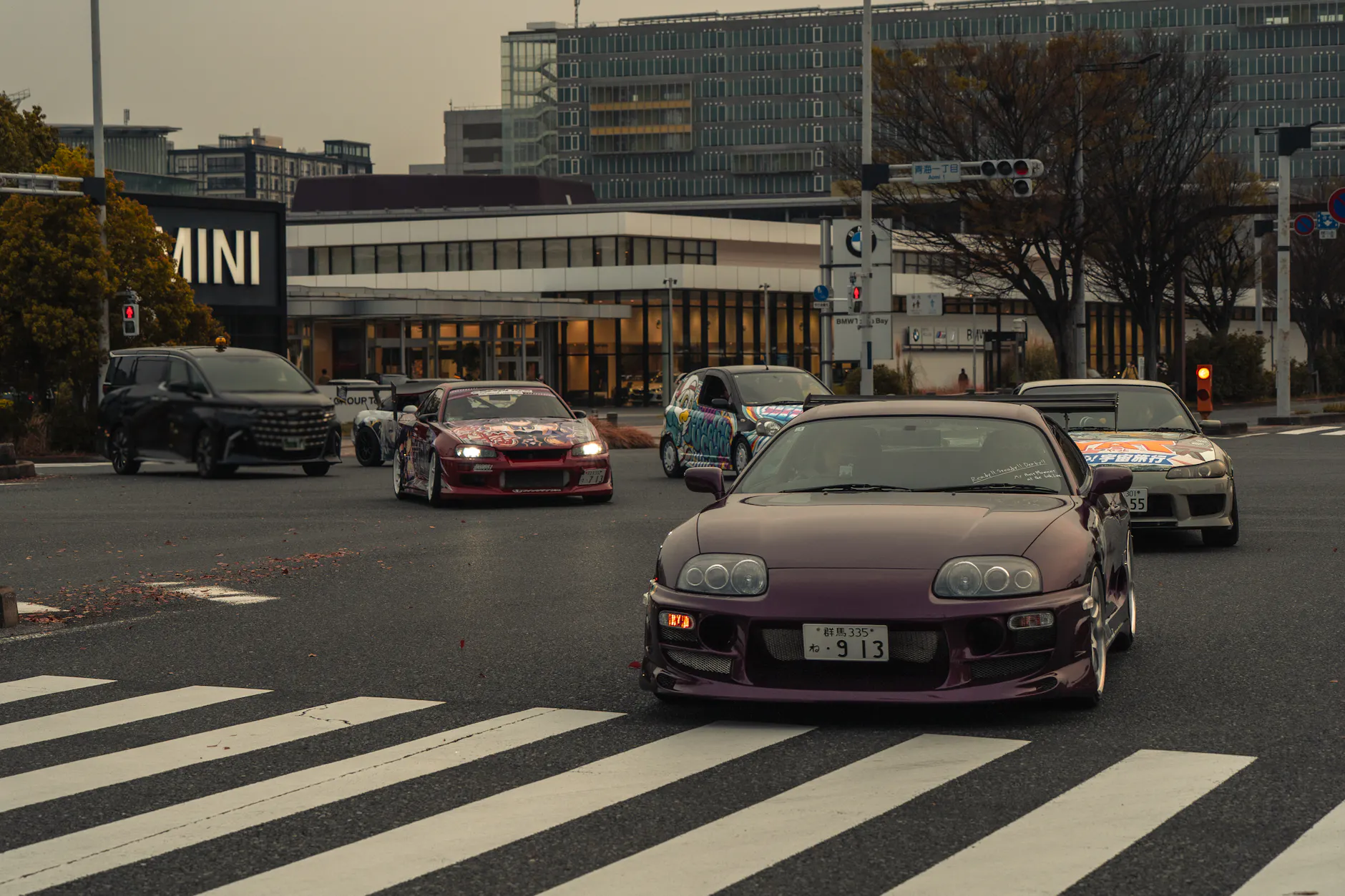
A drift experience is a structured session at a racing circuit where you get to drive — or ride along in — a car that is set up specifically for drifting. Unlike normal driving, drifting involves intentionally oversteering the car so the rear wheels lose traction and the vehicle slides sideways through corners in a controlled manner.
Most experiences offered to tourists follow this general format:
- Safety briefing — You will learn about the car, the circuit layout, flag signals, and basic safety rules. This is conducted by a professional instructor and typically lasts 15 to 30 minutes.
- Technique instruction — The instructor explains the fundamentals of drifting: clutch kick initiation, throttle control, counter-steering, and weight transfer. You do not need to memorize all of this — the instructor will be right beside you.
- Passenger ride (drift taxi) — Many programs start by putting you in the passenger seat with a pro driver. This gives you a visceral understanding of what a proper drift looks and feels like at full speed. It is also an incredible adrenaline rush on its own.
- Driving session — You get behind the wheel of a prepared drift car (usually a Nissan Silvia S13/S14/S15, a 180SX, or a Toyota AE86/Mark II) and start practicing on the track. An instructor sits in the passenger seat, coaching you through each run.
- Debrief — Some programs include video review or feedback at the end of the session.
The entire experience typically lasts between 2 and 5 hours depending on the package you choose. Some circuits also offer a “ride-along only” option if you simply want to experience the sensation without driving yourself.
Best Drift Circuits in Japan
Japan has dozens of circuits that host drift events and experiences, but these are the ones most relevant to international visitors — either because they offer structured tourist-friendly programs, because of their historical significance, or because they are accessible from major cities.
Ebisu Circuit (Fukushima Prefecture) — The Mecca of Drifting
Ebisu Circuit is, without question, the most famous drift facility on the planet. Located in the mountains of Fukushima Prefecture, this sprawling complex features not one but seven different course layouts — including the infamous Minami (South) course, the Nishi (West) course with its elevation changes, and the Touge (mountain pass) course that simulates real downhill drift roads. There is also a dedicated beginners’ area and a figure-eight practice pad.
Ebisu is the spiritual home of grassroots drifting in Japan. On any given weekend, you will find amateur drivers of all skill levels practicing alongside semi-professional competitors. The atmosphere is welcoming and unpretentious — this is where Japanese car culture lives and breathes.
What is available for tourists:
- Drift Taxi — Ride as a passenger in a competition-spec drift car driven by a professional driver. Available most weekends and costs around ¥3,000-5,000 per ride.
- Multi-day Drift Schools — Ebisu is famous for its 2-day and 3-day drift school programs that take complete beginners through a full progression. Prices range from ¥50,000 to ¥100,000+ depending on whether a car rental is included.
- Open Track Days — If you have access to a drift-prepared car, you can rent track time starting from around ¥5,000-8,000 per session.
Getting there: Ebisu is approximately 3 to 3.5 hours from Tokyo by car, or about 2 hours by Shinkansen to Fukushima Station followed by a 40-minute drive. There is no convenient public transport to the circuit itself, so renting a car is strongly recommended.
Nikko Circuit (Tochigi Prefecture)
Located approximately 2 hours north of Tokyo, Nikko Circuit is one of the most accessible drift-friendly tracks from the capital. The circuit sits in the mountains of Tochigi Prefecture — the same region made famous by the Initial D manga series — and offers a technical layout that is satisfying for beginners and experienced drivers alike.
Nikko regularly hosts drift practice days and events. Several tour operators run English-friendly drift experience packages here due to its proximity to Tokyo. The circuit features a 1.1km course with a good mix of tight corners and faster sections that are ideal for learning drift transitions.
Getting there: About 2 hours from central Tokyo by car via the Tohoku Expressway. Train access is possible via JR to Nikko Station, but you will need a taxi or local transport to reach the circuit.
Fuji Speedway Area Experiences
Fuji Speedway in Shizuoka Prefecture is one of Japan’s premier racing circuits, and while the main circuit hosts top-level motorsport events, the surrounding area and Fuji’s own short course are used for drift events and experiences. Several operators run drift experience days on the shorter course layouts.
The major draw here is the scenery — on a clear day, Mount Fuji towers directly over the circuit, creating a backdrop that is impossible to beat. The area is approximately 90 minutes from Tokyo by car, making it a viable day trip.
Mobara Twin Circuit (Chiba Prefecture)
For visitors who want the closest possible drift experience to Tokyo, Mobara Twin Circuit in Chiba Prefecture is hard to beat. Located roughly 75 minutes from central Tokyo by car, this compact circuit is a popular grassroots drift venue with two connected course layouts.
Mobara is known for its welcoming atmosphere and is a frequent venue for beginner-friendly drift days. The circuit is small enough that it does not feel intimidating, but technical enough to be genuinely rewarding. Several operators run organized drift experience packages here.
Getting there: About 75 minutes from Tokyo by car. Accessible by JR to Mobara Station, followed by a short taxi ride.
Suzuka Circuit Area (Mie Prefecture)
While Suzuka Circuit itself is primarily known for hosting Formula 1’s Japanese Grand Prix, the broader Suzuka area and nearby facilities offer drift experiences for those visiting the Kansai region (Osaka, Kyoto, Nagoya). Suzuka’s driving school and various nearby tracks occasionally host drift events and experience days.
If your Japan itinerary is focused on Kansai rather than Kanto, this is worth investigating as an alternative to the Tokyo-area circuits.
Drift Experience from Tokyo
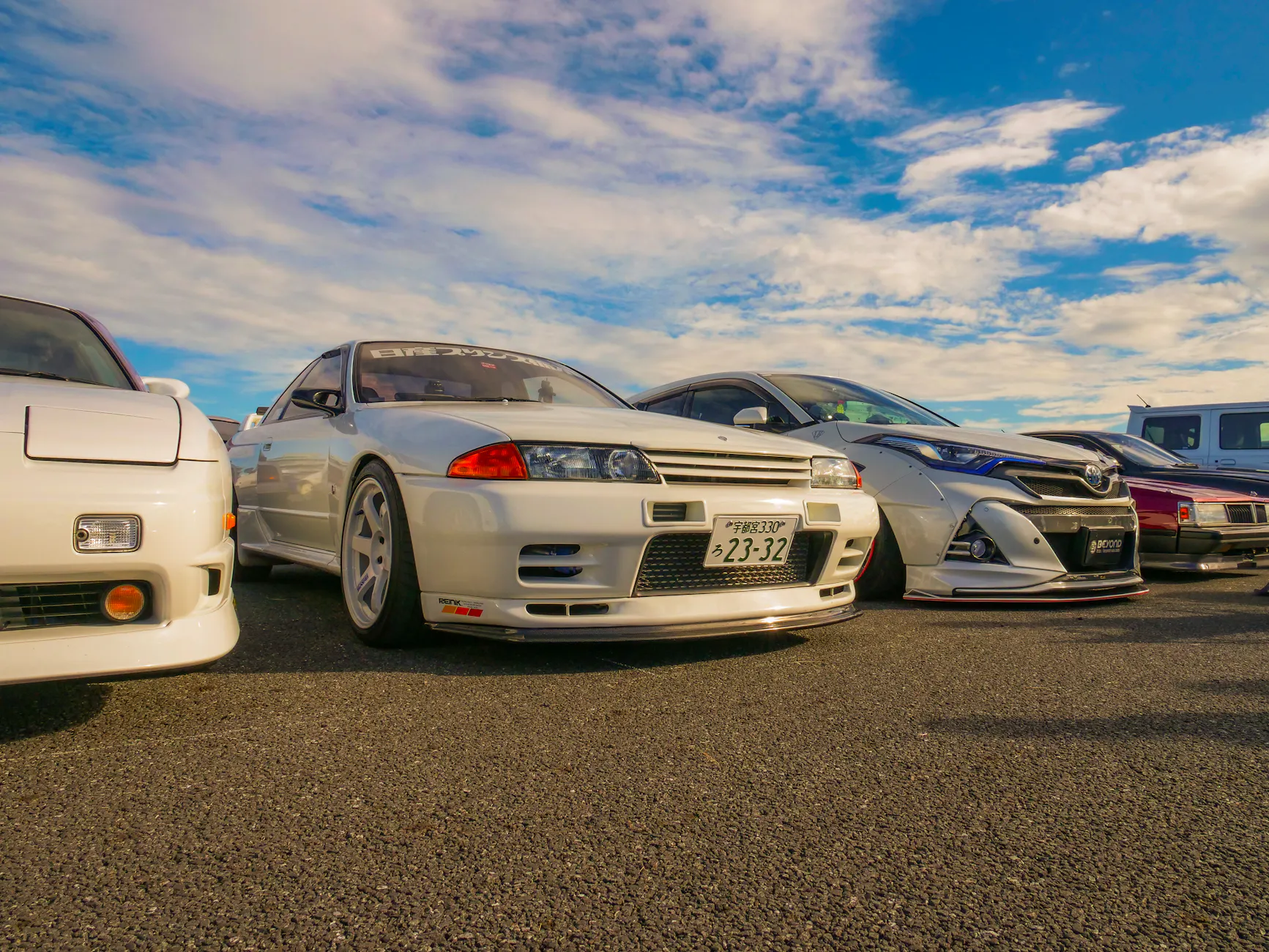
For most international visitors, Tokyo is the base of operations. The good news is that you do not need to travel to Fukushima or venture deep into the mountains to experience drifting. Several excellent options are available within day-trip range of central Tokyo.
Samurai Car Japan, a JDM car rental service based in Shibuya, Tokyo, offers dedicated drift experience packages that combine circuit time with their fleet of iconic Japanese sports cars. Their packages are specifically designed for international tourists, with English-speaking support and all logistics handled for you — including transport coordination to partner circuits near Tokyo. For visitors who want a seamless, language-barrier-free drift experience without the hassle of arranging everything independently, this is one of the most straightforward options available.
A typical Tokyo-based drift experience day looks like this:
- Morning departure from central Tokyo (some operators offer pickup from hotels or stations)
- Arrive at circuit (usually Mobara, Nikko, or a Fuji-area track)
- Safety briefing and instruction (30-60 minutes)
- Driving or ride-along sessions (2-3 hours of track time)
- Return to Tokyo by late afternoon or evening
What to Expect as a Complete Beginner
If you have never drifted before, you might feel nervous about signing up. That is completely normal — and completely unnecessary. Drift experiences in Japan are designed with beginners in mind, and the instructors are remarkably patient and skilled at teaching the fundamentals quickly.
Here is what you should know:
You will not need to bring a car. All organized drift experiences provide the vehicle. These are purpose-built or modified cars with welded differentials, hydraulic handbrakes, bucket seats, roll cages, and harnesses. They are set up to drift easily and to protect you if something goes wrong.
An instructor will be with you. For beginner sessions, a professional instructor sits in the passenger seat at all times. They will talk you through every input — when to brake, when to turn in, when to flick the wheel, when to apply throttle. You are never on your own until you reach an advanced level.
You will spin out. A lot. This is expected and completely fine. Spinning is part of the learning process. The circuits have large run-off areas designed for exactly this. Nobody will judge you — every single person at that track has spun hundreds of times.
You will probably get the hang of it. Most beginners can initiate and hold a basic drift within the first hour of instruction. You will not look like a D1 competitor, but you will feel the car rotate, catch it with counter-steer, and hold it for a few glorious seconds. That moment is addictive.
It is physically manageable. Drifting requires quick steering inputs and firm pedal work, but you do not need to be an athlete. If you can drive a manual transmission car, you have the baseline physical ability needed. Some experiences use automatic transmission cars for absolute beginners.
Pricing Guide
Drift experience pricing in Japan varies significantly depending on the circuit, the duration, and whether a car is included. Here is a general overview of what to expect.
| Experience Type | Typical Price Range | What Is Included |
|---|---|---|
| Drift Taxi (Passenger Ride) | ¥3,000 – ¥8,000 | 2-3 laps as a passenger with a pro driver |
| Introductory Experience (2-3 hrs) | ¥15,000 – ¥25,000 | Briefing, instruction, car, 30-60 min track time |
| Half-Day Package (4-5 hrs) | ¥25,000 – ¥40,000 | Extended instruction, car, multiple track sessions |
| Full-Day Package | ¥35,000 – ¥50,000 | Comprehensive instruction, lunch, full day of track time |
| Multi-Day Drift School (Ebisu) | ¥50,000 – ¥120,000 | 2-3 days of progressive instruction, car rental, sometimes accommodation |
| Tokyo Day Trip Package | ¥30,000 – ¥50,000 | Transport from Tokyo, instruction, car, full experience |
Prices listed are per person and are approximate as of 2026. Most operators require advance booking, especially for English-language instruction. Payment is usually accepted in cash (Japanese yen) or by credit card, though some smaller circuits are cash-only.
What You Need to Participate
Before booking your drift experience, make sure you have the following sorted.
International Driving Permit (IDP)
To drive any vehicle on Japanese roads or circuits, you need a valid International Driving Permit (IDP) in addition to your home country driver’s license. The IDP must be based on the 1949 Geneva Convention format — this is the standard version issued in the US, UK, Australia, Canada, and most European countries. Get this before you leave home; it cannot be obtained in Japan.
Some countries (including Switzerland, Germany, France, and Belgium) have bilateral agreements with Japan that allow their domestic licenses to be used with an official Japanese translation instead of an IDP. Check the Japan Automobile Federation (JAF) website for the current list.
Clothing and Gear
- Closed-toe shoes — Required at all circuits. Sneakers or driving shoes are ideal. No sandals, flip-flops, or heels.
- Long pants — Most circuits require long trousers for safety. Jeans or athletic pants work well.
- Comfortable top — A t-shirt or long-sleeve shirt that allows free arm movement. Avoid anything loose that could catch on the steering wheel or harness.
- Helmet — Provided by the circuit or operator in nearly all cases. If you have your own that meets SNELL or FIA standards, you are welcome to bring it.
- Gloves — Optional but recommended for grip. Thin driving gloves or mechanics’ gloves work well. Some circuits provide these.
Physical Requirements
There are no strict fitness requirements for most drift experiences. You should be able to comfortably operate a car’s pedals and steering wheel, and fit into a bucket seat with a racing harness. Most operators have a weight or size limit related to the harness fit — if you are significantly taller than 190cm or heavier than 110kg, confirm with the operator in advance.
You must be at least 18 years old to drive at most Japanese circuits. Passenger ride-along experiences may accept participants from age 10 or 12 with parental consent — check with the specific operator.
Advanced Options for Experienced Drivers
If you already know your way around a drift car and want something more than a beginner experience, Japan has plenty to offer.
Bring Your Own Car
If you are renting a performance car during your Japan trip, some circuits allow you to bring it onto the track for open drift sessions — provided the car meets safety requirements (typically a roll cage, fire extinguisher, and tow hook are required for track use, though requirements vary). This is more common at grassroots-oriented circuits like Ebisu, Nikko, and Mobara.
Multi-Day Drift Schools at Ebisu
Ebisu Circuit’s multi-day drift schools are legendary in the global car community. These intensive programs run over 2 to 3 days and take you through a structured progression from basic car control to initiating drifts, holding angle, transitioning between corners, and eventually tandem drifting (following another car through a drift section in close proximity).
Several international operators organize group trips to Ebisu drift schools, often including accommodation in nearby hotels or the circuit’s own lodging facilities. These packages frequently sell out months in advance, so book early if this is on your radar.
Touge (Mountain Pass) Driving
For those who want to experience the roads that inspired the original drifting culture, driving a mountain pass in a JDM sports car is a bucket-list item. While drifting on public roads is illegal and dangerous, simply driving the famous touge routes — like the Irohazaka curves in Nikko, the roads around Mount Haruna (the real-life “Mount Akina” from Initial D), or the Hakone Turnpike — in a proper JDM car is an unforgettable experience.
Samurai Car Japan in Shibuya offers rentals of iconic JDM cars including the Nissan Skyline GT-R, Mazda RX-7, Toyota Supra, and Nissan Silvia — any of which would make a touge drive a truly memorable part of your trip.
D1 Grand Prix and Professional Drifting Events
If your trip timing aligns, watching a professional drifting competition in Japan is an extraordinary spectacle. The D1 Grand Prix is Japan’s premier professional drifting series and the most prestigious drift championship in the world.

What to Expect at a D1 Event
D1 Grand Prix events feature Japan’s top professional drivers competing in heavily modified machines producing 500 to 1,000+ horsepower. The competition format involves single runs judged on speed, angle, line, and style, followed by tandem battles where two cars drift simultaneously in close formation.
The atmosphere at a D1 event is electric. The cars are impossibly loud, the tire smoke is thick enough to obscure entire sections of the circuit, and the skill level on display is jaw-dropping. Paddock access is often included with general admission tickets, allowing you to get close to the cars and sometimes meet the drivers.
2026 D1 Grand Prix Calendar
The D1 Grand Prix season typically runs from April through November, with rounds held at circuits across Japan including Fuji Speedway, Suzuka, Ebisu, Tsukuba, and Odaiba (a special street-style event in Tokyo). Check the official D1GP website for the current season schedule and ticket information.
General admission tickets typically cost ¥5,000 to ¥8,000 per day, with premium seating and paddock upgrades available. Tickets can be purchased through Japanese ticket agencies or sometimes at the gate.
The History and Culture of Drifting in Japan
Understanding the history of drifting makes the experience richer. This is not just a motorsport — it is a cultural phenomenon that was born in Japan and has since spread to every corner of the globe.
The Origins: Mountain Passes and Street Racing
Drifting as a driving technique has roots in Japanese motorcycle racing and rally driving of the 1960s, but it became a distinct motorsport discipline in the 1970s and 1980s on the mountain passes (touge) of central Japan. Street racers discovered that intentionally oversteering through tight mountain corners was not only faster in certain situations but looked and felt spectacular.
Keiichi Tsuchiya: The Drift King
No discussion of drifting history is complete without Keiichi Tsuchiya, universally known as the “Drift King” (Dorikin). In 1987, a video titled Pluspy was released showing Tsuchiya drifting his Toyota AE86 (Sprinter Trueno) on public mountain roads. The video was a sensation in the Japanese car community and is widely credited with popularizing drifting as a spectator sport.
Tsuchiya went on to become a professional racing driver (competing in Super GT, Le Mans, and other series) while simultaneously championing drifting. He was instrumental in creating organized drifting competitions, which eventually led to the founding of the D1 Grand Prix series in 2001. He remains an active figure in Japanese motorsport and car culture.
Initial D: From Manga to Global Phenomenon
The manga and anime series Initial D (1995-2013) by Shuichi Shigeno brought Japanese street racing and drifting culture to a massive international audience. The story follows Takumi Fujiwara, a tofu delivery driver who becomes an unstoppable downhill racer in his father’s Toyota AE86 on the fictional “Mount Akina” — based on the real Mount Haruna in Gunma Prefecture.
Initial D’s influence on global car culture cannot be overstated. It inspired an entire generation of enthusiasts to seek out AE86s, to learn about touge driving, and ultimately to visit Japan to experience the culture firsthand. The eurobeat soundtrack became synonymous with drifting, and the series is directly responsible for the AE86’s legendary status and sky-high used car prices.
The Fast and the Furious: Tokyo Drift
The 2006 film The Fast and the Furious: Tokyo Drift brought Japanese drifting to mainstream Western audiences. While the film took creative liberties with its portrayal of Tokyo’s car culture, it sparked enormous international interest in drift experiences in Japan. Many visitors today still cite the film as their initial inspiration for wanting to drift in Japan.
The film’s portrayal of drifting through parking garages and neon-lit streets was fictional, but the underlying culture it depicted — underground car meets, modified JDM cars, and the Japanese drift scene — is very real and still thriving today.
Frequently Asked Questions
Can I drift in Japan without knowing how to drive manual transmission?
Yes. While most traditional drift cars are manual, some operators now offer automatic transmission options for beginners. Additionally, passenger ride-along experiences (drift taxis) require no driving ability at all. That said, if you know how to drive a manual, you will have access to a wider range of experiences and cars. If you are planning a drift experience and do not know manual, it is worth learning the basics before your trip — even a few hours of practice will help enormously.
Is drifting dangerous for a tourist with no experience?
Organized drift experiences at established circuits are remarkably safe. The cars are equipped with roll cages, racing harnesses, and fire extinguishers. Circuits have large run-off areas and safety barriers. Professional instructors are in the car with you at all times during beginner sessions. Speeds during learning are relatively low (60-80 km/h), and the environment is far more controlled than normal road driving. Injuries are extremely rare in structured drift experience programs.
How far in advance should I book?
For standard drift experience packages near Tokyo, booking 2 to 4 weeks in advance is usually sufficient, though weekends fill up faster. For Ebisu Circuit multi-day drift schools, book at least 2 to 3 months in advance — these are popular with international visitors and sell out. During peak travel seasons (cherry blossom season in March-April, autumn foliage in October-November, and Golden Week in early May), book as early as possible.
Can I combine a drift experience with a JDM car rental trip?
Absolutely — and this is one of the best ways to experience Japan’s car culture. Several operators, including Samurai Car Japan in Shibuya, offer packages that combine JDM car rentals with dedicated drift experience days. You can spend a few days exploring Tokyo and Japan’s scenic driving routes in a Skyline GT-R or Supra, then have a dedicated day at a circuit learning to drift in a prepared car. It is the ultimate JDM enthusiast trip.
[st_af id=”854″]
🇯🇵 Plan Your Japan Experience
JDM Car Rental
Drive a GT-R, Supra, RX-7, or Silvia on the roads they were built for. Hakone passes, Wangan highway, mountain touge — your dream JDM experience.
Daikoku PA Tour
Visit Japan’s most legendary car meet. Hundreds of modified cars, passionate owners, and the heartbeat of JDM culture. Guided weekend night tours available.
Photo Guide Tour
Capture stunning photos at locations only locals know. Hidden shrines, backstreet alleys, rooftop views, and golden hour spots for unforgettable shots.
Leave a Reply