Tokyo Night Drive Guide: Wangan, Rainbow Bridge & City Lights Routes
There is something almost spiritual about driving through Tokyo after dark. The city transforms. Daytime congestion melts away, neon signs paint the wet asphalt in shades of pink and electric blue, and the elevated expressways become ribbons of light suspended above the world’s largest metropolis. If you have ever watched Wangan Midnight, played the Tokyo Xtreme Racer games, or simply dreamed of cruising past Tokyo Tower in a JDM sports car, a Tokyo night drive is one of those bucket-list experiences that genuinely lives up to the hype.
This guide covers everything you need to plan the ultimate Tokyo night drive experience: the best routes along the Wangan (Bayshore) expressway, how to cross Rainbow Bridge with the city skyline shimmering behind you, practical tips on tolls and ETC cards, where to stop for the best views, and how to rent a proper JDM car to make the experience truly unforgettable. Whether you are a car enthusiast on a pilgrimage or a traveler looking for a completely different side of Tokyo, this guide is for you.
Why Tokyo at Night Is Special for Drivers
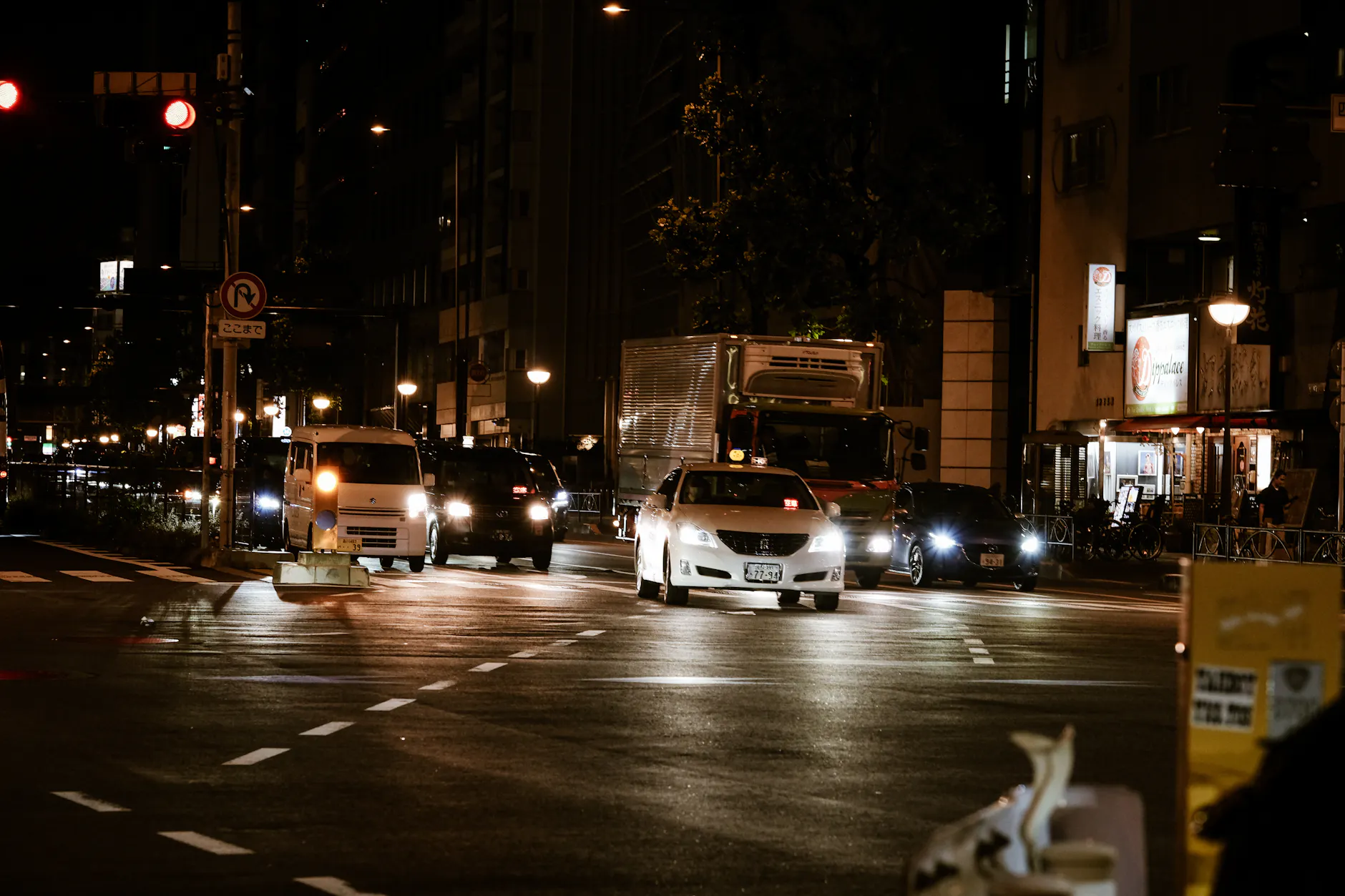
Tokyo is a city of 14 million people. During the day, its expressways are a crawling mess of trucks, taxis, and commuter traffic. But after 10:00 PM, the roads open up dramatically. Here is why Tokyo night driving is in a league of its own:
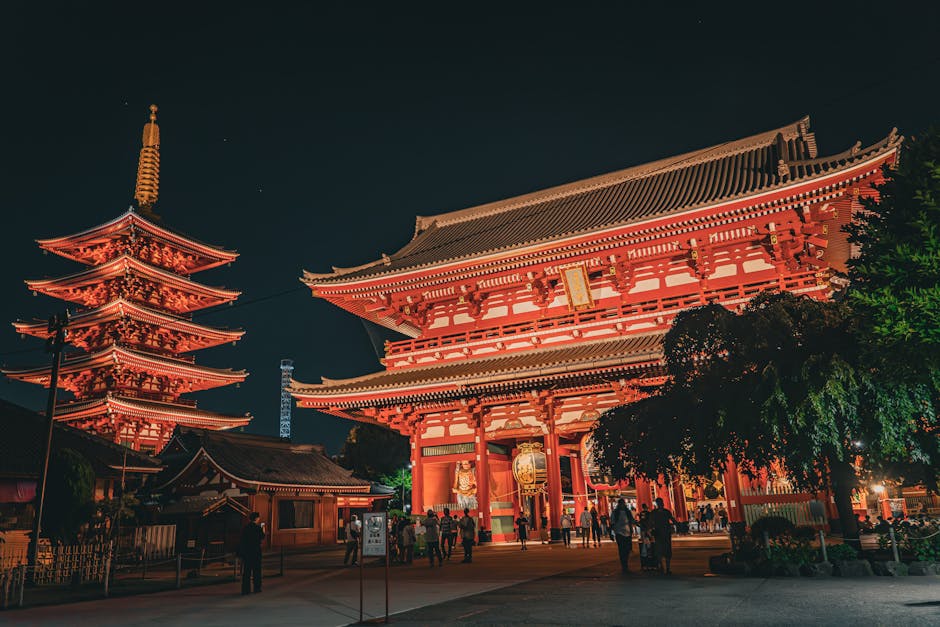
- Traffic drops by 60-70% — The Metropolitan Expressway, nearly gridlocked at 6:00 PM, becomes a flowing circuit of smooth asphalt and sweeping curves after 22:00.
- The skyline comes alive — Tokyo Tower glows orange, the Rainbow Bridge shifts through programmed color sequences, and the Skytree beams its signature blue or purple illumination across the eastern sky.
- Expressway tolls are discounted — ETC cardholders enjoy a 30% late-night discount (midnight to 4:00 AM) on most Metropolitan Expressway routes.
- The atmosphere is cinematic — Elevated highways weave between skyscrapers at the 5th or 6th floor level, giving you a perspective of the city that no observation deck or walking tour can replicate.
- Car culture comes out at night — Daikoku Parking Area, Tatsumi Parking Area, and other legendary meetup spots fill with modified cars and enthusiasts after dark.
The Best Night Driving Routes in Tokyo
The Metropolitan Expressway (Shutoko) system is a sprawling network of elevated toll roads that crisscross central Tokyo and extend to surrounding areas. Here are the five essential routes for an unforgettable Tokyo night drive.
1. The C1 Inner Circular (Metropolitan Expressway Loop)
The C1 is the beating heart of Tokyo’s expressway network. This roughly 15-kilometer loop circles the Imperial Palace area, passing through Ginza, Nihonbashi, Kasumigaseki, and Akasaka. It is tight, twisting, and feels nothing like a highway — more like a racing circuit carved into the gaps between office towers.
What makes it special at night:
- Continuous curves and elevation changes that keep you engaged
- Stunning views of illuminated government buildings, Tokyo Station, and the financial district
- One complete loop takes only 15-20 minutes at night — many drivers do multiple laps
- The junction connections (Edobashi, Kasumigaseki, Hamazakibashi) are beautifully lit stacks of interchanging ramps
Route details: Enter from any C1 on-ramp. The inner loop runs clockwise; the outer loop runs counterclockwise. Tolls are approximately ¥300-¥1,320 depending on distance and ETC discount.
2. Wangan Line (Bayshore Route — Route B)
The Wangan Line is legendary. Running along Tokyo Bay from Haneda Airport area past Odaiba, through the undersea tunnel to Chiba, and extending all the way to Yokohama in the other direction, this is the road that inspired Wangan Midnight — the iconic manga and anime about midnight street racing on this exact stretch.
What makes it special at night:
- Long, straight stretches with wide lanes — the most open expressway in the Tokyo area
- Bay views with the industrial waterfront creating an almost cyberpunk atmosphere
- Passes directly by the giant Ferris wheel at Odaiba (illuminated until midnight)
- The Yokohama Bay Bridge section at the western end is breathtaking
- Connects to Daikoku Parking Area, Japan’s most famous car meetup spot
Recommended Wangan drive route: Enter at Shibaura or Ariake, head southwest toward Yokohama, stop at Daikoku PA, then return via the same route or loop back through the C1. Total distance one-way to Daikoku PA is approximately 30 km.
3. Rainbow Bridge & Odaiba Loop
The Tokyo Rainbow Bridge drive is perhaps the single most photogenic driving moment in all of Japan. The 798-meter suspension bridge connects central Tokyo (Shibaura) to the Odaiba waterfront, and crossing it at night with Tokyo Tower rising directly ahead of you is genuinely breathtaking.
What makes it special at night:
- The bridge itself is illuminated in white, green, or special seasonal colors
- Tokyo Tower and the skyline fill your windshield as you cross northbound
- The Odaiba side offers the reverse view — the entire Tokyo waterfront panorama
- The route through Odaiba passes by the life-size Gundam statue (illuminated at night)
Route details: Take Route 11 (Daiba Line) from the C1 toward Odaiba. The bridge crossing itself is only about 2 minutes, but the entire Odaiba loop and return takes 20-30 minutes. Toll is included in your expressway entry fee.
4. Shibuya to Roppongi to Tokyo Tower Route
This is the perfect surface-street night cruise for those who want to experience Tokyo’s nightlife districts from behind the wheel. It is not about speed — it is about atmosphere.
Route: Start in Shibuya (the Samurai Car Japan shop is right here in the heart of the action), drive through the neon-lit streets past the famous crossing, head southeast on Route 246 toward Roppongi, then continue to Tokyo Tower via Roppongi-dori and Gaien-Higashi-dori.
Highlights:
- Shibuya Crossing seen from street level in your car
- Roppongi’s glowing entertainment district
- Tokyo Tower looming larger and larger as you approach on the tree-lined avenue
- Total distance: approximately 6 km, taking 20-40 minutes depending on traffic lights
5. Yokohama Minato Mirai Route
Extending your Tokyo night drive south to Yokohama adds a spectacular second act. The Yokohama Bay Bridge, Minato Mirai’s futuristic skyline, and the waterfront Cosmo Clock Ferris wheel create a completely different atmosphere from central Tokyo.
Route: From central Tokyo, take the Wangan Line or Route 1 (Yokohane Line) south toward Yokohama. Exit at Minato Mirai and cruise the waterfront. Total distance from Shibuya is approximately 35 km one-way.
Highlights:
- Yokohama Bay Bridge crossing — massive cable-stayed bridge with bay views
- Minato Mirai skyline with the Landmark Tower (296m) lit up
- The Red Brick Warehouse area is beautifully illuminated
- Combine with a stop at Daikoku PA on the way back
The Wangan Midnight Connection: Culture, Anime & Real History
You cannot talk about Tokyo night driving culture without talking about the Wangan. The Wangan drive is not just a route — it is a cultural phenomenon that spans decades of Japanese car culture.
Wangan Midnight, the manga series by Michiharu Kusunoki that ran from 1990 to 2008, told the story of illegal midnight races on the Bayshore Route. The series popularized the idea of the Wangan as the ultimate proving ground — a place where top-speed monsters like the Devil Z (a modified Datsun S30 Fairlady Z) and the Blackbird (a tuned Porsche 911 Turbo) would battle at speeds exceeding 300 km/h.
While those days of extreme street racing are long gone (and were always illegal and dangerous), the cultural legacy lives on. The Wangan Line is still the road that Japanese car enthusiasts speak of with reverence. Driving it at night, even at the legal speed limit of 80 km/h, you can feel why — the long straights, the bay on both sides, the distant glow of the city, and the knowledge that you are on the same asphalt that launched a thousand car culture legends.
The connection extends beyond Wangan Midnight. The broader Tokyo drift and street racing culture of the 1990s and 2000s — the era of the Midnight Club, the Mid Night Racing Team, and countless other groups — centered on these same expressways. The C1 loop was the domain of the grip racers and drifters, while the Wangan was for the top-speed specialists. Today, you can experience these same roads legally and safely, and the atmosphere at night still carries an unmistakable charge.
Practical Tips for Night Driving in Tokyo
Driving the Tokyo expressway network at night is an incredible experience, but the system has its quirks. Here is what you need to know before you go.
ETC Card: Absolutely Essential
The ETC (Electronic Toll Collection) card is non-negotiable for a smooth night drive. Without one, you will need to stop at manual toll gates, fumble with cash, and miss out on the late-night toll discounts. Most rental car companies, including Samurai Car Japan in Shibuya, provide ETC cards with their rentals — always confirm this when booking.
Expressway Tolls at Night
| Time Period | Discount | Notes |
|---|---|---|
| 6:00 AM – Midnight | Standard rate | Peak pricing applies during rush hours |
| Midnight – 4:00 AM | 30% off (ETC only) | Applies automatically with ETC |
| Weekends/Holidays | Up to 30% off | Varies by route and distance |
A typical night drive covering the C1 loop, Wangan Line, and Rainbow Bridge crossing will cost approximately ¥1,500-¥2,500 in tolls with ETC discounts applied. Without ETC, expect to pay ¥2,000-¥3,500 for the same routes.
Speed Limits and Speed Cameras
The Metropolitan Expressway has a general speed limit of 60 km/h on most sections, increasing to 80 km/h on wider stretches like the Wangan Line. These limits are strictly enforced with fixed speed cameras (called “orbis” in Japanese car culture) and occasional mobile radar units.
The penalties for speeding in Japan are severe:
- Over 20 km/h above the limit: ¥15,000-¥25,000 fine
- Over 30 km/h above the limit: ¥25,000-¥35,000 fine and possible license suspension
- Over 50 km/h above the limit: Criminal charges, arrest possible
Where to Stop: Parking Areas (PA) and Service Areas (SA)
The expressway system has small rest stops called Parking Areas (PA) built into the highway. These are perfect for taking a break, grabbing a vending machine drink, and soaking in the atmosphere. Key stops for a night drive:
- Tatsumi PA (辰巳PA) — Route 9, legendary car meetup spot, compact but atmospheric
- Daikoku PA (大黒PA) — Wangan Line, Japan’s most famous car gathering spot (more on this below)
- Yoyogi PA (代々木PA) — Route 4, close to Shibuya, good starting/ending point
- Heiwajima PA (平和島PA) — Haneda Line, modern facilities near the bay
- Yokohama Bay Bridge (大黒JCT area) — Near Daikoku PA, spectacular bridge views
Parking at Viewpoints
If you want to stop for photos on surface streets, use coin parking lots (called “coin parking” or “100-yen parking” in Japan). They are everywhere in Tokyo and typically cost ¥200-¥600 per hour at night. Never park on the street or in convenience store lots for extended periods — towing is swift and expensive (¥30,000+).
Renting a JDM Car for a Night Drive
A Tokyo night drive in a Toyota Prius is fine. A Tokyo night drive in a Nissan Skyline GT-R, a Mazda RX-7, or a Toyota Supra? That is an entirely different experience. The rumble of a tuned exhaust echoing off the concrete walls of the C1 loop, the glow of aftermarket gauges on the dashboard — this is what car enthusiasts travel across the world for.
Samurai Car Japan, located in Shibuya, Tokyo, specializes in exactly this kind of experience. They offer a fleet of iconic JDM cars for self-drive rental, including models like the R34 Skyline, FD RX-7, GR86, and Suzuki Jimny, along with guided night driving tours for those who prefer an expert behind the wheel or riding shotgun to show you the best routes. Their location in central Shibuya means you are minutes from the expressway on-ramps and can start your night drive immediately.
What to look for in a night drive rental:
- ETC card included — Essential for toll gates. Confirm before booking.
- English GPS/navigation — Tokyo’s expressway junctions are complex. You need clear guidance.
- Insurance coverage — Make sure your rental includes comprehensive insurance with night driving permitted.
- Late return option — If you are picking up a car for a night drive, confirm the return time. Some shops offer overnight rental packages.
- International Driving Permit (IDP) — You must have a valid IDP issued in your home country to drive in Japan. No exceptions.
Combining Your Night Drive with Daikoku PA
No Tokyo night drive is complete without a stop at Daikoku Parking Area (大黒パーキングエリア). Located on the Wangan Line in Yokohama, Daikoku PA has become the most famous car meetup spot in the world. On any given Friday or Saturday night, you will find hundreds of modified cars — from pristine R34 GT-Rs and widebody Lamborghinis to bosozoku vans and VIP-style sedans — all gathered under the fluorescent lights of this expressway rest stop.
What to expect at Daikoku PA:
- Friday and Saturday nights (10 PM – 2 AM) are the biggest gatherings
- Hundreds of cars on busy nights, from mild to wild modifications
- Friendly atmosphere — enthusiasts are generally happy to talk about their cars (many speak some English)
- Vending machines and restrooms available, but no restaurants open late
- Free to enter (it is a public parking area on the expressway)
- You must be on the expressway to access it — no surface street entrance
How to get there: From central Tokyo, take the Wangan Line (Route B) heading southwest toward Yokohama. Daikoku PA is on the left side approximately 25 km from Shibaura. The exit is well-signed. If you miss it, continue to the next exit, loop back, and try again.
Etiquette at Daikoku PA:
- Do not rev your engine excessively — police patrol regularly and can shut the PA down
- Ask before photographing someone’s car up close
- Do not block traffic or parking spots
- Take your trash with you
- Police occasionally close Daikoku PA on busy nights if crowds get too large — have a backup plan
Safety and Rules for Night Driving in Tokyo
Driving in Japan is statistically very safe, and driving the Tokyo expressway at night is no exception — as long as you follow the rules and stay alert. Here are the essential safety points:
- Drive on the left. Japan drives on the left side of the road. If you are from a right-hand-drive country, take extra care at intersections and when merging.
- Headlights are mandatory from sunset to sunrise. Use low beams in urban areas and on the expressway unless the road ahead is completely empty.
- No phone use while driving. Fines start at ¥18,000, and if you cause an accident while using your phone, penalties escalate dramatically.
- Fatigue warning: If you have been sightseeing all day and then attempt a late-night drive, fatigue is a real risk. Take breaks every 60-90 minutes. The PA stops along the expressway are designed for exactly this purpose.
- Emergency numbers: Police: 110 / Ambulance & Fire: 119 / Roadside assistance (JAF): #8139
- Expressway breakdown procedure: Pull over to the shoulder, turn on hazard lights, place the triangle reflector behind your car (one should be in the trunk), and call for assistance. Never stand on the road side of the barrier.
Suggested Night Drive Itinerary
Here is a complete evening plan that hits all the highlights. Total driving time is approximately 2-3 hours, but with stops, plan for 4-5 hours.
| Time | Activity | Details |
|---|---|---|
| 9:00 PM | Pick up car in Shibuya | Get familiar with the car, set up GPS |
| 9:30 PM | Cruise Shibuya → Roppongi → Tokyo Tower | Surface streets, soak in the atmosphere |
| 10:15 PM | Enter expressway, drive C1 Inner Loop | 1-2 laps around the Imperial Palace area |
| 10:45 PM | Rainbow Bridge crossing to Odaiba | Stop for photos at Odaiba Seaside Park |
| 11:15 PM | Wangan Line toward Yokohama | The legendary Bayshore Route |
| 11:45 PM | Daikoku PA stop | Car watching, photos, vending machine coffee |
| 12:30 AM | Return via Wangan or C1 | Late-night toll discount kicks in at midnight |
| 1:00 AM | Return car / arrive at hotel | Total tolls: approximately ¥2,000-¥3,000 |
Frequently Asked Questions
Do I need an International Driving Permit to drive in Tokyo at night?
Yes. All foreign visitors must hold a valid International Driving Permit (IDP) along with their home country’s driver’s license to drive anywhere in Japan, including Tokyo’s expressways. The IDP must be issued in your home country before you arrive. Japan does not recognize IDPs issued by some countries (notably China and certain others) — check with the Japan Automobile Federation (JAF) for the current list. Your IDP is valid for one year from your entry date into Japan.
Is it safe to drive Tokyo’s expressways at night as a tourist?
Yes, it is generally very safe. Japanese drivers are disciplined and follow the rules. The expressway system is well-maintained, well-lit, and clearly signed (most signs include English). The main challenges are the complex junction layouts and narrow lanes on older sections like the C1 loop. Using a GPS navigation system is strongly recommended. Drive at a comfortable pace, stay in the left lane when not overtaking, and you will be fine.
How much does a Tokyo night drive cost in total?
Budget approximately ¥15,000-¥30,000 total depending on the car and duration. A JDM sports car rental for an evening or overnight period typically costs ¥10,000-¥20,000. Expressway tolls for a full night drive covering the C1, Rainbow Bridge, and Wangan Line run ¥1,500-¥3,000 with ETC. Add ¥500-¥1,000 for parking and ¥1,000-¥2,000 for fuel (most sports cars use premium gasoline).
Can I drive to Daikoku PA without getting on the expressway?
No. Daikoku PA is located on the expressway itself and can only be accessed from the Wangan Line. There is no surface street entrance. You must enter the expressway, drive to the PA, and exit the expressway when you leave. This means you will pay an expressway toll. Some people park near Daikoku-cho station and walk, but pedestrian access to the PA is not officially permitted and involves crossing dangerous road sections — it is not recommended.
[st_af id=”862″]
🇯🇵 Plan Your Japan Experience
JDM Car Rental
Drive a GT-R, Supra, RX-7, or Silvia on the roads they were built for. Hakone passes, Wangan highway, mountain touge — your dream JDM experience.
Related Articles
Daikoku PA Tour
Visit Japan’s most legendary car meet. Hundreds of modified cars, passionate owners, and the heartbeat of JDM culture. Guided weekend night tours available.
Photo Guide Tour
Capture stunning photos at locations only locals know. Hidden shrines, backstreet alleys, rooftop views, and golden hour spots for unforgettable shots.
Leave a Reply