Coastal Beach Drive from Tokyo: Enoshima, Slam Dunk Crossing & Chigasaki Surf Town by Car
There’s a drive in Japan that hits every note — sacred island shrines, anime pilgrimage sites, palm-lined surf beaches, and one of the most cinematic coastal highways in the country. It starts in the heart of Tokyo and ends in Odawara with the ocean on your left the whole way. This is the Shonan coast drive, and if you’ve ever dreamed of rolling down your windows to the smell of salt air while the Pacific glitters beside you, this is your route.
What makes this stretch so special is how many worlds it packs into a single day. You leave the urban sprawl of Shibuya behind, cross into the green hills of Kanagawa, and suddenly you’re on National Route 134 — a coastal highway so iconic that Japanese drivers make the trip just for the road itself. Add in Enoshima’s mystical shrines, the world-famous Slam Dunk train crossing, and Chigasaki’s laid-back surf culture, and you’ve got one of the most satisfying day drives anywhere in Japan.
The best part? You can kick the whole thing off right in Shibuya. Grab your rental car, punch the first waypoint into your GPS, and you’re on the expressway within minutes. No trains, no timetables — just you, the road, and the Shonan coast unfolding at your own pace. Here’s everything you need to know to drive this route like a local.
Route Overview
This route runs roughly 80 kilometres from central Tokyo to Odawara, following the Shonan coastline for most of its length. Total pure driving time is around 2 to 2.5 hours, but plan for a full day — there’s too much to rush. Here’s the breakdown stop by stop:
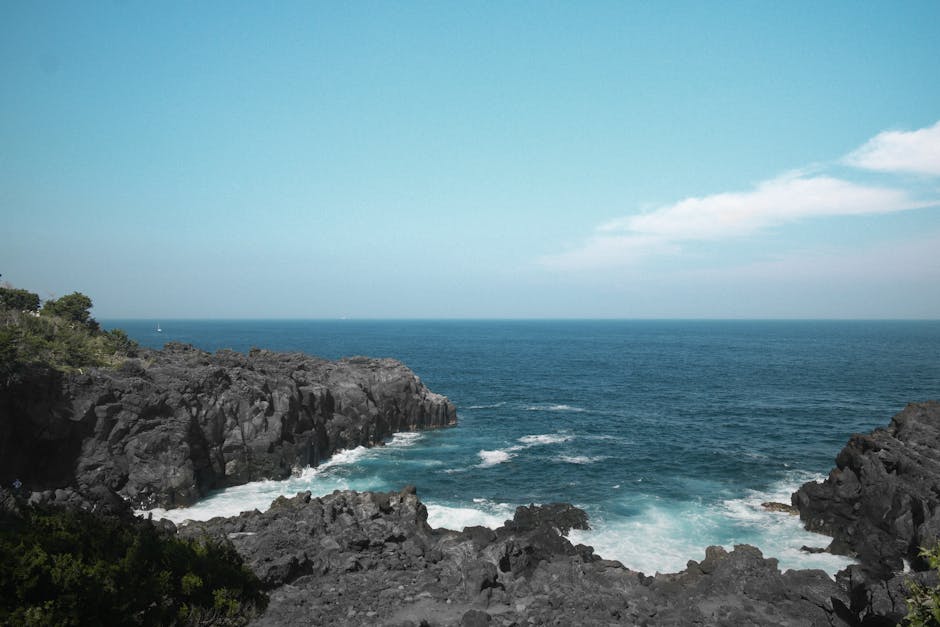
- Pick up your rental car at Samurai Car Japan in Shibuya, Tokyo — Your journey begins here. Collect your keys, get your ETC card sorted, and set your GPS.
- Shibuya → Enoshima — Approx. 50 km via the Tomei Expressway and Route 1, then south via Fujisawa. Drive time: 50–70 minutes without traffic (allow more on weekends).
- Enoshima → Kamakurakoko-mae Station — Approx. 7 km along Route 134 hugging the coast. Drive time: 15–20 minutes.
- Kamakurakoko-mae → Chigasaki — Approx. 12 km west along Route 134. Drive time: 20–30 minutes.
- Chigasaki → Oiso Long Beach — Approx. 8 km west along Route 1. Drive time: 15 minutes.
- Oiso → Odawara — Approx. 15 km via National Route 1. Drive time: 25–35 minutes. End of route.
🗺️ Open This Route in Google Maps
Opens in Google Maps app on mobile
Shibuya to Enoshima: Leaving the City Behind
The drive out of Shibuya is your warm-up — city streets give way to elevated expressway within a few minutes if you take the Shuto Expressway No. 3 (Tomei Line) southbound. Follow signs toward Yokohama and then cut southwest toward Fujisawa via National Route 1 or the Yokohama-Yokosuka Road depending on traffic. Your GPS will sort the best path in real time, but the general direction is southwest and then south toward the coast.
As you exit the suburban sprawl of Yokohama and Fujisawa, the landscape opens up and you’ll catch your first glimpse of the ocean. The moment you see water, you know Enoshima is close. Follow signs for 江の島 (Enoshima) — you’ll cross the distinctive Enoshima Bridge (Benzaiten Bridge), a long causeway over Sagami Bay that delivers you straight to the island’s entrance. That first crossing with the sea on both sides and the island’s forested hill ahead of you is genuinely thrilling.
Toll costs: Using the Shuto Expressway from Shibuya adds roughly ¥600–¥900 depending on entry point and time of day. If you have an ETC card (which Samurai Car Japan includes with rentals), your tolls are calculated automatically — no stopping at booths.
What to Do in Enoshima
Enoshima is a small island — you can walk end to end in under 30 minutes — but it packs in an extraordinary amount. The main draw is the Enoshima Shrine complex (江島神社), a Shinto shrine network that winds up through the island’s centre, dedicated to the goddess Benzaiten. The stone torii gates and stone-paved approach called Benten-Nakamise Dori are lined with seafood restaurants and souvenir shops, and the climb through shrine grounds feels genuinely sacred even on a busy day.
At the island’s peak, don’t miss the Enoshima Sea Candle (江の島シーキャンドル) — a lighthouse observation tower that rises 59.8 metres above the hilltop. On a clear day, the 360° views of Sagami Bay and Mount Fuji to the northwest are jaw-dropping. Entry to the tower’s observation deck costs ¥500 for adults. Pay the extra ¥200 to access the outdoor spiral platform at the very top — the wind up there feels like standing on the edge of the ocean.
Further along the island’s tip are the Iwaya Caves (岩屋洞窟) — sea caves carved into the cliffs that you can explore with a candle lantern. It’s atmospheric, slightly eerie, and well worth the ¥500 entry fee. Allow at least 2–3 hours total on Enoshima if you want to hit the shrine, Sea Candle, and caves.
Parking at Enoshima
Parking directly on Enoshima island is extremely limited and expensive. The smartest move is to use one of the large car parks on the mainland side of the bridge. The Katase Enoshima Municipal Parking near the bridge entrance charges around ¥300–¥400 per 30 minutes, with a daily cap. On weekends in summer, arrive before 9 AM or you’ll be circling for a long time. There are also private lots nearby for similar rates.
Enoshima to Kamakurakoko-mae: Route 134 and the Anime Crossing
This is where the drive truly becomes something special. From Enoshima, head east on National Route 134 — a coastal road that runs right along the beach, separated from the Pacific by nothing more than a low seawall and a strip of sand. This is the road Japanese car culture romanticises. Wind your windows down. The ocean is right there.
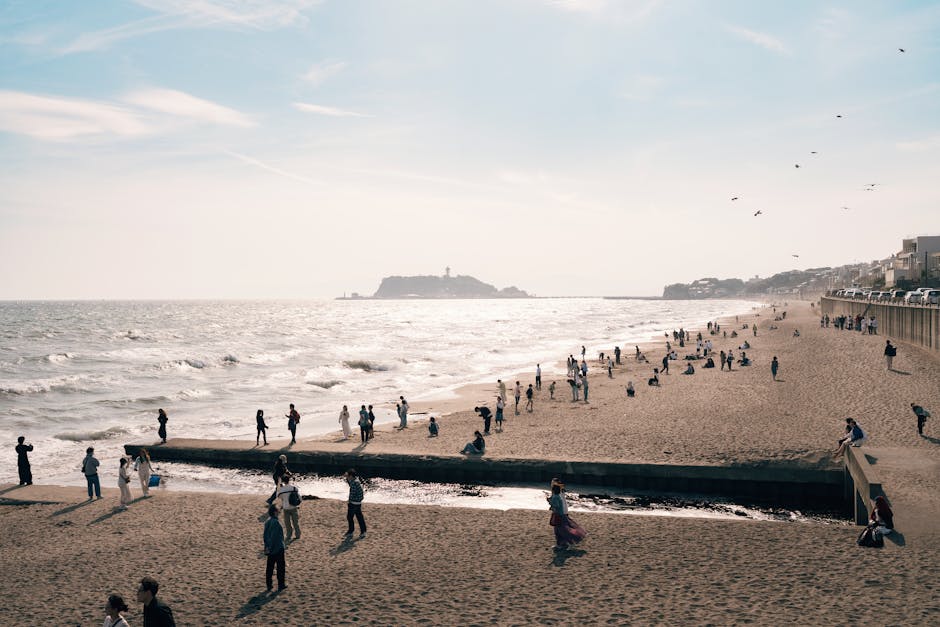
Route 134 between Enoshima and Kamakura is about 7 kilometres of pure coastal driving — two lanes, gentle curves, beachside cafés, surf schools, and surfers carrying boards across the road to the waves. In summer the whole strip buzzes with energy. In winter it’s quieter but hauntingly beautiful, with grey waves rolling in and Mount Fuji sometimes appearing stark white above the horizon to the west.
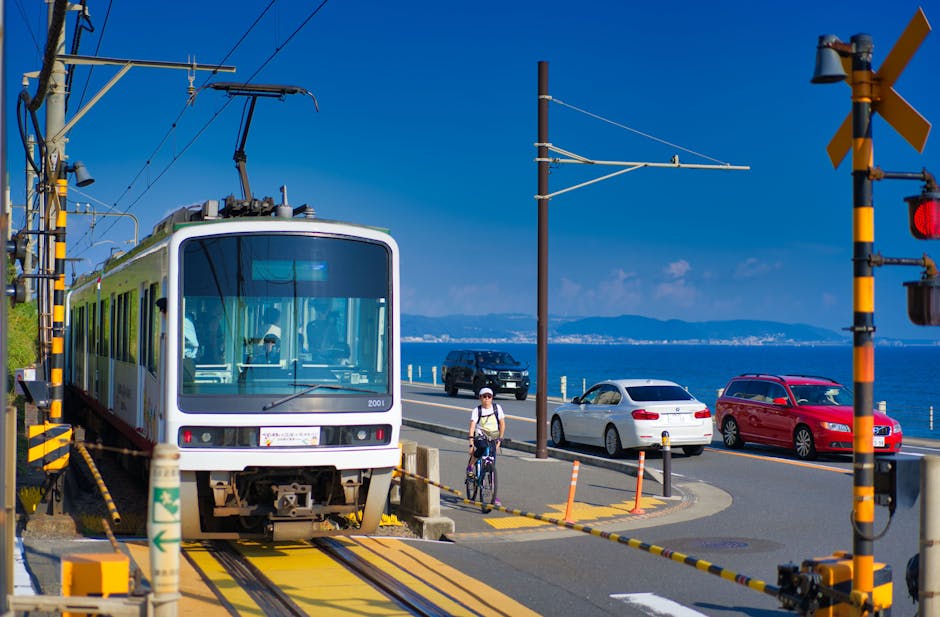
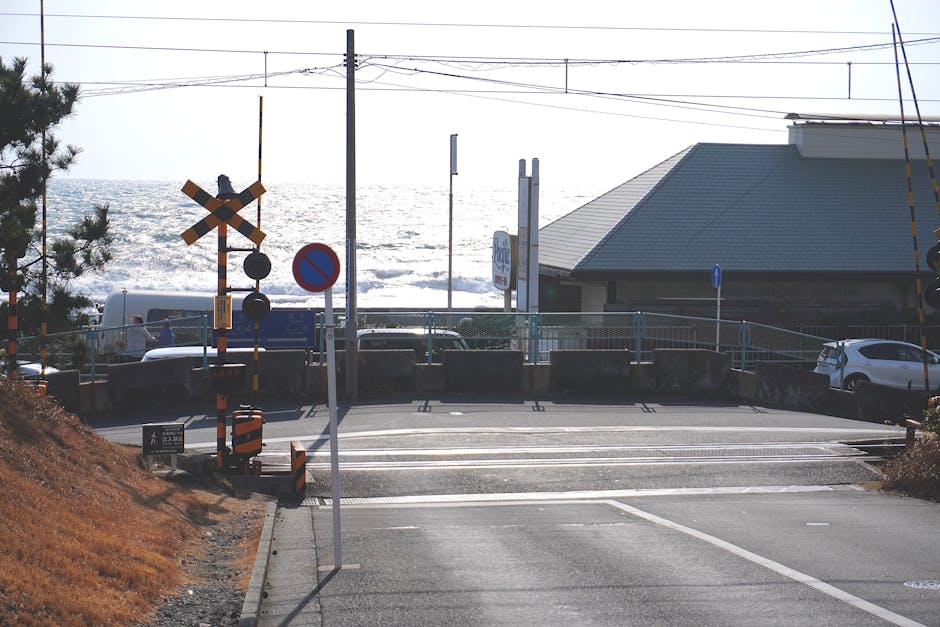
After roughly 15 minutes on Route 134, you’ll reach Kamakurakoko-mae Station (鎌倉高校前駅) — and more specifically, the level crossing just outside the station that has become one of Japan’s most visited anime pilgrimage sites.
The Slam Dunk Crossing: An Anime Pilgrimage
If you grew up watching Slam Dunk — Takehiko Inoue’s iconic basketball manga and anime from the 1990s — this crossing will stop you in your tracks. The opening sequence of the anime features this exact level crossing, the Enoden railway line ticking past, and the Pacific Ocean glittering in the background. It’s been recreated in frame-perfect detail by fans from across Asia, and the spot has become a full-on pilgrimage destination, attracting visitors from China, South Korea, Taiwan, and beyond.
Standing at the crossing and watching the small Enoden train rattle past with the sea behind it is genuinely moving if you’re a fan. Even if you’re not, the composition is stunning — a railway crossing, a coastal road, a wide blue ocean, and on clear days, a distant smudge of Fuji on the horizon. It’s the kind of view that makes you understand why this scene became immortal.
Driving tip: Don’t try to park on Route 134 itself near the crossing — it’s dangerous and you’ll get ticketed. There’s a small pay parking lot about 200 metres west near Kamakurakoko-mae Station, charging roughly ¥200–¥300 per 30 minutes. You can also park further back and walk the short distance along the coast. Spend 30–45 minutes here — enough to see a few Enoden trains pass and get your photos.
Driving this route? We’ve got you covered.
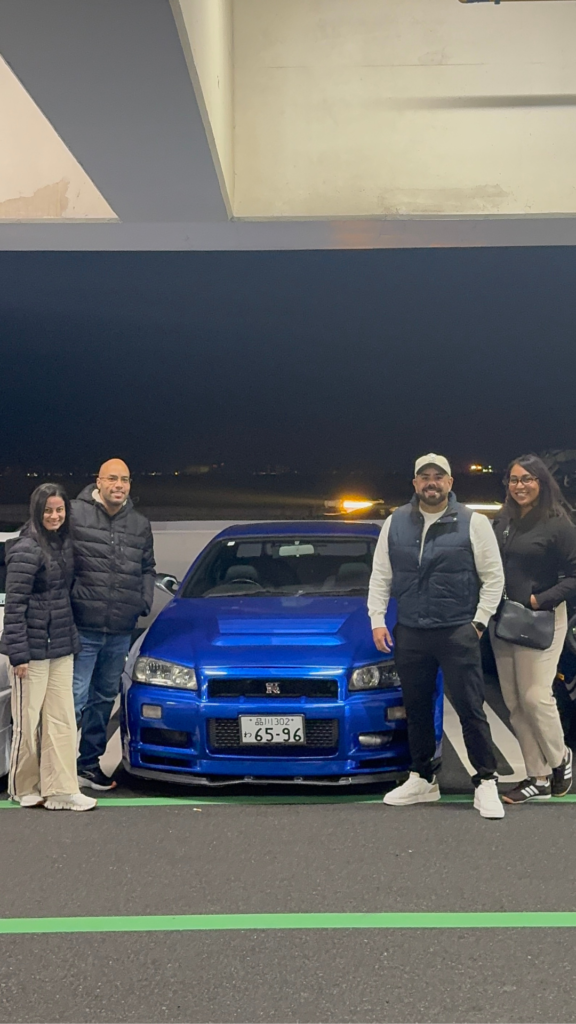
Hundreds of international visitors have driven this route with a car from Samurai Car Japan. Our team will brief you on road conditions, tolls, and the best stops before you set off.
Kamakurakoko-mae to Chigasaki: Surf Town California Vibes
Back on Route 134 heading west, the vibe shifts again. The road pulls back slightly from the coast and you enter Chigasaki — a town that has built its entire identity around surf culture, beach life, and a specific brand of Japanese Californian cool. Palm trees line Southern Beach Chigasaki, surf shops cluster around every corner, and on a summer day the whole town feels like it’s been lifted from Malibu and dropped on the Shonan coast.
Chigasaki is most famous internationally as the hometown of legendary Japanese rock musician Yuujiro Ishihara (called the “Japanese Elvis”), but for the beach crowd it’s all about the waves and the lifestyle. The town has been a surf destination since the 1960s, and that history shows in the weathered cool of its beach shacks and the easy confidence of its locals.
What to Do in Chigasaki
Southern Beach Chigasaki is the heart of it all — a wide sandy beach backed by palm trees with views of the distinctive flat-topped rock offshore called Eboshi-iwa. It’s a genuine surfing beach with consistent waves, and you’ll see boards everywhere regardless of season. In summer the beach sets up with food stalls and beach huts. Even in the off-season, coming here for an hour to walk the sand, breathe the air, and watch surfers ride the Pacific feels like a reset button for the soul.
For surf culture immersion, wander the streets just inland from the beach — there are independent surf shops, vintage clothing stores, and low-key cafés run by surfers who gave up Tokyo salaries for Chigasaki beach life. This is the Japan that rarely appears in tourist brochures, and it’s wonderful.
Parking in Chigasaki
The Southern Beach Chigasaki Parking Lot is the main option — large, well-signposted, and charges approximately ¥200–¥300 per 30 minutes with a summer weekend daily cap around ¥1,500. Multiple smaller pay lots operate in the surrounding streets at similar rates. Weekday parking is straightforward; weekend summer parking requires patience and an early arrival.
Chigasaki to Oiso Long Beach: Retro Coastal Japan
From Chigasaki, head west on National Route 1 toward Oiso. This stretch is about 8 kilometres and takes roughly 15 minutes. Route 1 here runs inland from the coast, passing through the quieter residential and commercial zones of western Shonan — it’s a pleasant, easy drive after the bustle of Chigasaki.
Oiso Long Beach (大磯ロングビーチ) has a different character entirely from Chigasaki. This is classic Japanese beach resort territory — the kind of place where Japanese families have been coming since the Meiji era when Oiso was one of the country’s first Western-style seaside resorts. There’s a retro elegance to the town, with old ryokan-style buildings, pine trees lining the beach, and a general sense that time moves slower here.
The beach itself is long, dark-sanded (the sand here is volcanic grey-black, typical of the Shonan coast), and often less crowded than Chigasaki or Kamakura. It’s a great place to stop for a walk, a coffee, and some time with the waves before the final push to Odawara. There are beach-side restaurants and a few classic kissaten (old-school Japanese coffee shops) in Oiso town worth exploring.
Oiso to Odawara: The Final Run
The last leg of the drive follows National Route 1 westward through Ninomiya and into Odawara — a distance of about 15 kilometres taking 25–35 minutes. This stretch of Route 1 is one of Japan’s oldest road corridors, following the ancient Tokaido highway that connected Edo (Tokyo) to Kyoto. You’re driving history here.
As you approach Odawara, the imposing silhouette of Odawara Castle appears to the north — a fully restored feudal fortress that once served as the stronghold of the Hojo clan. It’s a striking endpoint to a day that began in the urban heart of Tokyo. The castle grounds are free to walk, with the castle keep itself charging ¥510 for entry. On a clear late afternoon, the views from the top looking back toward the coast and Fuji are exceptional.
Odawara also sits at the gateway to the Hakone mountains, so if you’re extending your trip into a two-day journey, this is a natural overnight base before heading into the volcanic landscape of Hakone the following morning.
Parking in Odawara
There are multiple pay parking lots around Odawara Castle Park charging approximately ¥200 per hour. The Odawara City Hall parking area nearby often has more availability on busy days. If you’re continuing to Hakone, the Odawara-Atsugi Road (toll: approximately ¥450) takes you directly into the mountains.
Essential Driving Tips for This Route
Road Conditions and Speed Limits
- Shuto Expressway (Tokyo) — 60 km/h speed limit, multiple lanes, well-signed in English and Japanese. Can be congested during morning rush (7–9 AM) and evening return (5–8 PM).
- Route 134 (Coastal Road) — Mostly 40–50 km/h, two lanes, some sections narrow near beach access points. Watch for pedestrians and cyclists constantly crossing to the beach. No overtaking in many sections.
- National Route 1 — 60 km/h general limit, wider road, more straightforward driving. Watch for heavy truck traffic.
Toll Summary
- Shuto Expressway (Shibuya exit to Yokohama area): approximately ¥600–¥1,000 with ETC
- Odawara-Atsugi Road (if continuing to Hakone): approximately ¥450
- Total toll estimate for full route: ¥1,000–¥1,500 depending on exact entry/exit points
- Route 134 and Route 1 are toll-free national roads
Fuel Stations
There are ENEOS and Shell stations throughout the Fujisawa and Chigasaki areas along Route 134. Fuel up before hitting the coastal stretch as stations directly on Route 134 are sparse. In Odawara, multiple stations are available near the city centre. Average fuel cost at time of writing: approximately ¥170–¥185 per litre for regular petrol.
International Driving Permit (IDP)
Foreign nationals driving in Japan must carry an International Driving Permit issued in their home country, along with their original home country licence. Japan accepts IDPs issued under the 1949 Geneva Convention. Some nationalities (Switzerland, Germany, France, Belgium, Monaco, Taiwan) can use their home licence with a certified Japanese translation instead — check current rules before travel. Your IDP must be valid for the duration of your rental. Samurai Car Japan can advise on your specific situation at pickup.
Where to Eat Along the Route
Enoshima
Enoshima is famous for shirasu — whitebait fish caught fresh from Sagami Bay. Don’t leave without eating a shirasu don (whitebait rice bowl) at one of the restaurants lining Benten-Nakamise Dori. Tobicho is a well-known spot near the shrine entrance that does excellent versions. Expect to pay around ¥1,500–¥2,000 for a set meal. In season (spring and autumn), raw shirasu is available — a slightly briny, silky experience unlike anything else.
Chigasaki
The surf town aesthetic extends to the food scene. Nakamura Ya near the beach is a beloved local institution serving Japanese-style pasta and rice dishes with a relaxed, sun-bleached interior. For something more casual, the beachside food stalls in summer serve cold beer, grilled corn, and yakisoba that tastes inexplicably better with the sound of waves behind it. For coffee, look for the independent specialty coffee shops inland from the beach — the surf community here takes its coffee seriously.
Oiso
Oiso is famous in Japan as the birthplace of summer beach culture, and its food scene reflects old-school Japanese coastal dining. Try Koizumi Shouten for Japanese-style sandwiches and coffee, or look for one of the small sushi restaurants near the town centre that serve Sagami Bay fish caught that morning.
Odawara
Odawara is historically famous for kamaboko — fish cake made from local fish, a traditional craft the city has practised for centuries. The area around the castle has multiple shops selling freshly made kamaboko in various flavours. For a proper meal, Nihombashi Imahan near the castle area does excellent beef hotpot if you want to end the day in style, or try Odawara ramen at one of the local shops near the station for something more casual.
Best Season for This Drive
Summer (July–August)
Peak beach season — the coast is alive with swimmers, surfers, food stalls, and festivals. Route 134 is at its most vibrant and you get the full Shonan summer experience. The downside is serious traffic, especially on weekends. Parking fills fast. Leave early or prepare to wait. The heat (often 35°C+) makes good car air conditioning essential.
Spring (March–May)
This is arguably the best season for the drive. Temperatures are mild (18–24°C), traffic is lighter than summer, and clear spring days give exceptional Mount Fuji views from the coast and the Sea Candle. Cherry blossom season (late March to mid-April) adds extraordinary beauty to the Odawara Castle stop. Highly recommended.
Autumn (September–November)
Post-summer the coast quietens down beautifully. September still has warm enough temperatures for the beach, and October–November brings crystal-clear skies and some of the year’s best Fuji visibility. Autumn surfing at Chigasaki is excellent with strong Pacific swells. A genuinely underrated season for this drive.
Winter (December–February)
Cold but clear — winter mornings on Route 134 with a snow-capped Fuji dominating the skyline are unforgettable. Traffic is minimal, parking is easy, and the coast has a stark, beautiful quiet. Pack layers. The Sea Candle observation deck in winter, with Fuji gleaming white to the northwest, is one of the great views in the Kanto region.
Frequently Asked Questions
Where can I rent a car for this route?
The most convenient starting point is Samurai Car Japan in Shibuya, Tokyo. They specialise in international visitors and offer English GPS navigation, ETC cards (essential for toll roads), and International Driving Permit support. They also have JDM sports cars available if you want to drive this coastal route in a GT-R, Supra, or RX-7 — which, let’s be honest, is the most cinematic way to do it. You can pick up your car and be on the expressway toward Enoshima within minutes. Reserve in advance, especially for weekends and summer.
How long does the full route take?
Pure driving time is around 2 to 2.5 hours end to end. However, with proper time at Enoshima (2–3 hours), the Slam Dunk crossing (30–45 minutes), Chigasaki beach (1–2 hours), Oiso (45 minutes), and Odawara Castle (1–2 hours), you’re looking at a full day trip — 8 to 10 hours including meals. Most people leave Tokyo around 8 AM and arrive in Odawara by early evening. It can also be done as a comfortable two-day trip if you overnight in Chigasaki or Odawara.
Is Route 134 suitable for beginner drivers in Japan?
Yes, but with caution. Route 134 is a straightforward two-lane coastal road, not technically demanding. The main challenges are pedestrian crossings near beach access points, cyclists and surfers crossing the road with boards, and periodic congestion near popular spots like the Slam Dunk crossing. Drive slowly, stay alert, and never rush on this road. The expressway sections from Tokyo are actually easier — wider lanes, consistent speeds, and clear signage.
Do I need an ETC card for this route?
An ETC card is highly recommended but not strictly required if you’re only using Route 134 and Route 1, which are toll-free. If you use the Shuto Expressway to exit Tokyo (which saves significant time), you’ll pay tolls — and without an ETC card, you need cash at toll booths. Samurai Car Japan includes an ETC card with rentals, which makes the whole process seamless. ETC lanes also move much faster than cash lanes, so it’s a meaningful practical advantage.
Can I drive from Odawara into Hakone after this route?
Absolutely — this is actually a very natural extension. The Odawara-Atsugi Road connects Odawara to the Hakone area in about 30–40 minutes. The Hakone Turnpike toll road (approximately ¥730) offers spectacular mountain driving with Fuji views. Many visitors do the Shonan coast on day one and Hakone on day two, overnighting in Odawara or at a Hakone ryokan. It’s one of the best two-day road trip combinations available from Tokyo.
Why not elevate your journey with a legendary JDM experience?
Our Services:
- Self-Drive Rentals
- Guided Tours
- Drift Experiences
Please visit the dedicated page for more details.