Samurai Car Japan to Chichibu: The Ultimate Anime Pilgrimage & Mountain Drive Through Saitama
Some road trips are just about getting from A to B. This one is something else entirely. The drive from Shibuya through Hanno, up over Mt. Buko, past the dramatic gorges of Nagatoro, and into the ancient mountain town of Chichibu is one of those routes that stays with you long after you’ve returned the keys. It’s got everything — winding cedar-lined mountain roads, panoramic summit views, a river gorge straight out of a Studio Ghibli dream, and a 2,000-year-old shrine that anime fans from around the world make pilgrimages to. And the best part? You can drive every kilometre of it yourself.
This is the kind of route that rewards drivers. You’re not squeezed into a train window hoping for a glimpse of something beautiful — you’re in control, windows down, engine humming, with the freedom to stop whenever a view demands it. The roads through this part of Saitama Prefecture are genuinely fun to drive: well-maintained, beautifully scenic, and varied enough to keep things interesting whether you’re threading through cedar forests on Route 299 or cruising along the Arakawa River valley. If you’ve ever wanted to combine a proper Japanese mountain drive with an anime pilgrimage, this is your route.
The adventure begins in the heart of Tokyo. Pick up your rental car at Samurai Car Japan in Shibuya, and you’re already positioned perfectly for an early escape from the city. Grab your keys, punch in your first destination, and within minutes you’ll be on the expressway heading northwest, watching Tokyo’s skyline shrink in your rearview mirror as the mountains start to appear on the horizon. Let’s get into it.
Route Overview
Here’s the full breakdown of the drive with estimated times between each stop. This is a full-day route — plan for around 8–10 hours including stops, sightseeing, and meals. Total driving time is roughly 3 hours without stops, but the magic of this trip is taking it slow.
- Pick up your rental car at Samurai Car Japan in Shibuya, Tokyo
- Shibuya → Hanno: Approx. 55–70 minutes via the Kan-Etsu Expressway (Expressway 17). Head northwest from Shibuya, exit at Hanno IC.
- Hanno → Mt. Buko Trailhead: Approx. 30–40 minutes via Route 299 heading west toward Hanno-shi and then south toward Chichibu-shi.
- Mt. Buko → Nagatoro: Approx. 30 minutes via Route 140 and local roads along the Arakawa River valley.
- Nagatoro → Chichibu (Chichibu Shrine & Hitsujiyama Park): Approx. 15–20 minutes via Route 140 and local roads into central Chichibu city.
🗺️ Open This Route in Google Maps
Opens in Google Maps app on mobile
Stop 1: Hanno — Gateway to the Mountains
What to See and Do
Hanno feels like the moment Tokyo exhales. After the expressway exit, you’ll notice the air change, the buildings thin out, and actual forest starts pressing in from all sides. The city of Hanno sits at the natural boundary between the Kanto plains and the Okutama-Chichibu mountain range, and it wears that position proudly. It’s a small, unhurried place, but it punches well above its weight as a destination.
The headline attraction here is Moominvalley Park (ムーミンバレーパーク), a genuinely enchanting theme park built around the Finnish children’s book series by Tove Jansson — the same series that inspired a beloved Japanese anime adaptation. The park is set beside Miyazawa Lake and does a remarkable job of recreating the atmospheric world of Moominvalley with remarkable faithfulness. Even if you’re not a lifelong Moomin fan, the lakeside setting alone is worth the stop. The Moomin House walk-through exhibit, the Emma’s Theatre storytelling space, and the seasonal flower gardens make this an easy 2–3 hour visit. For anime fans specifically, this is a pilgrimage point for fans of the Finnish-Japanese co-produced Moomin anime series, and the park leans into that heritage beautifully.
Beyond Moominvalley, Hanno’s old town area near Musashi-Hanno Station has a handful of charming old craft shops, local sake breweries, and small galleries worth a stroll if you have extra time. The Hanno area is also known for its firefly populations in early summer — a magical bonus if you’re driving this route in June.
How Long to Spend
Allow 2–3 hours if visiting Moominvalley Park, or 45–60 minutes if you’re just stretching your legs and grabbing a coffee in town before pushing on.
Driving Tips: Shibuya to Hanno
From Shibuya, your best bet is to head north toward the Kan-Etsu Expressway (Route 17 / Ken-O Expressway). The most straightforward route takes you through the Gaikan Expressway or Kan-Etsu heading northwest, then joining the Ken-O Expressway (E17) and exiting at Hanno IC. Expect toll costs of approximately ¥1,200–¥1,600 depending on your exact entry point from Shibuya. The drive is mostly urban expressway for the first 40 minutes, then the scenery opens up noticeably as you approach the Hanno exit — cedar-covered ridges start appearing, and the horizon gets genuinely interesting. Early morning departures (before 8am) will help you skip the suburban Tokyo traffic that can clog this corridor on weekends.
Parking at Hanno
Moominvalley Park has a dedicated paid car park with capacity for several hundred vehicles. Parking costs approximately ¥500–¥700 per day. On busy spring weekends, the car park fills quickly — aim to arrive before 10am. Paid municipal car parks are also available near Musashi-Hanno Station for around ¥300–¥500 for a few hours.
Stop 2: Mt. Buko — Panoramic Views Over Saitama and Tokyo
What to See and Do
Mt. Buko (武甲山, Buko-san) is one of those mountains that commands the landscape rather than hiding in it. Standing at 1,304 metres, it’s instantly recognisable from much of the Chichibu region — a dramatic, asymmetrical peak with the distinctive scars of limestone quarrying on its south face that have ironically become part of its character and identity. This is sacred mountain territory. Mt. Buko has been a site of religious worship for over 1,300 years, and the Buko Shrine at the summit continues to draw visitors seeking a connection with the mountain gods.
The most accessible trailhead is the Ura-Buko Trailhead (裏武甲) accessed via narrow roads through Yokoze-machi. The trail itself is a solid but manageable hike — expect around 2–2.5 hours each way for a moderate hiker. The summit rewards you with genuinely spectacular panoramic views: on clear days you can see across the entire Kanto Plain, with the Tokyo skyline visible in the distance and Mt. Fuji appearing dramatically to the southwest. Even if you don’t summit, the approach roads through Yokoze and the lower forested slopes are strikingly beautiful and worth driving slowly through.
For those who want the views without the hike, the Buko-san Limestone Museum near the mountain base offers fascinating context about the mountain’s geology and the quarrying history that has shaped the region’s economy and landscape for generations.
How Long to Spend
Full summit hike: Allow 5–6 hours including breaks. Lower trails and viewpoint drive: 1–1.5 hours is sufficient. Most drivers on this full-day route opt for the viewpoint drive and a short lower trail walk, then push on.
Driving Tips: Hanno to Mt. Buko
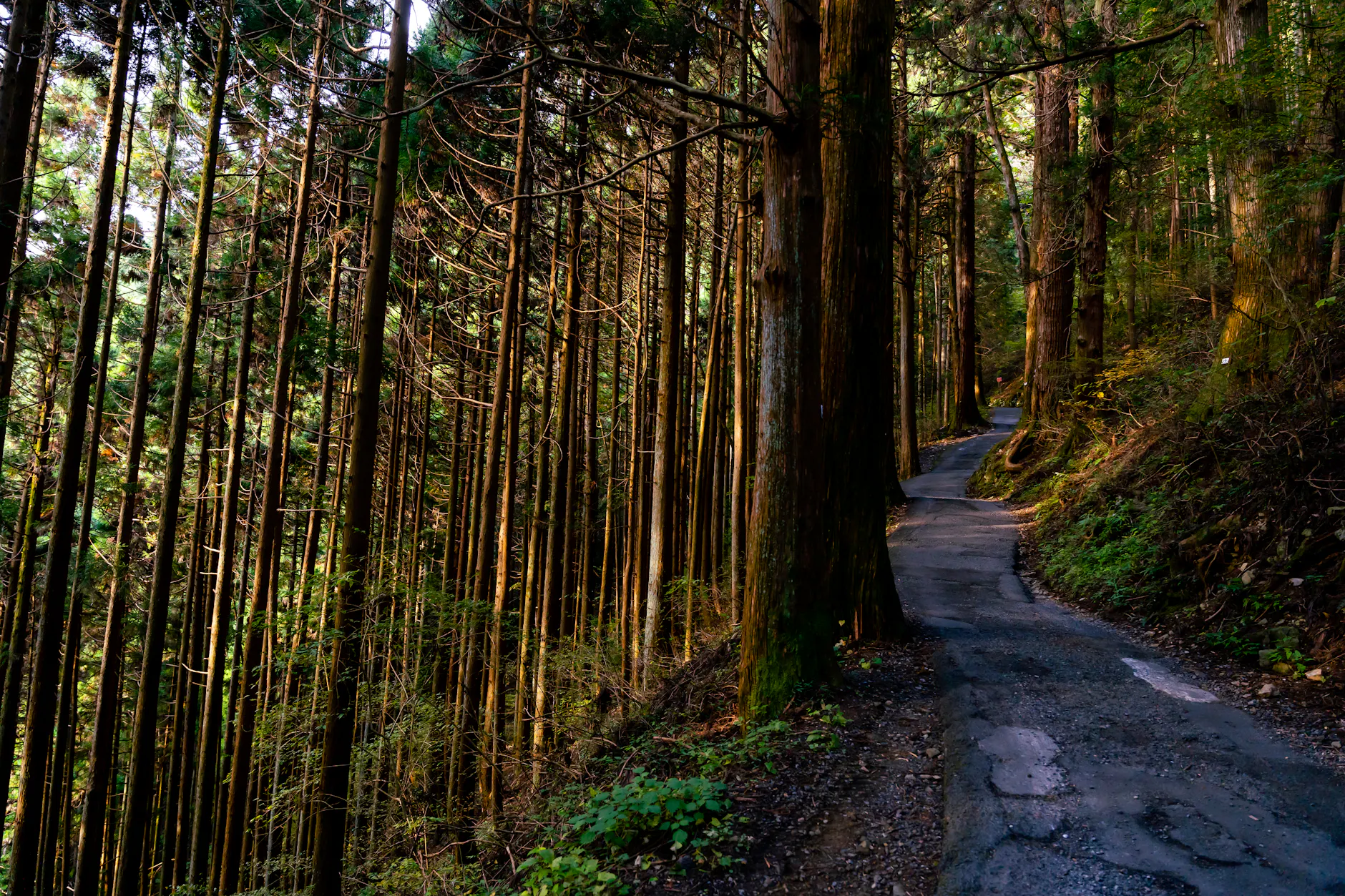
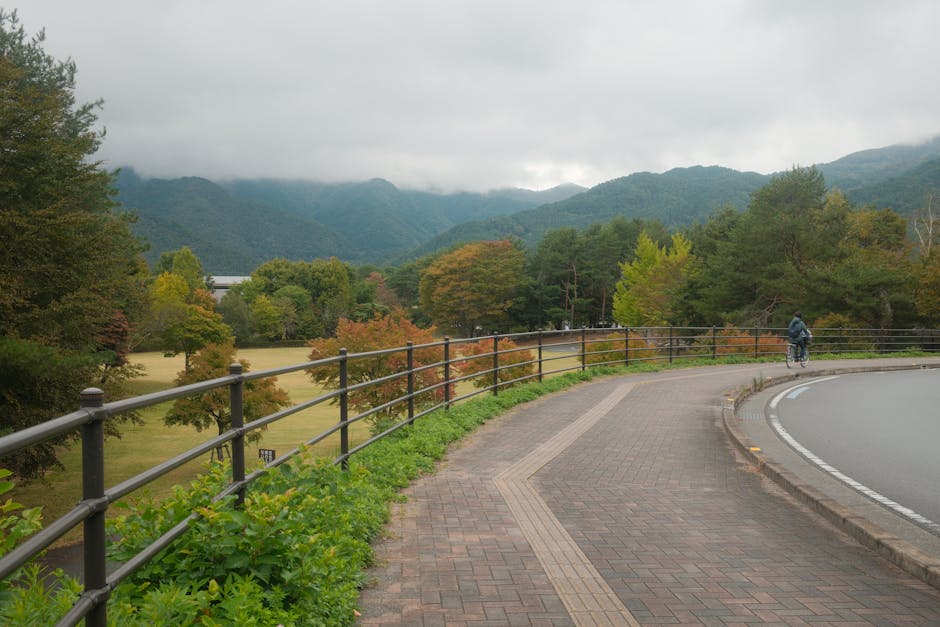
From Hanno, take Route 299 westbound — this is where the driving gets seriously good. Route 299 is the backbone of this entire route and one of the most enjoyable mountain roads in the greater Tokyo area. The road winds steadily upward through thick cedar and cypress forests, with occasional viewpoints where you can pull over and take in the valley below. Traffic is typically light on weekdays and manageable on weekends. The road is well-maintained and paved throughout, but sections do narrow to near-single-lane in places, so keep your speed sensible and watch for oncoming timber trucks on early mornings. To reach the Mt. Buko trailhead area, turn south off Route 299 onto the roads leading through Yokoze-machi. Your GPS will guide you, but don’t be alarmed when the roads shrink — this is normal and part of the charm.
Parking at Mt. Buko
There is a small free car park at the Ura-Buko trailhead with space for approximately 15–20 vehicles. This fills quickly on weekends. Arrive before 8am on busy days or use the overflow parking area along the approach road. No fee, but limited space.
Stop 3: Nagatoro — River Gorge, Rock Formations, and Natural Drama
What to See and Do
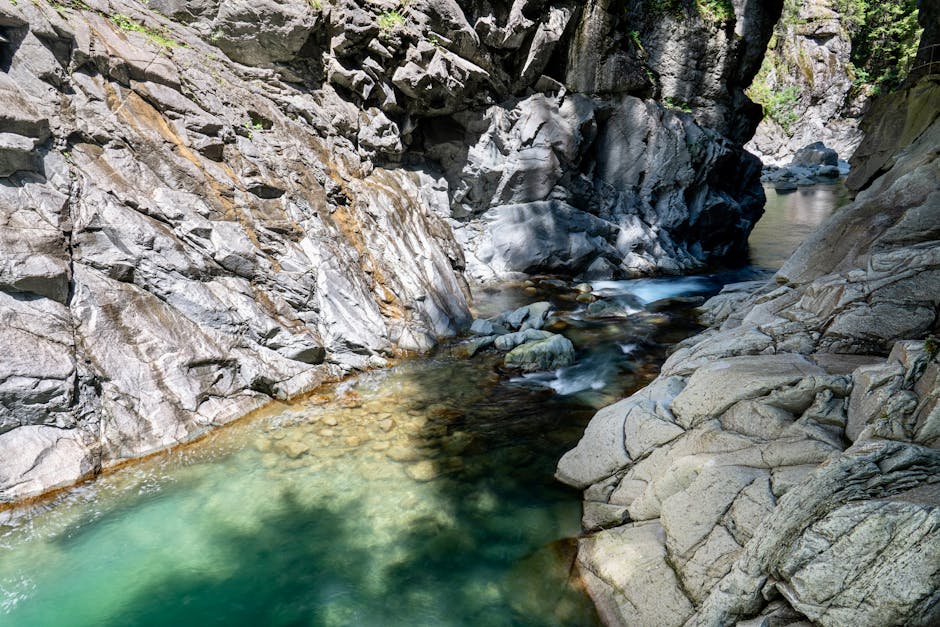
If Mt. Buko gave you the mountain, Nagatoro gives you the water — and what water it is. The Nagatoro River Gorge (長瀞渓谷) is one of the most visually dramatic natural landscapes within day-trip range of Tokyo, and arriving by car means you can explore its full length at your own pace rather than being herded with tour groups. The Arakawa River cuts through ancient crystalline schist rock formations here, creating a series of rapids, smooth rock platforms, and sculpted pools that look almost too beautiful to be real.
The crown jewel of Nagatoro is the Iwadatami (岩畳) — literally “rock tatami” — a vast expanse of naturally flat, layered rock along the riverbank that you can walk across, picnic on, and photograph to your heart’s content. The geological history here is mind-bending: these rocks are approximately 500 million years old and have been designated a National Natural Monument. You can easily spend an hour just wandering the rock platforms and watching the river.
The other unmissable experience is the traditional river boat ride (ライン下り, rain kudari). Flat-bottomed wooden boats piloted by skilled local boatmen navigate the gentle rapids of the upper gorge, giving you a completely different perspective on the rock formations from water level. The rides take approximately 20–30 minutes and cost around ¥1,600–¥2,000 per person. It’s a quintessential Nagatoro experience and absolutely worth doing. For the more adventurous, rafting tours on the more turbulent sections of the Arakawa are available from several operators along the riverbank.
The Hodo-san Rope Way (宝登山ロープウェイ) near central Nagatoro whisks you up to Hodo-san (497m) for views over the gorge and Chichibu basin — a great option if you want elevated views without serious hiking. At the summit, the Hodo-san Shrine is a beautiful structure set among ancient cedar trees.
How Long to Spend
Minimum 1.5 hours; ideally 2.5–3 hours to include the rock walk, boat ride, and a stroll through the small town’s craft shops and food stalls.
Driving Tips: Mt. Buko to Nagatoro
Head back to Route 299 and continue east, then pick up Route 140 (Chichibu-Tama-Kai National Highway) northward along the Arakawa River valley. This is gorgeous driving — the road follows the river closely for much of the journey, and you’ll catch glimpses of the gorge through the treeline. The 30-minute drive from the Mt. Buko area to Nagatoro is genuinely scenic. Watch your speed through the small riverside settlements — speed limits drop to 40km/h and local traffic can be unpredictable.
Parking at Nagatoro
Multiple paid car parks line the main Nagatoro sightseeing area. Most charge ¥500–¥700 for the day. The car park nearest the Iwadatami rock platforms tends to fill quickly on spring and autumn weekends — arrive before 10am or use one of the secondary car parks a 5-minute walk away. Parking attendants actively direct traffic on busy days, so follow their guidance.
Stop 4: Chichibu — Ancient Shrine, Anime Pilgrimage, and Fields of Pink
What to See and Do
Chichibu is the destination this entire route has been building toward, and it delivers on every level. Nestled in a basin ringed by mountains, this compact city carries millennia of history, genuine spiritual significance, and — for international anime fans — a very specific emotional weight as the setting for one of the most beloved anime series of the 2010s.
Chichibu Shrine
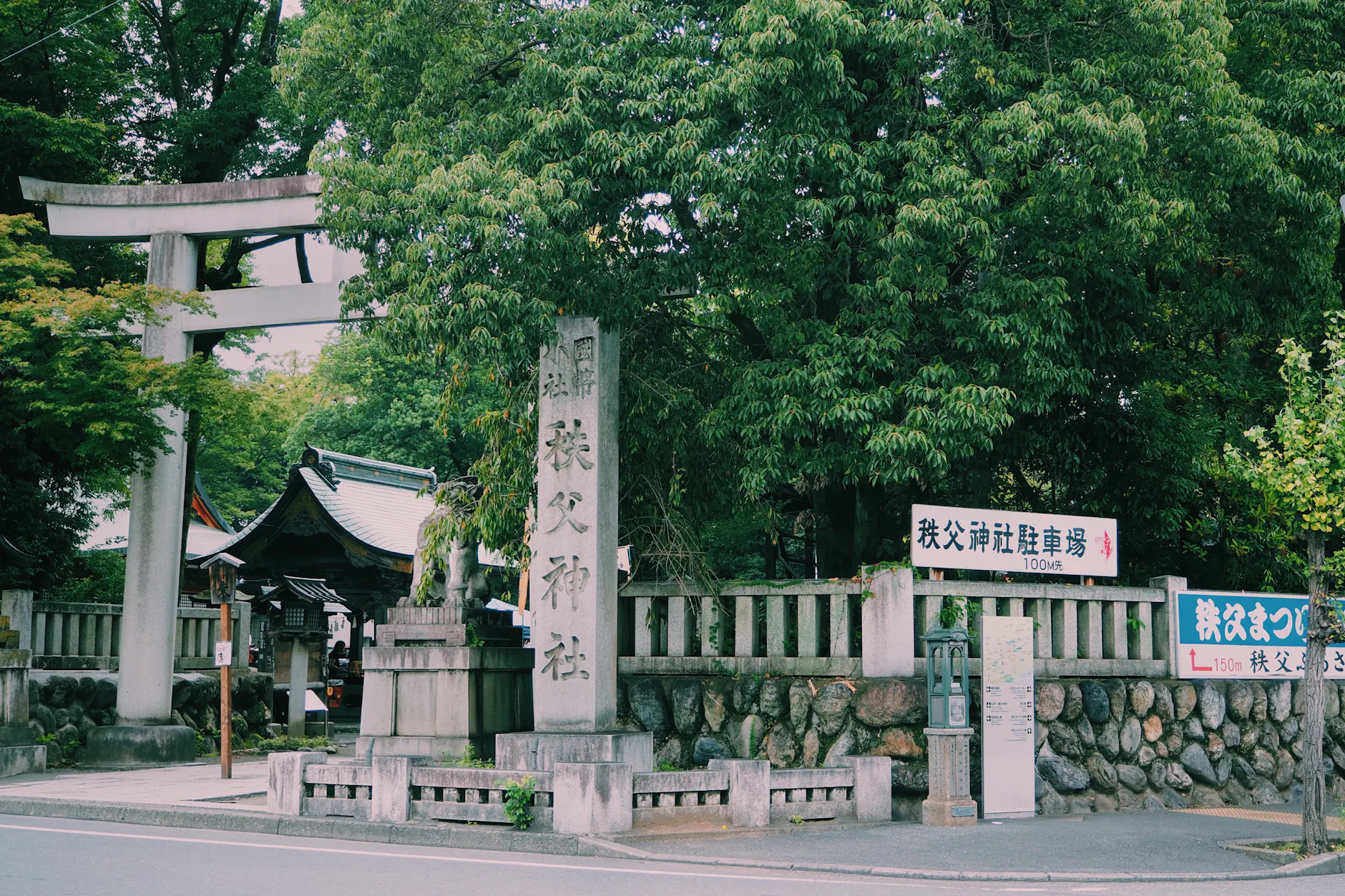
Chichibu Shrine (秩父神社) is the spiritual centrepiece of this journey. Dating back over 2,000 years, it is one of the most important shrines in the Kanto region and forms the focal point of the famous Chichibu Night Festival held every December — a UNESCO Intangible Cultural Heritage event and one of Japan’s three great float festivals. The shrine’s current buildings date from the Edo period and feature intricate wood carvings commissioned by Tokugawa Ieyasu’s grandson, including the remarkable “Do Not See, Do Not Hear, Do Not Speak” trio of wise monkeys that appear on the main hall.
For anime fans, Chichibu Shrine is deeply significant as one of the primary settings for Anohana: The Flower We Saw That Day (あの日見た花の名前を僕達はまだ知らない), the achingly emotional 2011 anime series set entirely in the Chichibu region. The shrine’s stone torii gate, the forested approach path, and the surrounding streets are all recognisable from the series. A dedicated Anohana pilgrimage map is available at the Chichibu tourism office near the station, directing fans to specific filming locations throughout the city. It’s a genuinely moving experience to walk these streets knowing the story that was told here.
Hitsujiyama Park
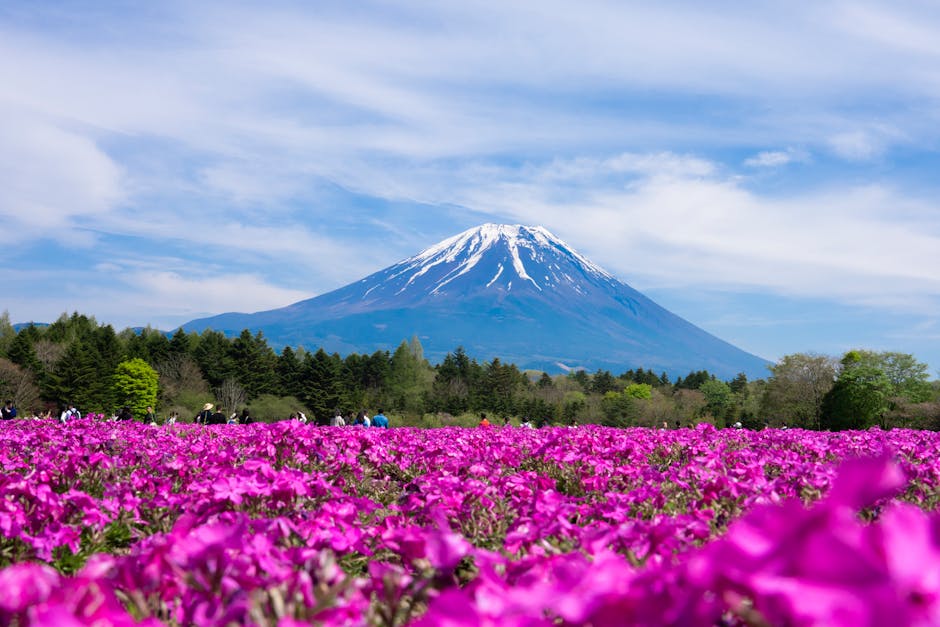
Hitsujiyama Park (羊山公園) is one of the most spectacular seasonal sights in all of Saitama Prefecture, and possibly one of the most photogenic landscapes in greater Tokyo. The park’s famous Shibazakura field (芝桜の丘) is a hillside blanketed in thousands of moss phlox plants that bloom every spring — typically from mid-April to early May — creating an undulating carpet of pink, white, and purple that is almost surreally beautiful. The view from the upper observation point with Mt. Buko looming in the background and the riot of colour in the foreground is genuinely one of Japan’s great spring spectacles.
Outside of shibazakura season, Hitsujiyama Park is a pleasant green space with views over the Chichibu basin, cherry blossoms in early April, and a small zoo area. It’s always worth a visit, but the spring shibazakura window is the one to plan around if at all possible.
How Long to Spend
Allow 2–3 hours in Chichibu comfortably — one hour at the shrine and surrounding streets, and 45–60 minutes at Hitsujiyama Park. Add extra time for the Anohana pilgrimage walk if that’s a priority for you.
Driving Tips: Nagatoro to Chichibu
The final leg from Nagatoro into central Chichibu is an easy 15–20 minute drive along Route 140 and local city roads. The road is flat, well-signposted, and traffic is light. Hitsujiyama Park sits slightly south of central Chichibu city — follow the signs from the main intersection near Seibu Chichibu Station. This is a straightforward drive with no challenging road sections.
Parking at Chichibu
Chichibu Shrine has limited roadside parking nearby — use the municipal car parks on Chichibu-dori central street, which charge approximately ¥200–¥300 per hour. For Hitsujiyama Park, the main park car park charges ¥500 per visit. During the shibazakura festival period, a temporary traffic management system operates and additional shuttle bus services run from the station — follow the traffic marshals’ directions and consider parking at Seibu Chichibu Station’s paid lot (approximately ¥700 per day) and walking or taking the shuttle.
Driving Tips for This Route
Road Conditions
The majority of this route uses well-maintained national and prefectural roads. Route 299 is the most characterful stretch — a proper mountain road with sweeping curves, gradient changes, and narrow sections in places. It is entirely paved and safe, but demands attentive driving rather than motorway autopilot. Road surfaces are excellent by Japanese standards. Winter (December–February) can bring snow to the Route 299 mountain sections — check conditions and carry snow chains if traveling November through March.
Best Time of Day to Drive
Depart Shibuya before 8am to clear the city expressway traffic. The Route 299 mountain section is most pleasant in the morning when light filters through the cedars. Aim to reach Nagatoro by early-to-mid afternoon for the best photography light on the gorge. Return from Chichibu by 6–7pm to avoid peak weekend return traffic on the expressways toward Tokyo.
Fuel Stations
Fuel up in Hanno — there are several ENEOS and Cosmo stations on the main road through town. Options become limited on Route 299 between Hanno and Nagatoro, so don’t start that mountain section with less than half a tank. Chichibu city has multiple fuel stations for your return journey.
Toll Costs
Estimated total tolls for the full route from Shibuya and back: approximately ¥2,500–¥3,500 depending on your return route. The Ken-O Expressway from Shibuya to Hanno IC accounts for the majority. An ETC card is strongly recommended — it saves money through discounts and makes toll plaza navigation far smoother. Most rental cars from Samurai Car Japan can be equipped with ETC — confirm this when booking.
International Driving Permit (IDP)
Foreign nationals driving in Japan must carry a valid International Driving Permit (IDP) alongside their home country licence. Japan accepts IDPs issued under the 1949 Geneva Convention — check that your IDP is the correct type. Drivers from Germany, France, Switzerland, Belgium, Monaco, Taiwan, and Estonia may use their native licence with a certified Japanese translation instead of an IDP — verify current requirements with the Japan Automobile Federation (JAF) before your trip. Drive on the left side of the road in Japan.
Where to Eat Along the Route
In Hanno
Moominvalley Park Restaurant (Snufkin’s Kitchen) — The park’s main dining facility serves Scandinavian-inspired dishes with Moomin-themed presentation. Quirky and fun. Budget around ¥1,500–¥2,500 per person. For something more local, Satoyama Kitchen near Musashi-Hanno Station serves mountain vegetable cuisine using seasonal local produce — excellent mountain soba and tempura sets.
On Route 299 / Near Mt. Buko
Small roadside stalls and rest stops along Route 299 occasionally sell local produce, pickles, and simple grilled items. Don’t count on finding a sit-down restaurant on this section — eat in Hanno or wait until Nagatoro.
In Nagatoro
The sightseeing street along the riverfront has numerous food stalls and small restaurants. Ayu (sweetfish) cuisine is the regional speciality — try salt-grilled ayu on a skewer from any of the riverside stalls for around ¥500–¥800. Nagatoroya restaurant serves excellent river fish teishoku sets in a traditional riverside building. Also look out for ichigo daifuku (strawberry mochi) from the local confectionery shops.
In Chichibu
Waraji Katsu (わらじカツ) — Chichibu’s beloved local dish — is a massive breaded pork cutlet served over rice, originally created so that working men could eat one-handed. Yasuragi and Shokudo Ando near the station are both well-regarded for this dish. Budget ¥1,000–¥1,500. Chichibu is also famous for miso pork belly (味噌豚) and locally brewed sake from the Bukou Shuzo and Kubota Shuzo breweries — the perfect souvenir for the drive home (passenger only, obviously).
Best Season for This Drive
Spring (Late March – Early May) ⭐ Highly Recommended
Arguably the best time for this entire route. Cherry blossoms line the Route 299 approach in late March and early April. The Chichibu Shibazakura Festival at Hitsujiyama Park (mid-April to early May) is one of Japan’s great seasonal spectacles. Nagatoro’s gorge is at peak beauty with fresh green foliage. Temperatures are ideal for mountain driving (10–18°C). Expect crowds on weekends during peak cherry blossom and shibazakura periods.
Summer (June – August)
The cedar forests on Route 299 provide a cool, dark tunnel effect that is genuinely special in summer heat. Nagatoro rafting is at its most popular. Fireflies appear in the Hanno area in June. August can be hot and humid — pack water and plan mountain activities for early morning. Occasional typhoons may affect conditions.
Autumn (October – November) ⭐ Highly Recommended
The second peak season for this drive. Autumn foliage on Route 299 and throughout the Chichibu basin is extraordinary — deep reds and golds against limestone mountain faces. Nagatoro Gorge in autumn colours is stunning. The famous Chichibu Night Festival takes place on December 2nd and 3rd — if you can time a visit for this, extend your stay and experience one of Japan’s most spectacular traditional festivals.
Winter (December – February)
Quieter and more contemplative. Snow on the mountain sections adds drama and beauty. Route 299 can become impassable in heavy snow — check road closure information (通行止め) before departing. Chichibu Shrine is atmospheric and uncrowded in winter mornings. The Chichibu Night Festival (early December) brings brief but intense crowds.
Frequently Asked Questions
Where can I rent a car for this route?
The ideal starting point is Samurai Car Japan in Shibuya, Tokyo. They specialise in self-drive rentals and JDM tours, and their Shibuya location puts you perfectly positioned to jump straight onto the expressway heading northwest toward Hanno without fighting through unnecessary city roads. They can also advise on ETC card setup and route-specific tips before you head out.
Is this route suitable for beginner drivers in Japan?
Yes, with some caveats. The expressway sections and Route 140 are straightforward and well-signed. Route 299 through the mountains requires more attentive driving — narrow sections, gradients, and curves demand respect. If you have some experience driving on winding rural roads (even in your home country), you’ll manage comfortably. Complete beginners should drive more slowly than feels natural and use pullouts to let faster local traffic pass. Driving on the left becomes intuitive quickly for most visitors.
Can I do this route as a day trip from Tokyo?
Absolutely — this is designed as a full day trip. Depart Shibuya by 7:30–8:00am, keep your stops focused, and you’ll be back in Tokyo by 8–9pm comfortably. If you want a more relaxed pace or wish to include the full Mt. Buko summit hike, consider booking accommodation in Chichibu or Nagatoro for one night and returning the following morning.
Do I need to book Moominvalley Park in advance?
It’s strongly recommended on weekends and during Japanese public holiday periods. Moominvalley Park operates an online advance ticket system and can reach capacity on busy days. Weekday visits rarely require advance booking. Check the official Metsa Village website for current ticketing information before your trip.
When is the Chichibu Shibazakura Festival?
The Chichibu Shibazakura Festival at Hitsujiyama Park typically runs from mid-April through early May, though exact dates vary year by year depending on the bloom timing. Peak bloom is usually in the final week of April. Check the official Chichibu tourism website for current year dates. During the festival, a ¥500 admission fee is charged to enter the shibazakura garden area.
Ready to Drive? Start Your Journey in Shibuya
This route from Shibuya through Hanno, Mt. Buko, Nagatoro, and Chichibu is the kind of drive that reminds you why exploring Japan by car is so special. You get the freedom to linger where the light is perfect, the flexibility to take the road less travelled, and the pure joy of navigating Japan’s mountain roads under your own steam. Whether you’re here for the Anohana pilgrimage, the shibazakura fields, the ancient shrine, or just the drive itself — this route delivers something unforgettable.
Why not elevate your journey with a legendary JDM experience?

Our Services:
- Self-Drive Rentals
- Guided Tours
- Drift Experiences
Please visit the dedicated page for more details.
Book a Kyoto Experience
Explore Kyoto's most stunning temples, geisha districts, and hidden gems with a local guide. Small group, big experience. Free cancellation.
fuji tour
The Ultimate JDM Road Trip: 1-Day Mt. Fuji & Fuji Speedway Itinerary
Are you ready to experience Japan's most iconic landscapes from the driver's seat of a legendary sports car like the Nissan Skyline?
This one-day self-drive itinerary offers the perfect blend of traditional Japanese beauty and pure motorsport adrenaline. Starting with the world-famous views around the Fuji Five Lakes and culminating at the holy grail of Japanese motorsports—Fuji Speedway—this route is tailor-made for car enthusiasts.
📍 Tour Overview
- Total Duration: Approx. 8-9 hours
- Starting Point: Tokyo or Gotemba area (heading towards Yamanashi)
- Vehicle of Choice: Nissan Skyline (or your favorite JDM sports car!)
🕒 Recommended Itinerary
08:30 | Arakurayama Sengen Park (1 Hour)
Kick off the day with a postcard-perfect view. Beat the crowds by arriving early. After climbing the 398 steps to the observation deck, you will be rewarded with the world-famous view of the five-story Chureito Pagoda framing Mt. Fuji. The crisp morning air and the soft morning light make this the absolute best time for photography.
- Pro-tip: Wear comfortable walking shoes for the stairs!
09:45 | Lawson Kawaguchiko Station (15 Mins)
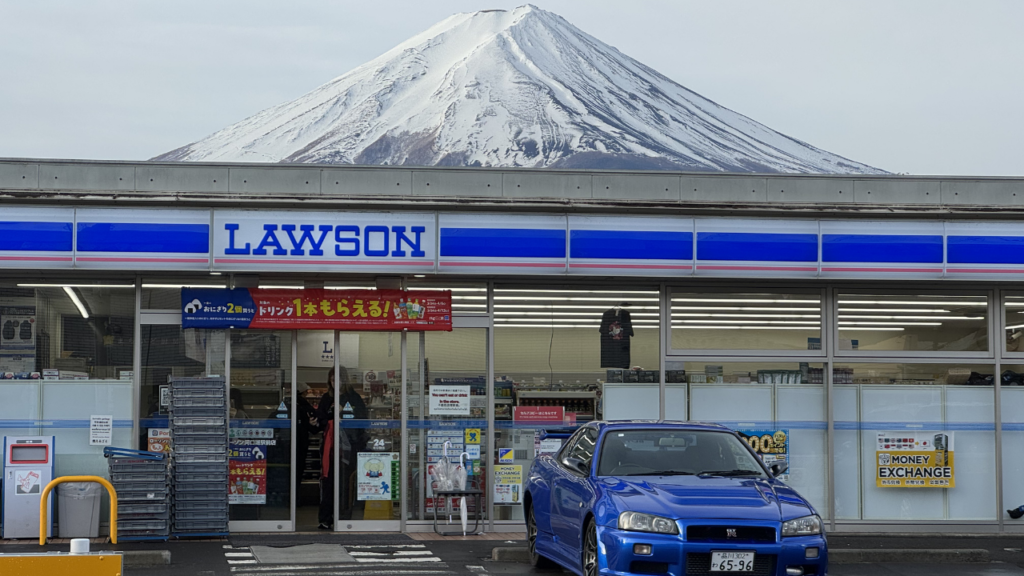
The viral photo spot. Just a short drive away is the famous "Mt. Fuji Lawson." It’s an incredibly popular spot on social media where the massive mountain looms directly over the convenience store roof. Park your Skyline safely in the designated area, grab a canned coffee, and snap a quick photo.
- Driver's Etiquette: This area gets extremely busy. Please respect local traffic rules, avoid parking on the street, and watch out for pedestrians.
10:15 | Lake Kawaguchi & Oishi Park (1 Hour)
Scenic cruising and lakeside photos. Cruise along the northern coast of Lake Kawaguchi. The winding lakeside roads are a joy to drive in a sports car. Stop by Oishi Park, where you can capture stunning photos of your car with the lake and Mt. Fuji in the background, surrounded by seasonal flowers.
11:45 | Oshino Hakkai (1.5 Hours)
Crystal clear springs and local street food. About a 30-minute drive from the lake brings you to Oshino Hakkai, a traditional village famous for its eight sacred ponds fed by Mt. Fuji's melting snow. The water is so clear you can see straight to the bottom. This is the perfect pit stop for lunch. Enjoy freshly made Soba noodles, grilled river fish, or toasted Kusamochi (sweet mugwort rice cakes) from the local vendors.
14:00 | Fuji Speedway / FSW (2 Hours)
The climax for motorsport fans. After a thrilling drive through the scenic mountain passes of Route 138, you will arrive at Fuji Speedway in Shizuoka. Depending on the day’s schedule, there are two epic ways to enjoy this holy ground:
- Experience Run (Drive the track!): On select days, you can actually drive your own Skyline on the international racing circuit behind a pace car (no helmet required!). It's an unforgettable experience to feel the same tarmac as racing legends.
- Fuji Motorsports Museum: Located at the adjacent hotel, this museum showcases about 40 historic racing cars from various global manufacturers. It’s a deep dive into the history of speed.
🇯🇵 Plan Your Japan Experience
JDM Car Rental
Drive a GT-R, Supra, RX-7, or Silvia on the roads they were built for. Hakone passes, Wangan highway, mountain touge — your dream JDM experience.
Daikoku PA Tour
Visit Japan's most legendary car meet. Hundreds of modified cars, passionate owners, and the heartbeat of JDM culture. Guided weekend night tours available.
Photo Guide Tour
Capture stunning photos at locations only locals know. Hidden shrines, backstreet alleys, rooftop views, and golden hour spots for unforgettable shots.