Tokyo to Aso Caldera by Car: The Ultimate Kyushu Volcano Drive
There are road trips, and then there are road trips that make you feel like you’re driving across the surface of another planet. The run from Tokyo down to Kyushu’s Mount Aso region is firmly in the second category. You’ll sweep past one of Japan’s most iconic feudal castles, climb into the rim of the world’s largest volcanic caldera, and find yourself staring into an active, steaming crater lake that seems utterly impossible — all from behind the wheel of your own car. This is Kyushu at its most dramatic, and the only way to do it justice is on four wheels.
What makes this route so special is the sheer contrast packed into every kilometre. You start in the electric buzz of Shibuya, Tokyo — urban Japan at full intensity — and within hours you’re threading through mountain switchbacks with volcanic peaks rising above you and wild horses grazing in highland meadows below. The Aso Panorama Line is one of the great driving roads of Asia, and it leads you right into the caldera itself, where you can peer into a turquoise crater lake still hissing with volcanic gas. No train, no tour bus gets you this close to raw Japan.
The best part? You can kick the whole adventure off without any hassle. Grab your rental car in Shibuya — right in the heart of Tokyo — and hit the expressway south. The route is well-signed, the toll roads are smooth, and with an ETC card loaded up, you can focus entirely on the scenery instead of fumbling with cash at toll booths. Here’s everything you need to know to drive this incredible route from start to volcanic finish.
Route Overview
This is a multi-day driving route that covers roughly 1,400 kilometres from central Tokyo down to the heart of Kyushu. The backbone of the drive is the expressway network — primarily the Tomei Expressway and Kyushu Expressway — but the real magic happens on the smaller mountain roads once you arrive in the Aso region. Here’s the full sequence:
- Pick up your rental car at Samurai Car Japan in Shibuya, Tokyo — your journey begins here
- Shibuya, Tokyo → Kumamoto City — approximately 10–11 hours via Tomei and Kyushu Expressways (best split over 2 days with an overnight stop in Osaka or Hiroshima)
- Kumamoto City → Kumamoto Castle — 10 minutes from central Kumamoto, 2–3 hours sightseeing
- Kumamoto Castle → Daikanbo Viewpoint — approximately 70 km, 1 hour 30 minutes via Route 57 and the Yamanami Highway
- Daikanbo Viewpoint → Kusasenri Grasslands — approximately 20 km, 30–40 minutes along the Aso Panorama Line (Route 111)
- Kusasenri Grasslands → Mt. Aso Crater / Aso Caldera — approximately 5 km, 15 minutes
- Optional side trip: Kurokawa Onsen — approximately 40 km north of Aso, 50 minutes
Total driving distance (Shibuya to Aso Caldera): approx. 1,380–1,420 km
Recommended trip length: 4–5 days
Estimated toll costs (one way, Tokyo to Kumamoto): ¥18,000–¥22,000 with ETC card
🗺️ Open This Route in Google Maps
Opens in Google Maps app on mobile
Stage 1: Shibuya, Tokyo to Kumamoto — The Long Drive South
Let’s be honest: the expressway run from Tokyo to Kumamoto is a long haul. We’re talking roughly 1,050 kilometres on the Tomei Expressway (E1) heading west out of Tokyo, then picking up the Meishin (E1) toward Osaka and Kobe, before joining the Chugoku Expressway (E2) across to Shimonoseki and finally crossing onto Kyushu via the Kanmon Straits tunnel on the Kyushu Expressway (E3). It’s a drive that most people sensibly break into two days, stopping overnight in Hiroshima or Osaka.
But here’s the thing — even the expressway portion has its moments. The stretch through the Chugoku mountains as you approach Hiroshima is genuinely beautiful, especially in the early morning when mist sits in the valleys below the highway. And crossing from Honshu into Kyushu via the undersea Kanmon Tunnel at Shimonoseki feels like a proper milestone — you’re on the southern island now, and everything changes.
From the Kyushu Expressway, take the Mashiki IC exit and follow Route 28 into Kumamoto City. Total expressway tolls from Tokyo to Kumamoto with an ETC card run approximately ¥18,000–¥20,000 one way. Without ETC, expect to pay around 10–15% more and deal with cash lanes at each booth — a strong argument for making sure your rental includes an ETC card from the start.
Stop 1: Kumamoto Castle — A Giant Rising from the Ashes
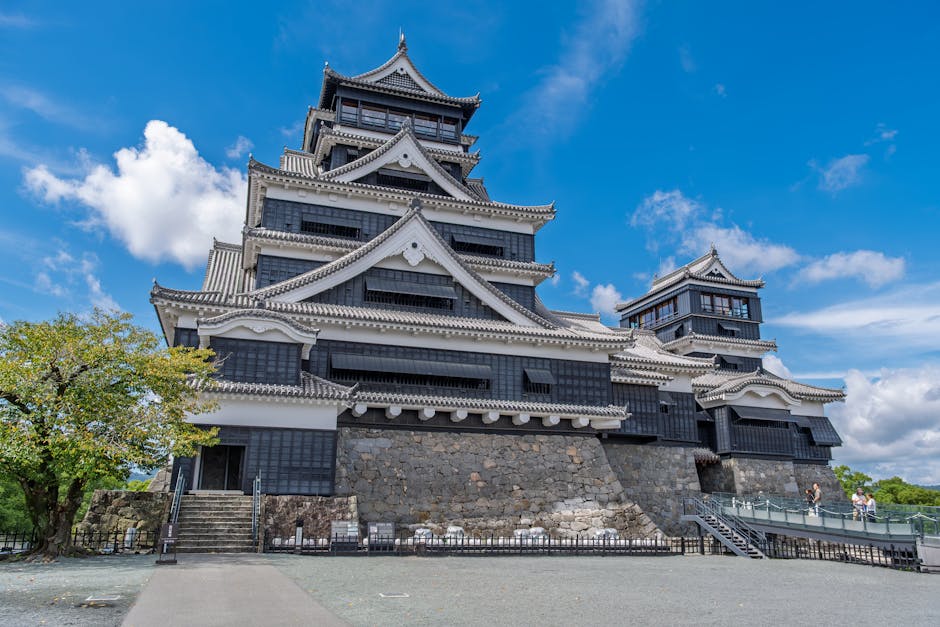
Your first major stop in Kyushu deserves every bit of the anticipation that builds during the long drive south. Kumamoto Castle is one of Japan’s three premier castles alongside Himeji and Matsumoto — a colossal black-walled fortress that has dominated the city skyline for over 400 years. But visiting today carries an extra layer of emotional weight: on April 14–16, 2016, two powerful earthquakes struck Kumamoto, toppling stone walls, collapsing tower roofs, and leaving the castle in dramatic ruin.
What you see now is something remarkable — an active, living restoration. The main keep (Tenshukaku) reopened to visitors in 2021, and seeing it standing tall again against the Kyushu sky genuinely moves you. Scaffolding still laces sections of the outer walls, and the repair crews are visibly at work, which paradoxically makes the visit even more compelling. You’re not just seeing a castle; you’re witnessing Japan’s extraordinary commitment to preserving its heritage.
- What to see: The main keep interior (six floors of samurai history and weapons), the Uto Yagura turret (one of the few structures to survive the earthquake), panoramic city views from the upper floors, and the ongoing stone wall restoration work
- Time needed: 2–3 hours for a thorough visit
- Admission: ¥800 adults, ¥300 children
- Opening hours: 8:30am–5:30pm (last entry 5:00pm); closed December 29–31
Getting there and parking: From the Mashiki IC on the Kyushu Expressway, it’s about 20 minutes by car into central Kumamoto. The castle sits on a hill in the city centre, and parking is available at Ninomaru Parking directly adjacent to the castle grounds (approx. ¥200 per 30 minutes, capacity around 400 spaces). There’s also the Kumamoto Castle Loop Bus parking area nearby. On weekends and public holidays, the area gets busy — aim to arrive before 9:30am to snag a good spot without circling.
Stop 2: The Road to Aso — Route 57 and the Climb Begins
Leaving Kumamoto Castle and heading east on National Route 57 is when this trip shifts gears — literally and figuratively. The flat, urban landscape of Kumamoto City dissolves within about 30 minutes, and you start climbing. The road winds through the towns of Ōzu and Akita, following the Shira River upstream as the valley walls close in around you. The mountains ahead take on a more volcanic character — steeper, more rugged, with exposed rock faces and the occasional plume of steam visible in the distance on clear days.
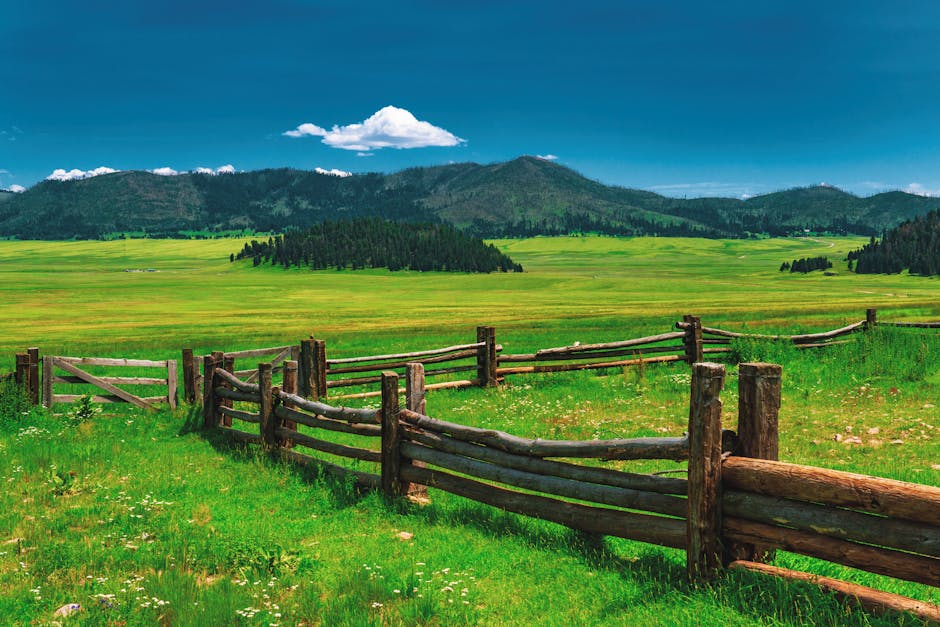
Route 57 is a comfortable two-lane highway through most of this stretch, well-maintained and easy to drive. Traffic can be moderate through the valley towns, but it thins dramatically once you begin the serious climb toward the caldera. Keep an eye out for the point where the road punches through a long tunnel and emerges into a completely different world — you’re suddenly at altitude, and the scale of the Aso Caldera begins to reveal itself.
Driving time from Kumamoto Castle to Daikanbo Viewpoint: approximately 1 hour 20 minutes to 1 hour 40 minutes (70 km)
Stop 3: Daikanbo Viewpoint — The Caldera Reveals Itself
Pull into the Daikanbo Viewpoint parking area and step out of the car, and prepare for a genuine gasp moment. This is consistently ranked as the single best panoramic viewpoint over the entire Aso Caldera — and standing here, it’s completely obvious why. You’re looking out over a bowl of volcanic earth that stretches roughly 25 kilometres east to west and 18 kilometres north to south, making it one of the largest calderas on Earth. Towns, rice paddies, rivers and roads sit inside this ancient volcanic depression like toys in a bathtub, ringed by the dramatic outer caldera walls on every side.
The five peaks of Mount Aso — Nakadake, Takadake, Eboshidake, Kishimadake and Nekodake — rise from the caldera floor in the south, with steam visibly rising from Nakadake crater on most days. On a clear morning, with the shadow of the caldera rim stretching across the green floor below, this view is simply unforgettable. Photographers should budget extra time here.
- Best time to visit: Early morning for the clearest air and most dramatic light; cloud inversions in autumn fill the caldera floor with a sea of white mist
- Time needed: 30–60 minutes
- Parking: Free parking area directly at the viewpoint (approx. 30 spaces); a small souvenir shop and restrooms are on site
- Access road: The final approach is a narrow but paved road with tight hairpin bends — perfectly driveable in any standard car, but take your time
Driving this route? We’ve got you covered.

Hundreds of international visitors have driven this route with a car from Samurai Car Japan. Our team will brief you on road conditions, tolls, and the best stops before you set off.
Stop 4: Kusasenri Grasslands — Horses, Meadows and Volcanic Drama
From Daikanbo, drop back down onto the Aso Panorama Line (Prefectural Route 111) and begin one of the finest short drives in all of Japan. This road cuts south across the caldera’s inner landscape, winding through open highland terrain with the volcanic peaks growing larger ahead of you. The grass on either side shifts from scrubby highland brush to the smooth, almost manicured green of managed meadows — because this whole landscape is maintained partly by controlled burns each spring that give Aso its legendary emerald colour.
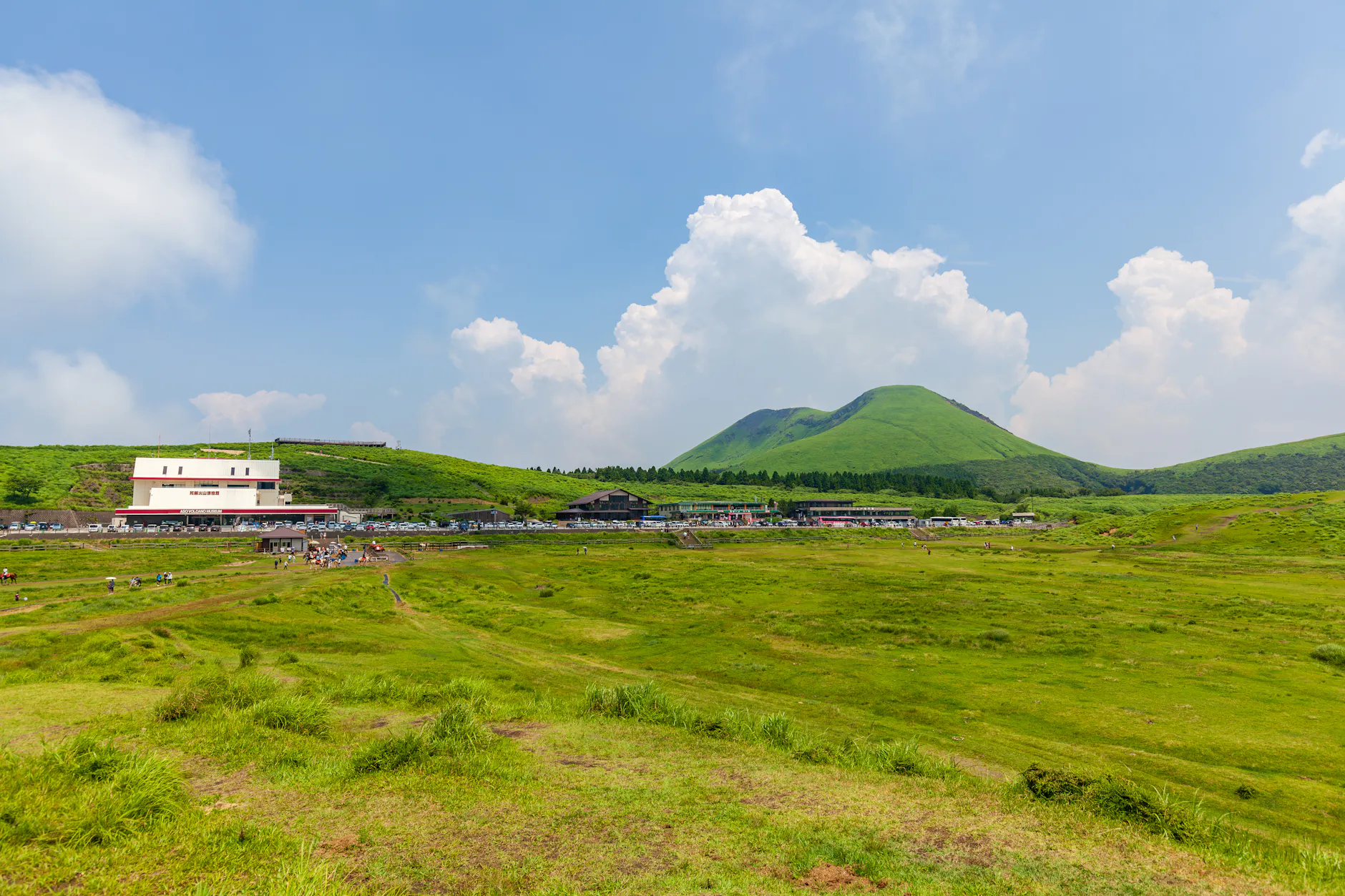
After about 20–25 minutes of sublime driving, you’ll arrive at Kusasenri — a vast, circular grassland meadow sitting inside one of Aso’s ancient subsidiary craters. The meadow is about 1 kilometre in diameter, studded with two small ponds that reflect the sky and the volcanic peaks, and populated by free-roaming horses and cattle that graze here year-round. It’s one of those scenes that feels almost too perfectly composed to be real.
- What to do: Walk the perimeter path around the ponds (about 30–40 minutes), take photos with the horses (they’re docile but don’t feed them), visit the small Aso Volcano Museum at the edge of the meadow, and simply soak in the extraordinary highland atmosphere
- Time needed: 1–1.5 hours
- Parking: Large public parking area adjacent to the meadow, ¥500 per vehicle (paid at the entrance barrier)
- Aso Volcano Museum: ¥840 adults; excellent live camera feeds of the Nakadake crater are shown inside — well worth a quick visit to understand what you’re about to see
The driving on the Panorama Line between Daikanbo and Kusasenri is genuinely special — smooth, wide enough for comfortable two-way traffic, with sweeping curves and open sight lines that let you appreciate the landscape rather than white-knuckling the bends. If you’re in a GT-R or a spirited rental, this is a road that rewards you. Keep your speed sensible though — there are cyclists and pedestrians in places, and the views are too good to rush past.
Stop 5: Mt. Aso Crater and the Aso Caldera — Into the Volcano
From Kusasenri, it’s just a few minutes’ drive along Route 111 to the Aso Nishiguchi (West Entrance) Toll Road that climbs to the Nakadake crater area. This is the active heart of the whole journey — a working volcano that you can drive to within walking distance of, which still feels like an extraordinary privilege every single time.
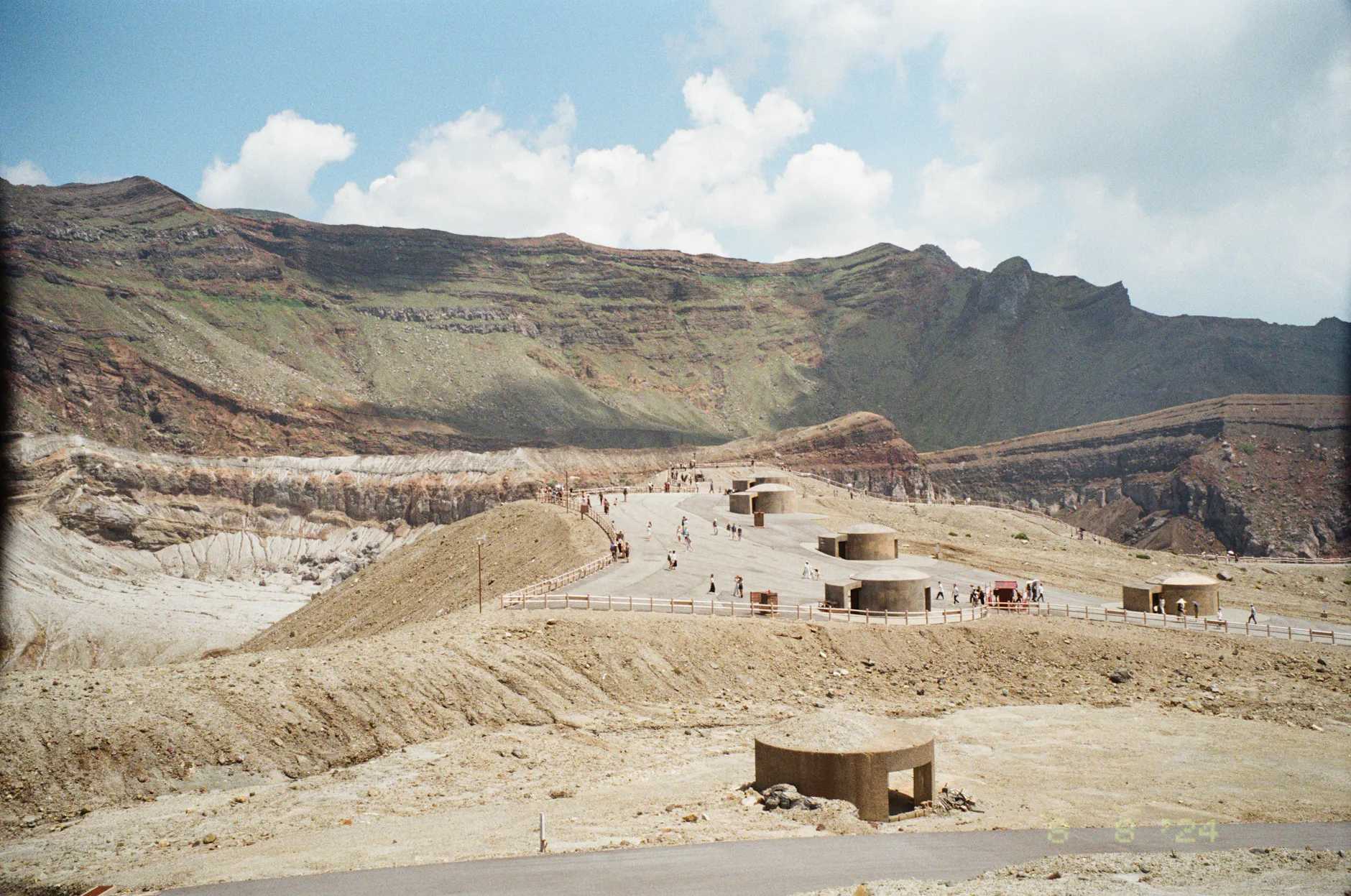
The crater road itself is spectacular. The vegetation thins and then vanishes entirely as you climb, replaced by raw volcanic rock in shades of rust, grey and black. The air takes on a faintly sulphurous edge. And then you park and walk to the crater rim, and there it is: a roughly 600-metre-wide, 130-metre-deep volcanic crater with walls of layered volcanic rock and, at the bottom, a lake of impossible turquoise green water — Yudamari Pond — hissing and steaming with volcanic gases. On active days, the lake shifts colour, swirls and occasionally surges. On really active days, access to the crater rim is restricted entirely.
- Access road: Aso Nishiguchi Toll Road — toll is ¥200 per vehicle (very reasonable for the access it provides)
- Parking: Large paid parking area at the crater trailhead, ¥500 per car; shuttles available if you prefer not to walk the final 500 metres
- Access restrictions: Crater access is managed in real time based on volcanic activity levels (Levels 1–5). At Level 2 or above, the crater rim is closed. Always check the Japan Meteorological Agency (JMA) volcanic activity alert before visiting: jma.go.jp/en/
- Time needed: 1–2 hours including the walk to the crater rim
Bonus Stop: Kurokawa Onsen — Soak in a Volcanic Village
About 40 kilometres north of the Aso crater area, tucked into a steep forested river valley, is Kurokawa Onsen — one of Japan’s most atmospheric hot spring villages and the perfect place to end a day of volcanic sightseeing. The village consists of around 30 traditional ryokan inns clustered along a small river gorge, most of them operating open-air rotenburo baths fed directly by geothermally heated water. The whole place feels like a step back in time: stone-paved lanes, lanterns reflecting in the stream, the smell of sulphur mixing with cedar wood smoke.
The famous Nyuto Tegata bath-hopping pass (¥1,500) lets you access three different rotenburo baths across the village — a brilliant way to explore. Each inn has its own character and water chemistry, ranging from milky white and silky to clear and slightly acidic. Some of the best include Yamabiko Ryokan (dramatic riverside outdoor bath carved from rock), Ikoi Ryokan (classic thatched-roof setting), and Oku no Yu (forest-edge outdoor baths with deep seclusion).
- Driving from Aso crater: Approximately 50 minutes via Route 11 north (Yamanami Highway direction)
- Day-tripper parking: Public car park at the village entrance, ¥200 for 1 hour; additional ryokan-specific lots available for guests
- Best for overnight: Booking a room at one of the mid-range ryokan gives you unlimited bath access and sets you up beautifully for the next day’s drive
Practical Driving Tips for This Route
Road Conditions
The expressway sections from Tokyo to Kumamoto are in excellent condition — well-lit, clearly signed in English and Japanese, with regular rest areas (SA/PA) every 50–80 km offering fuel, food, toilets and convenience stores. The mountain roads around Aso are paved but narrow in places, particularly on the approach roads to Daikanbo. Drive at a relaxed pace and don’t be surprised if you encounter slow-moving camper vans or cyclists on the Panorama Line — the passing areas are well-placed but you’ll need patience.
Toll Roads and ETC
This route is heavily toll-dependent. The expressway run from Tokyo to Kumamoto alone will cost approximately ¥18,000–¥22,000 one way depending on your exact route and whether you’re travelling at night (10pm–6am discounts apply with ETC). Having an ETC card in your rental car is not optional on this route — it’s essential. Without one, you’re paying higher rates and dealing with cash lanes, which add time and hassle. If your rental doesn’t include one, ask specifically when booking.
Fuel
Fill up in Kumamoto City before heading into the Aso area. There are petrol stations in Aso City and Minamioguni, but selection thins dramatically once you’re on the mountain roads. Budget around ¥175–¥195 per litre for regular petrol at time of writing.
International Driving Permit (IDP)
Foreign visitors driving in Japan must carry a valid International Driving Permit along with their home country licence. Japan recognises IDPs issued under the 1949 Geneva Convention — check that yours is issued under this convention before you travel. Some countries (Switzerland, Germany, France, Belgium, Monaco, Taiwan) have bilateral agreements allowing use of their national licence with a certified Japanese translation instead. Your rental company will clarify this at pickup.
GPS and Navigation
Japanese in-car GPS systems work brilliantly but are sometimes only in Japanese. If your rental includes an English-language GPS or you’ve set up Google Maps offline on your phone, you’re well covered. Use the mapcode system if you’re using a Japanese GPS — every major attraction in Japan has a mapcode, and it’s the fastest way to enter a destination without wrestling with Japanese character input.
Where to Eat Along the Route
In Kumamoto City
Kumamoto is famous for basashi — raw horse meat sashimi — which sounds alarming and tastes surprisingly mild and tender. Try it at Sakura-tei near the castle grounds, which has been serving Kumamoto specialties for decades. For a more accessible lunch, Kumamoto ramen (rich tonkotsu broth with black garlic oil) is excellent at Ajisen Ramen downtown — a regional institution. The castle area also has a cluster of bento and street food stalls that are perfect for a quick lunch before your drive east.
On the Road to Aso
The Roadside Station (Michi-no-Eki) Aso on Route 57 in Aso City is a great lunch stop — they serve Aso’s famous Akaushi beef (a local red-haired cattle breed with superb marbling) in burger and rice bowl formats. The Michi-no-Eki also stocks local daikon pickles, yuzu products and Aso-branded snacks that make excellent car-trip provisions.
At Kusasenri and the Crater Area
There’s a small café and souvenir shop at the Kusasenri parking area serving hot drinks, soft-serve ice cream (try the Aso milk flavour — it’s outstanding) and simple snacks. The Aso Volcano Museum also has a café. Don’t expect restaurant-level dining up here — it’s functional rather than gourmet, but that’s fine when the view is this good.
In Kurokawa Onsen
The village has several small restaurants and cafés along the main lane. Sanzoku Yatai serves excellent mountain-style grilled chicken and wild vegetable dishes. If you’re staying at a ryokan, the kaiseki dinner included in your room rate will likely be the most memorable meal of the whole trip — locally sourced Aso vegetables, Akaushi beef, fresh river fish and multiple seasonal small courses.
Best Season for This Drive
Spring (March–May) — Highly Recommended
The Aso highland burn happens in late February to early March, and by late March the new grass is electric green — the colour that makes Kusasenri look like a fantasy landscape. Cherry blossoms in Kumamoto City (typically late March to early April) mean the castle is framed in pink, which is spectacular. Spring weather is generally stable and clear, making crater access and panoramic views much more reliable.
Summer (June–August) — Good but Humid
The rainy season (tsuyu) in June brings heavy rain and reduced visibility at altitude. July and August are clear and bright but intensely humid at lower elevations — though the highland Aso area is noticeably cooler than the coast. Volcanic activity can occasionally be higher in summer, affecting crater access.
Autumn (September–November) — Peak Season
Autumn in Aso is extraordinary. The susuki silver grass that covers the caldera slopes turns golden from late September, and on still mornings, dense cloud inversions fill the caldera floor while the peaks stand clear above — a scene that photographers travel specifically to capture. The Daikanbo viewpoint in early November with autumn colours and cloud sea is genuinely one of the great natural spectacles in Japan.
Winter (December–February) — Challenging but Magical
Snow falls regularly on the Aso caldera rim in January and February, and some mountain roads may close or require chains. The Panorama Line can be icy and dangerous — check road conditions carefully (Japan Road Traffic Information Center: jartic.or.jp). That said, a snow-dusted Kusasenri with the volcanic peaks behind it is an almost impossibly beautiful image if conditions align.
Frequently Asked Questions
Where can I rent a car for this route?
The most convenient starting point is Samurai Car Japan in Shibuya, Tokyo. They specialise in international visitors and offer a range of vehicles from practical daily drivers to iconic JDM sports cars — including the GT-R, Supra and RX-7 if you want to make the Panorama Line extra special. They include ETC cards, English GPS navigation, and provide IDP guidance, which makes the whole process significantly smoother than a standard rental counter. You pick up the car right in Shibuya and you’re on the expressway within minutes.
Is the Mt. Aso crater always accessible to visitors?
No — and this is the most important practical consideration for planning this trip. Nakadake is an active volcano and access to the crater rim is managed in real time by the Japan Meteorological Agency. At Alert Level 2 or above (which occurs multiple times per year), the crater approach road is closed and you cannot reach the rim. Always check the JMA volcanic alert status at jma.go.jp/en/ before your visit. Even if the crater is closed, the rest of the Aso area — Kusasenri, the Panorama Line, Daikanbo — remains fully accessible and is completely worthwhile on its own.
Do I need an International Driving Permit to drive in Japan?
Yes, in most cases. Visitors from most countries need a valid International Driving Permit (IDP) issued under the 1949 Geneva Convention, along with their original home country driving licence. You need to obtain the IDP in your home country before you travel — you cannot get one in Japan. Visitors from a small number of countries (including Switzerland, France, Germany, Belgium, Monaco and Taiwan) can use a certified Japanese translation of their licence instead. When you pick up your car at Samurai Car Japan, the team will confirm your documentation requirements based on your nationality.
How many days should I plan for this route?
We recommend a minimum of 4 days and ideally 5. Day 1 is the long drive from Tokyo to somewhere around Hiroshima or Osaka. Day 2 continues to Kumamoto. Day 3 is Kumamoto Castle and the drive up to the Aso caldera rim. Day 4 is the crater, Kusasenri and an optional night at Kurokawa Onsen. Day 5 gives you flexibility for a return journey or onward travel through Kyushu. Trying to do this as a there-and-back in 3 days is possible but leaves very little room for the spontaneous stops and slow mornings that make this drive special.
Can I drive a JDM sports car on the expressway and mountain roads?
Absolutely — in fact, the combination of Japan’s expressway network and the Aso mountain roads is a dream scenario for a JDM sports car. Japan’s expressways have a legal speed limit of 100–120 km/h (with some sections at 110 km/h), and the road surface quality is generally excellent. The Aso Panorama Line’s sweeping curves and dramatic scenery were practically made for a GT-R or Supra. Just keep in mind that mountain roads require a measured approach — enjoy the handling, but respect the speed limits and the occasional oncoming vehicle on narrow sections.
Ready to Drive? Let’s Make It Happen
The Tokyo-to-Aso-Caldera drive is one of those trips that stays with you long after you’re home. The moment you stand on the rim of Daikanbo and see the full scale of the caldera laid out below you, or peer into the turquoise smoking depths of Nakadake crater, you understand why Kyushu’s volcanic landscape is unlike anywhere else on Earth. And doing it on your own schedule, in your own car, stopping when you want and taking the slow roads when the mood strikes — that’s the only way to experience it properly.
Start your engines in Shibuya, point them south, and go find a volcano.
Why not elevate your journey with a legendary JDM experience?
Our Services:
- Self-Drive Rentals
- Guided Tours
- Drift Experiences
Please visit the dedicated page for more details.
[st_af id=”862″]
🇯🇵 Plan Your Japan Experience
JDM Car Rental
Drive a GT-R, Supra, RX-7, or Silvia on the roads they were built for. Hakone passes, Wangan highway, mountain touge — your dream JDM experience.
Daikoku PA Tour
Visit Japan’s most legendary car meet. Hundreds of modified cars, passionate owners, and the heartbeat of JDM culture. Guided weekend night tours available.
Photo Guide Tour
Capture stunning photos at locations only locals know. Hidden shrines, backstreet alleys, rooftop views, and golden hour spots for unforgettable shots.
Leave a Reply