Shibuya to Nikko & Irohazaka: The Ultimate Initial D Touge Road Trip by Car
There are road trips, and then there are road trips that make you feel like you’ve stepped directly into an anime. The drive from Tokyo to Nikko — winding up through cedar-lined mountain roads, past UNESCO-listed shrines, and culminating in one of Japan’s most legendary touge courses — falls firmly into the second category. If you’ve ever watched Initial D and dreamed of piloting a car up those impossibly tight hairpin bends while eurobeat plays in your head, this is the route for you. And even if you’ve never heard of Initial D, the sheer drama of this landscape — ancient shrines, thundering waterfalls, a mirror-calm mountain lake — will have you pulling over every few kilometres just to take it all in.
This route begins right in the heart of Shibuya, Tokyo, where you can pick up a rental car and hit the expressway before the city fully wakes up. Starting from Shibuya puts you in an excellent position to slip onto the Tohoku Expressway heading north, trading the neon-lit canyons of central Tokyo for increasingly wild mountain scenery as you close in on Tochigi Prefecture. The total driving distance is roughly 150 kilometres one way, but don’t let that fool you — between the shrine exploration, the waterfall detours, and the sheer addictive nature of Irohazaka’s 48 hairpin curves, you’ll want to give this a full day, or ideally an overnight trip so you can savour every metre of road.
What makes this particular route so special is the layering of experiences. You’re not just driving — you’re piloting through history (the Tokugawa shogunate’s most extravagant monument), through natural spectacle (a 97-metre waterfall and a high-altitude lake), and through genuine automotive legend (a mountain pass so famous it got its own arc in one of Japan’s most beloved racing manga). Lace up your driving shoes, charge your camera, and let’s break down exactly how to make the most of every kilometre.
Route Overview
Here’s your game plan for the day. The route flows logically from south to north and then upward in altitude, meaning you tackle the famous winding sections after the shrine visit — exactly when your driving confidence will be at its peak.
- Pick up your rental car at Samurai Car Japan in Shibuya, Tokyo — the logical starting point for any JDM road trip out of the capital.
- Shibuya → Nikko Toshogu Shrine — approximately 140 km, roughly 2 hours on the expressway (longer with traffic).
- Nikko Toshogu Shrine — allow 2–3 hours to explore the shrine complex properly.
- Toshogu → Irohazaka Winding Road (bottom of Route 120) — approximately 4 km, 10 minutes.
- Irohazaka Winding Road — the climb takes 20–30 minutes depending on traffic; savour every second.
- Kegon Falls — just 3 km from the top of Irohazaka; allow 45–60 minutes here.
- Lake Chuzenji — a short 1 km from Kegon Falls; allow 1–2 hours for lakeside exploration.
🗺️ Open This Route in Google Maps
Opens in Google Maps app on mobile
Leg 1: Shibuya to Nikko — The Expressway Warm-Up
Grab your car in Shibuya, punch Nikko into the navigation, and get ready for what is genuinely a satisfying expressway run before the mountain drama begins. From Shibuya, you’ll navigate east across central Tokyo to pick up the Tohoku Expressway (E4), which forms the backbone of this journey. The expressway onramp nearest to Shibuya will typically route you via the Shuto Expressway (Tokyo’s inner loop), so expect moderate inner-city driving for the first 20–30 minutes depending on when you depart.
Once you’re properly on the Tohoku Expressway heading north, things open up beautifully. The road is wide, well-signed in English, and the pace is brisk — Japan’s expressway speed limit is 100 km/h (110 km/h on some upgraded sections). You’ll pass through Saitama Prefecture and watch the urban density gradually thin out, replaced by flat agricultural land and, eventually, the first hints of mountains on the northern horizon. Take the Utsunomiya Interchange exit and follow Route 119 west toward Nikko — this final stretch of roughly 35 kilometres is where the scenery starts to shift noticeably, with cedar trees lining the roadside as you approach the Nikko area.
- Expressway to use: Shuto Expressway → Tohoku Expressway (E4) → Nikko Utsunomiya Road (E81)
- Estimated toll costs: Approximately ¥3,000–¥4,000 one way depending on your exact entry point in Shibuya
- Recommended departure time: 7:00–8:00 AM to beat Tokyo traffic and arrive at Toshogu before the tour buses
- Fuel note: Fill up before leaving Tokyo or at the Tohoku Expressway service areas — options become limited once you’re in the mountains
Stop 1: Nikko Toshogu Shrine — Where the Shogunate Built Its Heaven
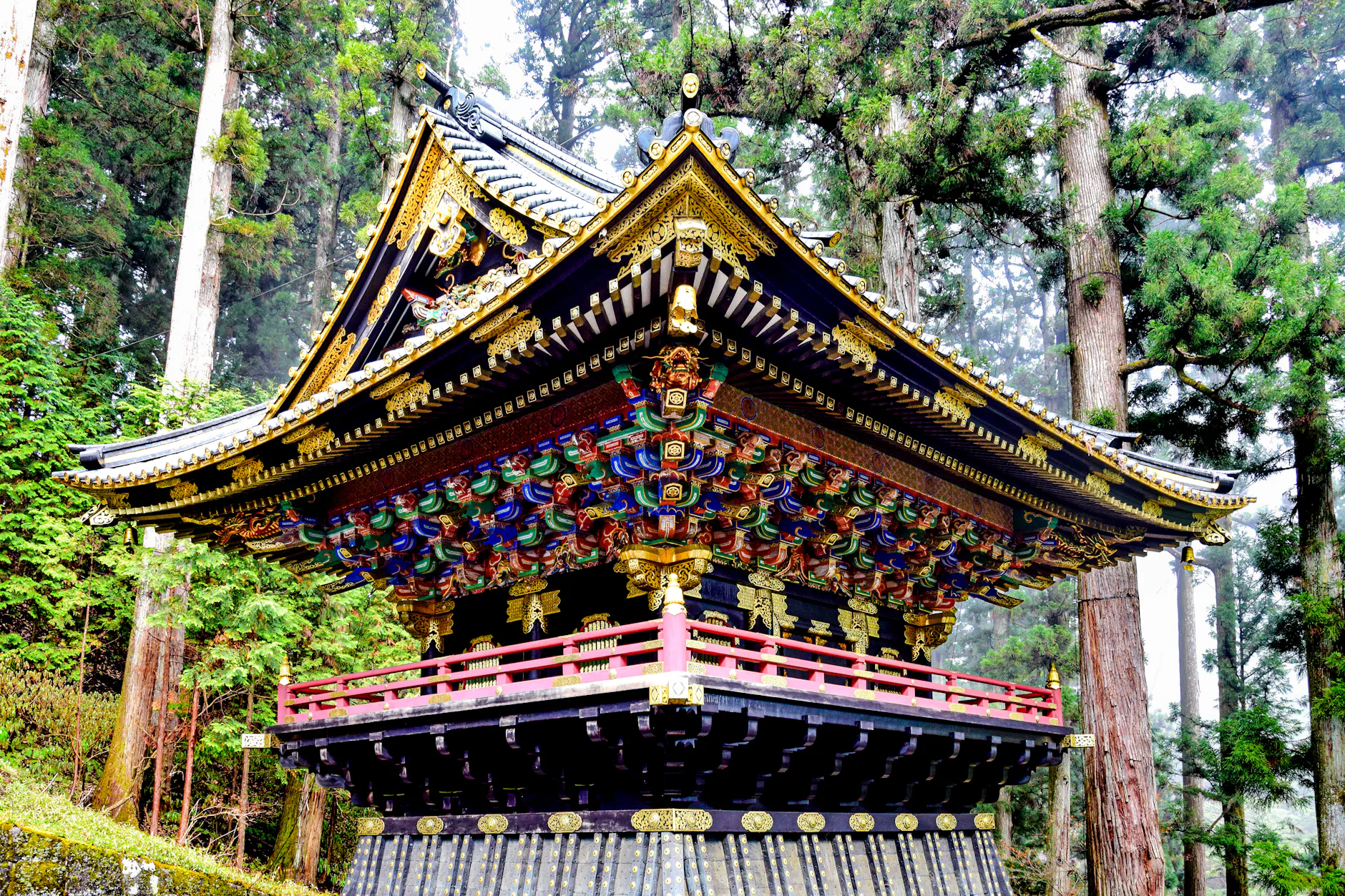
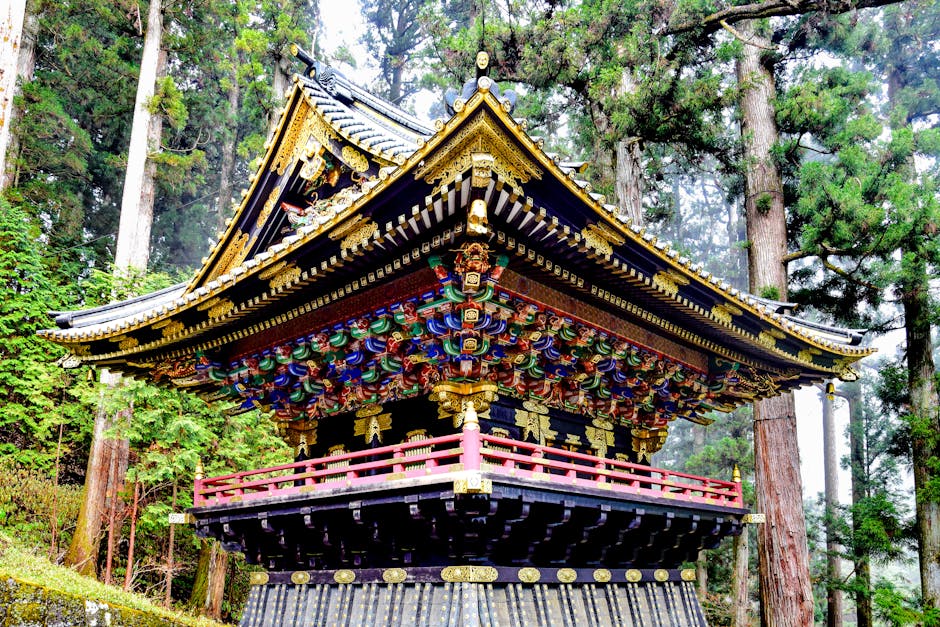
Park the car, stretch your legs, and prepare for a serious sensory overload — in the very best way. Nikko Toshogu Shrine is the mausoleum of Tokugawa Ieyasu, the warlord who unified Japan and founded the Tokugawa shogunate that would rule for over 250 years. His successors essentially spent the national budget on making his resting place the most extravagant structure in the country, and frankly, it shows. Every surface is carved, gilded, lacquered, or painted in colours so vivid they look almost digital.
The complex is a UNESCO World Heritage Site and encompasses over a dozen structures set within ancient cedar forest on the slopes of Mount Nantai. The atmosphere is extraordinary — shafts of light filtering through enormous cedar trees, the smell of incense drifting from wooden buildings that have stood since the early 17th century, and carvings so detailed you could spend an hour on a single panel. Budget at least two hours here; three is better if you want to climb up to the inner sanctuary and explore the surrounding Rinnoji Temple and Futarasan Shrine areas.
Don’t Miss Inside Toshogu
- The Three Wise Monkeys (Sanzaru) — the original “see no evil, hear no evil, speak no evil” carvings on the Sacred Stable building. These are the famous ones; they’re smaller than most people expect, which somehow makes them more charming.
- The Sleeping Cat (Nemuri-neko) — a small carving above a gate leading to Ieyasu’s tomb. Deceptively simple-looking; allegedly carved by master craftsman Hidari Jingoro and considered a national treasure.
- Yomeimon Gate — the centrepiece of the complex, covered in over 500 sculptural carvings of dragons, lions, flowers, and mythical creatures. Locals call it the “sunset gate” because it’s said you could stare at it until sunset without getting bored.
- Ieyasu’s Tomb — climb the 200+ stone steps behind the main hall to reach the relatively austere bronze pagoda marking the actual burial site. The contrast with the ornate shrine below is striking.
Parking at Nikko Toshogu
The most convenient option is the Nikko Toshogu Shrine parking area on the approach road (Omotesando). Parking costs approximately ¥600 per car and the lot can fill up quickly by mid-morning on weekends. There are also several private pay lots along the main road from Nikko Station toward the shrine — prices vary from ¥500 to ¥1,000. If you arrive early (before 9 AM), you’ll have no trouble finding a spot close to the main gate.
Leg 2: Irohazaka Winding Road — 48 Hairpins and Pure Touge Magic
This is the one. If you’ve watched Initial D, you already know the name. If you haven’t — let’s just say that Irohazaka is the kind of road that makes you understand why people become obsessed with driving. From the base of the climb near Nikko town, Route 120 begins its assault on the mountain, gaining approximately 440 metres of elevation over a series of 48 continuous hairpin turns, each one numbered and named after a character in the Japanese iroha syllabary (hence the name).
The upward route and the downward route are actually two separate one-way roads — the ascending route (second Irohazaka) uses one set of switchbacks, and the descending route (first Irohazaka) uses another set slightly to the south. This is important to know before you get there — you can’t turn around if you change your mind. You go up on one road, and you come back down on another when you’re ready to leave.
The Initial D Connection
In Initial D — Shuichi Shigeno’s seminal manga and anime about illegal street racing on mountain passes — the Irohazaka course is one of the featured battlegrounds. The protagonist Takumi Fujiwara’s signature run involves threading a hachiroku (Toyota AE86) through exactly these kinds of relentless hairpins using ultra-precise techniques. While the Nikko-area battles in the story aren’t the most prominent arc, Irohazaka is celebrated in the Initial D community precisely because it’s the real mountain pass that inspired the series’ entire aesthetic. Pilgrims come from across Asia specifically to drive this road — and once you’re on it, you’ll understand the obsession completely.
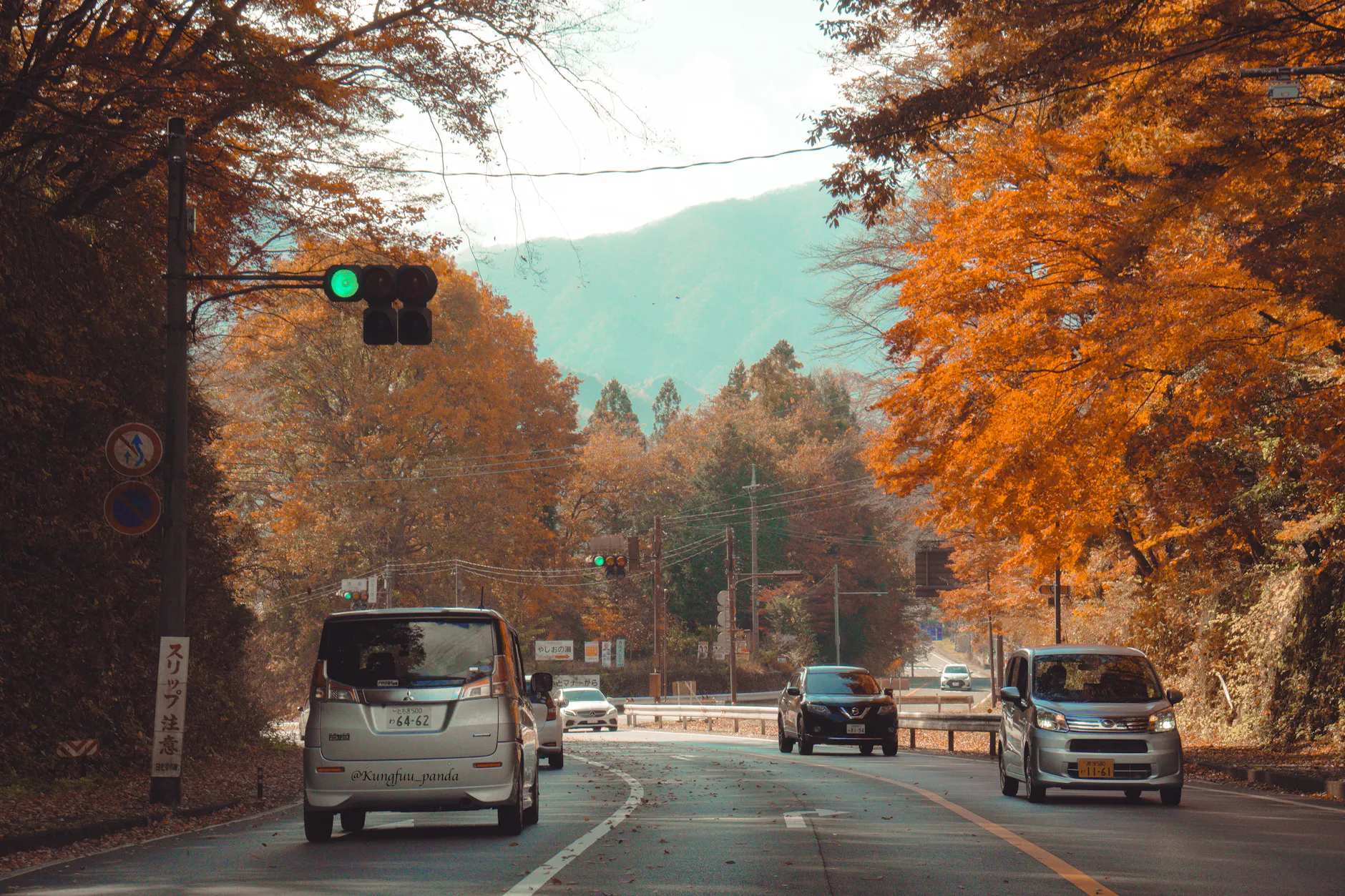
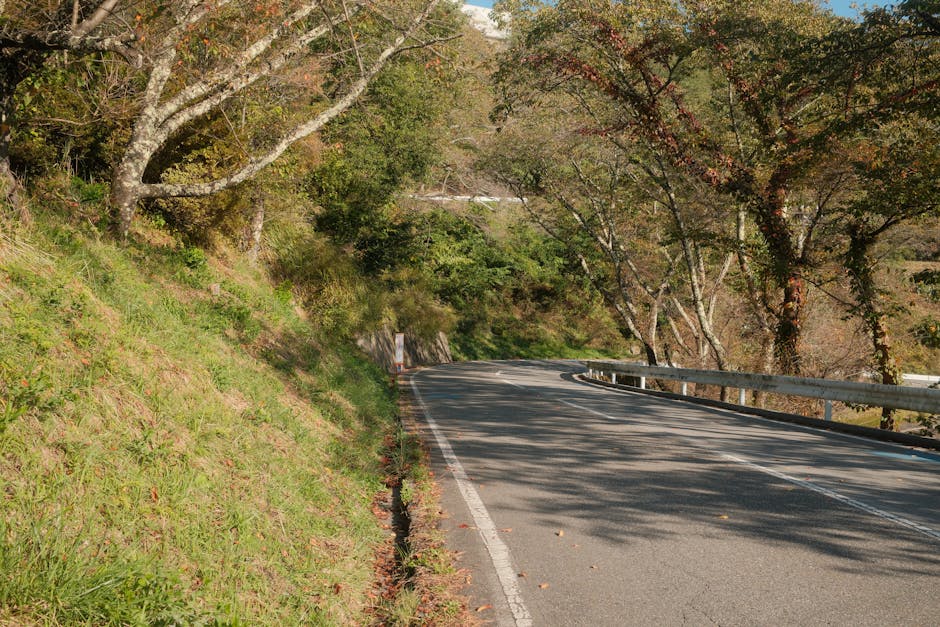
For real-world driving: the hairpins are tight but manageable in a standard car. Speed limits are strictly enforced (approximately 30–40 km/h through most of the bends), and there are road markings at each numbered corner. The surface is well-maintained asphalt, and the views through the guardrails — particularly in autumn — are absolutely spectacular. On weekday mornings you may find yourself essentially alone on the road; on weekend afternoons, expect a steady procession of cars, motorcycles, and occasional cyclists.
Driving Irohazaka — What to Expect
- Start of the climb: Look for the Route 120 junction just west of central Nikko — your GPS will guide you, but watch for the clear signage indicating the ascending Irohazaka lane.
- Time to summit: Allow 20–30 minutes for the climb at a comfortable, legal pace. Rush it and you’ll miss the views; take your time and savour each corner.
- Numbered corners: Each hairpin has a small sign marking its iroha syllable. Counting them down (or up) keeps you focused between bends.
- Pullout points: There are a handful of small layby areas on the ascent where you can stop safely for photos. The views back toward Nikko town and the forested valley below are outstanding.
- The summit plateau: Once you crest the final hairpin and emerge onto the Okunikko plateau, the landscape transforms dramatically — open meadows, the glittering surface of Lake Chuzenji ahead, and the sudden feeling of having arrived somewhere genuinely elevated and remote.
Stop 2: Kegon Falls — Japan’s Most Dramatic Waterfall
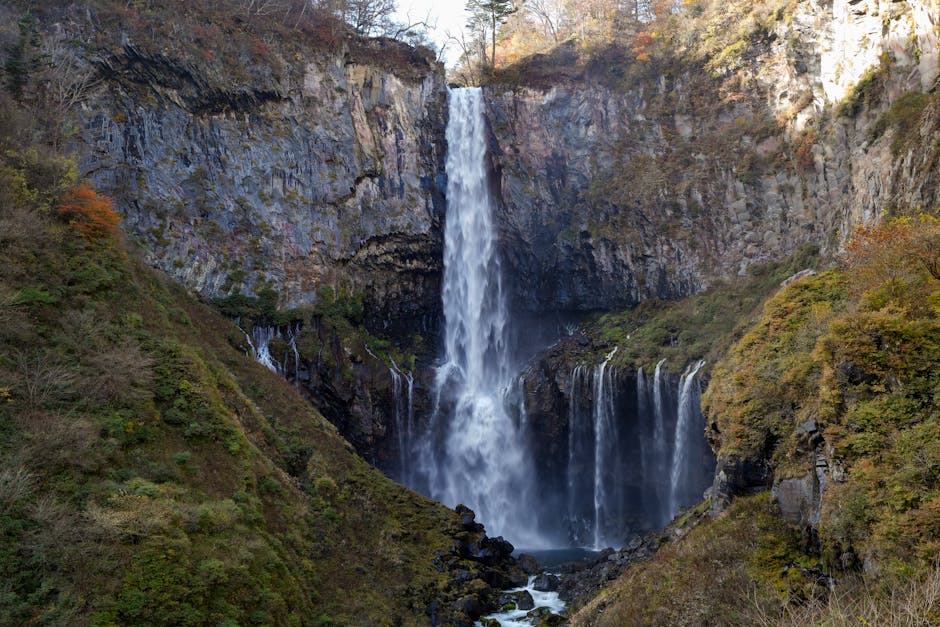
Three kilometres past the top of Irohazaka, following the lakeshore road, you’ll arrive at one of the most visually arresting stops on the entire route. Kegon Falls drops 97 metres in a single unbroken plunge from the outlet of Lake Chuzenji into the valley below — making it one of the three most celebrated waterfalls in all of Japan, alongside Nachi Falls in Wakayama and Fukuroda Falls in Ibaraki. The volume of water is enormous, particularly in spring and early summer when snowmelt feeds the lake to capacity, and the roar of it hitting the pool below is something you feel in your chest before you hear it with your ears.
There are two ways to view the falls. The free observation deck at the top, near the falls entrance, gives you a perfectly good view. But the real experience is the elevator (approximately ¥570 round trip) that descends through the cliff face to a viewing platform at the base of the falls. From down there, you’re looking straight up at 97 metres of cascading water with mist on your face and the sound filling the entire canyon. It’s one of the most physically impressive natural experiences in the Kanto region. Budget 45–60 minutes here — enough for both viewing levels and a walk along the observation area.
Parking at Kegon Falls
There’s a large public car park adjacent to the falls entrance area (near the Chuzenji-ko bus terminal) charging approximately ¥500–¥700 per car. This same car park serves both Kegon Falls and the Lake Chuzenji shoreline area, so you can conveniently walk to both without moving the car. The lot fills up fast on sunny weekends — arrive before 10 AM if you want a guaranteed spot.
Stop 3: Lake Chuzenji — Alpine Serenity at 1,269 Metres
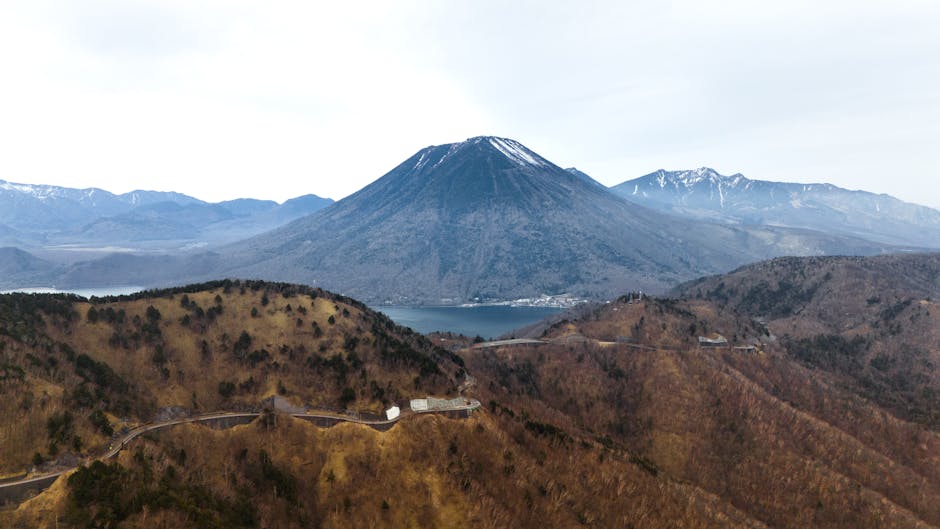
A short drive — or even a pleasant walk — from Kegon Falls, Lake Chuzenji sits at an altitude of 1,269 metres and was formed by a lava flow from volcanic Mount Nantai that dammed the ancient river valley. The result is a lake of remarkable clarity and colour, ringed by forested hills and overlooked by the symmetrical cone of Nantai-san. On calm mornings the surface acts as a perfect mirror, doubling the surrounding mountains in its reflection. On breezy afternoons small pleasure boats drift across its surface, and the overall atmosphere — cool, clean, unhurried — is about as far from Shibuya as it’s possible to get while still being the same prefecture.
The lakeside area around the main pier is dotted with small shops, traditional inns (ryokan), Italian villa museums (a legacy of early 20th-century diplomatic history), and excellent cafes that give you a strong excuse to sit by the water for longer than you probably planned. If time and fitness allow, the hiking trails around the lake — including the path up Mount Nantai — are genuinely excellent, though a full Nantai climb is a 6–7 hour commitment best saved for a dedicated trip.
What to Do at Lake Chuzenji
- Walk the eastern shore path — a flat, scenic 2–3 km route connecting the main pier area with the falls and giving excellent lake views throughout.
- Take a pleasure boat cruise — 30-minute sightseeing cruises depart from the main pier and give you a completely different perspective on the lake’s scale and colour.
- Visit the Italian and British Embassy Villa Memorial Parks — two beautifully preserved early 20th-century diplomatic retreat buildings open seasonally, offering an unexpectedly elegant history lesson.
- Simply sit at a lakeside cafe — honestly, sometimes the best thing you can do after a day of hairpin bends and shrine staircases is order a coffee and watch the mountain light change on the water.
Essential Driving Tips for This Route
Road Conditions and What to Expect
The expressway sections of this drive are straightforward — wide lanes, clear English signage, and consistent surface quality. Route 120 from Nikko toward Irohazaka is a standard two-lane mountain road in good condition. The hairpins themselves are well-surfaced but narrow enough that you’ll need to take wide corners carefully to avoid clipping the kerb on the inside. Visibility on the tighter bends is limited — use your horn briefly on blind corners (it’s standard practice in Japan on mountain roads) and maintain steady, predictable speed.
Foreign Driver Requirements
- International Driving Permit (IDP): Required for most foreign licence holders. Japan accepts IDPs based on the 1949 Geneva Convention — importantly, licences from some countries (including Germany, Switzerland, France, Belgium, Monaco, and Taiwan) are accepted without an IDP through bilateral agreements. Check your country’s status before you arrive.
- Your original driving licence must accompany the IDP at all times.
- Drive on the left — Japan follows left-hand traffic. Steering wheel is on the right.
- Speed limits: Expressways typically 100 km/h; national routes 60 km/h; mountain roads and residential areas 30–40 km/h. Speed cameras are common on all road types.
Fuel Stations
Fill up in Nikko town before starting the Irohazaka climb — there are several stations on Route 119 approaching the shrine area. Fuel options on the Okunikko plateau (above Irohazaka) are very limited and expensive. Most major rental cars run on regular (レギュラー, reGyura) unleaded petrol.
Toll Summary
- Shuto Expressway (Tokyo inner loop): Approximately ¥300–¥900 depending on route
- Tohoku Expressway (Tokyo → Utsunomiya area): Approximately ¥2,000–¥2,500
- Nikko Utsunomiya Road (Utsunomiya → Nikko IC): Approximately ¥740
- Total one-way estimate: ¥3,000–¥4,200 depending on your exact starting point in Shibuya
Where to Eat Along the Route
In Nikko Town
Hippari Dako — a beloved local institution near the shrine area serving yuba (tofu skin, a Nikko specialty) in various forms. Don’t leave Nikko without trying yuba — it’s been produced here for centuries, traditionally to feed the Buddhist monks of the temple complex, and the version served in light dashi broth is exceptional.
Meiji no Yakata — a Western-style restaurant set in a preserved Meiji-era stone building just below the shrine approach. Slightly upscale, but the beef stew and curry dishes made from local Tochigi beef are worth the price, and the building itself is reason enough to visit.
On the Irohazaka Plateau (Okunikko)
Hangetsu — a small, rustic restaurant near the Lake Chuzenji shoreline serving solid Japanese comfort food including soba noodles and local mountain vegetable dishes (sansai). Warm, unpretentious, and exactly what you want after a morning of driving hairpins.
At Lake Chuzenji
Café de la Paix Chuzenji — lakeside cafe with excellent coffee, light lunches, and windows positioned for the best possible views over the water toward Mount Nantai. A perfect spot for a long lunch break before the drive back down.
Fishermen’s Market stalls (seasonal) — in warmer months, small vendors near the lakeshore sell freshwater fish from the lake, including grilled rainbow trout on skewers. Simple, delicious, and quintessentially mountain Japan.
Best Season for This Drive
Autumn (October–November) — Peak Season
Irohazaka in full autumn colour is genuinely one of the most beautiful road-driving experiences in Japan. The 48 hairpins cut through a tunnel of red, orange, and gold maples and Japanese oaks, and the light on late October afternoons turns the whole mountain into something from a painting. This is peak season, which means crowds — plan accordingly with early departures and weekday visits if at all possible.
Spring (April–May) — Cherry Blossoms and Fresh Green
Cherry blossoms hit Nikko town in mid-April (a week or two later than Tokyo due to altitude), and the contrast of pink blossom against dark cedar is extraordinary. The mountain roads above Irohazaka are still cold in early spring but passable. Late May brings fresh green foliage that gives the whole route a luminous, energetic quality.
Summer (June–August) — Lush and Cool
The best time to escape Tokyo’s brutal summer heat. The plateau around Lake Chuzenji stays refreshingly cool even in August. Kegon Falls is at maximum volume from June through July due to snowmelt. Roads are open and surfaces are at their best. Rainy season (tsuyu, typically June through mid-July) can bring reduced visibility but also atmospheric mist in the mountain valleys.
Winter (December–March) — Proceed with Caution
Irohazaka can close entirely in heavy snow, and the mountain roads above require winter tyres (chains or snow tyres mandatory when indicated by road signs). The Nikko shrine complex in snow is breathtakingly beautiful, but the driving challenge is real. Only recommended for experienced drivers with appropriate tyre equipment.
FAQ
Where can I rent a car for this route?
The most convenient starting point for this exact route is Samurai Car Japan in Shibuya, Tokyo. It’s a car rental and JDM tour shop that caters specifically to enthusiasts and international visitors — meaning you can pick up a well-maintained car (potentially a JDM legend if you want to really commit to the Initial D spirit) and get solid local advice on the route before you roll out. Being based in Shibuya also gives you direct access to the expressway network heading toward Nikko without needing to navigate across central Tokyo from a more awkward location.
Do I need a special licence to drive on Irohazaka?
No special licence is required — just a valid driving licence and an International Driving Permit (IDP) if your country requires one. The road is a public national route open to all licensed drivers. That said, if you’ve never driven on narrow mountain roads with continuous hairpin bends before, a brief orientation drive on flatter local roads before tackling Irohazaka is a sensible warm-up. The road is challenging but entirely manageable for any careful, attentive driver.
Can I do this route as a day trip from Tokyo?
Yes — technically it’s doable in a single day, but you’ll need to be efficient. Depart Shibuya by 7:00–7:30 AM, keep your shrine visit to 2 hours, spend an hour at the falls, and allow yourself a leisurely lake stop before heading back by 4:00 PM to avoid evening expressway traffic. The return drive from Nikko to central Tokyo is roughly 2–2.5 hours in normal conditions. A better option if you want to fully savour it is to book a night at one of the lakeside ryokan near Lake Chuzenji and return the next morning when the plateau is quiet and the light is extraordinary.
Is Irohazaka open year-round?
The road is generally open year-round but subject to weather closures in winter — typically from December through March during and after snowfall events. Even when open, winter conditions can be very challenging. Always check current road status via the Tochigi Prefecture road information system (available in Japanese) or ask at your car rental about current conditions. During autumn peak season, temporary traffic restrictions may be in place on the most congested weekend days.
How much should I budget for the full day trip?
A rough per-person budget for the day (excluding car rental) breaks down as: expressway tolls approximately ¥3,500–¥4,500 (shared between car occupants), Nikko World Heritage Pass ¥2,200, Kegon Falls elevator ¥570, parking approximately ¥1,500–¥2,000 across all stops, fuel approximately ¥2,000–¥3,000 for the round trip, and food/drinks approximately ¥2,000–¥4,000 depending on your lunch choice. Total non-rental budget: roughly ¥12,000–¥16,000 per person for a comfortable, unhurried day on this route.
Why not elevate your journey with a legendary JDM experience?
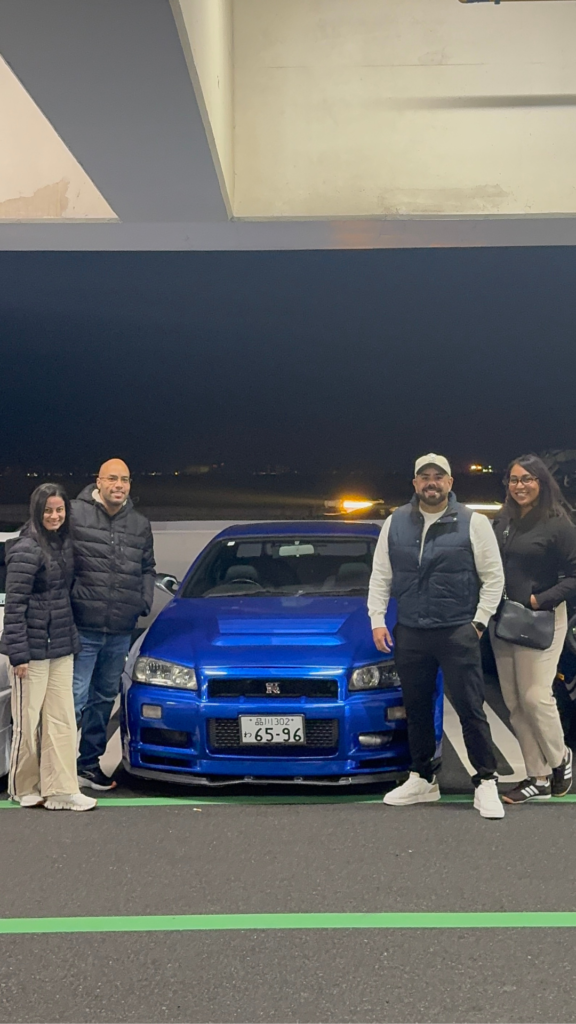
Our Services:
- Self-Drive Rentals
- Guided Tours
- Drift Experiences
Please visit the dedicated page for more details.
Book a Kyoto Experience
Explore Kyoto's most stunning temples, geisha districts, and hidden gems with a local guide. Small group, big experience. Free cancellation.
Related Articles
- Kamakura Great Buddha Day Trip Guide
- Hakone Hot Spring Day Trip from Tokyo
- Mt Fuji Day Trip from Tokyo
fuji tour
The Ultimate JDM Road Trip: 1-Day Mt. Fuji & Fuji Speedway Itinerary
Are you ready to experience Japan's most iconic landscapes from the driver's seat of a legendary sports car like the Nissan Skyline?
This one-day self-drive itinerary offers the perfect blend of traditional Japanese beauty and pure motorsport adrenaline. Starting with the world-famous views around the Fuji Five Lakes and culminating at the holy grail of Japanese motorsports—Fuji Speedway—this route is tailor-made for car enthusiasts.
📍 Tour Overview
- Total Duration: Approx. 8-9 hours
- Starting Point: Tokyo or Gotemba area (heading towards Yamanashi)
- Vehicle of Choice: Nissan Skyline (or your favorite JDM sports car!)
🕒 Recommended Itinerary
08:30 | Arakurayama Sengen Park (1 Hour)
Kick off the day with a postcard-perfect view. Beat the crowds by arriving early. After climbing the 398 steps to the observation deck, you will be rewarded with the world-famous view of the five-story Chureito Pagoda framing Mt. Fuji. The crisp morning air and the soft morning light make this the absolute best time for photography.
- Pro-tip: Wear comfortable walking shoes for the stairs!
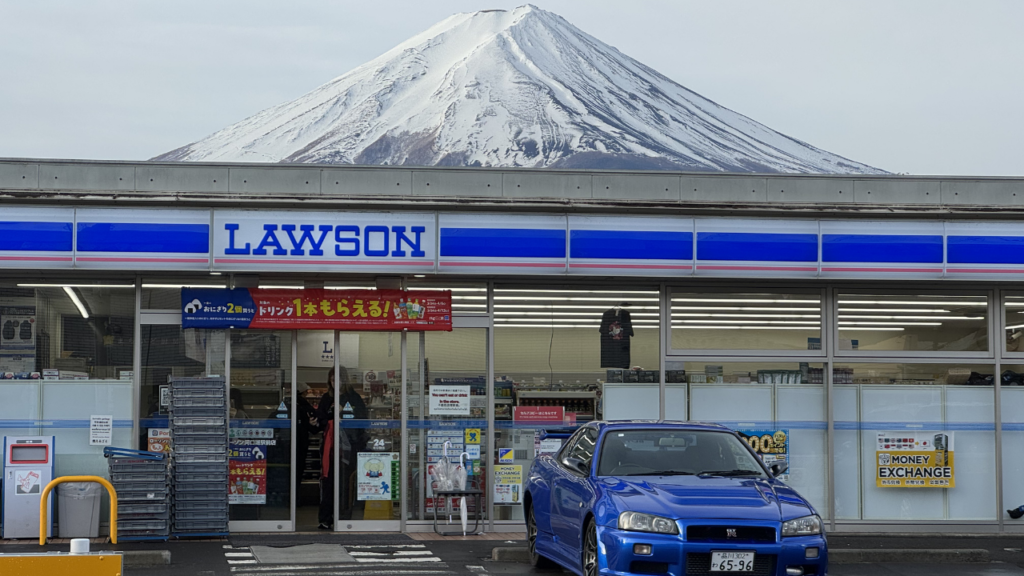
09:45 | Lawson Kawaguchiko Station (15 Mins)
The viral photo spot. Just a short drive away is the famous "Mt. Fuji Lawson." It’s an incredibly popular spot on social media where the massive mountain looms directly over the convenience store roof. Park your Skyline safely in the designated area, grab a canned coffee, and snap a quick photo.
- Driver's Etiquette: This area gets extremely busy. Please respect local traffic rules, avoid parking on the street, and watch out for pedestrians.
10:15 | Lake Kawaguchi & Oishi Park (1 Hour)
Scenic cruising and lakeside photos. Cruise along the northern coast of Lake Kawaguchi. The winding lakeside roads are a joy to drive in a sports car. Stop by Oishi Park, where you can capture stunning photos of your car with the lake and Mt. Fuji in the background, surrounded by seasonal flowers.
11:45 | Oshino Hakkai (1.5 Hours)
Crystal clear springs and local street food. About a 30-minute drive from the lake brings you to Oshino Hakkai, a traditional village famous for its eight sacred ponds fed by Mt. Fuji's melting snow. The water is so clear you can see straight to the bottom. This is the perfect pit stop for lunch. Enjoy freshly made Soba noodles, grilled river fish, or toasted Kusamochi (sweet mugwort rice cakes) from the local vendors.
14:00 | Fuji Speedway / FSW (2 Hours)
The climax for motorsport fans. After a thrilling drive through the scenic mountain passes of Route 138, you will arrive at Fuji Speedway in Shizuoka. Depending on the day’s schedule, there are two epic ways to enjoy this holy ground:
- Experience Run (Drive the track!): On select days, you can actually drive your own Skyline on the international racing circuit behind a pace car (no helmet required!). It's an unforgettable experience to feel the same tarmac as racing legends.
- Fuji Motorsports Museum: Located at the adjacent hotel, this museum showcases about 40 historic racing cars from various global manufacturers. It’s a deep dive into the history of speed.
🇯🇵 Plan Your Japan Experience
JDM Car Rental
Drive a GT-R, Supra, RX-7, or Silvia on the roads they were built for. Hakone passes, Wangan highway, mountain touge — your dream JDM experience.
Daikoku PA Tour
Visit Japan's most legendary car meet. Hundreds of modified cars, passionate owners, and the heartbeat of JDM culture. Guided weekend night tours available.
Photo Guide Tour
Capture stunning photos at locations only locals know. Hidden shrines, backstreet alleys, rooftop views, and golden hour spots for unforgettable shots.