Onsen, Volcanoes & Snow-Capped Highlands: The Ultimate Winter Driving Route from Tokyo to Kusatsu Onsen
There’s a drive in Japan that feels like it was designed specifically to make you forget you ever lived in a city. It starts in the heart of Tokyo’s Shibuya, climbs past elegant mountain resort towns, crosses a surreal frozen lava field, winds through one of Japan’s highest ski plateaus, and ends in a steaming, sulfur-scented hot spring town where the locals have been soaking away the cold for centuries. This is the Shibuya to Kusatsu Onsen route — and in winter, it is absolutely breathtaking.
What makes this drive genuinely special isn’t just the destinations. It’s the road itself. The further you climb into the volcanic highlands of Gunma and Nagano prefectures, the more the landscape shifts from everyday Japan into something almost otherworldly. Snow-dusted cedar forests give way to open alpine meadows. Mountain peaks float above the clouds. And then, without warning, the road cuts across a hillside at 1,800 meters and the entire Joshinetsu highland opens up before you. You’ll want to pull over. You probably will pull over.
The good news is that this entire adventure begins with something refreshingly simple: grabbing your rental car in Shibuya and heading straight for the expressway. Skip the train queues, the luggage transfers, the rigid timetables. Pick up your car in the center of Tokyo and be winding through alpine switchbacks by mid-morning. If you’re looking for the ideal starting point, Samurai Car Japan in Shibuya is exactly where this journey begins — and trust us, starting a snowy highland drive in a JDM machine makes the whole thing considerably more epic.
Route Overview
This route covers approximately 280–320 km total depending on your exact path through the highlands, and can be done comfortably over two days — though three days lets you soak properly in Kusatsu and explore without rushing. Here’s the breakdown:
- Pick up your rental car at Samurai Car Japan in Shibuya, Tokyo — your launchpad for the entire journey
- Shibuya → Karuizawa — approx. 150 km via the Kan-Etsu Expressway (Route E18/Route 18). Drive time: 1.5–2 hours. Toll: approx. ¥3,000–¥3,500 with ETC.
- Karuizawa → Onioshidashi Park — approx. 15 km via Route 146 North. Drive time: 20–25 minutes. Toll-free scenic road.
- Onioshidashi Park → Shiga Kogen — approx. 55 km via Route 146 and Route 292 (Shiga Kogen Road). Drive time: 1 hour–1.5 hours depending on snow conditions.
- Shiga Kogen → Kusatsu Onsen — approx. 35 km via Route 292 (the famous Manza-Kusatsu Highway section). Drive time: 45 minutes–1 hour.
Total estimated driving time (excluding stops): 4–5 hours. Recommended trip length: 2–3 days. Total tolls: approximately ¥3,500–¥4,500 one-way with an ETC card.
🗺️ Open This Route in Google Maps
Opens in Google Maps app on mobile
Stop 1: Karuizawa — Tokyo’s Alpine Escape
The moment you exit the Kan-Etsu Expressway at the Karuizawa interchange and the road dips into a forest canopy, you’ll understand why Tokyo’s wealthy have been retreating here since the Meiji era. Karuizawa sits at around 1,000 meters elevation in the shadow of still-active Mount Asama, and in winter it wears a quiet, frosted elegance that its summer crowds never quite capture. Boutique shops are less busy, the sidewalks dusted with snow, and the famous Karuizawa Prince Shopping Plaza becomes a genuinely pleasant stroll rather than a weekend scrum.
What to See and Do
- Kyu-Karuizawa Ginza Street: The charming old shopping promenade lined with cafés, galleries, and artisan jam shops. Even in winter, several specialty shops stay open and the atmosphere is serene.
- Karuizawa Prince Shopping Plaza: An enormous open-air outlet mall that wraps around the base of a ski slope. Great for picking up warm layers if you underpacked.
- Kumoba Pond (Karuizawa Ike): A short walk from the main street, this woodland pond freezes over beautifully in winter and reflects the bare silver birch trees. Stunning in the morning light.
- Shiraito Falls: About 5 km west via Route 146, these wide, curtain-like falls partially freeze in deep winter into an extraordinary ice formation. A 10-minute walk from the parking area.
Driving Tips: Shibuya to Karuizawa
From Shibuya, head to the Shinjuku Interchange and merge onto the Chuo Expressway (Route E20), then connect to the Kan-Etsu Expressway (Route E17/E18) toward Nagano. The drive is almost entirely expressway — smooth, wide, and well-marked in English. As you gain elevation past Yokokawa, you’ll notice the temperature drop on your dashboard display and the first dustings of snow on the roadside embankments. This is when the drive starts to feel like an adventure.
In winter, the expressway is generally well-maintained and gritted, but snow tires (studless winter tires) are mandatory on the approach roads beyond Karuizawa. Rental cars from Samurai Car Japan are equipped with appropriate seasonal tires, but always double-check before departure.
Parking in Karuizawa
The Karuizawa Prince Shopping Plaza has a large, free parking area that works perfectly as your base while exploring the town center on foot. For Kyu-Karuizawa, there are several pay parking lots along the main street — expect to pay around ¥500–¥700 for 2 hours. In winter, these lots are significantly quieter than in peak summer season.
How Long to Spend
A morning stop of 2–3 hours is ideal. Have a coffee, walk the Ginza street, swing by Kumoba Pond, and then push north toward Onioshidashi before noon.
Stop 2: Onioshidashi Park — Walking on Frozen Lava
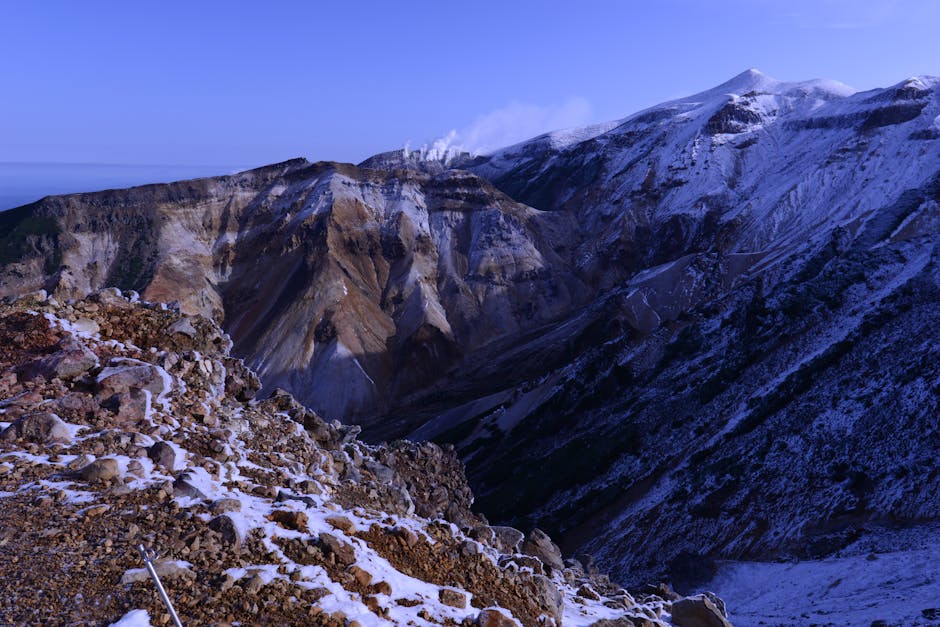
Drive north out of Karuizawa on Route 146 and within 20 minutes you’ll find yourself in one of the most otherworldly landscapes in Japan. The road climbs steadily through cedar and larch forest, Mount Asama looming increasingly large to your left, and then the trees part and there it is — a vast, frozen ocean of black and grey volcanic rock stretching across the hillside, snow dusted between the jagged peaks of hardened lava. This is Onioshidashi Park, and it looks like someone dropped a chunk of Iceland into the Japanese mountains.
The Story Behind the Lava
In 1783, Mount Asama erupted in one of the most violent volcanic events in Japanese history. The eruption killed over 1,500 people and sent massive lava flows pouring down the mountain’s northern slopes. What you’re walking on today — over two square kilometers of frozen lava formations — is exactly that flow, preserved almost exactly as it cooled 240 years ago. In winter, with snow settled in the crevices between the dark basalt formations and a cold mist drifting across the field, it’s genuinely eerie in the best possible way.
What to See and Do
- Main Lava Trail: A well-maintained wooden boardwalk winds through the heart of the lava field. The full loop takes about 40–60 minutes at a leisurely pace. Wear grippy boots — the wooden boards can be icy in winter.
- Asama Kannonsha Temple: A small Buddhist temple sits improbably in the middle of the lava field. The contrast of the red torii gate against the dark volcanic rock and white snow is incredibly photogenic.
- Asama Viewing Platform: On clear winter days, you get a dramatic close-up view of Mount Asama’s caldera. The mountain still releases steam from its summit — a reminder that this volcano is very much alive.
Driving Tips: Karuizawa to Onioshidashi
The drive north on Route 146 is straightforward and scenic. The road is generally two lanes, well-maintained, and plowed in winter. Watch for ice patches in shaded sections, particularly in the morning hours. There are no tolls on this stretch.
Parking at Onioshidashi
There is a dedicated parking lot directly at the park entrance. Cost: ¥500 per car. The lot is large and rarely full in winter. Park admission is separate: ¥650 per adult (as of most recent pricing — check before you visit as it may vary).
How Long to Spend
1.5–2 hours is enough to do the full lava trail and take your time with photos. Don’t rush this one — the landscape rewards slow exploration.
Driving this route? We’ve got you covered.

Hundreds of international visitors have driven this route with a car from Samurai Car Japan. Our team will brief you on road conditions, tolls, and the best stops before you set off.
Stop 3: Shiga Kogen — Japan’s Highest Highland Plateau
From Onioshidashi, continue north on Route 146 until you hit Route 292 — the famous Shiga Kogen Road — and begin one of the most dramatically scenic mountain drives in the entire country. The road climbs steadily through dense snowpack, passing frozen lakes, ski resort entrances, and panoramic viewpoints that seem to go on forever. Shiga Kogen at 1,500–2,000 meters elevation is Japan’s largest ski resort area, hosting events during the 1998 Nagano Winter Olympics, and in winter it’s an absolute wonderland.
The Drive Through Shiga Kogen
This stretch of Route 292 through Shiga Kogen is one of the highlights of the entire trip as a driving experience in its own right. The road winds through the resort plateau past frozen Maruike Pond and Shirakaba Lake — both mirror-smooth and snow-rimmed in winter — with ski runs visible on the slopes above you and, on clear days, a jaw-dropping panorama of the entire Northern Alps to the northwest. Pull over at any of the designated viewpoints. Seriously, don’t just drive through this section.
What to See and Do
- Skiing and Snowboarding: Shiga Kogen’s 19 interconnected ski resorts offer something for every level. The snow quality here is legendary — cold, dry powder that falls reliably from December through early April. A day lift pass costs approximately ¥5,500–¥6,500.
- Maruike Pond Viewpoint: In summer this is a vivid blue alpine pond. In winter it freezes completely and collects snow into a pristine white oval framed by snow-dusted trees. One of the most photographed spots on the highland.
- Yokote Mountain (Yakebitai-yama) Gondola: If you’re not skiing, some gondolas operate for sightseers in peak season and offer extraordinary views across the Joshinetsu Kogen National Park.
- Nordic Walking & Snowshoeing: Several resort hotels offer guided snowshoe tours into the surrounding forest — a peaceful alternative to skiing and a wonderful way to experience the highland silence.
Driving Tips: Onioshidashi to Shiga Kogen
Route 292 through Shiga Kogen is generally well-plowed and maintained throughout winter as it serves the ski resorts, but conditions can change rapidly. Always check the Nagano Prefecture road information website or the resort’s snow report before setting out. The road is narrow in several sections with tight switchbacks — slow down, use low gear on descents, and keep a safe following distance from the car in front. Speed limit in most sections is 40–50 km/h.
Note that the highest section of Route 292 beyond Shiga Kogen toward Kusatsu — the Manza Highway stretch — climbs to approximately 1,800 meters and is one of the most elevated national roads in Japan. In severe winter conditions, this section can be temporarily closed. Check road closure information (通行止め) the morning of your drive.
Parking at Shiga Kogen
Each ski resort has its own parking area. For non-skiers stopping to explore, parking near the Shiga Kogen Prince Hotel area gives easy access to the main plateau viewpoints. Most resort parking is free for day visitors in winter. There are also small pull-off viewpoints along Route 292 itself where you can stop safely for photos.
How Long to Spend
If you’re skiing, budget a full day and overnight here. If you’re passing through as part of the drive, 2–3 hours for a scenic stop, a warm drink at one of the resort lodges, and a walk around Maruike Pond is perfect before pushing on to Kusatsu.
Stop 4: Kusatsu Onsen — Japan’s Most Famous Hot Spring Town
You’ll smell Kusatsu before you see it — or rather, you’ll notice the faint but unmistakable scent of sulfur drifting through your car’s ventilation as you descend from the Manza Highway into the town. Kusatsu Onsen is consistently rated Japan’s number one hot spring resort by Japanese travelers themselves, and a single evening here will tell you exactly why. The entire town revolves around the therapeutic, highly acidic mineral water that gushes from the earth at an extraordinary rate — over 32,000 liters per minute — and at temperatures so hot that it has to be cooled before anyone can bathe in it.
Yubatake — The Hot Water Field
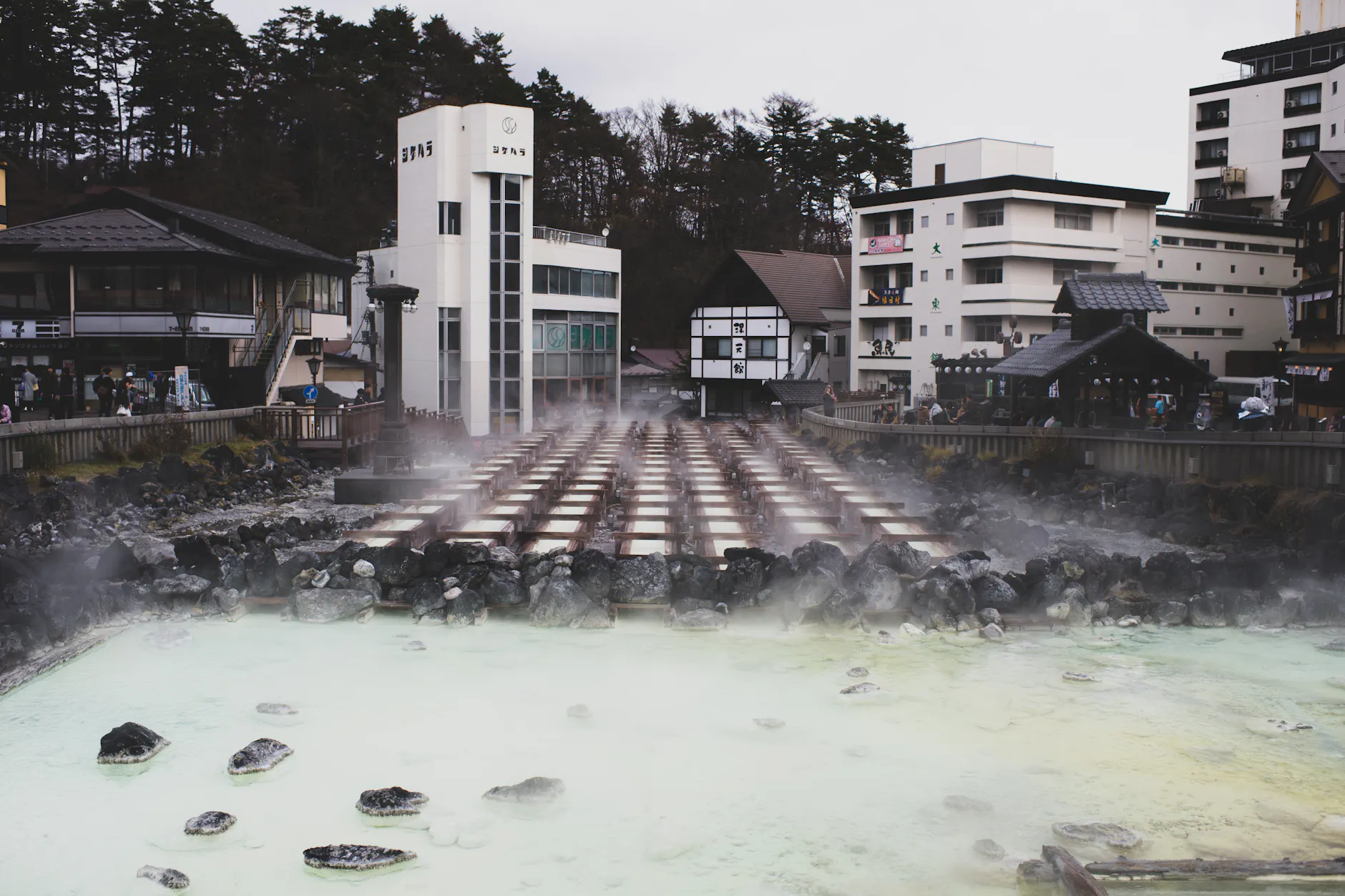
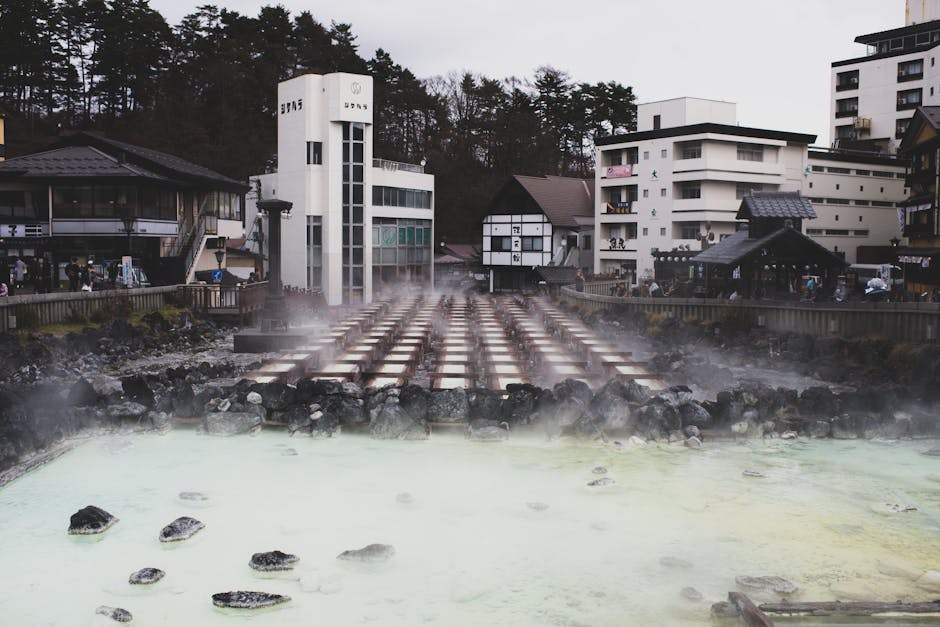
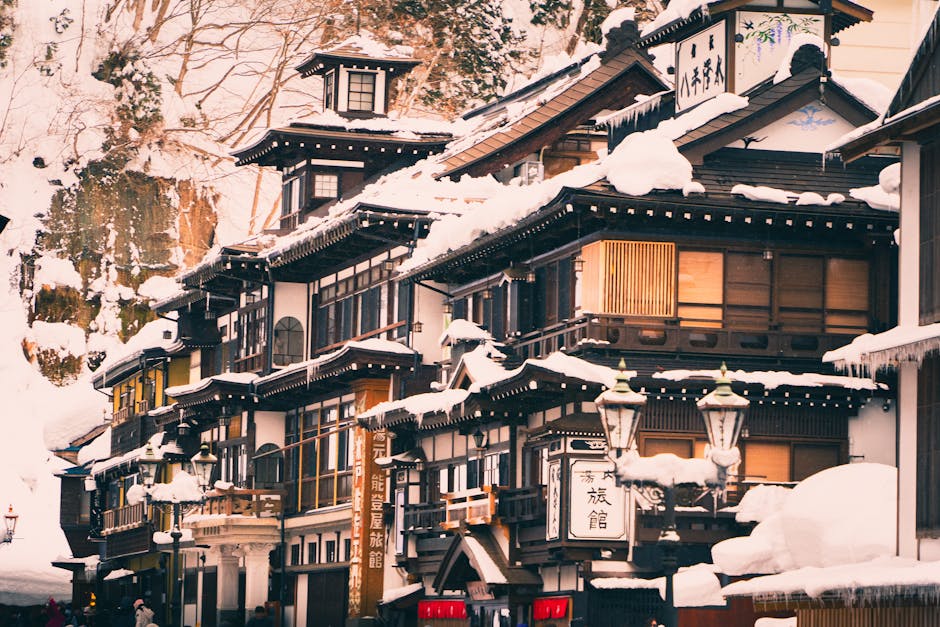
At the center of Kusatsu town, surrounded by ryokan and souvenir shops, sits the Yubatake (湯畑) — literally “hot water field.” This is Kusatsu’s iconic centerpiece: a series of wooden channels through which the scalding spring water flows and cools, releasing enormous clouds of steam into the cold winter air. The water itself is an extraordinary yellow-green color, stained by the sulfur and minerals it carries from deep underground. At night, the Yubatake is lit up and the steam glows gold against the dark sky. It’s one of those sights that genuinely stops you in your tracks regardless of how many photos you’ve seen beforehand.
Kusatsu Netsu-no-Yu — The Yumomi Performance
The Kusatsu Netsu-no-Yu (熱の湯) bathhouse next to the Yubatake offers something you won’t find anywhere else: the yumomi (湯もみ) performance. Since the spring water arrives too hot to bathe in (around 48°C at the source), Kusatsu developed a traditional method of cooling it using large wooden paddles stirred in a rhythmic, synchronized motion while workers sing traditional songs. Watching this performance — and then getting to try it yourself — is an utterly unique cultural experience. Performances run 6 times daily, and tickets cost around ¥600 per person. Absolutely worth it.
Bathing in Kusatsu
Kusatsu’s hot spring water is among the most acidic in Japan (pH around 2), which gives it remarkable skin-smoothing properties but also means you should limit your soak to the recommended 3 minutes per session, especially in the jikan-yu (time bathing) communal baths. There are several free public foot baths around the Yubatake area — perfect for a cold-weather soak without the full commitment. For a proper indoor onsen experience, most ryokan in the area allow day-use bathing for around ¥1,000–¥1,500.
What Else to Do in Kusatsu
- Kusatsu Ski Resort: A small but enjoyable ski area right at the edge of town, perfect for a quick run before dinner.
- Sainokawara Park: A large open-air foot bath at the edge of town, free to use, with a dramatic steam-filled atmosphere in winter. One of the largest outdoor foot baths in Japan.
- Onsen Street Shopping: The streets around the Yubatake are lined with shops selling Kusatsu manjū (sweet buns), onsen tamago (hot spring eggs), and various sulfur-mineral cosmetics — all excellent souvenirs.
Driving Into Kusatsu
The descent into Kusatsu from the Manza Highland is dramatic — the road drops quickly through switchbacks as you leave the open plateau and plunge into a forested valley. Use low gear on the descent and take it easy on the brakes. The town itself is compact and navigation is straightforward. Follow signs for Yubatake and you’ll find yourself at the center of town.
Parking in Kusatsu
There are several municipal parking lots within easy walking distance of the Yubatake. The Kusatsu Onsen Bus Terminal Parking is the most convenient, located just a 5-minute walk from the hot water field. Cost: approximately ¥200 per hour, with evening flat rates often available. The lots are generally well-signed and the attendants are used to dealing with foreign visitors.
Where to Stay Overnight
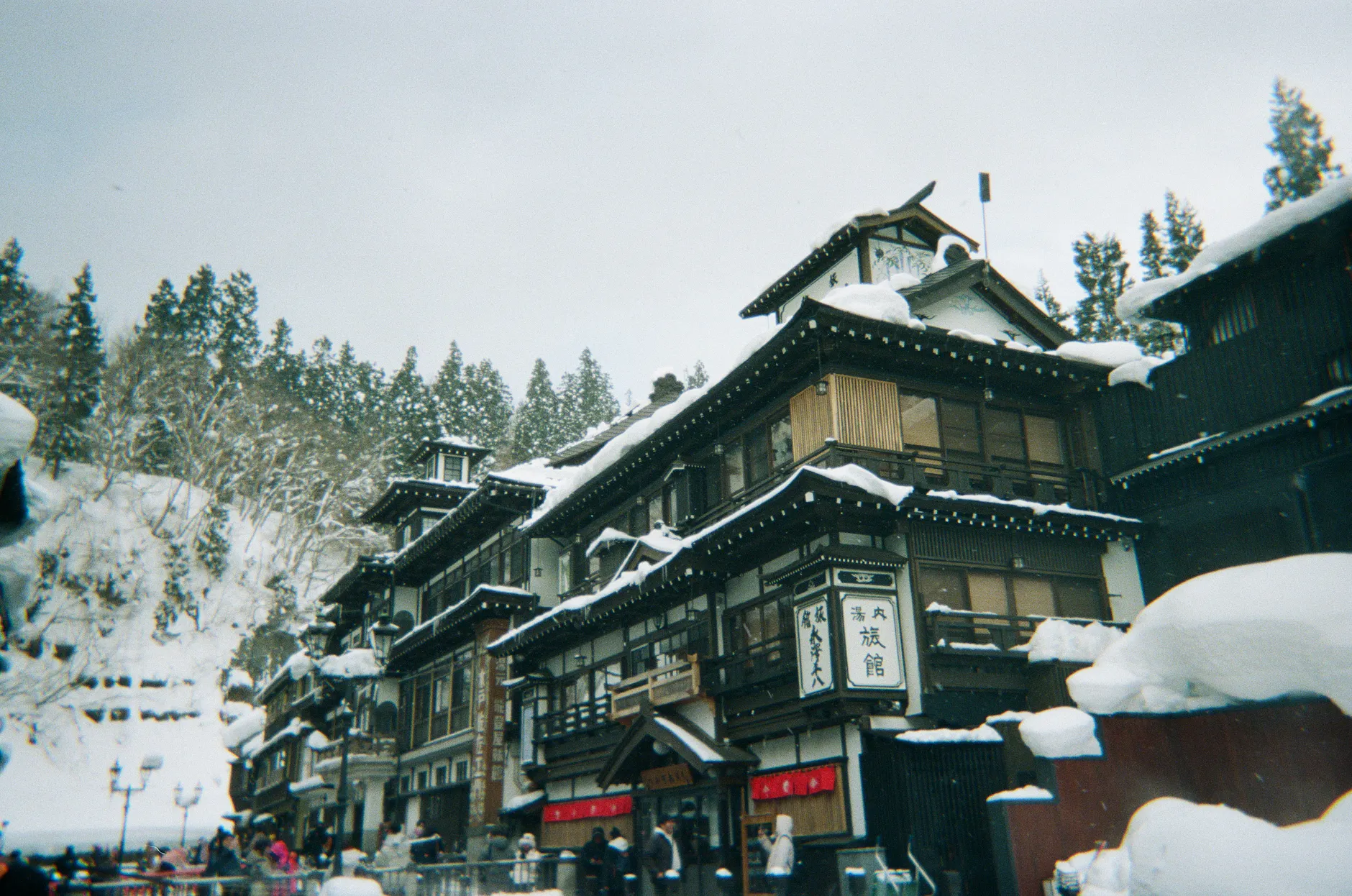
Staying overnight in Kusatsu is absolutely the right call. The evening atmosphere around the Yubatake, with steam rising into the cold night air and lanterns glowing along the wooden walkways, is pure magic. Options range from traditional ryokan (expect ¥15,000–¥30,000 per person including dinner and breakfast) to more affordable minshuku guesthouses (¥8,000–¥12,000 per person). Booking ahead in winter — especially on weekends — is essential.
Driving Tips for This Route
Road Conditions and Winter Driving
This route enters heavy snowfall territory from Karuizawa onwards in winter. Here’s what you need to know:
- Snow tires are mandatory on all mountain roads in winter. Chains may be required in extreme conditions — check the mandatory chain regulation signs (タイヤチェーン必要) before entering restricted sections.
- The Route 292 Manza Highway section at 1,800m is subject to temporary closures in heavy snowfall or blizzard conditions. Check Gunma Prefecture road closure information (道路通行止め情報) the morning of your drive.
- Drive with dipped headlights even in daytime in snowy or foggy mountain conditions — visibility can drop quickly.
- Keep a full tank of fuel when entering highland sections. Fuel stations become sparse above Karuizawa. Fill up at the Karuizawa town area before heading north.
Fuel Stations
- Shibuya / Tokyo: Multiple stations available near the expressway on-ramp
- Karuizawa: Several stations in town — fill up here before the highland stretch
- Shiga Kogen: Limited fuel availability — don’t rely on finding a station here
- Kusatsu Onsen: A couple of stations in town for the return journey
Toll Costs
- Shibuya to Karuizawa IC (Kan-Etsu Expressway): approx. ¥3,000–¥3,500 with ETC card (without ETC: approximately ¥3,900)
- Beyond Karuizawa, the route is primarily on national highways (Route 146, Route 292) — no tolls
- An ETC card is strongly recommended for the expressway toll discounts and convenience
International Driving Permit (IDP)
Foreign visitors must carry a valid International Driving Permit (IDP) along with their home country driving license to drive legally in Japan. Japan recognizes IDPs issued under the 1949 Geneva Convention — check that your country’s IDP is the correct type. Some countries (including Switzerland, France, Germany, and others) may have different requirements — confirm before your trip. Samurai Car Japan’s team can advise you on IDP requirements specific to your nationality when you pick up your vehicle.
Where to Eat Along the Route
In Karuizawa
- Milk Kobo (ミルク工房): Near the old Karuizawa shopping street, this dairy bakery has legendary soft-serve ice cream (yes, even in winter — real Karuizawa visitors know) and fresh-baked bread. The soft cream with local milk is worth a short queue.
- Karuizawa Delice: A French-inspired café and bakery that’s been an institution in the town since the 1980s. Perfect for a morning coffee and pastry before hitting the road north.
- Asama Dining: A mid-range restaurant near the Karuizawa Prince Hotel serving soba, tempura, and local mountain vegetables. Good hearty lunch fuel before the highland drive.
At Onioshidashi Park
- Onioshidashi Park Restaurant: A simple cafeteria-style restaurant inside the park serving hot udon, curry rice, and corn soup. Not gourmet, but it’s hot, it’s quick, and it’s exactly what you want after walking across a wind-blasted lava field in sub-zero temperatures.
In Shiga Kogen
- Shiga Kogen Prince Hotel Restaurants: The main resort hotel has a good Western-Japanese fusion restaurant with mountain views. Expect to pay ¥1,800–¥3,500 for a set lunch.
- Highland Resort Cafés: Multiple small café-restaurants are scattered along Route 292 through the resort. Look for places advertising nozawana pickles (a Nagano specialty) and oyaki (stuffed dumplings) — both excellent roadside snacks.
In Kusatsu Onsen
- Igaya (いがや): One of the most beloved local restaurants in Kusatsu, serving traditional Japanese set meals and excellent grilled local trout. Get there early for dinner — it fills up fast.
- Café de Marronnier: A cozy European-style café a short walk from the Yubatake. Perfect for warming up with a hot chocolate or coffee between onsen visits.
- Onsen Street Stalls: Don’t miss the Kusatsu manjū (hot spring buns) sold fresh at stalls near the Yubatake. Traditionally steamed using onsen water, they’re soft, sweet, and a quintessential Kusatsu snack.
Best Season for This Drive
Winter (December–March) — The Quintessential Experience
This route was essentially designed to be driven in winter. The combination of snowy highland landscapes, steaming onsen towns, and volcanic scenery dusted in white creates an atmosphere that simply can’t be replicated in other seasons. Kusatsu Onsen is especially magical in winter — the contrast of the steaming, sulfurous water against frozen surroundings is extraordinary. Road conditions require winter tires and attentiveness, but the reward is worth it completely. Note that the highest stretches of Route 292 may be closed in peak winter — always verify.
Autumn (October–November) — Fiery Foliage
The highlands turn extraordinary shades of red, orange, and gold from mid-October through November. The larch forests around Shiga Kogen are particularly spectacular, and the Manza Highway through the open plateau frames the autumn-colored mountains dramatically. Road conditions are easier than winter, and accommodations in Kusatsu are slightly more available on weekdays.
Spring (April–May) — Late Snow and Fresh Green
The highland roads reopen gradually as the snow melts, and the contrast of lingering snowfields against fresh green undergrowth is beautiful. However, some sections of Route 292 may not open until late April or May — check before you go. Wildflowers begin blooming in Shiga Kogen by late May, making it a lovely if less dramatic season.
Summer (June–August) — Hiking Season
Shiga Kogen transforms into a hiking paradise with mountain wildflower meadows, clear alpine ponds, and cool temperatures when lowland Japan is brutally humid. Kusatsu Onsen is pleasant year-round, and Karuizawa hits peak popularity with Tokyo daytrippers in August — expect crowds and higher accommodation prices.
Frequently Asked Questions
Where can I rent a car for this route?
The ideal place to start this drive is Samurai Car Japan in Shibuya, Tokyo. They specialize in rentals for international visitors, include ETC cards (essential for expressway tolls), provide English GPS navigation, and can brief you on road conditions before you set off. They also offer JDM sports cars if you want to tackle the Manza Highway in something genuinely memorable — think GT-R, Supra, or RX-7. For this route specifically, their team’s knowledge of winter road conditions in the highlands is genuinely useful. You can reserve directly through their website at samuraicarjapanjdm.jp.
Do I need snow tires for this drive in winter?
Yes, absolutely. From Karuizawa northward, studless winter tires are mandatory on all roads during the winter season (generally December through March, sometimes longer at higher elevations). Driving on summer tires in these conditions is both illegal and genuinely dangerous. Reputable rental car providers including Samurai Car Japan will fit seasonal tires automatically for winter rentals — but always confirm this when making your booking.
How many days should I set aside for this route?
We recommend a minimum of two full days — one driving day to reach Kusatsu via all the stops, and at least one full day and night in Kusatsu to properly experience the onsen culture. Three days is ideal: Day 1 to Karuizawa overnight, Day 2 through Onioshidashi and Shiga Kogen to Kusatsu, Day 3 for a proper Kusatsu soak and exploration before heading back to Tokyo. The return journey from Kusatsu to Tokyo via the Joshinetsu Expressway takes approximately 2.5–3 hours.
Is this drive suitable for beginner or inexperienced drivers?
The expressway section from Tokyo to Karuizawa is straightforward and accessible for most drivers. The mountain roads beyond — particularly Route 292 through Shiga Kogen and the Manza Highway — require confidence on narrow winding roads with potential ice and snow. If you have little experience driving in snowy conditions, we strongly recommend taking this route in spring, summer, or early autumn when the highland roads are clear. If you’re committed to a winter drive, drive slowly, use winter tires, and don’t rush. The roads are manageable with care and preparation.
Is the Manza Highway (Route 292) open in winter?
The Manza Highway section of Route 292 — specifically the high-altitude stretch between Shiga Kogen and Kusatsu passing near Manza Onsen — is subject to seasonal closures in winter. Closure periods vary by year depending on snowfall, typically falling between late October/November and late April. In some recent winters, the highest section has been closed from November through early May. Always check the current road status through the Gunma Prefectural Road Management Division or a reliable local source before setting out. If this section is closed, a scenic alternative route via Route 145 and Route 144 through Naganohara is available and adds only about 40 minutes to the journey.
Why not elevate your journey with a legendary JDM experience?
Our Services:
- Self-Drive Rentals
- Guided Tours
- Drift Experiences
Please visit the dedicated page for more details.
Book a Hot Spring Day Trip
Escape Tokyo and relax in Hakone’s famous hot springs. Includes transport, scenic views of Mt. Fuji, and onsen access. Free cancellation.
Related Articles
- Mt Fuji Climbing Guide: Routes, Gear and When to Go
- Hakone Hot Spring Day Trip from Tokyo
- Mt Fuji Day Trip from Tokyo
[st_af id=”862″]
🇯🇵 Plan Your Japan Experience
JDM Car Rental
Drive a GT-R, Supra, RX-7, or Silvia on the roads they were built for. Hakone passes, Wangan highway, mountain touge — your dream JDM experience.
Daikoku PA Tour
Visit Japan’s most legendary car meet. Hundreds of modified cars, passionate owners, and the heartbeat of JDM culture. Guided weekend night tours available.
Photo Guide Tour
Capture stunning photos at locations only locals know. Hidden shrines, backstreet alleys, rooftop views, and golden hour spots for unforgettable shots.
Leave a Reply