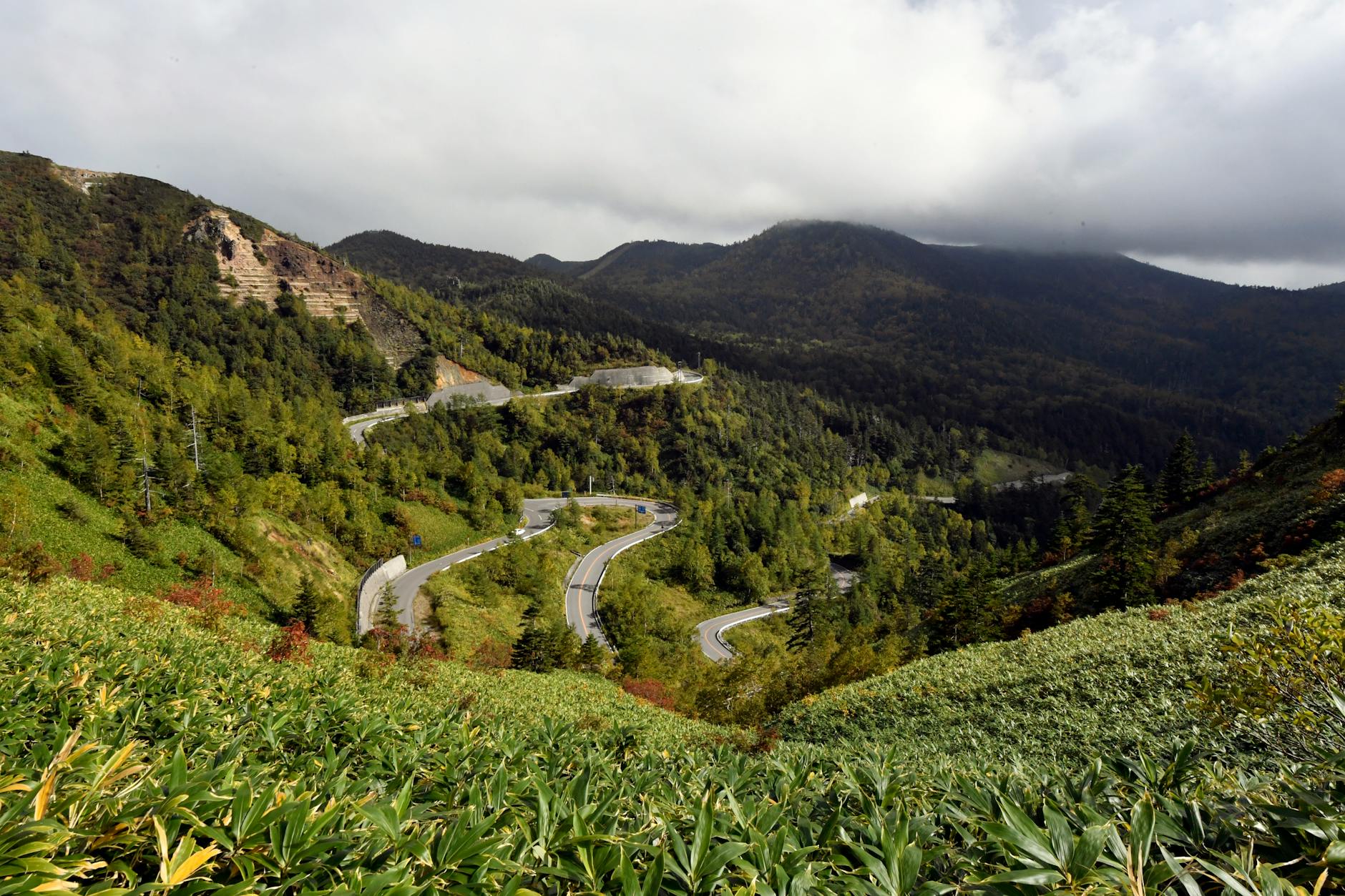
Japan is one of the world’s greatest destinations for driving enthusiasts. From the legendary touge mountain passes that inspired anime and motorsport culture, to sweeping coastal highways with volcanic backdrops, and the wide-open straight roads of the north — the best driving roads in Japan offer an unmatched combination of scenery, engineering, and driving culture. Whether you’re a JDM fan, a road-trip traveler, or simply someone who loves a great drive, Japan will not disappoint.
This guide covers eight of Japan’s most iconic driving routes in 2026, with practical tips on difficulty, best season, and which car to rent for each road.
[st_af id=”119″]
Why Japan Is a Dream Destination for Drivers
Japan’s road infrastructure is world-class. Tunnels punch through mountains, elevated highways weave through city cores, and well-maintained mountain roads spiral up volcanic peaks. Unlike many countries, Japanese roads are clean, well-signposted, and often lightly trafficked once you leave urban centers.
The country’s car culture runs deep. Japan gave the world the Nissan GT-R, Toyota Supra, Honda NSX, and Mazda RX-7 — all cars born from the idea that driving should be visceral and rewarding. The roads that shaped those legends still exist, and you can drive them today.
For foreign tourists, renting a car in Japan is straightforward with an International Driving Permit. Roads are driven on the left. Speed limits are modest (60–80 km/h on most scenic routes), but the driving experience — the corners, the views, the road surface — more than compensates.
1. Iroha-zaka — Nikko, Tochigi (48 Hairpin Turns)
Iroha-zaka is Japan’s most famous touge road and arguably the most technically demanding mountain pass open to tourist traffic. Located in Nikko, Tochigi Prefecture, this road climbs from the historic town of Nikko up to Lake Chuzenji with 48 consecutive hairpin turns — one for each syllable of the traditional Japanese phonetic alphabet (iroha).
The ascent and descent routes are separate one-way roads, so you’ll spiral upward on one and return on another. The road surface is well-maintained, the corners are tight and rhythmic, and autumn foliage transforms the hillside into a wall of gold and crimson from late October to mid-November.
- Location: Nikko, Tochigi Prefecture
- Difficulty: Intermediate — tight hairpins require precise steering
- Best Season: Autumn (late October) for foliage; Spring for fresh greenery
- Best Car: Compact sports car or light hatchback with good steering feedback
- Tip: Start early — traffic backs up significantly on weekends and holidays
After the drive, Nikko’s UNESCO-listed shrines and the Kegon Waterfall are just minutes away. Read our full Nikko driving route guide for a complete day-trip itinerary.
2. Hakone Turnpike & Skyline — Mt. Fuji Views, Kanagawa
The Hakone area is home to two world-class driving roads: the Hakone Turnpike (a toll road climbing Mt. Mikuni) and the Hakone Skyline (a free road connecting Nagao Pass to Lake Ashinoko). Together, they form one of Japan’s most complete driving experiences — sweeping corners, elevation changes, and on clear days, unobstructed views of Mt. Fuji rising above the clouds.
The Turnpike is the steeper, more dramatic of the two. Its gradient pushes into double digits in sections, and the corners arrive quickly. The Skyline is more relaxed, offering longer sightlines and pullouts where you can stop and photograph Fuji against a backdrop of volcanic hills.
- Location: Hakone, Kanagawa Prefecture (90 min from Tokyo by car)
- Difficulty: Intermediate — some sections require confident corner technique
- Best Season: Winter and early spring for clearest Mt. Fuji views
- Best Car: Sports coupe or AWD performance car for Turnpike; any car for Skyline
- Tip: Combine with Hakone’s hot springs for an overnight stay
The Hakone area is also a gateway to Izu Peninsula and the wider Fuji-Hakone-Izu National Park. Explore our Hakone driving route with hot springs and Fuji views for the full picture.
3. Mt. Haruna — Gunma (The Initial D Road)
If you grew up watching Initial D, Mt. Haruna needs no introduction. This is Akina Mountain — the fictional name used in the anime — where Takumi Fujiwara drove a beaten-up Toyota AE86 tofu delivery car down hairpin after hairpin in the middle of the night. The real road is just as dramatic as the anime made it look.
Mt. Haruna’s circuit is a loop road around Lake Haruna near the summit, but the downhill approach from the city of Takasaki is what drew the legend. Long sweeping corners mixed with tight switchbacks, surrounded by dense Japanese cedar and oak forest. On a clear day, the view from the lake across Gunma’s plains is extraordinary.
- Location: Haruna, Gunma Prefecture (2 hours from Tokyo)
- Difficulty: Intermediate to Advanced — blind corners on descent require caution
- Best Season: Autumn for foliage; Winter for atmospheric mountain mist
- Best Car: FR sports car — a Mazda MX-5, Toyota 86, or similar pays homage to the anime
- Tip: The Haruna Shrine near the summit is worth visiting; arrive weekday mornings for quiet roads
For Initial D pilgrims and touge enthusiasts alike, this is a must-drive. Read our complete Mt. Haruna driving guide including the full Initial D connection and nearby attractions.
4. Izu Skyline & Coastal Route — Shizuoka
The Izu Peninsula offers two completely different driving experiences in one compact geography. The Izu Skyline runs along the mountainous spine of the peninsula, reaching over 1,400 meters elevation with views across Sagami Bay and, on clear days, Mt. Fuji to the northwest. The Izu Coastal Route (Route 136 and 414) winds along cliffs above the Pacific Ocean, through fishing villages and past volcanic rock formations.
Many drivers combine both into a single day loop: climb the Skyline in the morning, descend to the coast for lunch, and cruise the oceanside road back north. It’s one of Japan’s most satisfying driving circuits.
- Location: Izu Peninsula, Shizuoka Prefecture (2–3 hours from Tokyo)
- Difficulty: Beginner to Intermediate — Skyline is faster; coastal route is more relaxed
- Best Season: Spring (cherry blossoms + Fuji views) or Autumn
- Best Car: Convertible or open-top car for the coastal route is sublime
- Tip: Avoid Golden Week — the peninsula gets extremely congested
See our Izu Peninsula coastal drive guide for suggested stops, onsen towns, and restaurant recommendations along the route.
5. Wangan — Tokyo Bay Highway (The Urban Legend)
The Wangan (literally “Bay Shore”) refers to the stretch of the Bayshore Route (Metropolitan Expressway Route 湾岸線) that runs along Tokyo Bay, connecting Yokohama to Chiba. It became legendary through the manga and anime Wangan Midnight, where modified sports cars chased each other through the night on this long, wide, multi-lane expressway.
In reality, the Wangan is a legal highway with speed limits — but driving it at night, with the Tokyo skyline reflected in the bay, Yokohama’s neon mirrored in the water, and the road stretching ahead in a clean straight line, is an undeniably cinematic experience. It’s best appreciated as a cultural landmark rather than a performance driving road.
- Location: Tokyo — Yokohama — Chiba coastal highway
- Difficulty: Beginner — straight expressway; focus is on atmosphere, not driving skill
- Best Time: Late night (11pm–2am) for the authentic Wangan atmosphere
- Best Car: Something with presence — a GT-R, Supra, or imported JDM sports car
- Tip: Stop at Daikoku PA — Japan’s most famous car meet spot, active on weekend nights
Read our Tokyo night drive guide for a complete Wangan route with all the key stops, parking areas, and viewing spots.
6. Hokkaido Straight Roads — The Northern Frontier
Everything changes in Hokkaido. Japan’s northernmost main island is sparsely populated, and its road network reflects that — long, perfectly straight roads cutting through farmland, forests, and volcanic plateau, with almost no traffic and horizons that seem to extend to infinity. This is the antithesis of the touge, and for many drivers, it’s even more liberating.
Roads like National Route 334 through the Shiretoko Peninsula, the roads through Furano’s flower fields, and the coastal highway around the Okhotsk Sea offer a kind of driving freedom that’s rare in densely populated Japan. In summer, Hokkaido’s temperatures are mild and the roads are clear; in winter, it becomes a completely different challenge for experienced drivers equipped with winter tires.
- Location: Hokkaido (fly from Tokyo in 90 minutes, or take the Shinkansen + ferry)
- Difficulty: Beginner in summer; Advanced in winter (ice and snow)
- Best Season: June–September for lush scenery; February for snow landscapes
- Best Car: Comfortable touring car or SUV; AWD recommended for winter
- Tip: Plan for distance — Hokkaido is vast. Budget 3–5 days minimum for a proper road trip
Explore our full Hokkaido road trip guide with recommended routes, accommodation, and seasonal tips for driving Japan’s north.
7. Chichibu Mountain Roads — Anime Scenery, Saitama
Chichibu, just 90 minutes from central Tokyo, is known to anime fans as the setting of Anohana and the area that inspired the landscapes of Your Name. For drivers, it offers a network of mountain roads through cedar forests, along river gorges, and past ancient Shinto shrines — all within easy reach of the capital.
The roads through the Chichibu highlands are tighter and more technical than the famous passes further west, with many sections following river valleys where the road narrows and the forest closes in on both sides. It’s intimate driving, focused on the road itself rather than big views — and deeply rewarding for anyone who enjoys reading corners rather than just seeing scenery.
- Location: Chichibu, Saitama Prefecture (90 min from Tokyo)
- Difficulty: Intermediate — narrow roads require careful lane positioning
- Best Season: Autumn for foliage; Spring for cherry blossoms at Chichibu shrines
- Best Car: Compact hatchback or kei car for the narrower sections
- Tip: Visit Chichibu Shrine and Nagatoro Gorge for a scenic break from driving
Read our Chichibu driving route guide combining the best mountain roads with anime pilgrimage spots and shrine visits.
8. Fuji Five Lakes Area — Driving with Fuji’s Shadow
Driving around the Fuji Five Lakes — Kawaguchiko, Saiko, Shojiko, Motosuko, and Yamanakako — is one of Japan’s most cinematic road experiences. Mt. Fuji dominates the northern horizon throughout, and on clear mornings, its reflection appears perfectly in the lakes below. The roads connecting the lakes wind through forest and farmland, passing ryokan villages, lavender fields, and traditional craft workshops.
Lake Yamanaka sits at 980 meters elevation on Fuji’s southeastern flank, and the road connecting it to Kawaguchiko via the Mitsutoge-Yamako Line climbs through subalpine forest with continuous views of the mountain. From Kawaguchiko, it’s possible to drive to the Fuji Subaru Line (a toll road) which climbs to the 5th Station at 2,300 meters — the highest driveable point on Mt. Fuji itself.
- Location: Fuji Five Lakes, Yamanashi Prefecture (90 min from Tokyo)
- Difficulty: Beginner to Intermediate — some mountain sections on the Subaru Line require caution
- Best Season: Winter and early spring for clearest Fuji views; Autumn for foliage
- Best Car: Any car; SUV recommended if driving the Subaru Line in uncertain weather
- Tip: The Subaru Line closes in winter — check dates before planning
Read our Mt. Fuji driving route guide for the complete Five Lakes circuit plus the climb to the 5th Station.
Comparison: Japan’s Best Driving Roads at a Glance
| Road | Region | Difficulty | Best Car | Best Season |
|---|---|---|---|---|
| Iroha-zaka (48 Hairpins) | Nikko, Tochigi | Intermediate | Sports coupe / compact | Autumn |
| Hakone Turnpike / Skyline | Hakone, Kanagawa | Intermediate | Sports car / AWD | Winter / Spring |
| Mt. Haruna (Initial D) | Gunma | Int. to Advanced | FR sports car | Autumn |
| Izu Skyline + Coast | Izu, Shizuoka | Beginner to Int. | Convertible / any | Spring |
| Wangan (Tokyo Bay) | Tokyo / Yokohama | Beginner | JDM sports car | Year-round (night) |
| Hokkaido Straight Roads | Hokkaido | Beginner (summer) | Touring / SUV | June – September |
| Chichibu Mountain Roads | Chichibu, Saitama | Intermediate | Compact / kei car | Autumn / Spring |
| Fuji Five Lakes / Subaru Line | Yamanashi | Beginner to Int. | Any / SUV for Subaru Line | Winter / Spring |
Tips for Driving in Japan as a Foreign Visitor
Before you hit these roads, a few practical points to keep your trip smooth:
- International Driving Permit (IDP): Required for foreign visitors. Obtain one from your home country’s automobile association before traveling. Japan does not accept foreign licenses alone.
- Drive on the left: Japan drives on the left side of the road. Steering wheels are on the right.
- Speed limits: 40–60 km/h in urban areas, 60–80 km/h on regular highways. Expressways are 80–120 km/h. Speed cameras are common.
- ETC cards: Japan’s toll roads use an ETC electronic system. Ask your rental company for an ETC card to avoid cash toll queues.
- Parking: Parking meters and pay lots are common in cities. On mountain roads, look for designated pullouts and rest stops.
- GPS / Navigation: Rent a car with a Japanese GPS, or use Google Maps offline. Many mountain roads are not well-signposted in English.
- Fuel: Japan uses regular (レギュラー) and premium (ハイオク) petrol, plus diesel. Sports cars typically require premium. Fuel stations are plentiful except in remote Hokkaido — fill up when you can.
Renting the Right Car for Japan’s Roads
Standard rental cars in Japan are compact and efficient — perfectly adequate for most of these routes. But if you want to elevate the experience, consider specialty rental companies that offer sports cars and JDM vehicles.
Samurai Car Japan specializes in JDM sports car experiences in Japan, including guided drives and car rental options for enthusiasts who want to drive these legendary roads in a car that belongs on them. Imagine running Iroha-zaka in a Nissan GT-R or tackling Mt. Haruna in a Toyota AE86 tribute build — that’s the level of experience they offer.
For standard rentals, Toyota Rent a Car, Nippon Rent-A-Car, and Times Car Rental are reliable options at major airports and train stations. Book well in advance for peak travel seasons.
[st_af id=”77″]
Best Time of Year to Drive Japan’s Top Roads
Japan’s driving roads transform with the seasons, and choosing the right time can make the difference between a memorable drive and a traffic jam.
- Spring (March–May): Cherry blossoms line many of these roads from late March to mid-April. Fuji views are excellent in April before summer haze arrives. Avoid Golden Week (late April to early May) — roads are packed with domestic tourists.
- Summer (June–August): Hokkaido is at its best. Mountain roads in Honshu can be hot but are busy with summer hikers. Typhoon season begins in August — check weather before mountain drives.
- Autumn (September–November): Peak season for most driving routes. The foliage (koyo) transforms Iroha-zaka, Mt. Haruna, and Chichibu into rivers of red and gold. Book accommodation far in advance for popular areas like Nikko.
- Winter (December–February): Clearest Mt. Fuji views from Hakone and Izu. Hokkaido becomes a winter driving challenge. Many mountain roads may close due to snow — always check before traveling.
Safety on Japan’s Mountain Roads
Japan’s mountain roads are generally safe and well-maintained, but a few precautions apply:
- Many touge roads are used by cyclists, delivery vehicles, and local traffic. Drive at a pace appropriate for visibility, not for performance.
- On narrow one-lane sections, pull into designated passing bays and give way to oncoming traffic.
- Wildlife — deer, raccoon dogs (tanuki), and even bears in Hokkaido — can appear on mountain roads at dawn and dusk. Reduce speed accordingly.
- After rainfall, watch for wet leaves on autumn roads. Japan’s cedar forests shed continuously from October to December, creating slippery patches at corner apices.
- Emergency services response times in remote mountain areas can be significant. Carry a basic first-aid kit and ensure your phone has reception or offline maps before entering remote areas.
Related Guides
Planning your Japan driving adventure? These guides will help you build the perfect itinerary:
- Nikko Driving Route: Shrines, Waterfalls & Iroha-zaka
- Hakone Driving Route: Hot Springs & Fuji Views
- Mt. Haruna Driving Route: The Initial D Road
- Izu Peninsula Coastal Drive Guide
- Tokyo Night Drive Guide: Wangan & Daikoku PA
- Hokkaido Road Trip Guide: Japan’s Northern Frontier
- Chichibu Driving Route: Anime Scenery & Mountain Roads
- Mount Fuji Driving Route: Lakes & 5th Station
[st_af id=”87″]
Dreaming bigger than one night?
Our JDM Golden Route is a 7-day private trip — Tokyo, Daikoku PA, Mooneyes, Top Secret, Fuji Speedway, Suzuka, Kyoto and Osaka — with a local JDM insider at your side the whole week. No research, no planning, no language barrier.
Leave a Reply