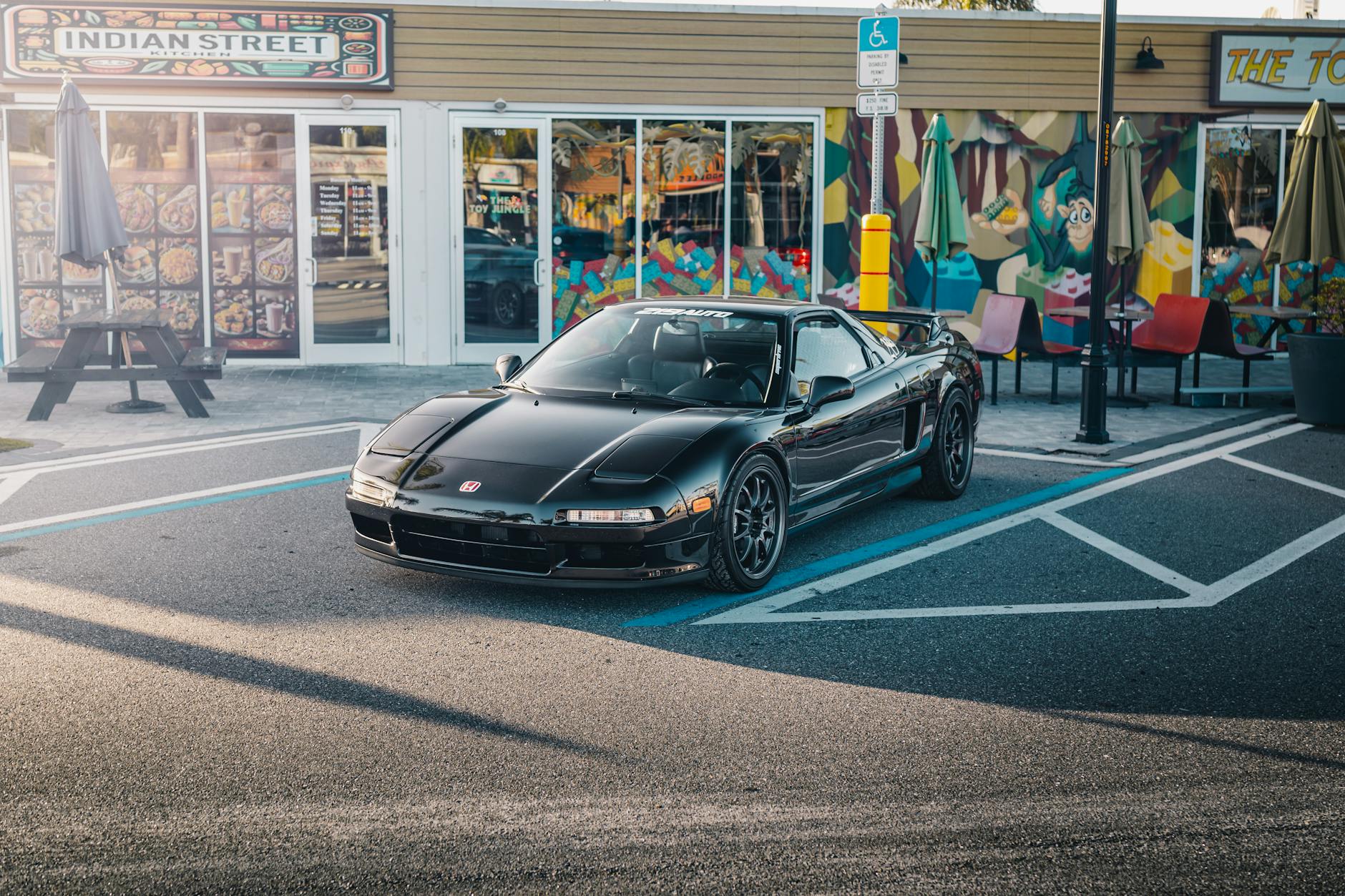
If you’ve ever watched a Fast & Furious film, scrolled through car Instagram, or stood open-mouthed at a Tokyo parking lot, you’ve encountered JDM cars. But what exactly does JDM mean — and why do enthusiasts around the world obsess over Japanese Domestic Market vehicles? This complete guide explains everything you need to know about JDM cars, their legendary history, and how you can experience them firsthand in Japan.
[st_af id=”119″]
What Does JDM Mean?
JDM stands for Japanese Domestic Market — a term referring to vehicles and automotive parts manufactured and sold exclusively in Japan. These cars were built to meet Japanese regulations, roads, and consumer preferences, often with performance specifications, safety features, and aesthetic details that never made it to export markets.
While the term technically describes any car sold in Japan, the car culture world uses “JDM” specifically to mean the high-performance, tuner-friendly, and often turbocharged sports cars that defined Japanese automotive excellence in the 1980s and 1990s. Think Nissan GT-R, Toyota Supra, Mazda RX-7, Honda NSX — these are the icons of JDM culture.
The JDM legend was born from a unique combination of Japanese engineering precision, a thriving street racing underground, and export restrictions that made these vehicles almost impossibly rare outside Japan. Decades later, enthusiasts worldwide still hunt for genuine JDM-spec vehicles, and Japan remains the ultimate pilgrimage destination for car lovers.
The History of JDM Cars: The Golden Era (1980s–1990s)
To understand JDM culture, you have to go back to post-war Japan. By the late 1970s, Japan had transformed from a war-damaged economy into an industrial powerhouse, and its automotive industry was at the forefront of that transformation. Japanese manufacturers like Toyota, Nissan, Honda, Mazda, and Subaru weren’t just making reliable economy cars — they were pouring serious engineering resources into performance vehicles.
The 1980s saw Japanese automakers operating under what’s known as the “gentlemen’s agreement” — an informal deal between manufacturers to limit cars to 276 horsepower (206 kW) on paper, regardless of actual output. This led to a fascinating situation: cars that officially made 276 hp but actually produced significantly more. The Nissan Skyline GT-R, for example, was widely known to far exceed its stated output.
This decade also birthed the Group A and Group B rally scenes, which pushed Subaru and Mitsubishi to develop the Impreza WRX STI and Lancer Evolution — cars that became rallying legends and JDM icons simultaneously.
The 1990s are considered the true golden era of JDM. This decade produced nearly every car that enthusiasts still worship today:
- 1989–2002 — Nissan Skyline GT-R (R32, R33, R34 generations)
- 1993–2002 — Toyota Supra (A80 generation, twin-turbo 2JZ)
- 1992–2002 — Mazda RX-7 (FD3S with twin-rotor 13B engine)
- 1990–2005 — Honda NSX (aluminum monocoque supercar)
- 1992–2007 — Mitsubishi Lancer Evolution (Evo I through IX)
- 1992–2007 — Subaru Impreza WRX STI (all generations)
- 1983–2000 — Toyota AE86 (the original Hachi-Roku touge legend)
Japan’s unique automotive regulations also contributed to the JDM mystique. The Shaken system — Japan’s strict bi-annual vehicle inspection — made it expensive to keep older, modified cars on the road. This pushed many low-mileage, well-maintained JDM cars into export markets when they reached a certain age, and strict emissions rules encouraged manufacturers to develop cleaner but still high-performing engines.
Why JDM Cars Are Legendary: Engineering That Changed the World
JDM cars didn’t become legendary by accident. Japanese engineers brought a distinctive philosophy to performance car development that set them apart from European and American rivals.
Reliability meets performance. While European exotics of the era were notoriously finicky, JDM sports cars combined supercar-level performance with Japanese build quality and everyday reliability. The Honda NSX was designed by Ayrton Senna to be a supercar that anyone could drive confidently — and it worked. The Supra’s 2JZ engine became famous for being able to handle 600, 800, even 1000+ horsepower builds on the stock block.
Advanced technology ahead of its time. The Nissan GT-R R32 featured ATTESA E-TS all-wheel drive, four-wheel steering (Super HICAS), and a sophisticated multi-link suspension that made it the fastest production car around Nürburgring in its era. Honda’s NSX used an aluminum monocoque chassis — unheard of for a production car at that price point. Mazda’s rotary engine in the RX-7 produced extraordinary power-to-weight ratios that combustion engine designers still marvel at.
Tuning potential. JDM engines were often conservative in their factory state — engineered with significant headroom for modification. The 2JZ-GTE, RB26DETT, and 4G63 have become the subject of nearly mythological tuning culture. A stock 2JZ making 320 hp from the factory could be pushed to 1000 hp with supporting modifications, using the same engine block. This made JDM cars the backbone of global tuner culture.
The touge connection. Japan’s mountain pass racing culture (touge) directly influenced JDM car development. Roads like the Hakone Turnpike and Irohazaka demanded precise, nimble handling rather than straight-line speed. JDM sports cars were tuned for corner-carving — a handling philosophy that translated perfectly to track days and competitive motorsport worldwide.
The Most Famous JDM Cars of All Time
Nissan Skyline GT-R (R32/R33/R34)
Nicknamed “Godzilla” by the Australian press after it dominated touring car racing, the GT-R is arguably the most iconic JDM car ever made. The R34 generation in particular — with its twin-turbocharged RB26DETT straight-six — became a cultural phenomenon through video games, films, and international motorsport. Today, pristine R34 GT-Rs sell for well over $200,000 USD.
Toyota Supra (A80, 1993–2002)
The fourth-generation Supra with its 2JZ-GTE twin-turbo engine is the stuff of tuning legend. While the car made 320 hp from the factory, the engine’s robust internals mean it can handle extraordinary power levels without internal modification. The Supra appeared in Fast & Furious and became a symbol of JDM performance globally.
Mazda RX-7 (FD3S, 1992–2002)
The FD RX-7 was Mazda’s masterpiece — a lightweight, rear-wheel-drive sports car with a twin-turbocharged rotary engine that revved to 8,000 RPM and produced a completely unique driving experience. Its sequential twin-turbo system was cutting-edge for its time, and the car’s near-perfect 50/50 weight distribution made it a cornering machine. Rotary reliability concerns aside, the FD is considered one of the most beautiful Japanese cars ever designed.
Honda NSX (NA1, 1990–2005)
The NSX proved that Japan could build a world-class supercar. Developed with input from Ayrton Senna, it featured a mid-mounted VTEC V6, aluminum construction, and handling so predictable and forgiving that even amateur drivers could explore its limits safely. It forced Ferrari to improve their own products and remains one of the greatest driver’s cars ever made.
Mitsubishi Lancer Evolution & Subaru Impreza WRX STI
The eternal rivals of the World Rally Championship. The Evo and STI turned all-wheel-drive turbocharged rally technology into accessible, four-door street cars that could embarrass supercars costing three times as much. Their rivalry defined an entire generation of performance car culture, and both have dedicated worldwide followings to this day.
Toyota AE86 (Hachi-Roku)
The AE86 Corolla Levin/Trueno might seem modest by modern standards, but this lightweight rear-wheel-drive coupe became the defining touge machine. Immortalized in the manga and anime “Initial D,” the Hachi-Roku taught a generation of drivers that power isn’t everything — balance, weight, and driver skill matter more. It inspired the modern Toyota 86/GR86 and Subaru BRZ.
JDM vs USDM: What’s the Difference?
Understanding the JDM/USDM (United States Domestic Market) distinction is crucial for any car enthusiast. The same model sold in Japan and America could differ significantly:
- Engine tuning: JDM versions often had higher compression ratios, different ECU maps, and sometimes entirely different engines to meet Japanese fuel quality and emissions standards.
- Power output: JDM cars were frequently more powerful than their export counterparts. The JDM Honda Civic Type R, Integra Type R, and various Skyline variants made more power than equivalent USDM models.
- Safety equipment: JDM cars sometimes had more advanced safety and driver assistance technology than export models, and sometimes less — depending on target market requirements.
- Styling differences: Front bumpers, headlight assemblies, taillights, and interior trim often differed between JDM and USDM versions, sometimes significantly.
- Availability: Many JDM models were never exported at all. The Nissan Silvia, Honda Beat, Suzuki Cappuccino, and countless kei sports cars never officially left Japan.
- Right-hand drive: JDM cars are right-hand drive (steering wheel on the right), matching Japan’s left-side driving. This makes them legal to import to countries like Australia, UK, and New Zealand, but creates complications in the US and continental Europe.
The import laws matter here. In the United States, the 25-year rule allows JDM vehicles to be legally imported once they reach 25 years of age. This means the R34 GT-R became legal to import to the US in 2024 — driving massive price increases and international demand. In other countries, the rules differ: Australia allows 25-year imports, while the UK and New Zealand have more relaxed rules allowing newer imports.
How to Experience JDM Cars in Japan as a Tourist
If you’re visiting Japan, experiencing real JDM car culture should be on your itinerary. Japan offers opportunities to see, meet, and even drive legendary JDM machines that are impossible to find anywhere else in the world — often at prices that seem extraordinary by Western standards.
Rent a JDM Sports Car in Tokyo
The most direct way to experience JDM culture is to actually drive one. Services like Samurai Car Japan offer tourists the chance to rent authentic JDM sports cars — GT-Rs, Supras, RX-7s, and more — in Tokyo. This is genuinely the best way for overseas enthusiasts to experience these legendary machines on their home turf, on Japanese roads, with the full cultural context that makes JDM special.
For a full breakdown of JDM rental options, pricing, and what to expect, check out our dedicated guide: JDM Car Rental in Japan — Complete Tourist Guide.
Visit a JDM Car Meet
Japan’s car meet culture is legendary. The Daikoku Parking Area on the Wangan expressway near Yokohama is the most famous informal car meet spot in the world — on weekend nights, it fills with Lamborghinis, GT-Rs, tuned kei cars, and everything in between. Our Daikoku PA guide covers everything you need to know to visit.
Tokyo itself has several established car meet locations. See our best car meet spots in Tokyo guide for current locations and timing advice.
Drive a Touge Mountain Pass
The mountain pass roads that inspired Initial D and shaped JDM car culture are still there — and still open to the public. Roads like Hakone Turnpike, the Irohazaka in Nikko, and Iroha-zaka in Gunma prefecture offer spectacular driving with incredible scenery. Read our touge culture guide to understand the history and etiquette of mountain pass driving in Japan.
Try a Drift Experience
Several circuits and experience providers around Japan offer drift experiences in RWD JDM cars. Whether you’re a beginner or an advanced driver, getting sideways in a proper Japanese sports car on a closed circuit is an unforgettable experience. Our drift experience guide covers the best options near Tokyo and Osaka.
Visit JDM Museums and Showrooms
Several museums and brand heritage facilities in Japan display legendary JDM cars in immaculate condition. The Toyota Automobile Museum in Nagakute, the Honda Collection Hall in Motegi, and the Mazda Museum in Hiroshima all feature iconic JDM models alongside the full story of Japanese automotive history. Nissan’s Zama Heritage Collection houses an extraordinary collection of GT-Rs and classic Skylines.
[st_af id=”77″]
JDM Car Culture Today
JDM culture hasn’t faded — if anything, it’s stronger than ever. The combination of nostalgia, genuine engineering excellence, and the unique scarcity of these vehicles has driven values to extraordinary levels. Clean R34 GT-Rs routinely sell for $150,000–$300,000 USD. FD RX-7s in good condition command $40,000–$80,000. Even the humble AE86 has become a collector’s piece.
Meanwhile, Japan continues to produce new performance cars that carry the JDM torch: the GR86, GR Supra, GR Yaris, Honda Civic Type R (FL5), Subaru BRZ, and the Nissan Z. These modern machines honor the spirit of their predecessors while meeting contemporary safety and emissions standards.
The video game connection cannot be overstated. Gran Turismo, Forza Motorsport, Need for Speed, and especially the Fast & Furious franchise have introduced JDM culture to billions of fans worldwide who may never visit Japan. This has created massive global demand for both the physical cars and the cultural experience of Japan itself.
Japan’s own domestic car scene remains vibrant. Events like Tokyo Auto Salon (held every January at Makuhari Messe) attract hundreds of thousands of visitors and showcase the absolute cutting edge of JDM tuner culture — custom GT-Rs, wide-body Supras, stanced kei cars, and everything imaginable. It’s the world’s largest tuning car show and an essential pilgrimage for any serious enthusiast.
Planning Your JDM Experience in Japan
If JDM cars are your passion, Japan will overwhelm you in the best possible way. Here’s a quick planning framework:
- Base yourself in Tokyo: Most JDM rental services, car meets, and automotive experiences are Tokyo-accessible
- Visit on weekends: Car meets, including Daikoku PA, are busiest Friday and Saturday nights
- January visit: Tokyo Auto Salon runs mid-January for three days at Makuhari Messe
- Book JDM rentals early: Availability for specific models (especially GT-Rs and Supras) fills up weeks in advance
- Get an International Driving Permit: Required to legally drive in Japan on a foreign license — get one before you travel
- Respect local traffic laws: Japan is strict on traffic enforcement; keep to speed limits especially on expressways
For the most complete JDM rental experience in Tokyo — including GT-Rs, Supras, RX-7s, and other legends — Samurai Car Japan is the premier choice for foreign tourists wanting an authentic, memorable experience behind the wheel of Japan’s greatest sports cars.
Related Guides
- JDM Car Rental in Japan — Complete Tourist Guide
- Daikoku Parking Area Car Meet Guide
- Best Car Meet Spots in Tokyo
- Touge Culture in Japan — A Complete Guide
- Drift Experience in Japan Guide
Experience JDM Culture in Person — Daikoku PA Tour
The best way to understand JDM culture is to be at Daikoku PA on a Friday night. Daikoku Tour runs private English-guided JDM night tours from Tokyo and Yokohama, with the option to ride in a real R34 GT-R.
[st_af id=”87″]
Dreaming bigger than one night?
Our JDM Golden Route is a 7-day private trip — Tokyo, Daikoku PA, Mooneyes, Top Secret, Fuji Speedway, Suzuka, Kyoto and Osaka — with a local JDM insider at your side the whole week. No research, no planning, no language barrier.
Leave a Reply