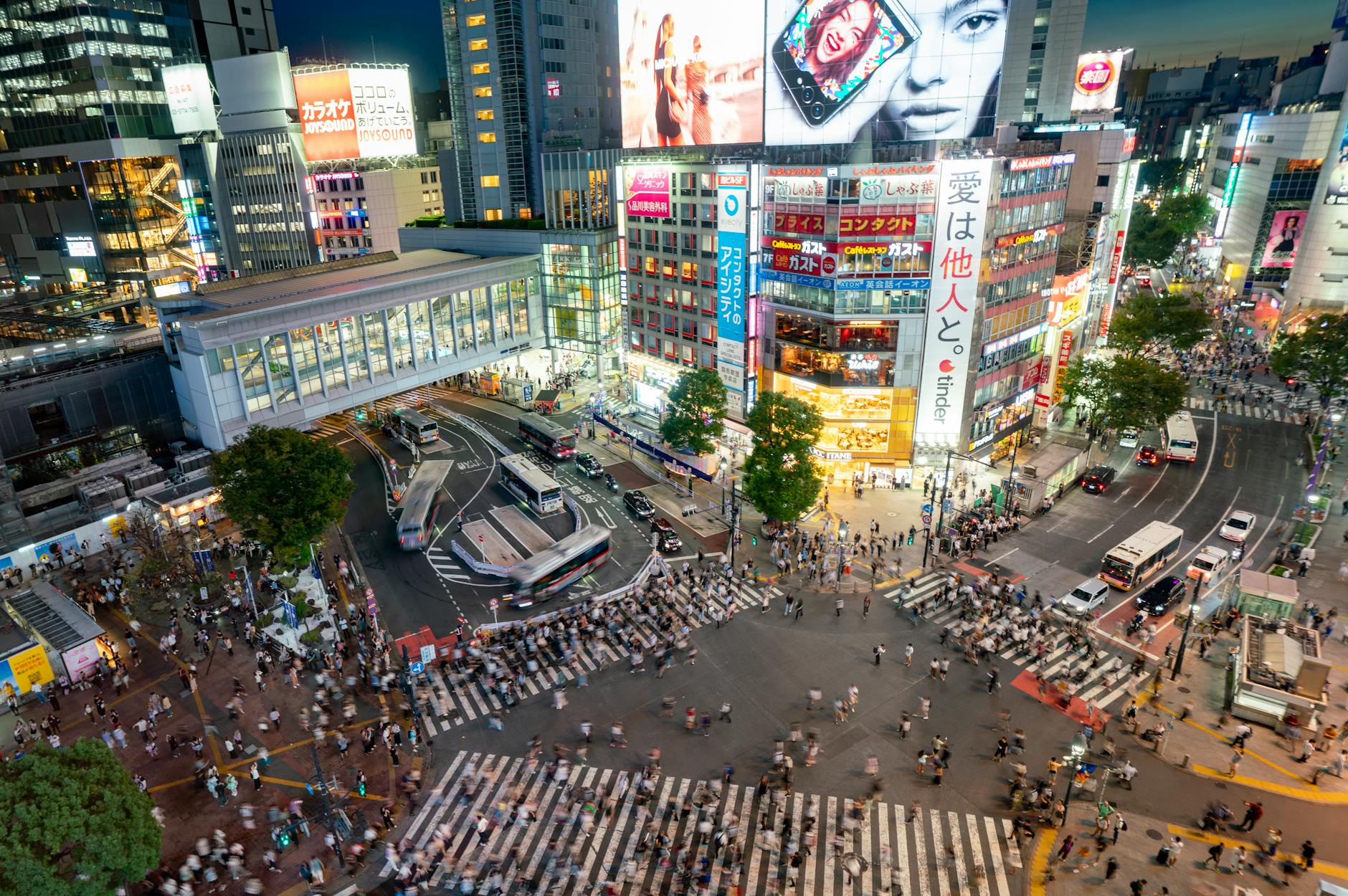
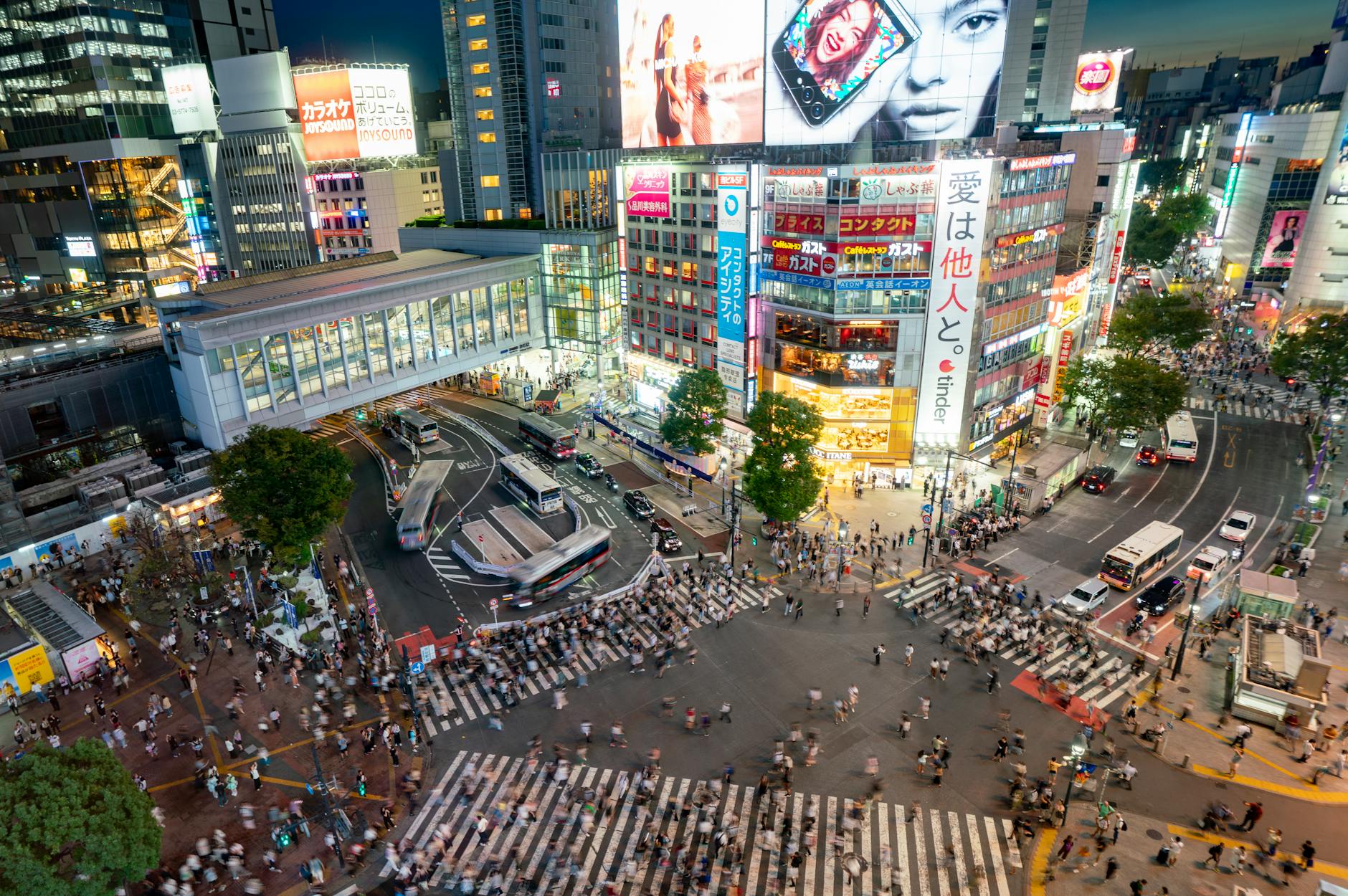
Every few minutes, the traffic lights at Shibuya Crossing turn red in all directions simultaneously. And then it happens: from every corner, in every direction, a human flood surges forward. Around 3,000 people cross at once, moving in five directions, weaving around each other in a spontaneous choreography that somehow never results in collisions. For roughly 47 seconds, the intersection belongs entirely to pedestrians — and to the millions of people who have photographed it, filmed it, and simply stood and stared at it in disbelief. Then the lights change and the cars return.
Welcome to Shibuya Crossing — the most photographed pedestrian intersection on Earth, one of the defining images of modern Tokyo, and quite possibly the single most memorable 47 seconds you will experience in Japan. This 2026 guide covers everything you need to know: the best spots to watch from, when to visit, how to cross it yourself, photography tips, and everything worth seeing nearby.
What Is Shibuya Crossing?
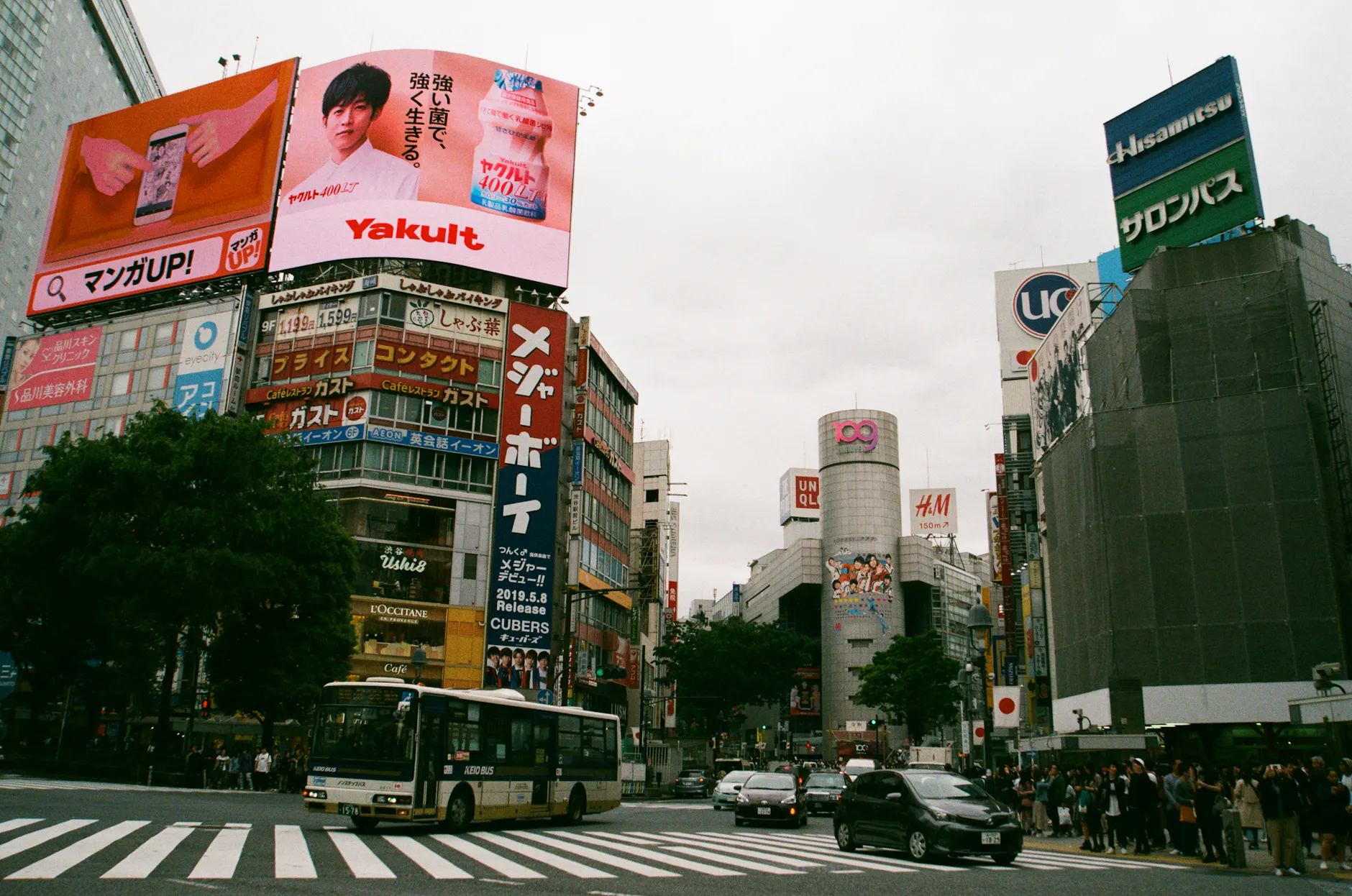
Shibuya Crossing — officially known as the Shibuya Scramble Crossing — is a scramble intersection located at the eastern exit of Shibuya Station in Tokyo. What makes a scramble intersection different from a regular crossing is that all vehicle traffic is stopped simultaneously in all directions, and pedestrians are then permitted to cross in any direction — straight across, diagonally, every way at once. This design, sometimes called a Barnes Dance (after the traffic engineer Henry Barnes who popularised it in the United States), was intended to improve pedestrian safety at very high-traffic intersections.
In Shibuya’s case, the result is visually extraordinary. The crossing spans five directions and sits at the convergence of some of Tokyo’s busiest streets, surrounded by the tower screens and neon signs of Shibuya’s commercial district. When the signal changes, the volume of pedestrians involved creates something that looks less like ordinary foot traffic and more like a natural phenomenon — a tide surge, a murmuration, a momentary dissolution of individual agency into collective flow.
The crossing has appeared in numerous films and has become one of the most iconic images in popular culture globally. Lost in Translation, Fast and Furious: Tokyo Drift, the Fast and the Furious franchise, video games like Yakuza, anime, music videos — Shibuya Crossing is shorthand for urban Tokyo in every medium. Visiting it in person, after years of seeing it on screen, carries a particular emotional charge that few tourist experiences deliver.
Key Facts
Important
Daily foot traffic: Approximately 2.4 million people pass through Shibuya Station daily, making it the world’s busiest station by some measures
Crossing directions: 5 directions simultaneously during the scramble phase
Green light duration: Approximately 47 seconds for pedestrians
Peak crowd per crossing: Estimated 1,000–3,000 people cross simultaneously during rush hour
Why called a “scramble”: All traffic signals turn red at the same time, letting pedestrians cross in all directions including diagonally — this is what defines a scramble intersection
Admission: Free — Shibuya Crossing is a public street
Despite its global fame, Shibuya Crossing is simply a public street intersection. There is no admission fee, no tickets required, no queues. You can visit at any time of day or night, stay as long as you like, and cross as many times as you want. This accessibility is part of what makes it such a remarkable urban attraction — the spectacle is entirely free, entirely public, and entirely genuine.
Best Spots to View Shibuya Crossing
Standing at street level and crossing is one experience. But Shibuya Crossing really reveals itself from above, and there are several excellent vantage points to choose from.
1. Starbucks 2F/3F (Most Popular Free Viewpoint)
The Starbucks Coffee located in the Q Front building, right on the corner of the crossing, has floor-to-ceiling windows on the second and third floors that look directly down onto the intersection. This is the most popular free viewing spot and the one you have probably seen in countless travel photographs. The view is excellent — you can see the full width of the crossing from the window seat positions.
The catch: window seats are claimed early and held for long periods. If you want a window seat, arrive when the Starbucks opens (typically around 7:00–8:00) or during off-peak midday hours. On weekends and holidays, competition for window seats begins before opening and the second floor fills quickly. You can order a coffee and wait in the general seating area, but window seats may require patience.
2. Mag’s Park Rooftop (Small Fee, Less Crowded)
The rooftop terrace above Mag’s Park (sometimes referred to as the L’Occitane building) offers an elevated outdoor view of the crossing from a different angle. There is a small entrance fee, which keeps crowds manageable. The outdoor setting gives you more flexibility with camera angles than the interior Starbucks view, and the crowd is typically smaller and more relaxed.
3. Shibuya Sky Observation Deck (Best Aerial View, Paid)
For the ultimate bird’s-eye perspective on Shibuya Crossing, Shibuya Sky — the rooftop observation deck of Shibuya Scramble Square at 230 meters — provides an almost directly overhead view of the intersection. From this height, the crossing looks like an abstract animation — tiny figures flowing in geometric patterns. It is the most dramatic possible view of the crossing and uniquely puts the entire Shibuya neighbourhood into context. See our full Shibuya Sky guide for tickets and details.
4. Q Front Building
The Q Front building directly faces the crossing and offers ground-level close-up views from its forecourt and entrance area. This is one of the better positions for street-level photography of the crossing because you can capture the full flow of pedestrians against the backdrop of the tower screens and neon advertising on the opposite buildings.
5. Shibuya Stream Rooftop (Free)
Shibuya Stream, the modern commercial development along the Shibuya River, has a rooftop terrace that offers views across the Shibuya area. While not as direct a view of the crossing as the Starbucks or Mag’s Park options, it provides a broader perspective on the neighbourhood and is reliably uncrowded.
Best Times to Visit Shibuya Crossing
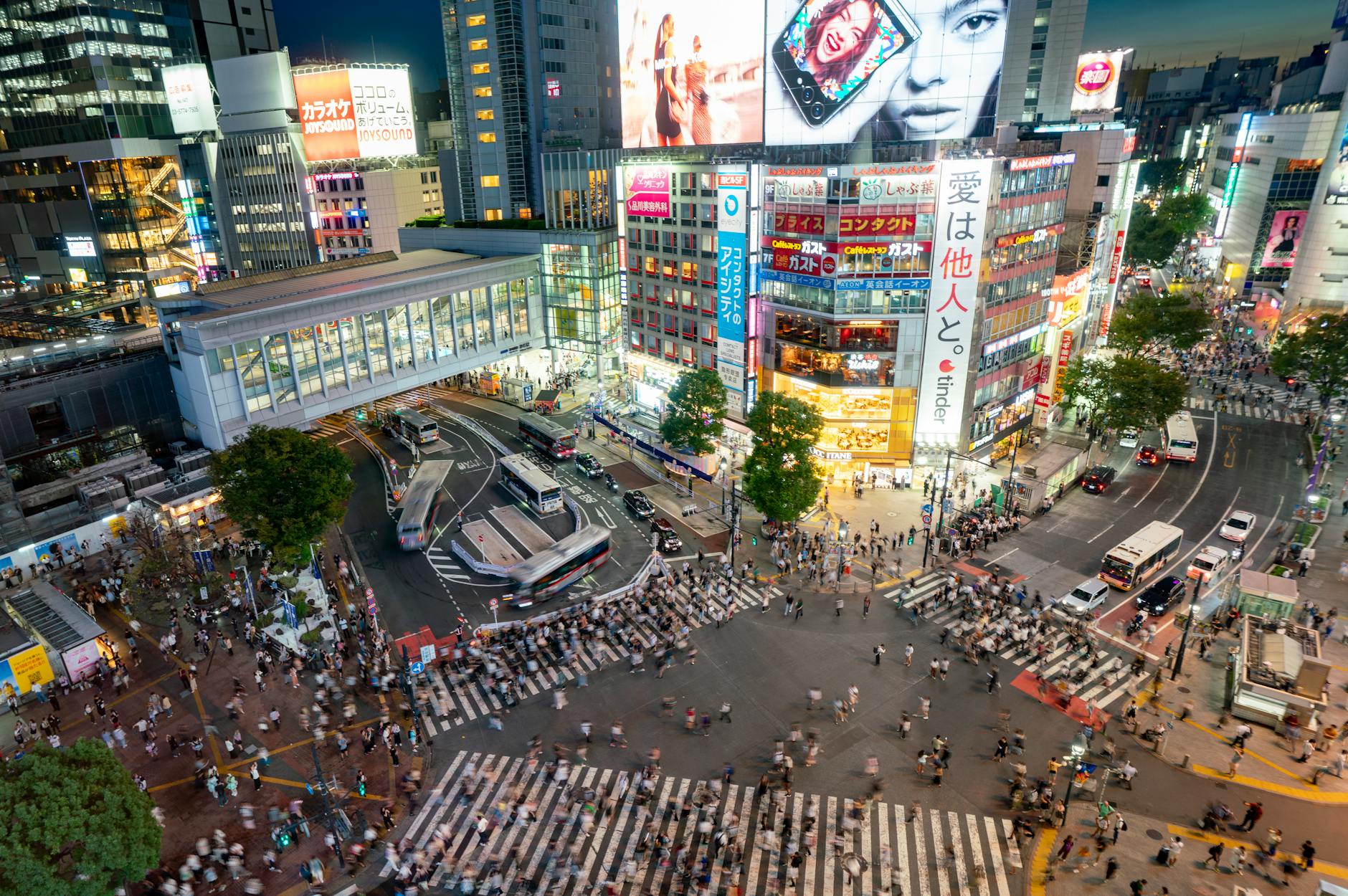
Shibuya Crossing operates 24 hours a day, 7 days a week. But the experience varies enormously depending on when you visit.
Rush Hour (Weekday 8:00–9:00 and 17:00–20:00)
If you want to see Shibuya Crossing at maximum intensity, come during weekday rush hour. The commuter crowds combine with shoppers and tourists to push crossing volumes to their peak. The intersection during evening rush hour (particularly 17:30–19:00) is genuinely overwhelming in the best possible way — a constant succession of massive crossing events that barely pause between cycles.
Friday Evenings
Friday evenings add an electric social energy to the already intense rush hour crowd. People are in higher spirits heading into the weekend. The area around the crossing fills with groups heading to restaurants and bars. The combination of volume and atmosphere makes Friday evening one of the most memorable times to visit.
Halloween (October 31)
For many years, Shibuya Crossing on Halloween night was one of the most extraordinary public gatherings in Tokyo — tens of thousands of costumed revellers filling the streets, the crossing becoming a parade of elaborate costumes. Note that in recent years, the Shibuya city government has implemented stricter crowd control measures around Halloween, including restrictions on alcohol consumption near the crossing. Check current rules before visiting.
New Year’s Eve
The countdown to the new year draws enormous crowds to Shibuya. The crossing becomes a focal point for celebrations in the midnight hours, and the energy is unforgettable — though be prepared for very large crowds and plan your transport home carefully as trains fill to capacity after midnight.
Rainy Days
This is perhaps the most underrated time to visit Shibuya Crossing. When rain falls, every crossing pedestrian opens an umbrella — and from above, the intersection transforms into a stunning kaleidoscope of coloured circles in motion. Some of the most famous photographs of Shibuya Crossing were taken in the rain from the Starbucks window, and the visual is genuinely unlike anything you will see on a dry day. If it rains during your Tokyo visit, do not hide from it — go to Shibuya.
How to Cross It Yourself
After photographing the crossing from above, you absolutely must cross it yourself. The experience of being inside the flow is completely different from watching it — and it is something most foreign visitors describe as one of their most vivid Japan memories.
Practical tips for crossing: when the signal turns green, simply step off the pavement and walk at a natural pace toward your destination corner. The flow is remarkably self-organising and collisions are essentially non-existent despite appearances. Most people keep slightly to the left, mirroring Japan’s general pedestrian convention. Do not stop in the middle of the crossing to take photos — keep moving and shoot as you walk, or photograph from the edges once you reach the other side.
Try crossing in multiple directions during a single visit. Cross diagonally from one corner to the opposite. Then wait for the next cycle and cross straight. Then cross again from a different starting point. Each direction gives you a different view of the flow and a different experience of being inside it.
Photography Tips
Pro Tip
From Starbucks: Get there early for a window seat. Press your lens against the glass to eliminate reflections. Shoot in burst mode during each crossing cycle to capture the flow at different stages.
Long exposure at night: From any elevated position, a 2–4 second exposure with a tripod turns the crossing into rivers of light trails. ISO 100–200, aperture f/8–f/11 for sharpness across the scene.
Best lens: 24–70mm covers most situations. A 50mm equivalent gives you a natural field of view similar to the human eye. Avoid very wide angles from street level as they can distort the perspective.
Rainy day tip: Shoot from the Starbucks window during rain for the famous umbrella-flower effect. Use a longer shutter speed (1/30–1/60 sec) to let the moving umbrellas create a slight blur that enhances the pattern effect.
Avoid shooting into the sun: In morning hours, the sun is behind the Q Front building looking from the Starbucks direction; in late afternoon it shifts. Check sun direction for your visit time.
Nearby Attractions
Shibuya Crossing sits at the epicentre of one of Tokyo’s most rewarding neighbourhoods. Everything listed below is within easy walking distance.
Hachiko Statue (2-minute walk)
The bronze statue of Hachiko the Akita dog stands just outside Shibuya Station’s Hachiko Exit, a 2-minute walk from the crossing. Hachiko became famous for waiting at Shibuya Station every day for nearly 10 years after his owner died, and his story became one of Japan’s most beloved tales of loyalty. The statue is a major landmark and one of the most photographed spots in Shibuya. It also serves as an extremely popular meeting point — “meet at Hachiko” is one of the most common phrases in Tokyo social life.
Shibuya Parco
Shibuya Parco is the reimagined version of one of Tokyo’s most storied fashion department stores. The current building, reopened in 2019, contains an extraordinary mix of high-concept retail, galleries, and the famous Nintendo Tokyo store. Even if you are not shopping, walking through Parco is worth the time — the building itself is architecturally interesting and the tenant mix is unlike any shopping centre you will find outside Japan.
Shibuya 109
The cylindrical silver tower of Shibuya 109 is one of the most recognisable buildings in Tokyo — a pillar of Japanese youth fashion culture since the 1980s. The building has evolved considerably over the decades but remains a cultural landmark and a genuinely interesting destination for anyone interested in Japanese fashion and street style.
Shibuya Stream
A newer addition to the Shibuya landscape, Shibuya Stream is a mixed-use development built above the rerouted Shibuya River. The riverside promenade is a pleasant walk, and the development contains restaurants, a hotel, and the Google Japan offices. It represents the newer, more considered urbanistic direction of Shibuya’s ongoing regeneration.
Nonbei Yokocho (Bar Alley)
A few minutes’ walk from the crossing, Nonbei Yokocho (literally “drunkard’s alley”) is a narrow laneway lined with tiny bars, yakitori restaurants, and izakayas. The alley has survived successive rounds of Shibuya redevelopment and retains the intimate, slightly ramshackle atmosphere of old Tokyo nightlife. This is the place to go after photographing the crossing — sit down, order yakitori and beer, and let the neighbourhood come to you.
Getting to Shibuya Crossing
Shibuya Crossing is directly outside Shibuya Station’s Hachiko Exit (also called the West Exit). Shibuya Station is one of the most connected transport hubs in Tokyo, served by the following lines:
- JR Yamanote Line — the main loop connecting Shinjuku, Harajuku, Ebisu, and all major central Tokyo stations
- Tokyo Metro Ginza Line
- Tokyo Metro Hanzomon Line
- Tokyo Metro Fukutoshin Line
- Tokyu Toyoko Line (direct connections to Yokohama)
- Tokyu Den-en-toshi Line
- Keio Inokashira Line
Navigating Shibuya Station itself can be bewildering — it is genuinely one of the most complex station buildings in the world, currently undergoing long-term redevelopment. The key phrase to remember is: Hachiko Exit. Follow signs for the Hachiko Exit, emerge from the station, and the crossing will be immediately in front of you. If you get confused inside the station, ask a station staff member for directions to the Hachiko Exit.
Explore Tokyo’s Streets Like a Local
Shibuya Crossing is one of the great Tokyo experiences. But the city has another dimension that most tourists never access: its streets at speed, from behind the wheel of something memorable.
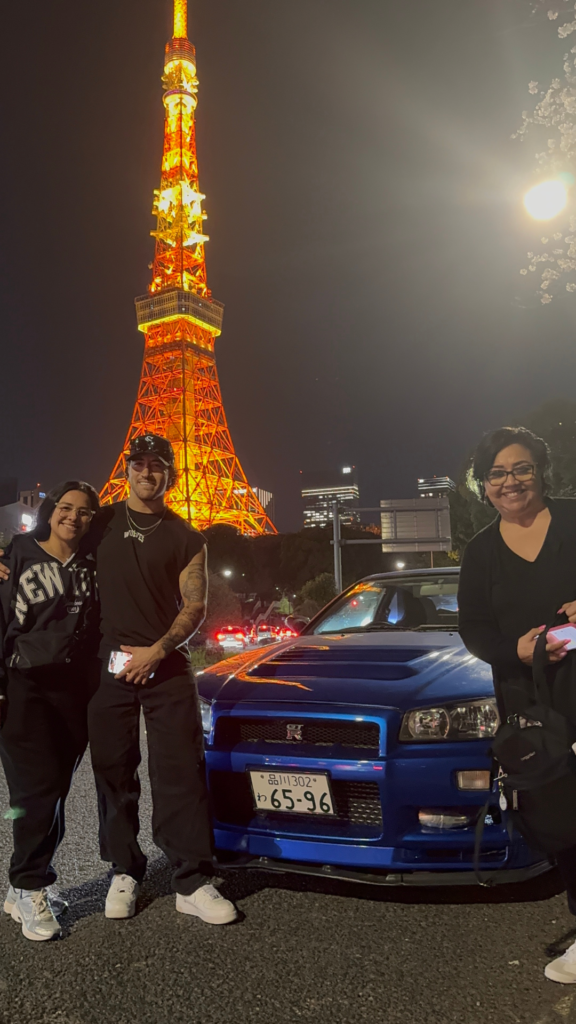
The best way to truly experience Tokyo after visiting Shibuya Crossing? Rent a JDM sports car from our Shibuya showroom and cruise the famous expressways, the wangan bayside highway, and the Rainbow Bridge route at night. Drive the same streets that Tokyo’s car culture made legendary — in a GT-R, Supra, or RX-7 — and see the city from a completely different perspective. Samurai Car Japan offers JDM car rentals departing directly from Shibuya, making it easy to combine the ultimate pedestrian Tokyo experience with the ultimate driving one.
JDM tour guide!
Step into the world of “Fast & Furious” with our exclusive Daikoku Tour!
Experience the legendary car meet atmosphere for yourself. Make it the ultimate highlight of your Tokyo trip!
Related Guides
Frequently Asked Questions
What is special about Shibuya Crossing?
Shibuya Crossing is a scramble intersection — all traffic lights turn red simultaneously and pedestrians cross in every direction at once, including diagonally. The combination of this crossing design with the enormous foot traffic volume of Shibuya creates a visual spectacle unlike any other pedestrian crossing in the world. An estimated 1,000–3,000 people cross simultaneously during peak times, producing the flowing, wave-like patterns that have made the intersection one of the most photographed spots on Earth.
When is the best time to see Shibuya Crossing?
For maximum crowd volume: weekday evening rush hour (17:30–19:00) or Friday evenings. For atmosphere and photos: any time after dark when the neon lights are fully lit, typically from 19:00 onwards. For a quieter experience with good photographic light: early morning (7:00–9:00). For the famous umbrella pattern: any time it rains. There is genuinely no bad time to visit — each time of day and each season offers something different.
Is Shibuya Crossing free to visit?
Yes. Shibuya Crossing is a public street intersection. There is no admission fee, no ticket required, and no formal tourist facility to visit. The surrounding areas — the Starbucks viewing spot, the Q Front building forecourt, the streetscape of the immediate neighbourhood — are all freely accessible. Some elevated viewing spots such as Mag’s Park charge a small fee, and Shibuya Sky observation deck charges 2,000 yen for its views from 230 meters.
How do I get to Shibuya Crossing?
Take any train to Shibuya Station and follow signs for the Hachiko Exit. The crossing is immediately outside the exit — you will see it as soon as you step out of the station. Shibuya Station is served by multiple JR and Tokyo Metro lines, as well as Tokyu and Keio lines, making it one of the most accessible locations in the entire Tokyo metropolitan area.
Is Shibuya Crossing safe for tourists?
Completely safe. Despite the apparent chaos of thousands of people crossing simultaneously, the flow is remarkably orderly. Collisions between pedestrians are very rare — people unconsciously coordinate and navigate around each other with impressive efficiency. The surrounding neighbourhood is safe, well-lit at night, and heavily policed during major events. Standard urban travel common sense applies: be aware of your belongings in crowded conditions, particularly during major events like Halloween and New Year’s Eve when pickpocket risk increases with crowd density.
[st_af id=”862″]
🇯🇵 Plan Your Japan Experience
JDM Car Rental
Drive a GT-R, Supra, RX-7, or Silvia on the roads they were built for. Hakone passes, Wangan highway, mountain touge — your dream JDM experience.
Daikoku PA Tour
Visit Japan’s most legendary car meet. Hundreds of modified cars, passionate owners, and the heartbeat of JDM culture. Guided weekend night tours available.
Photo Guide Tour
Capture stunning photos at locations only locals know. Hidden shrines, backstreet alleys, rooftop views, and golden hour spots for unforgettable shots.