Things to Do in Tokyo at Night: Best Nightlife, Views & Experiences (2026)
Tokyo at night is an entirely different city. Once the sun sets, neon signs flicker to life across Shinjuku, lantern-lit alleyways fill with the aroma of grilled yakitori, and observation decks reveal a glittering ocean of lights stretching to the horizon. Whether you are chasing rooftop cocktails, slurping late-night ramen, singing karaoke until dawn, or cruising the expressways in a JDM sports car, there is no shortage of things to do in Tokyo at night.
This guide covers the best Tokyo nightlife experiences, night views, late-night food, entertainment, and cultural activities for 2026. Every recommendation is geared toward foreign tourists visiting Tokyo for the first time or returning for another round of after-dark adventures.
1. Observation Decks & Night Views

Few cities on earth can match Tokyo’s nighttime skyline. The sheer density of illuminated buildings creates a carpet of light that feels infinite. Here are the top observation decks for experiencing Tokyo at night from above.
Tokyo Tower (Main Deck & Top Deck)
Tokyo Tower remains one of the most iconic structures in Japan, and at night it takes on a warm orange glow that makes it instantly recognizable from anywhere in the city. The Main Deck at 150 meters gives you a wide panorama of the surrounding Minato ward, while the Top Deck at 250 meters provides an exclusive experience with guided tours and champagne service.
Hours: 9:00 AM – 10:30 PM (last entry 10:00 PM)
Cost: Main Deck ~1,200 yen; Top Deck Tour ~2,800 yen
Nearest station: Akabanebashi (Oedo Line) or Kamiyacho (Hibiya Line)
Tokyo Skytree (Tembo Deck & Tembo Galleria)
At 634 meters, Tokyo Skytree is the tallest structure in Japan and offers the highest observation point in the city. The Tembo Deck sits at 350 meters, while the Tembo Galleria spirals up to 450 meters. On clear nights, the view is staggering: you can see the entire Kanto Plain, the curve of Tokyo Bay, and even Mount Fuji silhouetted against the western sky.
Hours: 10:00 AM – 9:00 PM (last entry 8:00 PM; hours may extend seasonally)
Cost: Tembo Deck ~2,100 yen; Tembo Galleria combo ~3,100 yen
Nearest station: Tokyo Skytree (Tobu Skytree Line) or Oshiage (multiple lines)
Shibuya Sky
Shibuya Sky is the rooftop observation deck atop Shibuya Scramble Square, and it has quickly become one of the most popular night view spots in Tokyo. At 229 meters, the open-air rooftop gives you an unobstructed 360-degree panorama. You can look straight down at the famous Shibuya Scramble Crossing, see Tokyo Tower and Skytree simultaneously, and watch the red taillights of traffic streaming along the expressways.
Hours: 10:00 AM – 10:30 PM (last entry 9:20 PM)
Cost: ~2,000 yen (advance online tickets recommended)
Nearest station: Shibuya (all major lines)
For more on what to do in the Shibuya area, check out our complete guide to things to do in Shibuya.
Mori Tower (Roppongi Hills Observatory)
The Tokyo City View observatory on the 52nd floor of Mori Tower offers a sophisticated nighttime experience. The indoor observation area is surrounded by floor-to-ceiling windows, and there is an open-air Sky Deck on the rooftop at 270 meters. The Roppongi Hills area itself is lively at night with restaurants and bars, making it easy to combine a visit here with dinner.
Hours: 10:00 AM – 10:00 PM (Sky Deck closes earlier and is weather-dependent)
Cost: ~2,000 yen; Sky Deck additional ~500 yen
Nearest station: Roppongi (Hibiya or Oedo Line)
2. Historic Bar Districts & Drinking Alleys
Tokyo’s drinking culture is legendary, and the most memorable bars are often tucked away in narrow alleyways that date back decades. These atmospheric districts are essential for anyone exploring Tokyo nightlife.
Golden Gai (Shinjuku)
Golden Gai is a labyrinth of roughly 200 tiny bars crammed into six narrow alleys in the Kabukicho area of Shinjuku. Each bar seats only 5 to 10 people, and each has its own personality: some focus on jazz, others on horror films, punk rock, or 1960s nostalgia. Walking through Golden Gai at night feels like stepping into a different era.
Many bars charge a small seating fee (typically 500-1,000 yen), and some are members-only or Japanese-speaking only. However, a growing number of bars actively welcome tourists. The atmosphere is intimate and unique, nothing like it exists anywhere else in the world.
We have a dedicated guide that covers everything you need to know: Golden Gai Shinjuku: The Complete Guide.
Omoide Yokocho (Memory Lane / Piss Alley)
Located right next to JR Shinjuku Station’s west exit, Omoide Yokocho (sometimes called “Piss Alley” by locals, though the name is outdated) is a cluster of tiny open-air food stalls specializing in yakitori (grilled chicken skewers), motsu (offal), and other grilled snacks. The smoke, the cramped seating, the cold beer, and the chatter of salarymen winding down after work create an atmosphere that perfectly captures old-school Tokyo.
Most stalls open around 5 PM and stay busy until 11 PM or midnight. It is best visited early (before 7 PM) or late (after 10 PM) to avoid the peak crowd.
Nonbei Yokocho (Shibuya)
Nonbei Yokocho, meaning “Drunkard’s Alley,” is a small collection of about 40 bars squeezed under the train tracks near Shibuya Station. It is quieter and more intimate than Golden Gai, with a distinctly local feel. The wooden buildings and hanging lanterns give it a nostalgic atmosphere that contrasts sharply with the neon chaos of Shibuya just steps away.
Harmonica Yokocho (Kichijoji)
If you want to venture slightly outside central Tokyo, Harmonica Yokocho in Kichijoji is a charming network of narrow alleys filled with small bars, restaurants, and shops. It is less touristy than Golden Gai and offers a glimpse of how locals actually spend their evenings. The izakayas here are excellent and affordable.
3. Late-Night Food Adventures

One of the great joys of Tokyo at night is the food. Many restaurants stay open well past midnight, and some never close at all. Here is where to eat when hunger strikes after dark.
Late-Night Ramen
Ramen is the quintessential late-night meal in Tokyo. After drinking, locals head to ramen shops (this post-drinking ramen is called “shime no ramen” or the finishing ramen). Some of the best late-night ramen spots include:
- Fuunji (Shinjuku): Famous for its intense tsukemen (dipping noodles). Open until late and almost always has a queue, but it moves fast.
- Ichiran (multiple locations): Individual booth-style ramen where you customize every aspect of your bowl via a paper form. Open 24 hours at most locations. Perfect for solo diners.
- Ramen Street (Tokyo Station): Located in the basement of Tokyo Station, this collection of eight ramen shops stays open until around 11 PM.
- Kabukicho area ramen shops: The streets around Kabukicho are packed with ramen joints that stay open until 4-5 AM, catering to the nightlife crowd.
Izakaya (Japanese Gastropubs)
Izakayas are casual Japanese pubs that serve drinks alongside a wide menu of small dishes: edamame, karaage (fried chicken), sashimi, grilled fish, and much more. They are the heart of Tokyo’s social dining scene. Chains like Torikizoku and Uotami are budget-friendly, while independent izakayas in areas like Yurakucho, Ebisu, and Shimokitazawa offer more character.
The Yurakucho area under the train tracks (called “gado shita”) is particularly atmospheric, with open-air izakayas set up beneath the JR tracks between Yurakucho and Shimbashi stations.
Conveyor Belt Sushi (Kaiten-zushi)
Several conveyor belt sushi chains stay open late, including Sushiro, Kura Sushi, and Genki Sushi. While not the highest-end sushi experience, the quality in Japan is far above what you would find abroad, and the prices are remarkably low (starting from about 100-150 yen per plate). Some locations in Shinjuku, Shibuya, and Ikebukuro are open until midnight or later.
24-Hour Restaurants & Convenience Stores
When everything else is closed, Tokyo’s convenience stores (konbini) are a lifesaver. 7-Eleven, FamilyMart, and Lawson serve surprisingly good onigiri (rice balls), sandwiches, oden (hot pot), and fried chicken. The quality is genuinely impressive.
For a sit-down option, chains like Yoshinoya (beef bowls), Matsuya, and Sukiya operate 24 hours in most major areas. Denny’s Japan (yes, it exists and it is different from the American version) is also open 24 hours and serves a Japanese-Western fusion menu.
4. Nighttime Entertainment
Tokyo after dark is one of the world’s great entertainment capitals. From singing your heart out in a karaoke booth to gaming in multi-story arcades, there is something for every kind of night owl.
Karaoke
Karaoke in Japan is a private room experience, not a stage-in-a-bar situation. You rent a room with your group, order drinks from a phone or tablet, and sing as badly (or brilliantly) as you want without judgment. Major chains include:
- Karaoke Kan (Shibuya): Famous as the location where the karaoke scene in “Lost in Translation” was filmed.
- Big Echo: One of the largest chains with locations everywhere. Good sound quality and extensive English song libraries.
- Joysound / DAM: The two main karaoke systems in Japan. Both have huge international song catalogs.
Rates are typically 500-1,500 yen per person per hour, with all-you-can-drink packages available. Many karaoke places are open until 5-6 AM, making them a popular option for staying out past the last train.
Arcades & Game Centers
Tokyo’s arcades (called “game centers” or “gesen”) are multi-story wonderlands filled with crane games (UFO catchers), rhythm games, fighting game cabinets, purikura (photo booths), and racing simulators. The major areas for arcades are:
- Akihabara: The spiritual home of gaming culture. Sega (now GiGO) and other arcades line the main strip.
- Shinjuku: Multiple large arcades around Kabukicho, open until very late.
- Ikebukuro: Namco Namjatown and several large game centers.
Many arcades stay open until midnight or later, and the competitive gaming floors for fighting games and rhythm games tend to get most intense after 10 PM when serious players show up.
Club Scene
Tokyo has a world-class club scene, though it tends to be more underground and less flashy than nightlife in cities like Las Vegas or Ibiza. Key clubs and areas include:
- Womb (Shibuya): One of the most famous clubs in Asia, known for techno and house music with international DJs.
- Contact (Shibuya): A smaller, more intimate club with a strong focus on electronic music.
- Ageha / Studio Coast area (Shin-Kiba): The largest club venue in Tokyo, hosting massive events.
- Sound Museum Vision (Shibuya): Multi-floor club with different music on each level.
Cover charges typically range from 2,000 to 4,000 yen and usually include one or two drinks. Most clubs do not get busy until after midnight and stay open until 5-6 AM. You will need a valid photo ID (passport for foreigners) to enter.
Robot Restaurant Area & Kabukicho Entertainment
Kabukicho, Shinjuku’s famous entertainment district, is Tokyo nightlife in its most concentrated form. While the original Robot Restaurant has closed, the area around it continues to evolve with new entertainment venues, themed restaurants, and immersive experiences. The Kabukicho Tower (Tokyu Kabukicho Tower) opened in 2023 and houses a cinema, hotel, live music venues, and entertainment floors.
Walking through Kabukicho at night is an experience in itself. The towering neon signs, the crowds, and the energy are something every visitor should witness at least once, even if you do not go into any of the establishments.
5. Night Views & Waterfront Walks
Beyond observation decks, Tokyo offers many ground-level and waterfront spots for enjoying night views.
Odaiba & Tokyo Bay
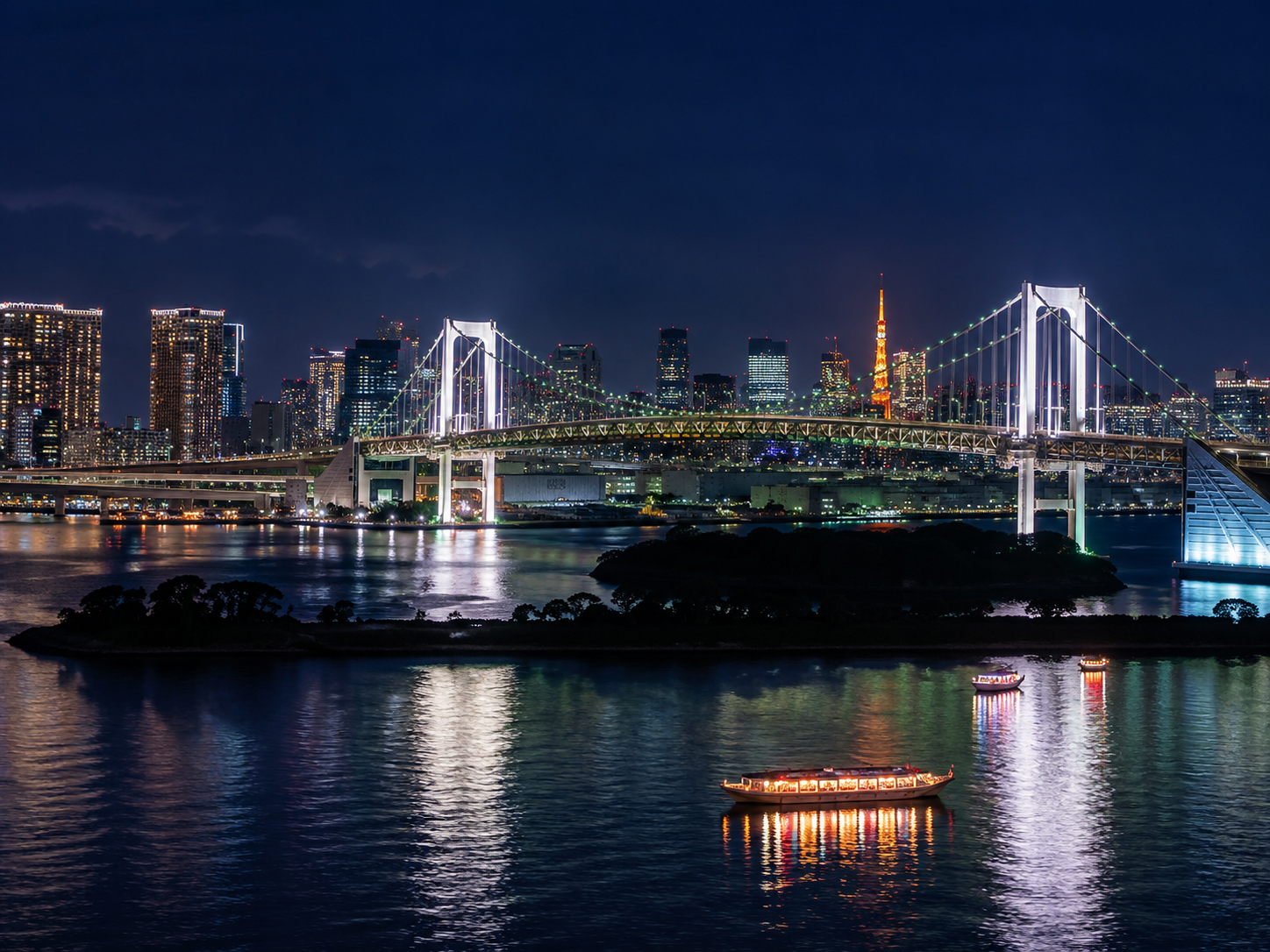
Odaiba is a large artificial island in Tokyo Bay that offers some of the best night views in the city. From the waterfront promenade, you can see Rainbow Bridge lit up in changing colors, Tokyo Tower in the distance, and the skyline of Minato ward reflected in the water. The area around AQUA CiTY and DiverCity (home of the life-size Gundam statue, which is also illuminated at night) is perfect for an evening stroll.
To get there, take the Yurikamome Line from Shimbashi. The ride itself crosses Rainbow Bridge and offers spectacular views, especially at night. Sit on the front of the driverless train for the best experience.
Rainbow Bridge Walk
The Rainbow Bridge has a pedestrian walkway that is open during certain hours (typically until 9 PM, closed in winter months). Walking across the bridge at sunset and into the evening is one of Tokyo’s most underrated experiences. The north side of the walkway faces the Tokyo skyline, while the south side looks out over Tokyo Bay.
Sumida River Cruise
Several companies operate evening cruises along the Sumida River, passing under illuminated bridges and offering views of the Skytree, Asakusa, and the waterfront. Some cruises include dinner or drinks. The yakatabune (traditional houseboat) dinner cruises are particularly atmospheric, with tatami seating and Japanese cuisine served while you drift along the river.
Roppongi Hills & Midtown Illuminations
The Roppongi area is beautifully lit at night, especially during the winter illumination season (November through February). The Roppongi Hills Keyakizaka street and Tokyo Midtown’s garden area feature elaborate light displays that draw crowds every year. Even outside the illumination season, the area has a sophisticated, upscale nighttime atmosphere worth experiencing.
6. Cultural Experiences After Dark
Tokyo at night is not just about neon and nightclubs. There are several cultural experiences best enjoyed after sunset.
Senso-ji Temple at Night (Asakusa)
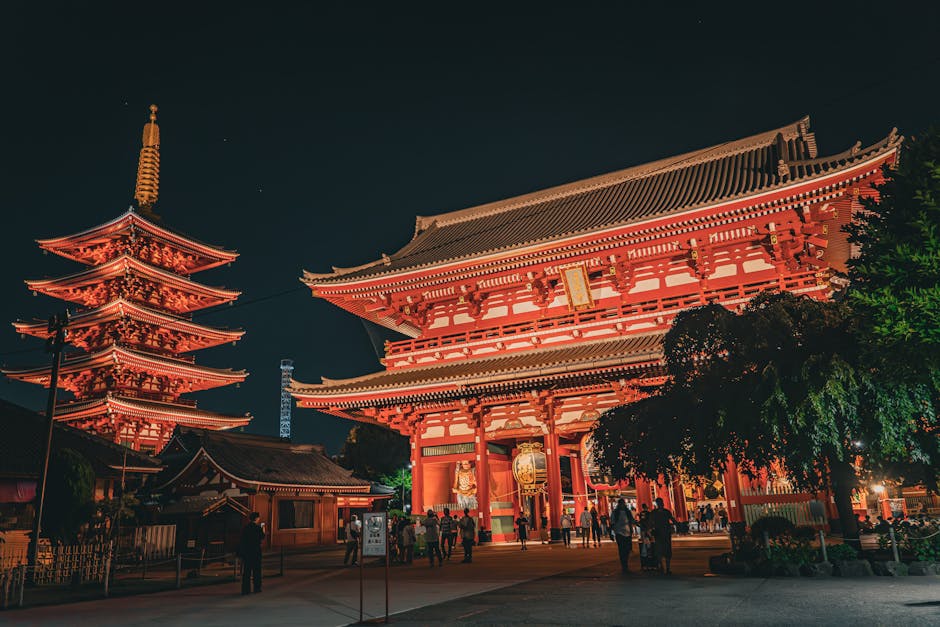
While Senso-ji is packed with tourists during the day, it takes on a serene, almost mystical quality at night. The temple grounds are open 24 hours, and the main gate (Kaminarimon), the Nakamise-dori shopping street, and the main hall are all beautifully lit. With far fewer visitors in the evening, you can appreciate the architecture and atmosphere in relative peace. The surrounding Asakusa area also has plenty of bars and restaurants for after your visit.
Meiji Shrine Forest (Limited Access)
While Meiji Shrine itself closes at sunset, the forested approach to the shrine (Meiji Jingu Gaien area) and the surrounding park can be atmospheric at dusk. During special events like New Year’s, the shrine stays open all night and the experience of visiting in the dark among thousands of worshippers is unforgettable.
Seasonal Illuminations
From November through February, Tokyo transforms with elaborate illumination displays across the city. Major illumination events include:
- Marunouchi Illumination: The tree-lined street near Tokyo Station glows with champagne-gold lights.
- Omotesando Illumination: The zelkova trees along Omotesando avenue are wrapped in lights.
- Rikugien Garden: This traditional Japanese garden offers special autumn nighttime illumination events with the foliage lit from below.
- teamLab Borderless / Planets: While technically indoor art installations, these immersive digital art museums are stunning experiences that feel especially magical visited at night. Check current locations as they may have relocated.
7. Late-Night Shopping
Tokyo caters to night owls even when it comes to shopping.
Don Quijote (Donki)
Don Quijote (commonly called “Donki”) is a chain of discount stores that sells everything from snacks and cosmetics to electronics and costumes. Several locations are open 24 hours, including the massive flagship stores in Shibuya, Shinjuku, and Roppongi. Browsing a multi-story Donki at 2 AM is a uniquely Tokyo experience. The stores are deliberately chaotic, with products crammed floor-to-ceiling and J-pop blasting on the speakers.
The Shibuya Mega Donki and the Shinjuku Kabukicho location are the most popular with tourists. They are excellent for picking up souvenirs, Japanese snacks, and quirky gifts.
Kabukicho & Shinjuku Late-Night Browsing
While most regular stores close by 8-9 PM, the Kabukicho area stays alive well past midnight. You will find 24-hour convenience stores, late-night drugstores (Matsumoto Kiyoshi, Sundrug), and various shops catering to the nightlife crowd.
8. JDM Night Drive on the Tokyo Expressways
For car enthusiasts, one of the most thrilling things to do in Tokyo at night is driving the city’s expressways in a Japanese sports car. The Shuto Expressway, Wangan (Bayshore) Route, and Rainbow Bridge create a network of elevated highways that weave through the skyline, offering views you simply cannot get any other way.
This is not just about transportation; it is a cultural experience rooted in Japan’s car culture. The midnight highway runs that inspired the manga “Wangan Midnight” and the real-life Mid Night Club took place on these very roads. Today, you can experience that same thrill legally and safely.
Samurai Car Japan offers JDM car rentals that let you get behind the wheel of iconic Japanese sports cars like the Nissan Skyline GT-R, Toyota Supra, Mazda RX-7, and Honda NSX. Driving one of these machines through the neon-lit expressways at night is a bucket-list experience for any car enthusiast.
After your drive, you can stop by Daikoku Parking Area on the Bayshore Route, where car enthusiasts gather spontaneously to show off their modified vehicles. It is Japan’s most famous car meet spot. Read our Daikoku Parking Area guide for details.
We have a full article dedicated to this experience: Tokyo Night Drive Guide: Expressways, Routes & Tips. If you want to rent a JDM car, check out our JDM car rental guide for Japan.
9. Unique Nighttime Experiences
Beyond the standard categories, Tokyo offers several one-of-a-kind nighttime activities.
Tsukiji Outer Market (Early Morning)
While technically not nighttime, the Tsukiji Outer Market begins coming alive around 4-5 AM, making it a perfect end to a night out. Fresh sushi, tamagoyaki (Japanese omelet), and seafood bowls are available as vendors set up for the day. If you have been out all night, arriving at Tsukiji as dawn breaks is one of Tokyo’s most rewarding experiences.
Shinjuku Gyoen Nighttime Events
Shinjuku Gyoen National Garden occasionally hosts special nighttime events, particularly during cherry blossom season (late March to early April) and autumn foliage season. The garden is illuminated with careful lighting that highlights the natural beauty. Check the official schedule as these events are limited to specific dates.
Yokocho Bar Hopping in Shimokitazawa & Sangenjaya
If you want to experience Tokyo nightlife the way locals do, head to neighborhoods like Shimokitazawa or Sangenjaya. These areas are packed with small, character-filled bars and restaurants that rarely appear in tourist guidebooks. The atmosphere is relaxed, prices are lower than in Shinjuku or Shibuya, and you are far more likely to have genuine interactions with locals.
Manga Cafes (Manga Kissa) & Internet Cafes
Manga cafes are a unique Japanese phenomenon that doubles as budget overnight accommodation. For around 1,500-2,500 yen, you get a private booth with a reclining chair or flat mat, unlimited manga, internet access, free drinks from a drink bar, and sometimes showers. Chains like Manboo and Popeye are popular. It is not luxury, but it is a genuinely interesting cultural experience and a practical option if you miss the last train.
Batting Cages & Bowling
Late-night batting cages and bowling alleys are scattered across Tokyo. Round One is a major entertainment chain with locations in Ikebukuro, Shibuya, and other areas that stays open until early morning. They offer bowling, batting, darts, billiards, and more, all under one roof.
10. Best Areas for Tokyo Nightlife by Vibe
Different neighborhoods in Tokyo cater to different nightlife preferences. Here is a quick guide to help you choose where to spend your evening:
- Shinjuku (Kabukicho / Golden Gai): The epicenter of Tokyo nightlife. Everything from tiny intimate bars to massive entertainment complexes. Biggest variety, biggest crowds.
- Shibuya: Club scene, trendy bars, and the famous crossing. Skews younger. Great for Shibuya Sky at night.
- Roppongi: International crowd, upscale bars, clubs. Popular with expats and foreign visitors. Can feel more “international” than Japanese.
- Ginza: High-end cocktail bars, whisky lounges, and sophisticated dining. Quiet and refined compared to Shinjuku.
- Asakusa: Traditional atmosphere, temples at night, and old-school izakayas. Best for cultural nighttime experiences.
- Shimokitazawa: Indie, bohemian vibe. Small live music venues, vintage shops open late, and quirky bars.
- Ebisu / Nakameguro: Stylish, slightly upscale. Excellent restaurants and wine bars. Popular with couples.
- Akihabara: Arcades, anime culture, maid cafes. A unique nighttime experience if you are into gaming or otaku culture.
11. Practical Tips for Enjoying Tokyo at Night
Transportation After Midnight
The biggest challenge of Tokyo nightlife is the train schedule. Most trains stop running between midnight and 12:30 AM, with the last trains on major lines as follows:
- JR Yamanote Line: Last train around 12:30 AM
- Tokyo Metro lines: Last trains typically 12:00-12:15 AM
- First morning trains: Resume around 5:00 AM
Your options if you miss the last train:
- Taxi: Readily available but expensive (a ride from Shinjuku to Shibuya can cost 2,000-3,000 yen).
- Ride-share apps: Uber and DiDi operate in Tokyo, though fares are similar to taxis.
- Stay out until 5 AM: Many people choose to keep the night going at karaoke, manga cafes, or izakayas until the first train.
- Night buses: Limited night bus services run on some routes.
Safety
Tokyo is one of the safest major cities in the world, and this extends to nighttime. Violent crime against tourists is extremely rare. That said, use common sense:
- Avoid touts in Kabukicho who aggressively try to pull you into bars or clubs. These establishments often have inflated prices or hidden charges.
- Keep your belongings close in crowded areas.
- If a deal seems too good to be true (free drinks, etc.), it probably is.
- Stick to well-lit, busy areas if you are unfamiliar with the neighborhood.
Etiquette
- Noise: Keep your voice down on the streets late at night, especially in residential areas. Tokyo takes noise complaints seriously.
- Drinking in public: Technically legal in Japan, but be respectful. Drinking while walking is frowned upon.
- Tipping: Do not tip at bars, restaurants, or clubs. It is not part of Japanese culture and can cause confusion.
- Smoking: Many bars allow indoor smoking (Japan has different rules for small establishments). If smoke bothers you, look for non-smoking venues.
Budget Planning
A rough guide to budgeting for a night out in Tokyo:
- Budget night out (izakaya + karaoke): 3,000-5,000 yen
- Mid-range night out (nice dinner + bars): 8,000-15,000 yen
- Splurge night (observation deck + cocktail bars + club): 15,000-25,000 yen
- Late-night food run (ramen or konbini): 500-1,500 yen
12. Sample Tokyo Night Itinerary
Here is a suggested evening-to-dawn itinerary that hits many of the highlights:
6:00 PM: Start at Shibuya Sky for sunset and early evening views.
7:30 PM: Dinner at an izakaya in Shibuya or head to Omoide Yokocho for yakitori.
9:00 PM: Walk through Kabukicho and explore Golden Gai for two or three bars.
11:30 PM: Karaoke session in Shinjuku (budget 2 hours).
1:30 AM: Late-night ramen in the Kabukicho area.
2:30 AM: Browse Don Quijote for souvenirs.
4:00 AM: Head to Tsukiji for early morning sushi as the sun rises.
5:30 AM: Catch the first train home.
For a more structured multi-day plan, our Tokyo 5-Day Itinerary includes specific evening recommendations for each day.
Frequently Asked Questions
Is Tokyo safe at night for tourists?
Yes. Tokyo is consistently ranked as one of the safest major cities in the world. Violent crime is extremely rare, and you can walk around most neighborhoods at any hour without concern. The main risks are scam bars (avoid street touts in Kabukicho and Roppongi) and missing your last train. Use common sense and you will be fine.
What time does Tokyo nightlife start?
Most bars and izakayas open between 5-7 PM. Restaurants typically serve dinner from 6 PM onward. Clubs do not get busy until midnight and peak around 1-3 AM. Observation decks are best visited after 7 PM in summer or after 5 PM in winter when it is fully dark.
Can I go out in Tokyo without speaking Japanese?
Absolutely. Major nightlife areas like Shinjuku, Shibuya, and Roppongi are very tourist-friendly. Many bars and restaurants have English menus, and staff at larger establishments often speak basic English. In Golden Gai, look for bars that specifically welcome international visitors. Translation apps on your phone are also incredibly helpful.
What should I wear for a night out in Tokyo?
Tokyo is generally casual and accepting of different styles. Smart casual works almost everywhere. For clubs, avoid overly sporty clothing (basketball shorts, flip-flops) as some venues have dress codes. For high-end bars in Ginza or Roppongi, slightly dressier attire is appreciated but rarely required.
Is it worth staying out all night in Tokyo?
If you are up for it, at least once during your trip, yes. The experience of watching Tokyo transition from its nightlife peak (midnight-2 AM) through the quiet hours (3-4 AM) and into the early morning bustle (5-6 AM) is unlike anything else. Karaoke, manga cafes, and 24-hour restaurants make it easy to stay comfortable through the night. The first train home after an all-nighter is a rite of passage.
What is the legal drinking age in Japan?
The legal drinking age in Japan is 20. ID checks are common at clubs and some bars, especially for younger-looking visitors. Always carry your passport when going out at night.
Final Thoughts
Tokyo at night rewards curiosity. The best experiences often come from wandering into an unmarked bar in Golden Gai, stumbling upon a festival in a quiet neighborhood, or following the sound of laughter down a lantern-lit alley. While this guide gives you a roadmap, do not be afraid to deviate from the plan and let Tokyo surprise you after dark.
Whether you are sipping whisky highballs in a six-seat bar, watching the city sparkle from 250 meters up, or pushing a JDM sports car through the curves of the Shuto Expressway, one thing is certain: you will not want to sleep.
[st_af id=”862″]
Explore Tokyo After Dark
Discover Tokyo’s vibrant nightlife with a local guide. Hidden izakayas, street food, and the neon-lit back alleys that make Tokyo legendary. Free cancellation.
[st_af id=”854″]
🇯🇵 Plan Your Japan Experience
JDM Car Rental
Drive a GT-R, Supra, RX-7, or Silvia on the roads they were built for. Hakone passes, Wangan highway, mountain touge — your dream JDM experience.
Daikoku PA Tour
Visit Japan’s most legendary car meet. Hundreds of modified cars, passionate owners, and the heartbeat of JDM culture. Guided weekend night tours available.
Photo Guide Tour
Capture stunning photos at locations only locals know. Hidden shrines, backstreet alleys, rooftop views, and golden hour spots for unforgettable shots.