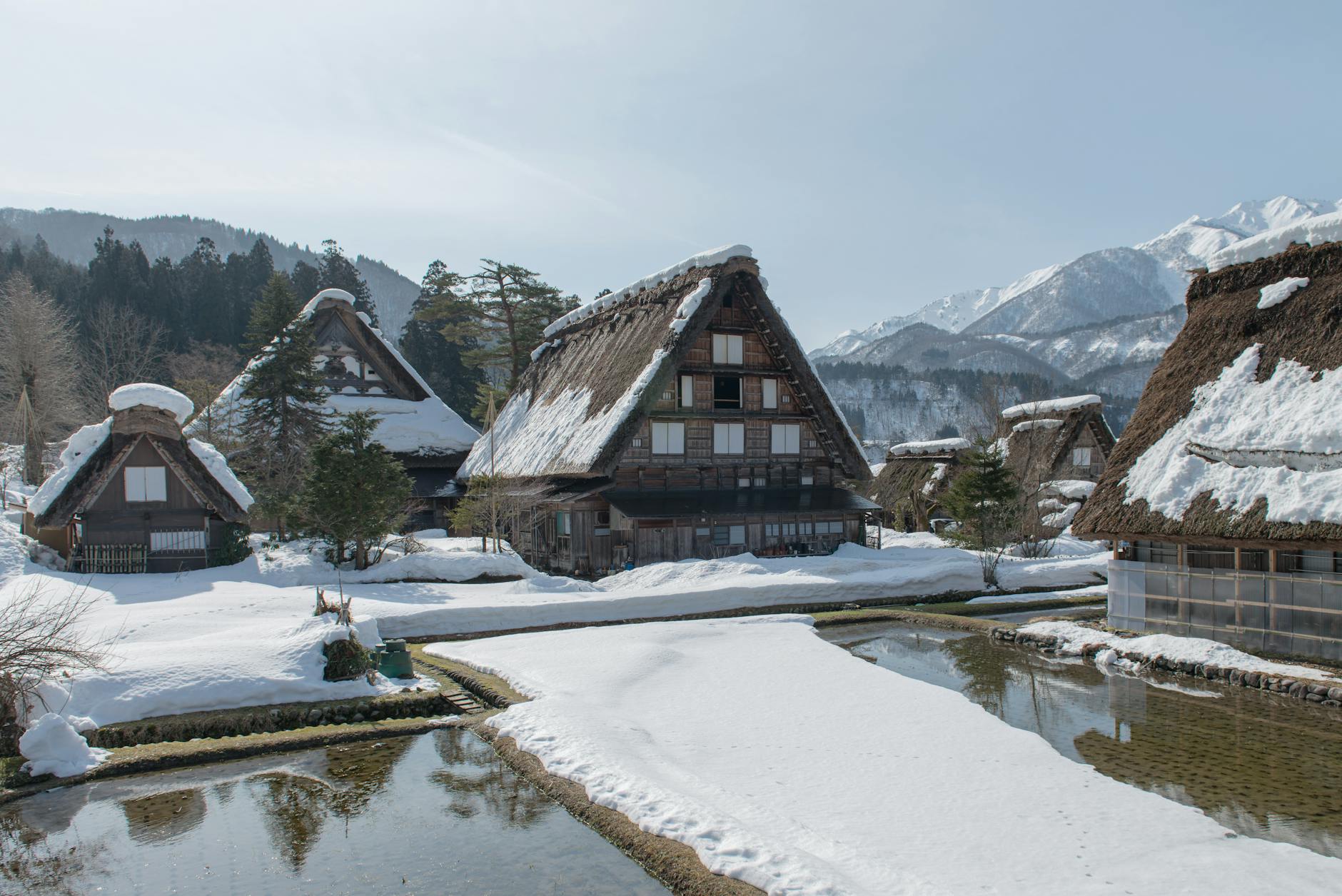
Nestled deep in the Japanese Alps, Shirakawa-go is unlike anywhere else on Earth. Ancient gassho-zukuri farmhouses — their massive thatched roofs rising like hands pressed together in prayer — stand clustered in a mountain valley that feels frozen in another century. Whether blanketed in winter snow or glowing green in summer, Shirakawa-go is one of Japan’s most breathtaking and unforgettable destinations.
Inscribed as a UNESCO World Heritage Site in 1995, this remote village in Gifu Prefecture draws visitors from around the globe — and it delivers on every expectation. This complete guide covers everything you need to know: what to see, how to get there, when to visit, where to stay, and what to eat.
What is Shirakawa-go?
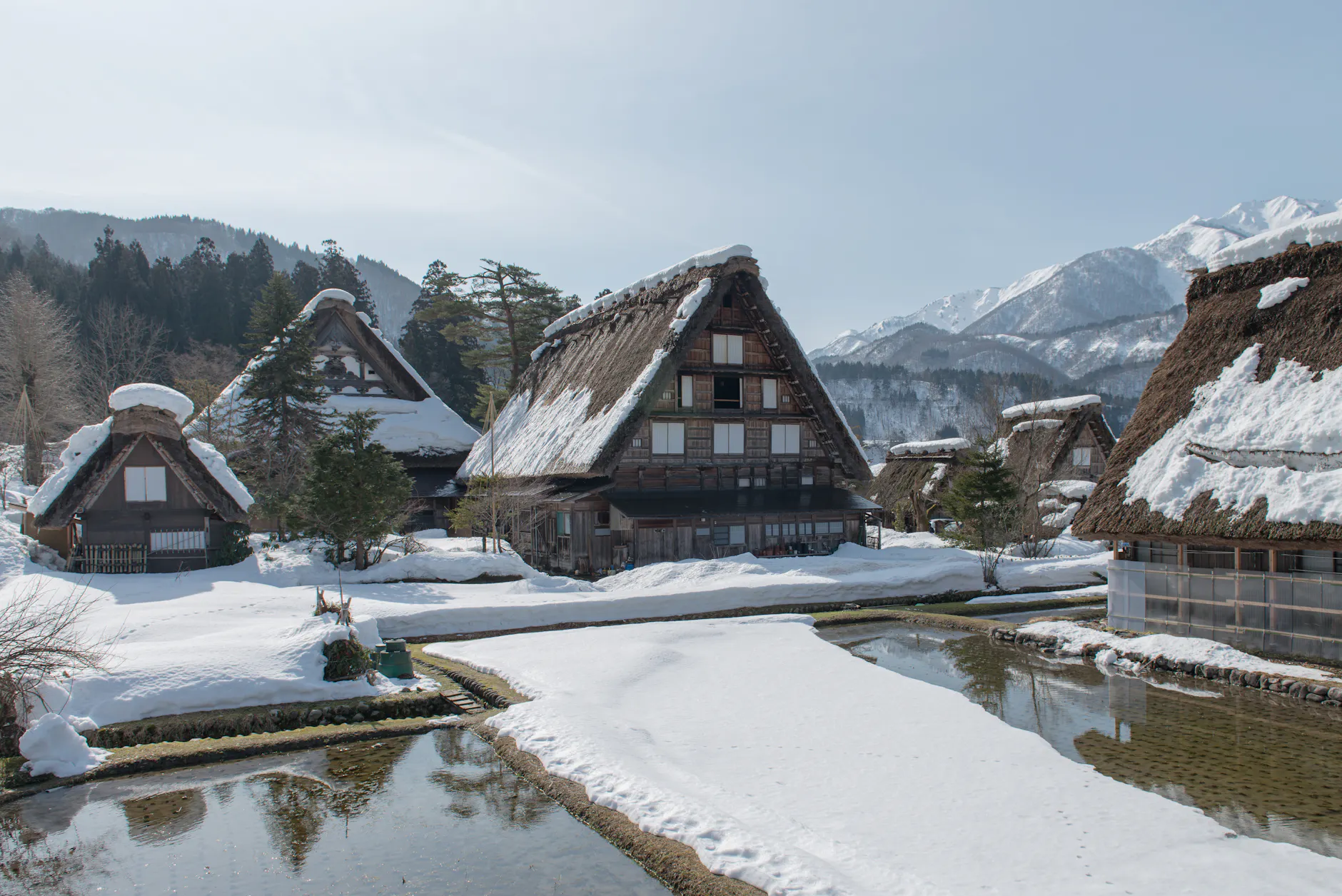
Shirakawa-go (白川郷) is a historic village located in the Ono District of Gifu Prefecture, tucked within the Shogawa River valley deep in the Japanese Alps. The name translates roughly to “White River Township,” and the region encompasses several hamlets, of which Ogimachi is the largest and most visited.
The village is famous above all for its gassho-zukuri farmhouses (合掌造り). The name “gassho” (合掌) literally means “hands in prayer” — a reference to the way the steep A-frame thatched roofs resemble Buddhist monks pressing their palms together. These roofs, pitched at an angle of roughly 60 degrees, were designed to shed the region’s extraordinarily heavy snowfall, which can reach several meters in a single winter.
The farmhouses are not merely picturesque relics: many remain inhabited and functional, housing families who have lived here for generations. UNESCO recognized Shirakawa-go (alongside the nearby Gokayama villages) in 1995 for the outstanding universal value of this living cultural landscape.
Top Attractions in Shirakawa-go
Ogimachi Village
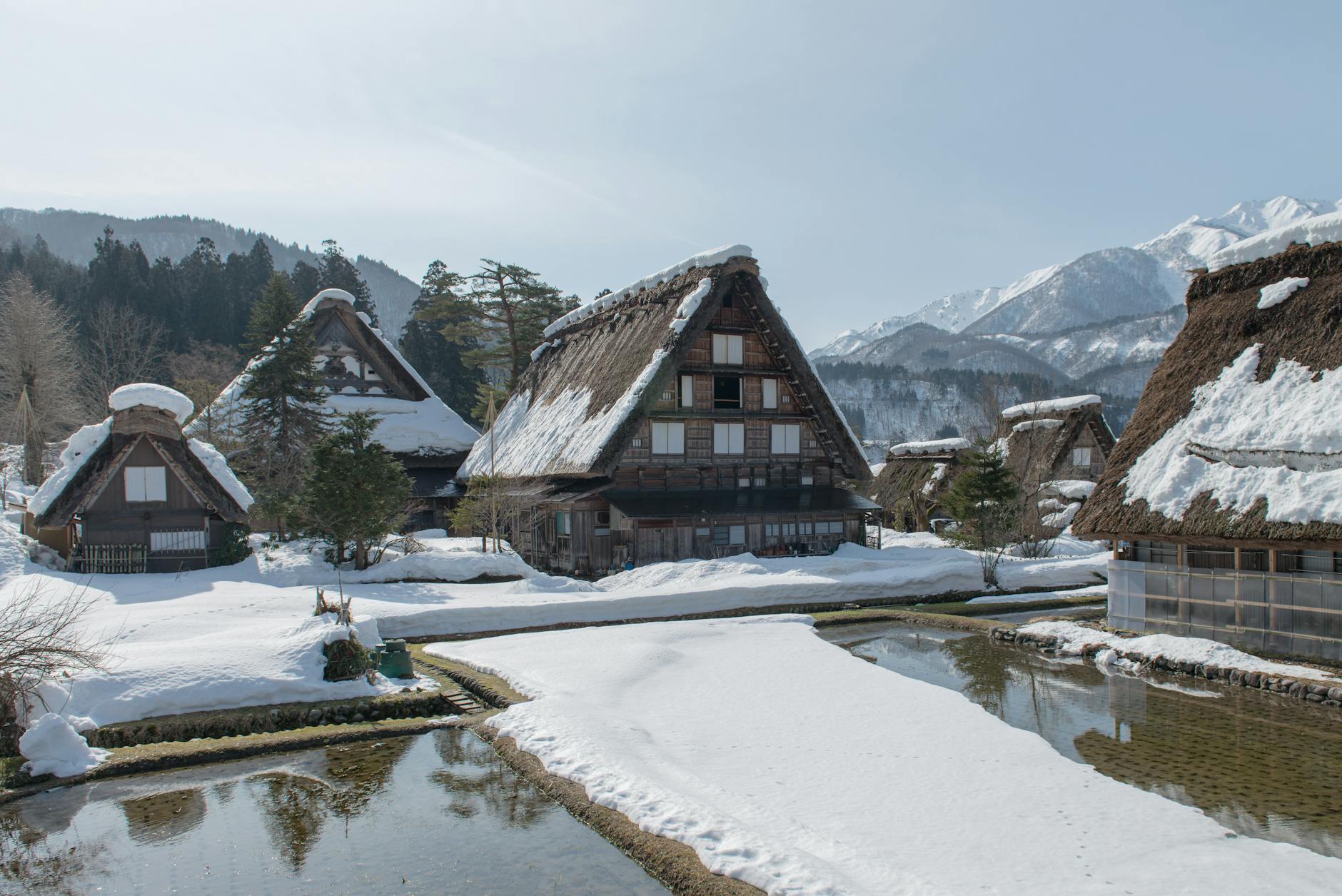
Ogimachi is the heart of Shirakawa-go and the destination most visitors mean when they say they are going to “Shirakawa-go.” Around 60 gassho-zukuri farmhouses remain standing here, spread across the valley floor with paddy fields and the Sho River providing the perfect backdrop. The village is entirely walkable — most key sites are within a 20-minute stroll of one another.
Wada House (和田家)
The Wada House is the largest surviving gassho-zukuri structure in Shirakawa-go. Built more than 300 years ago, it spans three full floors and served as both home and workshop for the prosperous Wada family, who made their fortune in sericulture (silkworm farming) and saltpeter production. The ground floor showcases original furniture, lacquerware, and period tools, while the upper floors reveal the massive wooden framework of the roof structure — an engineering feat accomplished entirely without nails.
Admission: ¥300. Hours: 9:00–17:00 (closed occasionally for private events — check before visiting).
Kanda House (神田家)
If the Wada House impresses with scale, the Kanda House wins on atmosphere. Beautifully preserved with original furnishings, household implements, and folk artifacts still in place, it offers one of the most immersive glimpses into daily life in a traditional mountain farmhouse. The interior feels genuinely lived-in rather than sterile, and the seasonal decorations — dried herbs, lacquered items, woven baskets — change throughout the year.
Admission: ¥400. Hours: 9:00–17:00.
Myozenji Temple and Gasshozukuri Museum
Myozenji Temple is a working Buddhist temple whose thatched bell tower is one of the most-photographed structures in the village. Adjacent to it is the Gasshozukuri Minkaen Open-Air Museum, where more than two dozen historic farmhouses have been relocated and preserved across an open hillside setting. Wandering among them — some open for exploration, some displaying traditional crafts being practiced by artisans — gives a comprehensive sense of what gassho-zukuri life looked like across the centuries.
Admission: ¥600 for the open-air museum. Temple grounds are free.
Shiroyama Viewpoint (城山展望台)
No visit to Shirakawa-go is complete without climbing to the Shiroyama Viewpoint, which sits on the forested ridge above the valley. From here, the entire Ogimachi settlement fans out below you — farmhouses, rice paddies, the river, and the mountain walls beyond — in the classic panoramic image that has made Shirakawa-go globally famous.
You can reach the viewpoint by a free shuttle bus (running roughly every 20 minutes during peak seasons) or on foot via a 15-minute uphill trail. Go early in the morning to beat the tour groups and catch the mist rising from the valley.
Shirakawa-go in Winter: Snow, Magic, and the Famous Light-Up
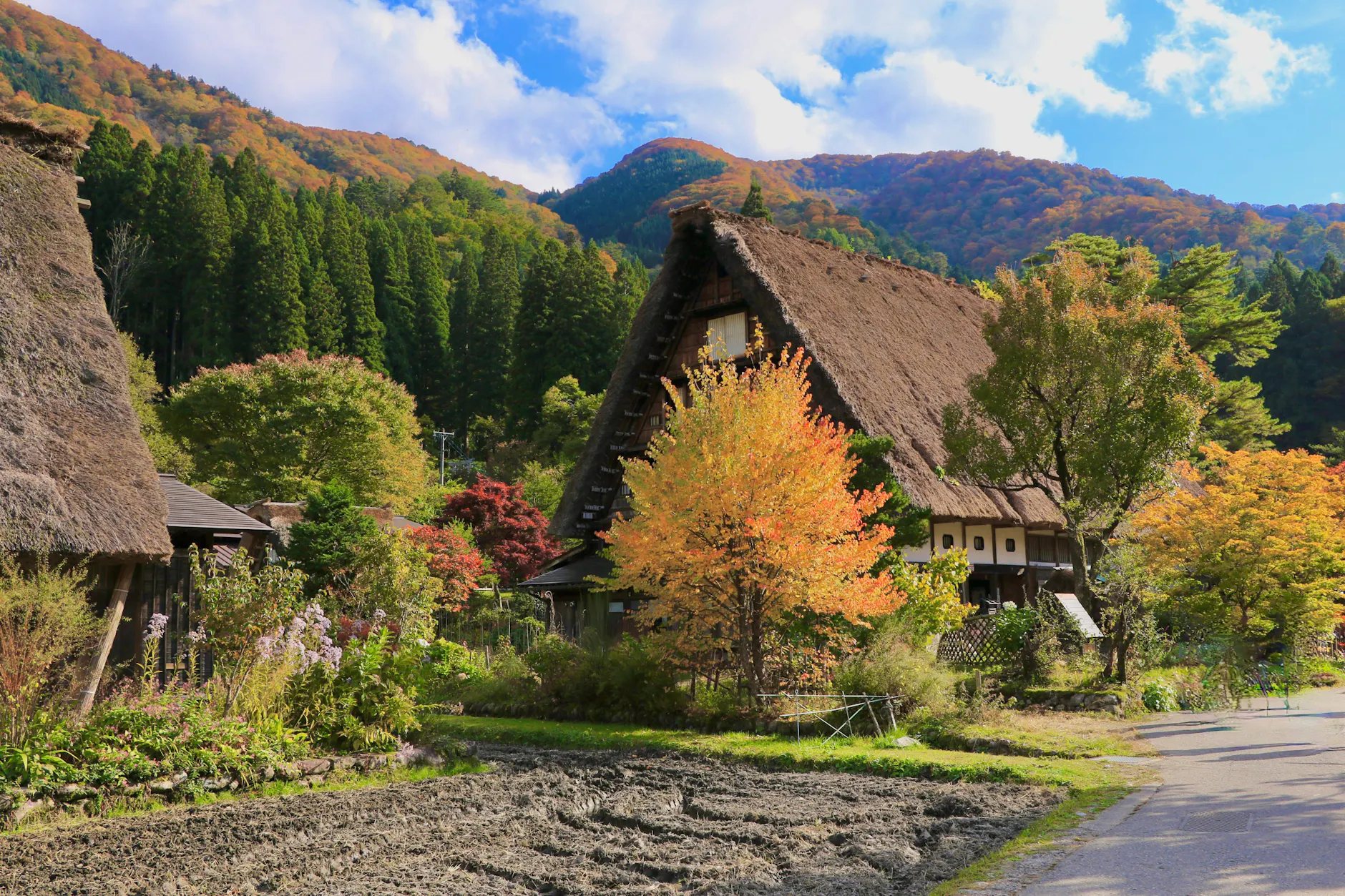
If there is one season that defines Shirakawa-go in the popular imagination, it is winter. From December through March, the village regularly receives heavy snowfall that transforms the gassho-zukuri roofs into enormous white pillows, and the entire valley takes on the atmosphere of a Japanese woodblock print come to life.
The highlight of winter is the legendary “Shirakawa-go Light-Up” event, held on select evenings in late January and early February. After dark, the farmhouses are illuminated from within and below, their glowing outlines reflected in the snow and the river. The effect is transcendently beautiful — and the event is extraordinarily popular.
Even without the light-up event, a winter visit during the day is one of Japan’s great travel experiences. The crowds are thinner on non-event days, the snow is reliable, and you can explore the farmhouses, sip hot sake by an open hearth, and experience the village at a more contemplative pace.
Day Trip from Takayama or Kanazawa
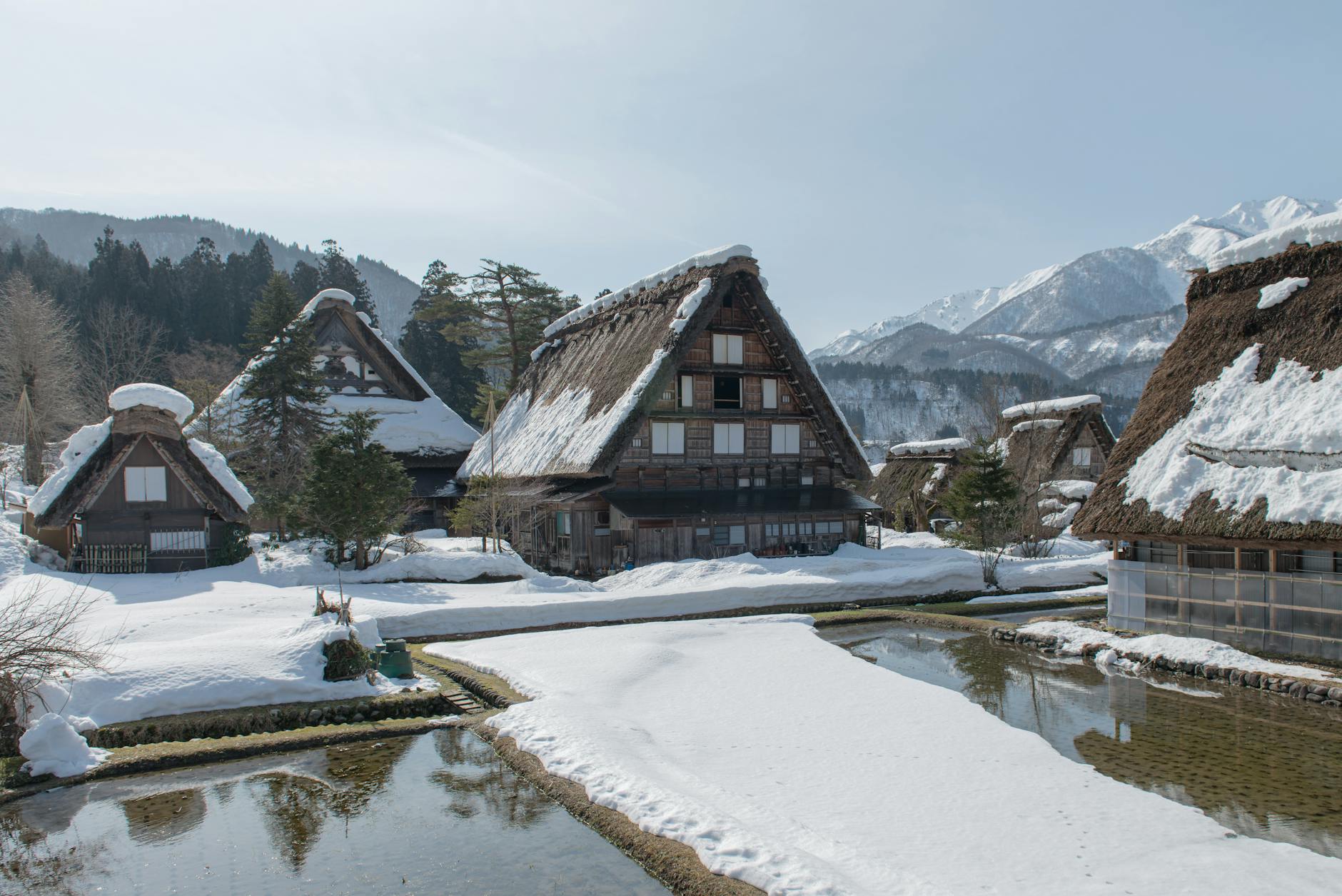
The vast majority of visitors arrive at Shirakawa-go on a day trip, and the two best bases are Takayama and Kanazawa — both handsome historic cities in their own right.
From Takayama
The Nohi Bus operates frequent express services between Takayama and Shirakawa-go, with a journey time of approximately 50–60 minutes. Buses run several times daily throughout the year, with increased frequency during peak seasons. A one-way ticket costs around ¥2,600; round-trip packages are available. Takayama itself — with its beautifully preserved old merchant town, morning markets, and proximity to the Hida Folk Village — is an ideal overnight base for exploring both Shirakawa-go and the wider Hida region.
From Kanazawa
The Nohi Bus also connects Kanazawa directly to Shirakawa-go in approximately 75–90 minutes. Kanazawa is a natural fit for this itinerary: it combines samurai districts, the stunning Kenroku-en garden, and the 21st Century Museum of Contemporary Art into one of Japan’s most rewarding secondary cities. Many travelers combine Shirakawa-go with both Takayama and Kanazawa on a single Chubu region circuit.
From Nagoya
Shirakawa-go is reachable from Nagoya in approximately 2.5 hours via a combination of train and bus (Meitetsu limited express to Shin-Takaoka or Nagoya to Kanazawa by shinkansen, then Nohi Bus). Direct bus services also operate seasonally. Check timetables carefully, as connections can be limited outside peak season.
Getting to Shirakawa-go from Tokyo
By Train and Bus
The most comfortable public transport option from Tokyo is the Hokuriku Shinkansen to Kanazawa (approximately 2.5 hours from Tokyo Station), followed by the Nohi Bus to Shirakawa-go (75–90 minutes). Total travel time is around 4–5 hours. The Japan Rail Pass covers the shinkansen portion but not the Nohi Bus, which must be purchased separately. Alternatively, take the shinkansen to Toyama and connect via Kanazawa, or go via Nagoya.
By Car: Japan’s Most Scenic Mountain Drive
Driving to Shirakawa-go from Tokyo is a genuine road trip experience — approximately 4–5 hours via the Chuo Expressway and Tokai-Hokuriku Expressway, passing through dramatic mountain tunnels and alpine scenery as you approach the Shogawa valley.
For those who want to make the drive truly memorable, renting a JDM sports car from Samurai Car Japan in Shibuya turns the mountain highway to Shirakawa-go into one of Japan’s great road trips. Imagine arriving at a UNESCO World Heritage village in a Nissan GT-R or Toyota Supra — the contrast between cutting-edge Japanese engineering and centuries-old mountain craftsmanship is uniquely and memorably Japanese. The Tokai-Hokuriku Expressway, winding through the Alps, was practically designed for a performance car.
Staying Overnight in Shirakawa-go
A day trip will show you Shirakawa-go, but spending a night here will change you. After the tour buses depart in the late afternoon, the village quiets dramatically. The farmhouses catch the last light. Locals tend their gardens. The mountains turn purple, then black, and then the stars come out — with near-zero light pollution in the valley, the night sky here is extraordinary.
The most authentic way to stay is in a minshuku — a Japanese family-run guesthouse — housed inside a genuine gassho-zukuri farmhouse. Many of the village’s working farmhouses operate as minshuku, with tatami rooms, futon bedding, shared baths, and multi-course dinners featuring local mountain cuisine. These are not luxury hotels; they are real homes that welcome guests. The experience of waking up inside a 200-year-old thatched farmhouse is simply not replicated anywhere else in Japan.
Food and Drink in Shirakawa-go
The mountain setting of Shirakawa-go shapes everything on the menu, and eating here is an integral part of the experience.
Hida Beef (飛騨牛) Wagyu
Hida beef is the premium wagyu of the Hida region, raised in the mountain pastures of Gifu Prefecture and prized for its rich marbling and depth of flavor. In Shirakawa-go, you will find it served in the most accessible and addictive form: skewers grilled over charcoal at small outdoor stalls along the village paths. One skewer typically costs ¥500–¥700, and it is worth every yen. The fat melts almost on contact with the grill, and the charcoal smoke adds a savory depth that lingers.
Doburoku Sake
Doburoku (どぶろく) is a rustic, unfiltered cloudy rice wine — an ancient form of sake that predates the refined clear product most people associate with Japan. Shirakawa-go is one of the few places in Japan legally permitted to brew doburoku at the local shrine level (an exemption dating back to the early Meiji era). The result is a thick, slightly effervescent brew with a tart, funky richness unlike anything you will find in a city izakaya. Try it at the Doburoku Festival (October 14–19) or sample it at local shops and minshuku year-round.
Mitarashi Dango
Mitarashi dango — chewy rice-flour dumplings brushed with a sweet soy glaze and grilled over coals — are the quintessential Japanese street food, and they taste particularly good in a cold mountain village. Look for vendors near the bus terminal and along the main walking path.
Sansai Mountain Vegetables
The mountains surrounding Shirakawa-go yield an extraordinary variety of sansai (山菜) — wild mountain vegetables including fiddlehead ferns, mountain burdock, and various foraged greens. These appear in minshuku dinners as pickled side dishes, tempura, and miso soup ingredients, lending a distinctly earthy, seasonal character to meals that you cannot replicate with cultivated produce.
Best Time to Visit Shirakawa-go
Shirakawa-go is genuinely beautiful in every season — but each season offers a distinct experience. For detailed advice on planning your Japan trip around seasons and weather, see our guide on the best time to visit Japan.
Winter (December – March): Snow and Spectacle
The most famous and visually dramatic season. Heavy snowfall transforms the farmhouses and the valley into a scene of extraordinary beauty. The famous light-up events (late January–early February) are the peak of the peak, but even regular winter days are magnificent. Dress in serious layers; temperatures regularly drop well below freezing. This is the most crowded and most expensive time to visit — book everything months ahead.
Spring (April – May): Cherry Blossoms
Cherry trees bloom in the valley in mid-to-late April, framing the gassho-zukuri farmhouses in pale pink blossoms against the still-snowcapped mountains. Spring is less crowded than winter or autumn, and the combination of cherry blossoms and historic architecture is classically Japanese. The weather is cold but often clear.
Autumn (September – November): Foliage and Festivals
The mountainsides ignite in red, orange, and gold from mid-October onward, providing a spectacular backdrop for the farmhouses. Autumn also brings the famous Doburoku Festival (October 14–19), held at Shirakawa Hachiman Shrine and featuring traditional performing arts, sake tastings, and village celebrations that offer a genuine cultural experience beyond sightseeing. Early autumn (September) is comparatively uncrowded and often has excellent weather.
Summer (June – August): Lush and Uncrowded
Summer is the least visited season, which means quieter paths, easier accommodation booking, and an unhurried experience. The valley is intensely green — the rice paddies reflect the sky, the mountains are lush, and the gassho-zukuri farmhouses stand out dramatically against the foliage. June brings the rainy season (occasional mist and rain can actually add atmosphere), while July and August are warm and clear. If you dislike crowds, summer is your season.
Practical Tips for Visiting Shirakawa-go
Getting Around
Ogimachi village is entirely walkable — you do not need any local transport within the village itself. The main walking path runs roughly parallel to the Sho River, with farmhouses, museums, and food stalls clustered along it. Allow at least 3–4 hours for a thorough day visit; overnight guests should plan a full day.
Cash is King
ATMs are very limited in Shirakawa-go. There is one 7-Eleven ATM in the village (accepting foreign cards), but it occasionally runs out of cash during peak periods. Bring sufficient yen from Takayama, Kanazawa, or any major city before you arrive. Entry fees to farmhouses are ¥300–¥600 each, and the food stalls are typically cash-only.
Entry Fees
Individual farmhouse museums charge separate admission: typically ¥300–¥500 per building. The Gasshozukuri Minkaen Open-Air Museum charges ¥600. Budget ¥1,500–¥2,000 per person if you plan to visit all major interior sites.
Winter Vehicle Access
During winter, private vehicle access to the village center is restricted on light-up event days and during heavy snowfall periods. Visitors must use shuttle buses from the Shirakawa-go Interchange parking area. Even on normal winter days, snow chains or winter tires are legally required on mountain roads leading to the village. If driving, check conditions with the Shirakawa-go Tourism Association before departing.
Combine with Gokayama
The nearby Gokayama villages — Ainokura and Suganuma — share the same UNESCO designation as Shirakawa-go and are connected by the Nohi Bus route between Takayama and Kanazawa. Far fewer tourists make it to Gokayama, which means you can experience gassho-zukuri farmhouses in near-complete silence. If you are traveling by car, a combined Shirakawa-go + Gokayama day itinerary is easily achievable and richly rewarding. Gokayama is approximately 15 kilometers north of Ogimachi.
Shirakawa-go Weather
The valley’s Shirakawa-go weather is shaped by its deep mountain location. Winters are severe — temperatures frequently drop to -10°C or below, and annual snowfall can exceed 2 meters. Summers are warm but not hot. Spring and autumn bring crisp, clear days ideal for photography. The region sits in a rain shadow zone that can produce sudden weather changes; always carry a layer regardless of the season. Check the Japan Meteorological Agency or Shirakawa-go Tourism Association site for current conditions before your visit.
JDM tour guide!
Step into the world of “Fast & Furious” with our exclusive Daikoku Tour!
Experience the legendary car meet atmosphere for yourself. Make it the ultimate highlight of your Tokyo trip!

Frequently Asked Questions
How do I get to Shirakawa-go from Tokyo?
The easiest public transport route is the Hokuriku Shinkansen from Tokyo Station to Kanazawa (approximately 2.5 hours), then the Nohi Bus from Kanazawa to Shirakawa-go (approximately 75–90 minutes). Total journey time is around 4–5 hours. By car, the drive via the Chuo and Tokai-Hokuriku expressways takes approximately 4–5 hours depending on traffic. See our day trips from Tokyo guide for more regional options, though Shirakawa-go is better suited as an overnight trip than a strict day trip from Tokyo.
What is the best season to visit Shirakawa-go?
It depends on what you are looking for. Winter (December–March) is the most visually dramatic, with heavy snow transforming the farmhouses into a fairy-tale scene; the famous light-up events in late January/early February are the peak experience. Autumn (October–November) offers spectacular fall foliage, the Doburoku Festival, and comfortable weather. Spring (April–May) brings cherry blossoms framed against snowcapped peaks. Summer (June–August) is the least crowded and the most affordable. There is no wrong answer — every season has its character.
Can I stay overnight in Shirakawa-go?
Yes — and it is strongly recommended. Staying overnight in a gassho-zukuri minshuku (farmhouse guesthouse) is one of Japan’s most unique accommodation experiences. After the day-trippers leave, the village quiets completely and takes on an entirely different atmosphere. However, accommodation is extremely limited (roughly 30 guesthouses) and books out months in advance, especially for winter weekends. Book as early as possible through the Shirakawa-go Tourism Association website.
What is gassho-zukuri?
Gassho-zukuri (合掌造り) refers to a style of traditional Japanese farmhouse architecture characterized by an extremely steep A-frame thatched roof. The name comes from “gassho” (合掌), meaning “hands in prayer,” as the roof resembles the shape of Buddhist monks pressing their palms together. The steep pitch — typically around 60 degrees — was designed to shed the heavy snowfall common in Japan’s mountain interior. The thatch can be up to a meter thick, providing excellent insulation. The upper floors of these multi-story structures were traditionally used for silkworm cultivation. Shirakawa-go and neighboring Gokayama contain the largest surviving concentrations of gassho-zukuri farmhouses in Japan.
How do I get tickets for the Shirakawa-go winter light-up?
Light-up event tickets are allocated by lottery only, and the lottery typically opens in October or November for events held in late January and early February. Apply through the official Shirakawa-go Tourism Association website (shirakawa-go.gr.jp). Demand far exceeds supply — successful applicants receive entry tickets that are non-transferable and tied to a specific time slot and transport arrangement (private vehicles are banned on light-up evenings; visitors must use designated shuttle buses). If you are not successful in the lottery, a daytime winter visit is still magnificent and far more accessible.
Is Shirakawa-go worth a visit without snow?
Absolutely. The gassho-zukuri farmhouses are architecturally stunning and culturally fascinating in any season. Autumn foliage, spring cherry blossoms, and the quiet lush green of summer all provide beautiful backdrops. The village’s history, food, and atmosphere are present year-round. Snow adds a layer of visual drama that is hard to match, but Shirakawa-go is not a one-trick winter destination — it earns its UNESCO status in every month of the year.
JDM tour guide!
Step into the world of “Fast & Furious” with our exclusive Daikoku Tour!
Experience the legendary car meet atmosphere for yourself. Make it the ultimate highlight of your Tokyo trip!
[st_af id=”862″]
🇯🇵 Plan Your Japan Experience
JDM Car Rental
Drive a GT-R, Supra, RX-7, or Silvia on the roads they were built for. Hakone passes, Wangan highway, mountain touge — your dream JDM experience.
Daikoku PA Tour
Visit Japan’s most legendary car meet. Hundreds of modified cars, passionate owners, and the heartbeat of JDM culture. Guided weekend night tours available.
Photo Guide Tour
Capture stunning photos at locations only locals know. Hidden shrines, backstreet alleys, rooftop views, and golden hour spots for unforgettable shots.