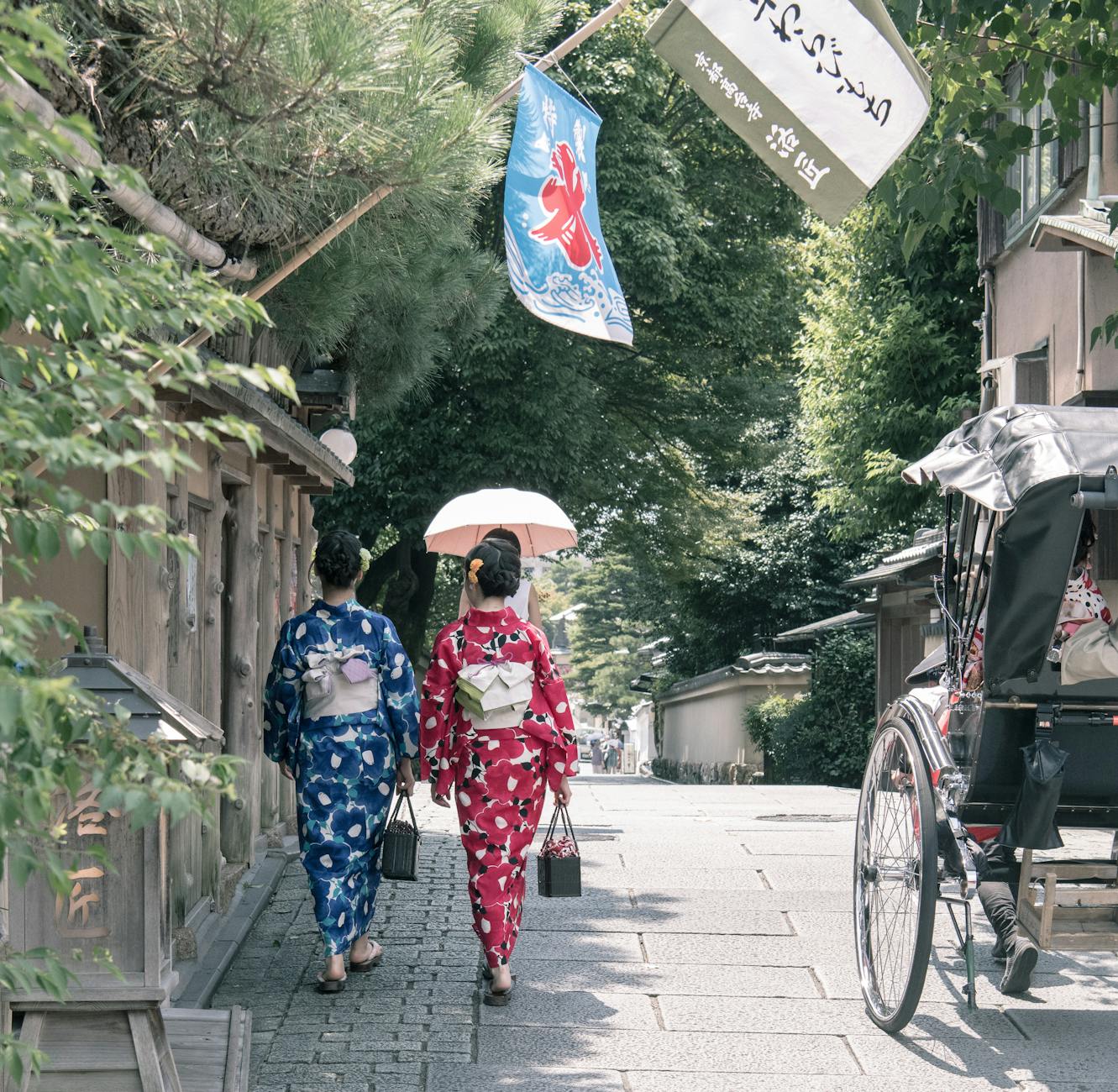
Walking through the lantern-lit streets of Asakusa on a summer evening, you’ll notice something magical: locals and visitors alike dressed in flowing cotton robes, wooden sandals clacking against the stone paths. That garment is the yukata — Japan’s most accessible and beloved traditional garment, and your invitation to experience Japanese culture from the inside out.
Whether you’re heading to a summer matsuri (festival), relaxing at a ryokan in Hakone, or simply exploring Tokyo’s historic neighborhoods, wearing a yukata transforms an ordinary day into an unforgettable cultural experience. This complete guide covers everything you need to know: what a yukata is, how it differs from a kimono, exactly how to wear one (including the critical left-over-right rule), where to rent one in Tokyo, and where to wear it across Japan.
What Is a Yukata?
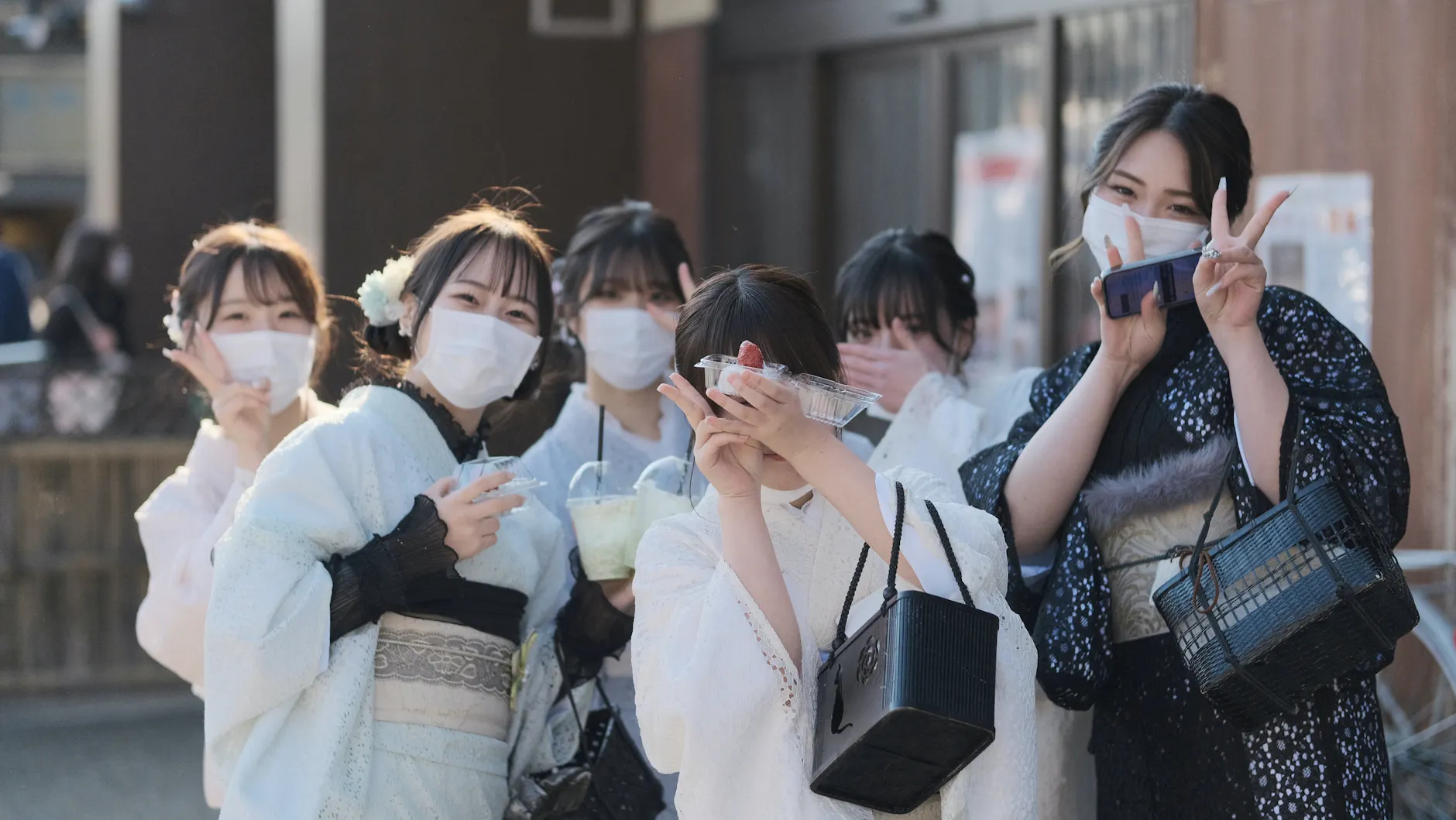
A yukata (浴衣) is a casual, lightweight Japanese robe made from cotton or synthetic fabric. The word itself breaks down into “yu” (bath) and “kata” (clothing), reflecting its origins as a simple garment worn after bathing. Today, it has evolved far beyond the bathroom into a beloved symbol of Japanese summer culture.
A Brief History of the Yukata
The yukata dates back to the Heian period (794–1185), when it was worn by court nobles while bathing. By the Edo period (1603–1868), the garment had spread to the general population and become a standard post-bath robe at public bathhouses. As Japan’s textile industry grew, yukata became more colorful and decorative, gradually moving outdoors to festivals and summer celebrations.
Today, the yukata is one of the easiest entry points into traditional Japanese fashion for foreign visitors — far simpler to wear than a formal kimono, yet still deeply meaningful and photogenic.
When and Where Japanese People Wear Yukata
- Summer festivals (matsuri) — The most iconic setting. Tanabata, Obon, Gion Matsuri
- Hanabi (fireworks) shows — A quintessential Japanese summer evening look
- Onsen towns and ryokan — Most traditional inns provide yukata for guests to wear around the premises
- Cultural experiences — Yukata rental shops cater specifically to tourists wanting the full experience
- Casual summer outings — Younger generations wear yukata to shopping areas and cafes during July and August
Yukata vs Kimono: Key Differences Explained
The question “what’s the difference between yukata and kimono?” comes up constantly among first-time visitors to Japan. While both are traditional Japanese robes with similar silhouettes, they are quite different in material, purpose, and complexity.
| Feature | Yukata | Kimono |
|---|---|---|
| Material | Cotton or synthetic | Silk (high-end), synthetic (casual) |
| Season | Summer only (July–August) | All seasons (different weights) |
| Occasion | Casual: festivals, onsen, relaxing | Formal: ceremonies, tea ceremony, weddings |
| Undergarments | None required (or simple slip) | Nagajuban (underrobe) + multiple layers |
| Collar | Single collar, no visible inner collar | Double collar — white inner collar visible |
| Purchase Price | ¥3,000–¥30,000 | ¥50,000–¥1,000,000+ |
| Rental Price | ¥2,000–¥5,000 (half-day) | ¥5,000–¥15,000+ (half-day) |
| Accessories | Simple obi belt + geta sandals | Elaborate obi + multiple accessories |
| Dressing time | 15–20 minutes | 45–90 minutes |
Can You Tell the Difference at a Glance?
The easiest way to identify a yukata versus a kimono on the street: look at the collar. A kimono wearer will show a bright white inner collar (the nagajuban), creating a layered look at the neckline. Yukata wearers have a single, clean collar with no inner layer visible. You’ll also notice that kimono are typically paired with white tabi socks and zori sandals, while yukata are worn with geta wooden sandals — sometimes with bare feet.
How to Wear a Yukata: Step-by-Step Guide
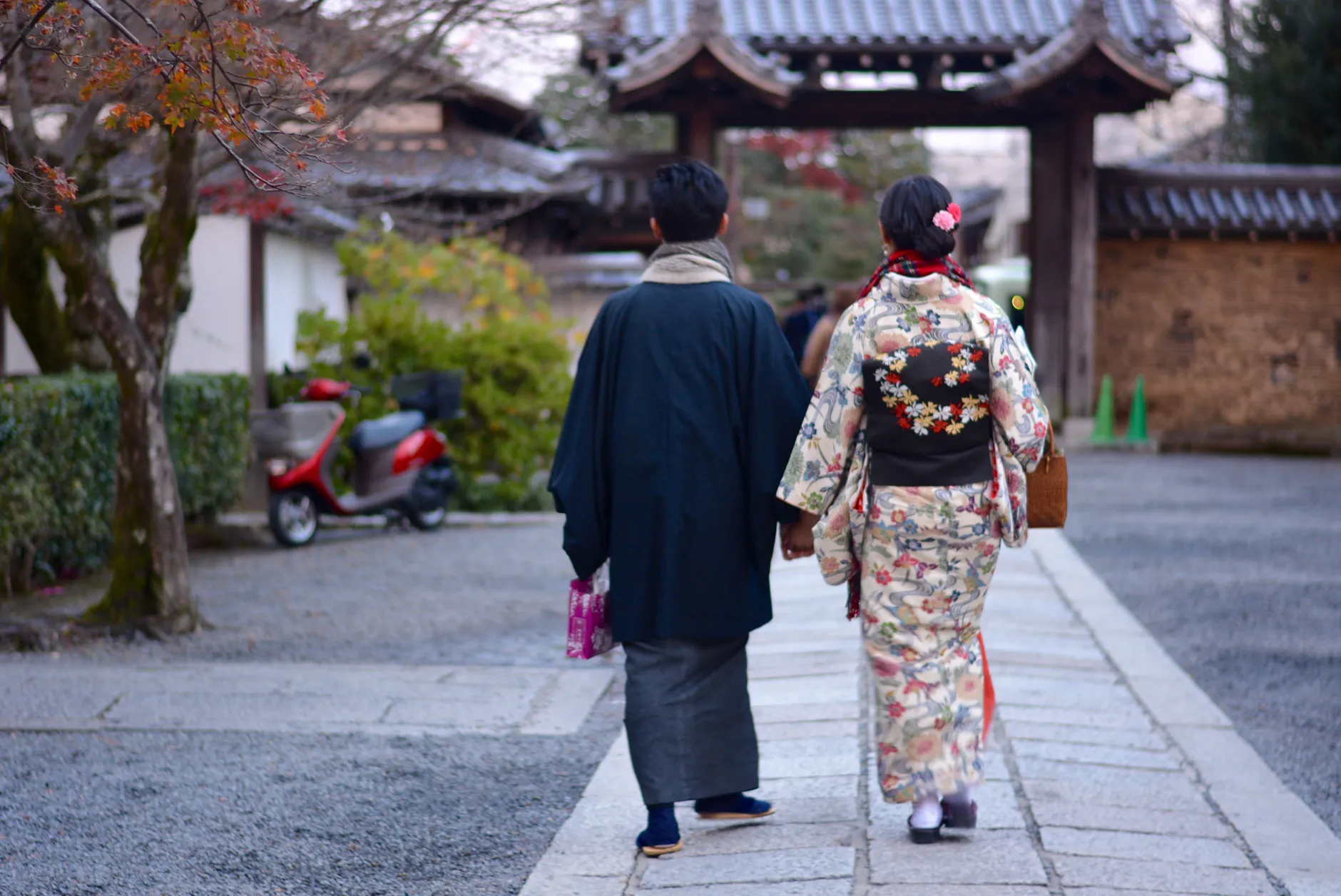
Learning how to wear a yukata properly is surprisingly straightforward — but there is one absolutely critical rule that every visitor must know before attempting to dress themselves.
The Golden Rule: Yukata Left Over Right
The single most important thing to know about wearing a yukata — or any traditional Japanese garment — is the wrapping direction. The left side of the garment always goes on top, over the right side.
Here’s how to remember it: face forward and look down at your chest. The left panel of fabric should be the one you can see. Your right hand should be able to slip inside the opening (toward your left hip) — this is a quick check used by Japanese people to verify correct wrapping.
Why does this matter so much? In Japan, the opposite wrapping — right over left — is reserved exclusively for the deceased. It is how bodies are dressed before burial. Appearing at a summer festival with your yukata wrapped the wrong way would be deeply alarming to any Japanese person who notices. Staff at rental shops will always dress you correctly, but if you’re dressing yourself, double-check before heading out.
Step-by-Step: Putting on a Yukata
- Prepare your foundation — Wear a thin cotton t-shirt or yukata slip underneath to absorb sweat (Japan summers are hot and humid). Men can go bare-chested underneath if preferred.
- Put on tabi socks if desired — Traditional tabi (split-toe socks) are optional with yukata; many people go bare-footed in their geta sandals. Regular socks don’t work well with geta.
- Wrap the right side first (closest to your body) — Hold the yukata open and wrap the right panel around your body so it sits against your left hip. This side goes underneath and will not be visible.
- Wrap the left side over the right — This is the visible side. Pull it snugly so both panels form a smooth V-shape at your chest and neckline. The left panel sits on top.
- Secure with koshi-himo (temporary belt) — Tie a thin cloth belt around your waist to hold everything in place while you create the ohashori. This is a temporary step, not the final belt.
- Create the ohashori (waist fold) — Pull down the excess fabric that hangs below the koshi-himo and fold it up and over the belt, creating a neat horizontal fold at the waist. This fold is what gives the yukata its characteristic clean silhouette. Adjust the length so the hem falls just above your ankles.
- Adjust the neckline — The collar should form a smooth V-shape at your chest. Women typically wear the collar slightly lower and more open; men wear it higher and more closed. The back of the collar should sit about two fingers’ width below the back of your neck — this is considered elegant in Japanese dress.
- Tie the obi belt — Wrap the obi (the wide decorative belt) around your waist twice over the ohashori, then tie it in the back (for men) or in a decorative bow in the back (for women). Women’s obi bows, called musubi, come in many styles — the simplest is the bunko musubi (butterfly bow). Rental shop staff will tie this for you.
Common Mistakes Foreigners Make
- Wrapping right over left — The most serious mistake. Always left over right.
- Wearing the collar too tight at the throat — Yukata should have a relaxed V-neckline, not a closed collar like a shirt.
- Obi tied too high or too low — The obi should sit comfortably at your natural waist, not at the ribcage or hips.
- Hem too long or too short — The hem should brush the top of your feet or sit just above the ankle. Dragging on the ground is a trip hazard with geta sandals.
- Wearing the wrong shoes — Sneakers and modern sandals break the look entirely. Stick with the geta provided by rental shops.
Yukata Rental in Japan: Everything You Need to Know
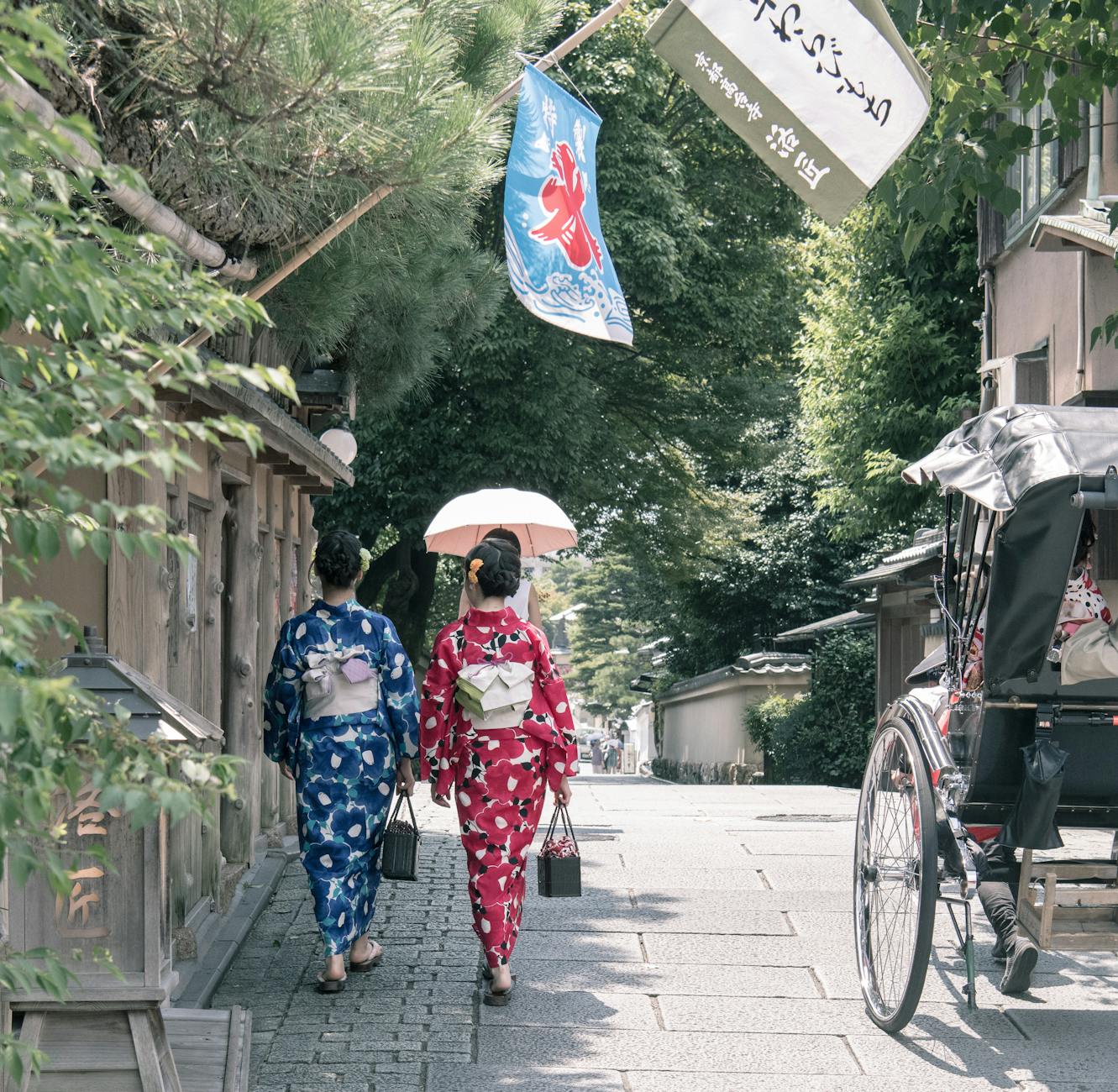
Yukata rental is one of the most popular cultural activities for foreign tourists in Japan — and for good reason. It’s affordable, inclusive (shops cater to all body types and genders), and the rental includes professional dressing by staff who ensure you look authentic and correct. No yukata experience knowledge required.
How Yukata Rental Works
- Browse and select your design — Shops typically offer dozens of designs ranging from traditional indigo geometric patterns to more modern floral styles. Men’s options tend toward darker, bolder patterns; women’s options are often more colorful and varied.
- Choose your obi and accessories — The obi (sash belt) dramatically changes the look. Many shops let you mix and match obi, hair accessories, and bags.
- Get dressed by staff — This is where the magic happens. Experienced staff will dress you properly in about 15–20 minutes, tying the obi in a photogenic knot and adjusting everything for a clean silhouette.
- Explore in style — Head out to explore the surrounding area. Rental periods are typically half-day (4–5 hours) or full-day.
- Return the garments — Return everything to the shop before closing time. No cleaning required — shops handle that.
Yukata Rental Costs
- Basic package: ¥2,000–¥3,500 — Yukata + obi + dressing service
- Standard package: ¥3,500–¥5,000 — Yukata + obi + accessories (bag, decorative pin) + dressing
- Premium package: ¥5,000–¥8,000 — Higher-end yukata + full accessory set + hair styling
- Hair styling add-on: ¥1,000–¥2,500 — Staff style your hair in a traditional updo
- Extra hours: ¥500–¥1,000 per hour beyond the standard rental period
Best Places for Yukata Rental in Tokyo
Asakusa — The #1 Destination for Yukata in Tokyo
Asakusa is far and away the most popular area for yukata rental in Tokyo, and it’s easy to see why. The neighborhood’s traditional architecture, Nakamise shopping street, and the iconic Senso-ji Temple provide the perfect backdrop for yukata photos. Dozens of yukata rental shops line the streets near the temple, ranging from budget-friendly to high-end boutiques. Some shops even offer same-day reservations.
After being dressed, spend the afternoon exploring the temple grounds, browsing Nakamise’s souvenir stalls, or walking along the Sumida River. The combination of historic environment and traditional dress makes for genuinely memorable photos and experiences.
Harajuku — Meiji Shrine and Garden Backdrop
Several rental shops operate near Harajuku station, catering to visitors heading to Meiji Shrine. The forested shrine grounds offer a beautiful contrast to the vibrant yukata designs — green canopy overhead, gravel paths underfoot, and the serene Iris Garden in season. This area tends to be quieter than Asakusa, which some visitors prefer.
Shinjuku — Urban Yukata Experience
A handful of rental shops operate in and around Shinjuku, particularly near the Kabukicho entertainment district and the traditional Golden Gai alley network. Wearing yukata through the narrow lanes of Golden Gai at dusk is a uniquely Tokyo experience that blends old and new Japan in a single frame.
Best Places to Wear Your Yukata in Japan
Senso-ji Temple, Asakusa
The most photographed yukata destination in Japan. Senso-ji’s Thunder Gate (Kaminarimon) and the incense-filled main hall create a setting that feels like stepping back 300 years. Arrive early morning to beat the crowds, or visit at golden hour when the lanterns begin to glow.
Ueno Park — Summer Festivals
Ueno Park hosts multiple summer festivals and outdoor events from late July through August. The combination of illuminated stalls, festival food, and fellow yukata wearers creates an authentic matsuri atmosphere that can be hard to find in the center of a modern city.
Kamakura — Temples and Historic Streets
Kamakura’s network of ancient temples, bamboo groves, and traditional shopping streets is one of the most beautiful places in Japan to wear a yukata. The stone-paved Komachi-dori street and the forested approaches to Engakuji and Tokeiji temples provide endlessly photogenic settings. A day trip from Tokyo in yukata makes for a genuinely special itinerary.
Onsen Towns: Kusatsu, Hakone, and Atami
Japan’s onsen towns are the natural home of yukata culture. Most ryokan (traditional inns) provide yukata for guests to wear throughout their stay — not just in the room, but strolling through the town’s shopping streets and hot spring promenades. This is the most authentic way to experience yukata: as a living part of everyday culture rather than a tourist activity.
Kusatsu Onsen is particularly famous for its yukata culture, with guests in robes streaming between the various hot spring baths throughout the day. Atami and Hakone both offer similar experiences within easy reach of Tokyo.
Matsuri and Hanabi — Summer Festivals and Fireworks
There is no more traditional setting for yukata than a summer matsuri or fireworks display. Major events like the Sumida River Fireworks Festival (late July, Tokyo) and the Awa Odori Festival (August, Tokushima) draw hundreds of thousands of yukata-clad visitors. Even smaller neighborhood festivals — and almost every town has one in summer — provide the perfect occasion.
Buying a Yukata in Japan
If you want to take a yukata home as a souvenir or plan to visit Japan multiple times, buying makes more sense than renting. Fortunately, yukata are available across a wide price range.
Where to Buy a Yukata
- Department stores (Isetan, Takashimaya, Mitsukoshi) — The best selection of high-quality, authentic yukata. Staff can help with fitting and accessories. Prices run ¥15,000–¥80,000 for a quality set. Best visited in May–July when seasonal selections are freshest.
- Don Quijote (Donki) — Japan’s famous discount chain often carries affordable yukata sets (yukata + obi + accessories) for ¥3,000–¥8,000. Quality varies but is generally fine for casual wear. Available in most large branches during summer.
- Uniqlo — Occasionally releases simple, modernized yukata sets during summer. Limited styles but excellent quality-to-price ratio if you catch a good season.
- Asakusa stalls and traditional shops — Range from ¥3,000 tourist-grade pieces to ¥50,000+ handcrafted garments from specialty kimono shops. The Kappabashi area near Asakusa also has traditional textile vendors.
- Online (Amazon Japan, Rakuten) — Wide selection at all price points. Important note: Japanese sizing runs small. Always check the specific measurements (身丈, 裄丈) rather than relying on S/M/L sizing alone.
Yukata Care and Packing Tips
One of the great advantages of yukata over kimono is the ease of care. Cotton yukata are generally machine washable — a significant convenience compared to the dry-clean-only world of silk kimono.
Washing
- Most cotton yukata can be machine washed on a gentle cycle in cold water
- Check the care label — some decorative or dyed yukata require hand washing to preserve colors
- Hang to dry rather than using a tumble dryer to maintain shape
- Iron while slightly damp on a medium heat (cotton setting) to remove creases
- High-quality or antique yukata should be taken to a specialist kimono cleaner
Folding and Storage
Yukata are traditionally folded using the hontatami method — a systematic fold that prevents creasing along the seams. The basic process: lay flat, fold lengthwise along the back seam, fold the sleeves in, then fold the whole garment in thirds lengthwise and in thirds crosswise. Many shops sell yukata in a box already folded this way, which you can use as a template.
Packing for Travel
- Pack flat at the bottom of your luggage or use the original box if you have it
- Avoid stuffing into a compressed packing cube — folded neatly, a yukata takes surprisingly little space
- The obi can be rolled loosely around the yukata to save space
- Geta sandals are bulky — consider shipping home via Japan Post’s convenient takkyubin (door-to-door) service if luggage space is tight
Frequently Asked Questions About Yukata
Which side goes on top — left or right?
Left side always goes on top (over the right). This is true for yukata, kimono, and all traditional Japanese garments worn by living people. Right over left is reserved for funeral dress. When you look down at your chest, you should see the left panel on top. Your right hand should be able to slip inside the opening toward your left hip.
What is the difference between a yukata and a kimono?
The main differences are material, occasion, and complexity. A yukata is made from cotton, worn casually in summer, and requires no undergarment. A kimono is typically silk, worn for formal occasions across all seasons, and requires multiple undergarments and accessories. Visually, a kimono has a visible white inner collar; a yukata does not. Kimono take much longer to put on and can cost 10–100 times more than a yukata.
Can men wear yukata?
Absolutely. Men’s yukata are a strong part of Japanese summer fashion, featuring bolder, more geometric patterns in darker colors — navy, charcoal, dark green, and brown are traditional. The tying style is simpler (no elaborate obi bow) and the garment fits slightly differently, but the cultural significance is the same. Men’s yukata rental is available at all yukata rental shops in Japan.
When is yukata season in Japan?
Yukata season runs from late June through early September, with the peak being July and August. This aligns with Japan’s festival calendar — most summer matsuri and fireworks events happen during these months. Outside this window, you may still encounter yukata at onsen towns year-round (where ryokan provide them for indoor wear), but wearing a summer-weight cotton yukata outdoors in autumn or winter would be unusual.
Can foreigners wear yukata?
Not only can foreigners wear yukata — they’re warmly welcomed to do so. Japanese people generally appreciate when visitors engage genuinely with their culture, and wearing a yukata is seen as respectful participation rather than appropriation. Just wear it correctly (left over right!), and you’ll likely receive appreciative smiles rather than anything else.
How do I get around in geta sandals?
Geta sandals have a learning curve. Walk with shorter steps than usual, and let your heels extend slightly off the back of the sandal — this is normal and correct. Avoid rushing, especially on stairs. Most rental shops are located in areas with flat walking surfaces and minimal train travel, so you shouldn’t need to navigate too many subway staircases in geta. If your feet hurt, it’s fine to carry a pair of regular sandals as backup.
JDM tour guide!
Step into the world of “Fast & Furious” with our exclusive Daikoku Tour!
Experience the legendary car meet atmosphere for yourself. Make it the ultimate highlight of your Tokyo trip!
Final Thoughts: Make Time for a Yukata Experience
Of all the cultural experiences available to visitors in Japan, wearing a yukata ranks among the most immersive and accessible. It requires no special skill, costs no more than a restaurant meal, and transforms an ordinary afternoon into something genuinely memorable. Whether you’re strolling past the lanterns of Senso-ji, soaking in an onsen town hot spring, or watching summer fireworks over the Sumida River, wearing a yukata connects you to centuries of Japanese tradition in the most direct way possible.
The rules are simple: left over right, hem near the ankle, and let the rental shop staff handle the obi. Everything else is just enjoying Japan at its most beautifully traditional.
• Best Time to Visit Japan — Plan around summer festival season
• Kamakura Day Trip — Perfect destination to wear your yukata
• Kusatsu Hot Springs — Onsen town where yukata culture thrives
• Atami Hot Spring Day Trip — Ryokan experience near Tokyo
• Things to Do in Shibuya — Explore Tokyo in style
Rent a Kimono in Japan
Walk through historic streets dressed in a beautiful traditional kimono. Professional dressing, hair styling, and all-day rental included. Free cancellation.
Related Articles
- Kyoto Tea Ceremony Experience
- Tokyo Sumo Wrestling Tournament Tickets
- Zazen Meditation in Japan: How to Experience Zen at a Real Temple
[st_af id=”862″]
🇯🇵 Plan Your Japan Experience
JDM Car Rental
Drive a GT-R, Supra, RX-7, or Silvia on the roads they were built for. Hakone passes, Wangan highway, mountain touge — your dream JDM experience.
Daikoku PA Tour
Visit Japan’s most legendary car meet. Hundreds of modified cars, passionate owners, and the heartbeat of JDM culture. Guided weekend night tours available.
Photo Guide Tour
Capture stunning photos at locations only locals know. Hidden shrines, backstreet alleys, rooftop views, and golden hour spots for unforgettable shots.