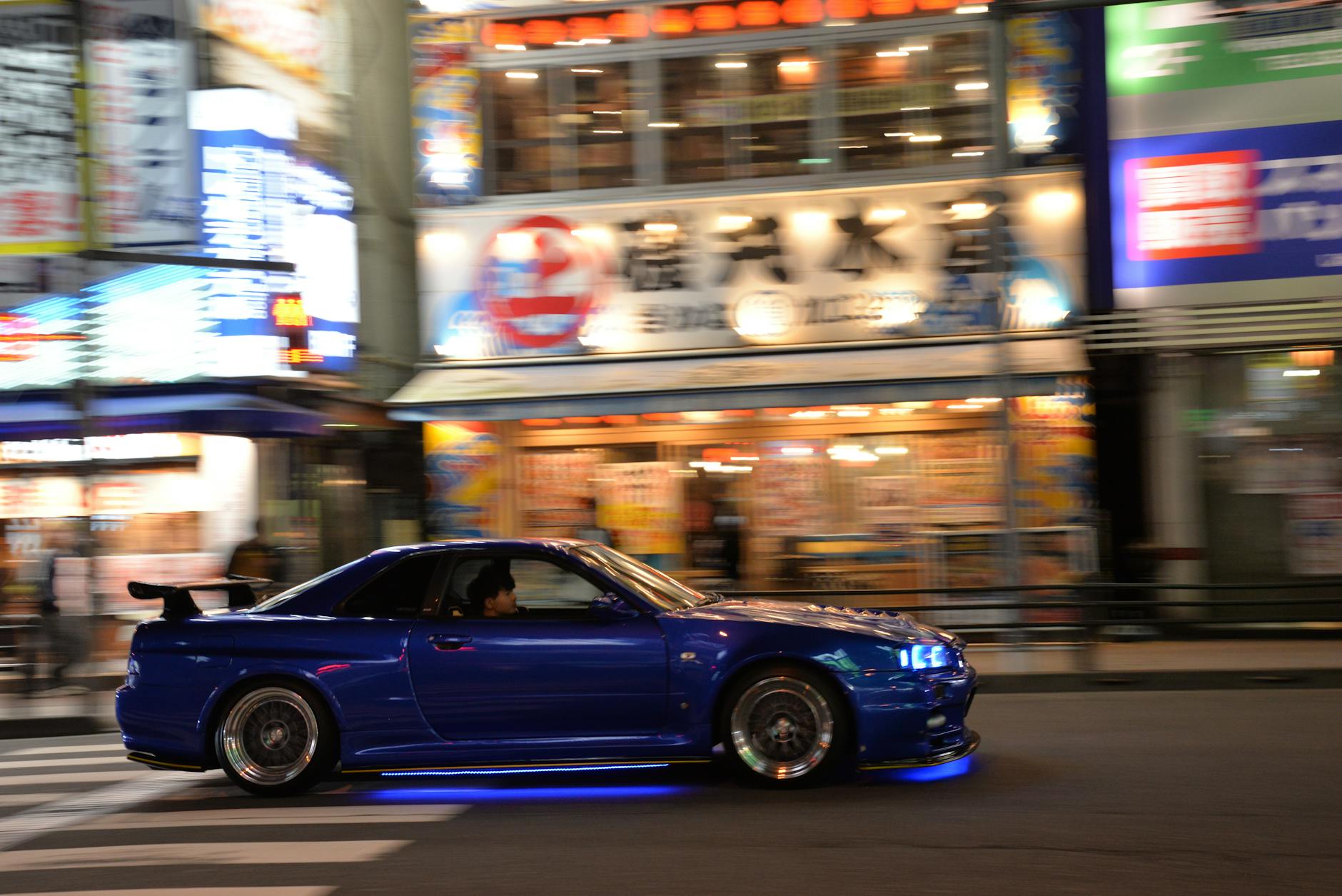
Japan has one of the best public transport systems in the world, and Tokyo sits at its center. The trains are fast, punctual, affordable, and will get you almost anywhere in the city without the stress of parking or navigation. For pure sightseeing within Tokyo’s core, the train network is genuinely the better option.
But here’s what the “just take the train” advice misses: some of Japan’s best experiences are only accessible by car.
The mountain passes above Hakone with Mt. Fuji filling your windshield. The coastal road from Kamakura along Sagami Bay. The Wangan expressway from Tokyo toward Yokohama at night, Rainbow Bridge behind you, the city lights reflecting off the bay. Driving to the 5th Station of Mt. Fuji through switchbacks that reward whoever’s behind the wheel.
This guide covers everything you need to rent a car specifically in Tokyo — the requirements, the driving conditions, the expressway network, parking realities, and the best day trips. We’ll also cover what separates a standard rental from the JDM sports car experience that has become one of the most talked-about things a tourist can do in Japan.
What You Need to Rent a Car in Tokyo
Important
Required documents for car rental in Tokyo:
- International Driving Permit (IDP) — Must be obtained in your home country BEFORE you arrive in Japan. Japan accepts the 1949 Geneva Convention IDP format. The 1968 Vienna Convention IDP is NOT accepted. In most countries, the IDP is issued by the national automobile association (AAA in the US, AA in the UK, CAA in Canada, NRMA in Australia). It typically costs around $20–$30 and takes 1–2 weeks to process. You cannot get one in Japan.
- Original home country driver’s license — The IDP is a translation document and must accompany your original license at all times.
- Passport
- Credit card — Most rental companies require a credit card (not debit) for the security deposit.
- Minimum age — Usually 21 at standard rental companies, 25 for some premium or sports car rentals. Check specific requirements when booking.
Exception for certain nationalities: Drivers from Switzerland, Germany, France, Belgium, Monaco, Taiwan, and Slovenia can use their home country license with an official Japanese translation (available from the Japan Automobile Federation, JAF). Check if your country qualifies before applying for an IDP.
Driving in Tokyo: What to Expect
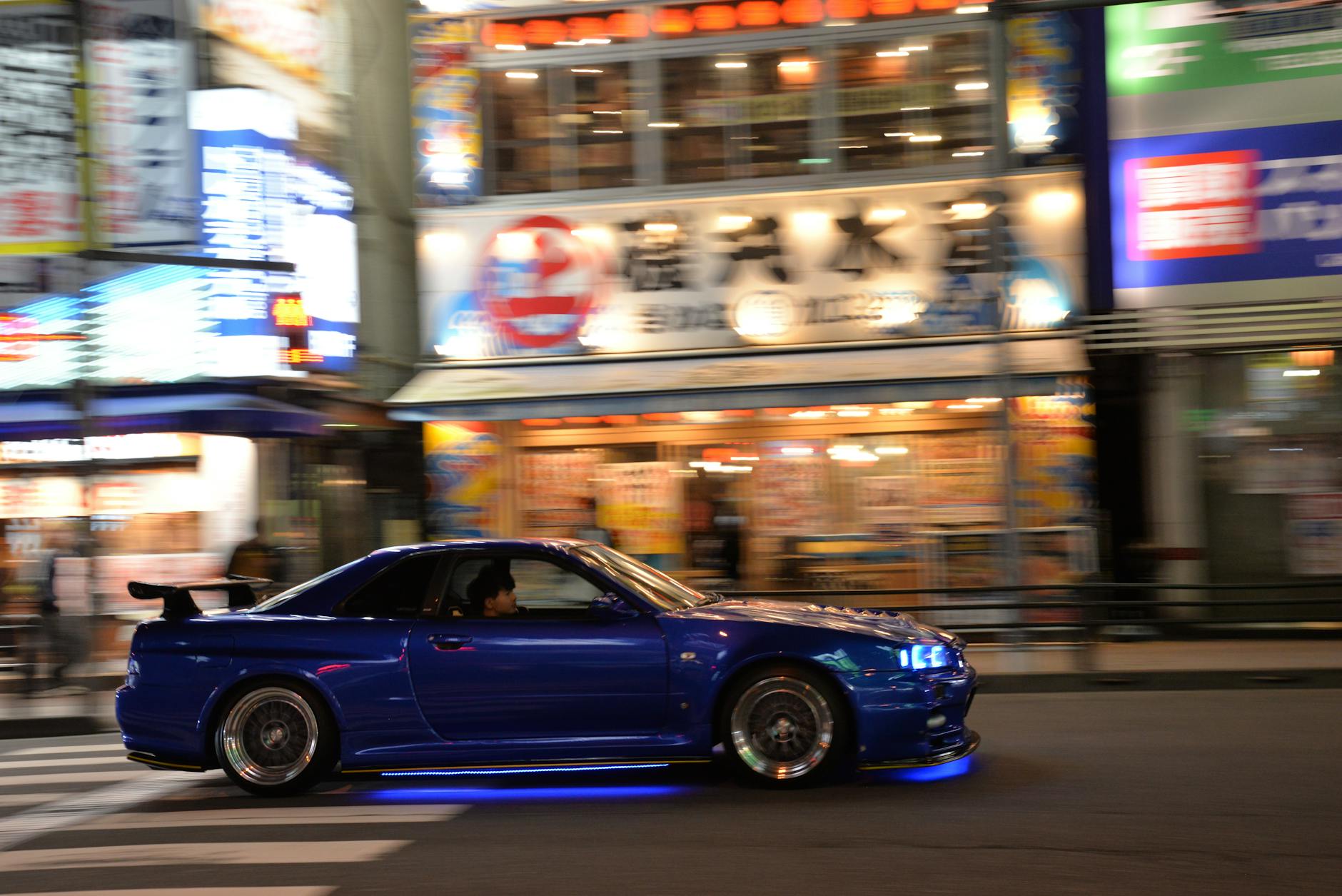
If you’ve never driven in Japan before, a few fundamental things to know before you start:
Left-Side Traffic, Right-Hand Drive
Japan drives on the left side of the road, with the steering wheel on the right side of the car. If you’re from a left-side driving country (UK, Australia, New Zealand, India, South Africa), this will be completely natural. If you’re from a right-side country (US, Canada, Europe, most of Asia), it requires an adjustment period.
The adjustment is usually faster than people expect. Within 30–45 minutes of driving, most people adapt. The main mistakes to watch for: turning into the wrong lane at intersections, and positioning the car on the wrong side of a lane (Japanese roads tend to be narrow, and instinct can put you too far to the right). Take it slowly for the first half hour.
Tokyo Traffic Conditions
Central Tokyo’s surface streets can be genuinely slow during peak hours. The city’s street grid was not designed for cars — it evolved from a feudal city plan, and many roads are one-lane with no room for error. Navigation apps will show you the fastest routes, but “fastest” in central Tokyo can still mean 20–30 minutes to travel a few kilometers.
The expressway network solves this problem completely. Tokyo’s elevated and underground expressways move at proper speed and bypass the ground-level congestion. If you’re going more than about 5 kilometers, the expressway is almost always worth the toll.
Pro Tip
Navigation
Navigation in Tokyo is straightforward with the right tools. Google Maps works excellently in Japan, provides Japanese expressway routing, and has English interface. Rental cars typically include a built-in GPS (usually in Japanese, but manageable), and most also accept your smartphone for CarPlay or Android Auto.
In Japan, destinations are often entered by phone number rather than address — the address system (which counts buildings by order of construction rather than street position) can be confusing. Google Maps handles this well by name or by landmark.
Road Signs
Japan’s road signs use standard international pictograms for most common signs, and major expressways, highways, and tourist routes include English/romaji signage alongside Japanese. In central Tokyo and on the expressway network, you’ll have no difficulty following signs. On rural or smaller roads, you may encounter Japanese-only signs — this is where navigation apps become essential.
Speed Limits
Japan’s posted speed limits are strictly enforced. Urban expressways in Tokyo are typically posted at 60–80 km/h. Surface streets in city areas run 30–50 km/h. Speed cameras are common, and fines are significant. The posted limit is the real limit — unlike some countries where informal tolerance exists, Japanese enforcement is serious.
Tokyo’s Expressway Network
Understanding Tokyo’s expressway system makes the city dramatically more accessible by car. The Metropolitan Expressway network is extensive, well-maintained, and — once you’re on it — relatively intuitive to navigate.
C1 Inner Circular Route
The C1 is a complete loop running under and around the core of central Tokyo. It passes through tunnels beneath Shinjuku, Shibuya, and Ginza, and connects to all the major outbound routes. Driving the full C1 loop takes about 30–40 minutes at legal speeds. It’s the backbone of the metropolitan expressway system and the most famous road in Japanese car culture.
C2 Outer Circular Route
The C2 runs a larger loop further from the city center. It’s useful for bypassing central congestion when traveling between different parts of the greater Tokyo area, and connects to routes heading out toward Saitama, Chiba, and the eastern suburbs.
Bayshore/Wangan Route
The Bayshore Route (Route 3) runs from central Tokyo along the waterfront, passing Rainbow Bridge, Odaiba, and the Tokyo Bay industrial waterfront, continuing to Yokohama and Haneda Airport. It’s the most scenic expressway in the metropolitan area and includes Tatsumi PA and Daikoku PA — two of Japan’s most famous car meet spots. The Wangan’s long straight sections and waterfront views make it memorable driving.
Tomei Expressway
The Tomei Expressway heads south from Tokyo toward Yokohama, then west toward Shizuoka and Nagoya. It’s the main artery for the Hakone day trip route and connects to the Odawara area. Plan for potential congestion near Yokohama on weekends.
ETC Cards
Japanese expressways use an electronic toll system called ETC. Most rental cars come equipped with an ETC reader, and the rental company will provide an ETC card (usually with a small daily fee for the card rental). With ETC, you drive through toll gates at low speed without stopping — the toll is automatically charged to the card and billed to your rental account. Without ETC, you use cash lanes (slower, but workable). If your rental includes ETC, use it — it makes the expressway experience much smoother.
Parking in Tokyo
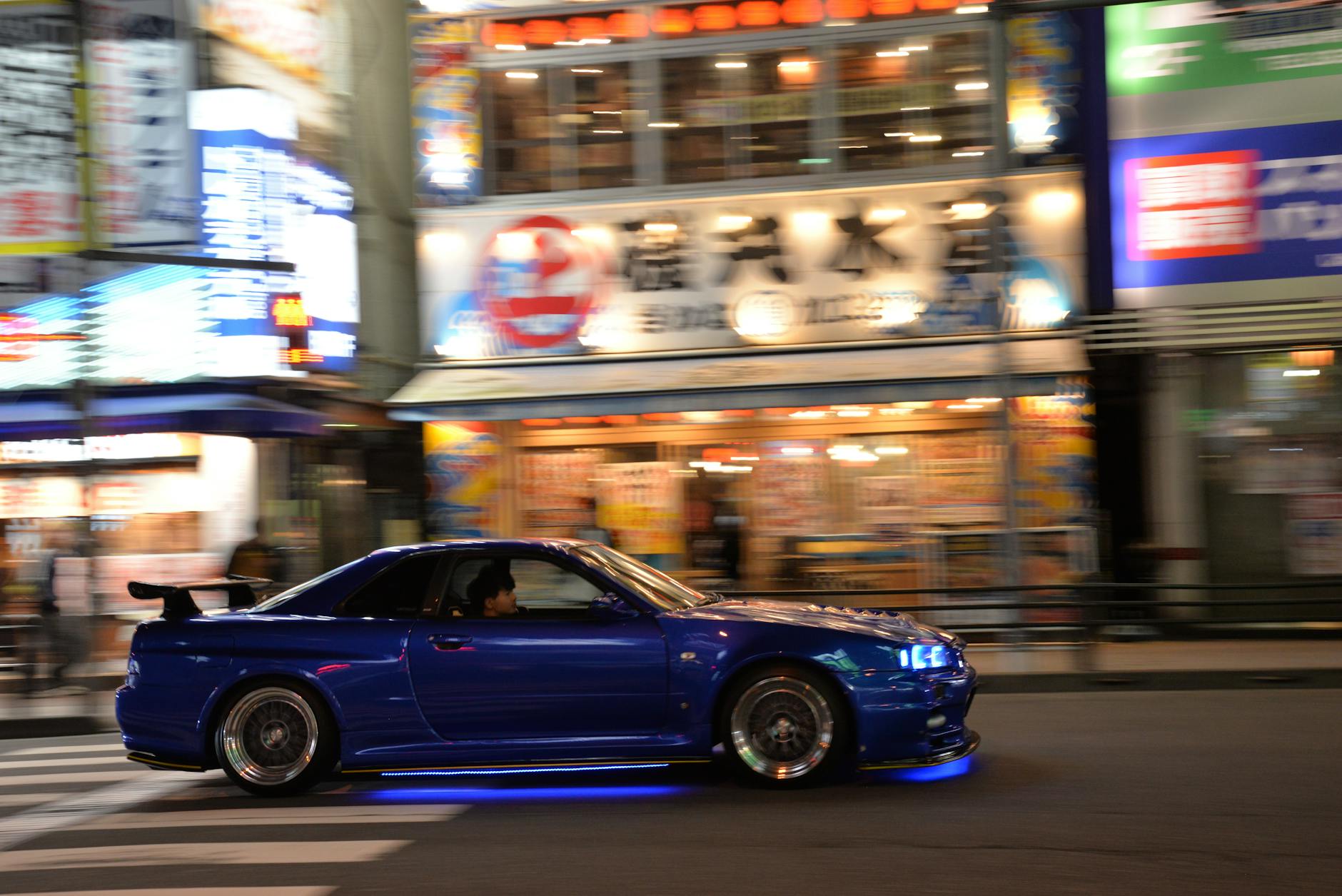
Important
Parking in Tokyo — what you need to know:
- Street parking is very limited — Unlike most Western cities, free roadside parking in central Tokyo is extremely rare. Most streets have no parking at all, and parking enforcement is active.
- Coin parking lots (コインパーキング) are everywhere — These small, often automated parking facilities appear throughout the city. The typical mechanism is a mechanical plate that rises under your car after you park, holding it until you pay at the machine before leaving. Look for blue “P” signs.
- Cost: Central Tokyo parking typically runs ¥300–600 per 30 minutes. Daily maximums (上限) often apply — look for signs showing “最大” (maximum) rates, which cap the total cost for extended stays.
- Apps: Times Car Park and Park24 have apps that can locate nearby parking and, in some cases, reserve spots in advance.
- Hotel parking: Many Tokyo hotels have parking facilities. If you’re renting a car for a specific day trip rather than keeping it at the hotel, this isn’t relevant — but if staying with a car, confirm parking costs when booking accommodation. Some central Tokyo hotels charge ¥3,000–5,000 per night for parking.
Best Day Trips by Car from Tokyo
This is where renting a car in Tokyo genuinely pays off. Japan’s most spectacular scenery is outside the train corridors, and some of the country’s best destinations are dramatically better by car than by public transport.
Hakone — Mt. Fuji Views and Onsen (1.5 hours)
Hakone sits in a volcanic crater in Kanagawa Prefecture, about 90 kilometers southwest of Tokyo. By car via the Tomei Expressway, it’s 1.5–2 hours depending on traffic. The attraction is the volcanic landscape, hot spring resort towns, Lake Ashi with its floating torii gate, and — on clear days — some of the best views of Mt. Fuji available from any easily accessible location in Japan.
The Hakone Turnpike is one of the great driving roads in the Kanto region — a toll road that climbs through forest to an observation deck with panoramic Fuji views. Driving it in a quality car is an experience that doesn’t exist on any train route. See our full Hakone Driving Route Guide for the complete itinerary.
Nikko — Temples, Waterfalls, and Mountain Roads (2 hours)
Nikko in Tochigi Prefecture is home to the extraordinarily ornate Toshogu Shrine and several dramatic waterfalls, including Kegon Falls. By car, it’s about 2 hours from Tokyo on the Tohoku Expressway. The approach road through the cryptomeria cedar forest is one of the most atmospheric drives in Japan.
The Irohazaka mountain road above Nikko, with its 48 switchback curves, is a genuinely memorable drive that rewards anyone in a capable car. Read our Nikko Driving Route Guide for timing and routing recommendations.
Mt. Fuji 5th Station (2 hours)
The 5th Station of Mt. Fuji — at 2,305 meters — is the highest point reachable by vehicle. The approach via the Subaru Line (a toll road on the Yamanashi Prefecture side) winds through forest and volcanic terrain to a visitor area with direct views of the summit above and the Kanto Plain below. It’s one of the most visually spectacular drives accessible from Tokyo.
The route from Tokyo goes via the Chuo Expressway to Fujinomiya or Kawaguchiko, then up the Subaru Line. Plan for 2–2.5 hours each way. Our Mt. Fuji Driving Route Guide covers the route in full detail.
Kamakura — Coastal Roads and Ancient Temples (1 hour)
Kamakura is one of Japan’s most visited day trip destinations — an ancient capital with the famous Great Buddha, numerous Zen temples, and the scenic Shonan coastline along Sagami Bay. By expressway from Tokyo, it’s about an hour. The coastal route along Route 134 between Kamakura and Enoshima is one of the best seaside drives in the Kanto region.
Note that Kamakura itself has limited and expensive parking, particularly on weekends. Park outside the center and walk, or use the parking areas near Yuigahama Beach. See our Kamakura Day Trip Guide for parking tips and routing.
Standard Car Rental vs. JDM Sports Car Rental in Tokyo
Standard car rental in Tokyo works exactly as you’d expect. The major companies — Toyota Rent a Car, Nippon Rent-A-Car, Times Car Rental — operate near major train stations and offer a range of practical vehicles: Toyota Aqua hybrids, Honda Fit hatchbacks, Toyota Corolla sedans. These are practical, economical, and get the job done for day trips and transportation needs.
Then there’s the other option.
Japan produced some of the most iconic sports cars in automotive history during the 1990s and 2000s — the Nissan Skyline GT-R, the Toyota Supra, the Mazda RX-7, the Honda NSX, the Nissan Silvia. These cars are legendary to anyone who grew up with Gran Turismo, Initial D, Fast and Furious: Tokyo Drift, or simply an appreciation for driving machines built when Japanese manufacturers were competing to produce the most exciting cars in the world.
Most of these cars were never officially exported to the United States, Australia, or Europe. Japan is one of the few places in the world where you can legally drive them.
If you’re going to rent a car in Tokyo, the question worth asking is: why settle for a Toyota Aqua when you could drive a Nissan GT-R?
Samurai Car Japan, based in Shibuya, offers JDM sports car rental specifically designed for tourists. The fleet includes genuine iconic JDM vehicles — GT-Rs, Silvias, RX-7s, Supras — that you can rent with a valid IDP and drive on the exact roads they were built for. The Wangan run to Yokohama in a Silvia S15. Hakone Turnpike in an RX-7. Rainbow Bridge approach in an R34 GT-R.
This isn’t a “sports car experience” where you ride as a passenger. It’s a rental — you drive. The Samurai Car Japan showroom is in Shibuya, walking distance from the Shibuya Scramble Crossing, positioned at the center of Tokyo’s car culture geography.
Pro Tip
Where to Rent a Car in Tokyo
Standard Rental Companies
For practical day trips, family trips, or if JDM sports cars aren’t the priority, the major rental companies near Tokyo’s main stations are convenient and straightforward:
- Toyota Rent a Car — Multiple locations including near Shinjuku and Shibuya stations. Japan’s largest rental network with well-maintained vehicles and English-friendly service.
- Nippon Rent-A-Car — Competitive pricing, multiple locations near major stations, good selection of hybrids and larger vehicles for family groups.
- Times Car Rental — Widespread locations throughout Tokyo. Part of the same group as the Times Car Park parking lots, making combined parking/rental logistics simpler.
- Orix Rent a Car — Good coverage near Haneda Airport for travelers collecting a car on arrival rather than after settling in.
JDM Sports Car Rental
- Samurai Car Japan (Shibuya) — The specialist for JDM sports car rental in Tokyo. Fleet includes GT-Rs, Silvias, RX-7s, Supras, and other iconic Japanese performance vehicles. IDP required. Shibuya location is centrally positioned for all major Tokyo expressway routes. Book here.
Why not elevate your journey with a legendary JDM experience?
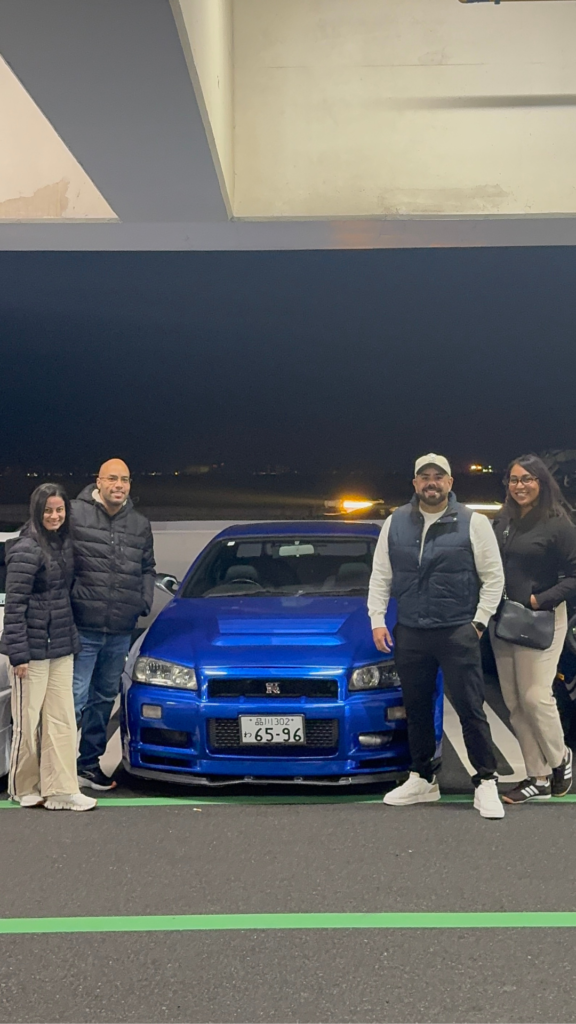
Our Services:
- Self-Drive Rentals
- Guided Tours
- Drift Experiences
Please visit the dedicated page for more details.
Frequently Asked Questions
Do I need an International Driving Permit to rent a car in Tokyo?
Yes, in almost all cases. Japan requires a valid International Driving Permit (IDP) for foreign visitors to drive. The IDP must be the 1949 Geneva Convention format, obtained in your home country before arriving in Japan — you cannot get one in Japan. Bring your original home country license as well, as the IDP alone is not sufficient. Some nationalities (Switzerland, Germany, France, Belgium, Monaco, Taiwan, Slovenia) can use their home license with an official Japanese translation instead.
Is it hard to drive in Tokyo?
Driving in Tokyo requires attention but is very manageable with preparation. The main adjustments are left-side traffic (if you’re from a right-side country), narrow streets in central areas, and the expressway toll system. Navigation apps work excellently. Most drivers adapt within the first 30–60 minutes. Day trips out of the city on expressways are straightforward once you’re on the highway.
How much does car rental cost in Tokyo?
Standard economy cars (Toyota Aqua, Honda Fit) typically rent for ¥5,000–8,000 per day before expressway tolls and fuel. Mid-range sedans run ¥7,000–12,000 per day. JDM sports cars through specialists like Samurai Car Japan are priced higher, reflecting the rarity and value of the vehicles. Expressway tolls add ¥1,000–3,000+ depending on your route. Parking in central Tokyo adds ¥1,000–5,000 per day depending on location and duration.
Can tourists drive in Tokyo?
Yes. Tourists with a valid International Driving Permit and original home country license can rent and drive cars throughout Japan, including Tokyo. The process at rental companies is designed to be foreigner-friendly, and most major companies have English-speaking staff or English documentation.
Where is the best place to rent a JDM sports car in Tokyo?
Samurai Car Japan in Shibuya is Tokyo’s specialist for JDM sports car rental. They offer authentic Japanese performance vehicles — GT-R, Silvia, RX-7, Supra — for tourist rental with an IDP. The Shibuya location puts you at the center of Tokyo with direct access to the Wangan expressway, Rainbow Bridge, and all major day trip routes. Visit japantripsguides.com/jdm-car-rental-japan/ for fleet details and booking.
[st_af id=”862″]
[st_af id=”854″]
🇯🇵 Plan Your Japan Experience
JDM Car Rental
Drive a GT-R, Supra, RX-7, or Silvia on the roads they were built for. Hakone passes, Wangan highway, mountain touge — your dream JDM experience.
Daikoku PA Tour
Visit Japan’s most legendary car meet. Hundreds of modified cars, passionate owners, and the heartbeat of JDM culture. Guided weekend night tours available.
Photo Guide Tour
Capture stunning photos at locations only locals know. Hidden shrines, backstreet alleys, rooftop views, and golden hour spots for unforgettable shots.
Leave a Reply