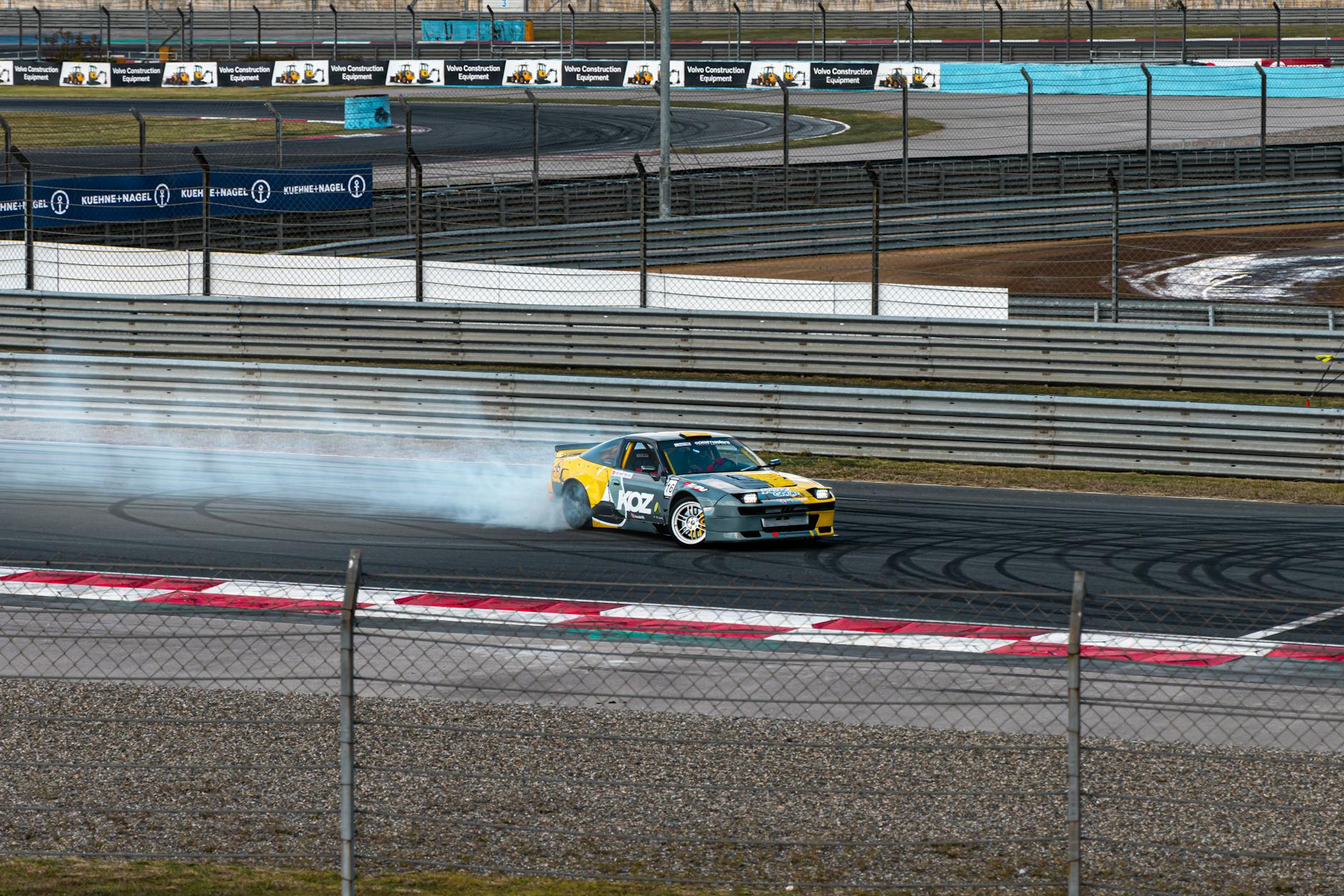
Japan has more dedicated drift circuits per square kilometer than anywhere else on earth. From legendary mountain passes to world-class motorsport venues, the infrastructure for drifting in Japan is unmatched — and as a foreign visitor, accessing it is more straightforward than you might think. This guide covers every circuit worth knowing, what to expect at each one, and exactly how to get on track as an overseas car enthusiast.
Japan’s Drift Culture: Why the Tracks Matter
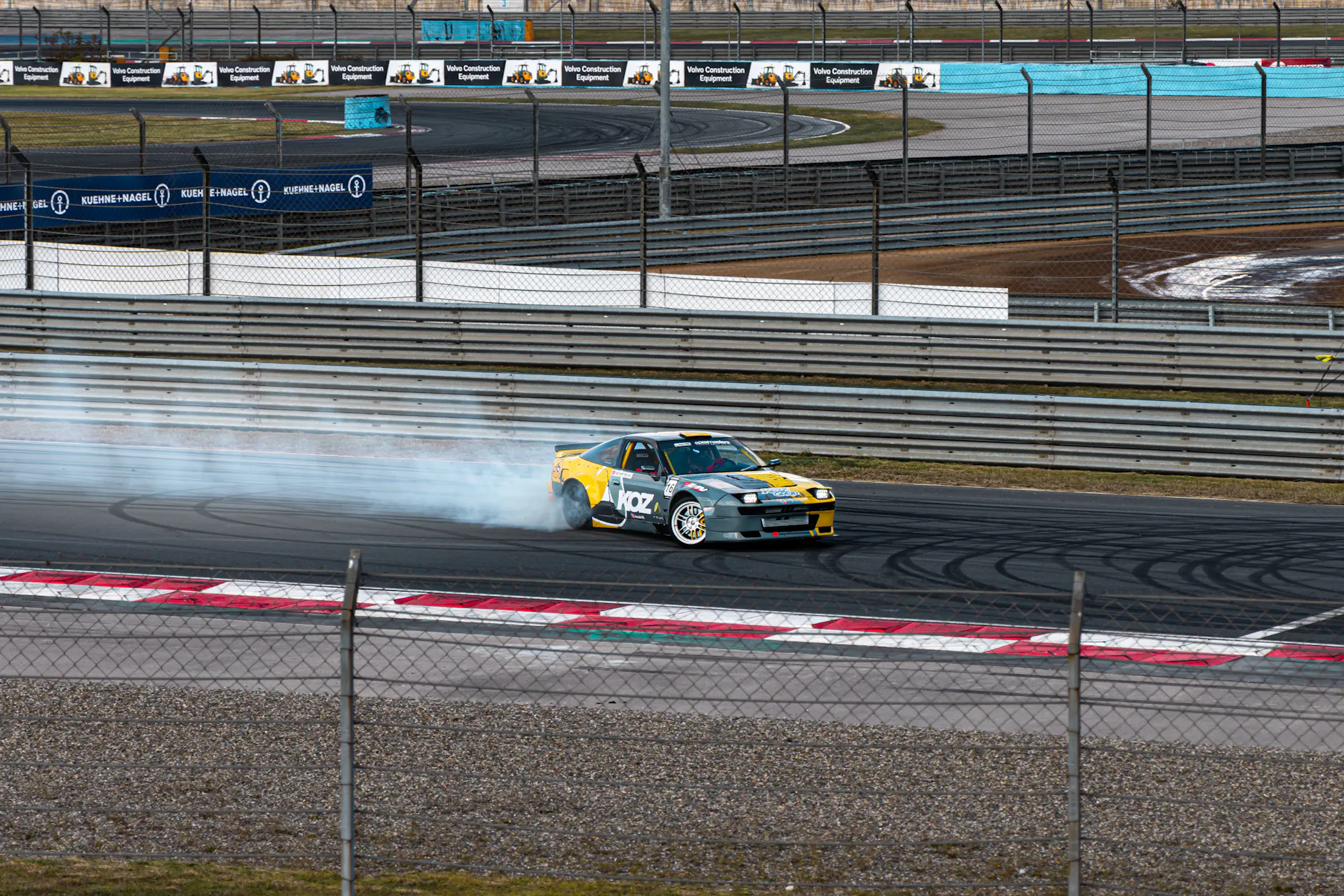
Drifting in Japan has a specific origin story that makes its circuits meaningful beyond just asphalt and barriers. It started on the touge — mountain pass roads like Irohazaka in Nikko and the Hakone Turnpike — where drivers like Keiichi Tsuchiya developed the controlled oversteer technique in the late 1970s and early 1980s. These were illegal sessions, filmed in secret, and shared on VHS tapes among Japan’s underground car community.
The formalization came in 2000 with the founding of D1 Grand Prix — Japan’s professional drift championship. D1 moved the sport from mountain passes to purpose-built circuits and sanctioned venues, transforming an underground subculture into a legitimate competitive discipline. Formula Drift in the United States, British Drift Championship in the UK, and dozens of national series worldwide all trace their lineage directly back to D1 and the culture it codified.
Understanding this history matters when you visit Japan’s drift circuits. You’re not just visiting a track — you’re visiting the place where a global sport was invented and refined. That context transforms the experience.
Ebisu Circuit — Fukushima
Location: Nihonmatsu City, Fukushima Prefecture — approximately 3 hours from Tokyo by car via the Tohoku Expressway.
Ebisu Circuit is the most famous drift venue in Japan — and arguably the world. Built into the mountains of Fukushima, it’s not a single track but a complex of multiple separate circuits spread across a hillside, each with different characteristics and challenges:
- Ebisu East (Higashi) — The main showpiece circuit, longer layout with high-speed sections and sweeping corners that reward commitment.
- Ebisu West (Nishi) — Technical, tight layout that demands precision. Often used for beginner drift sessions.
- Ebisu North (Kita) — Shorter circuit, good for advanced car control drills.
- Minami Ebisu (South) — The original course on the complex, winding through the landscape with the most touge-like character.
The annual Drift Matsuri event at Ebisu is the most celebrated gathering in global drift culture. Up to 500 cars descend on the complex, with 24-hour drifting across all circuits, drivers from Japan and overseas, and an atmosphere that feels like a pilgrimage for anyone who takes JDM seriously. If you can schedule your Japan visit around Drift Matsuri, do it.
Outside of events, track day access at Ebisu is available year-round. Rental cars are available on-site if you don’t have your own vehicle. The complex also has accommodation on-site — drivers staying overnight for extended sessions is common.
Getting there: Best by car — rent a JDM sports car in Tokyo and drive the Tohoku Expressway north. The 3-hour drive in an S15 Silvia or AE86 with the mountains rising around you is part of the Ebisu experience. Shinkansen to Koriyama then taxi/rental is the public transport option, but it’s significantly less convenient.
Nikko Circuit — Tochigi
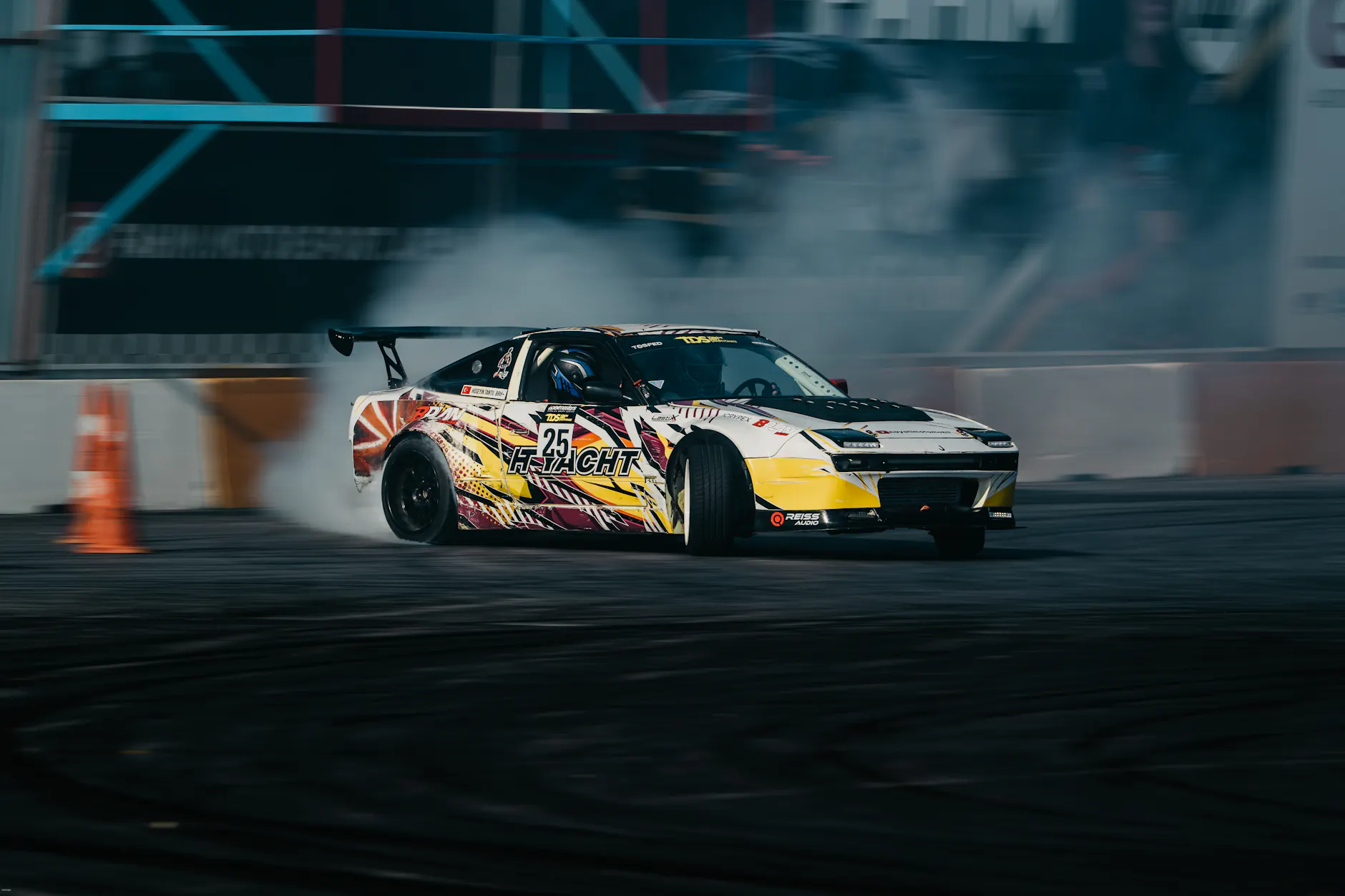
Location: Tochigi Prefecture — approximately 2 hours from Tokyo by car via the Nikko Expressway.
Nikko Circuit carries more historical weight per square meter than perhaps any other track in Japan. It sits within driving distance of Irohazaka — the 48-hairpin mountain pass where Keiichi Tsuchiya developed his drift technique in the early 1980s. This is the touge from which all drifting descends.
The circuit itself has a tight, technical layout that rewards car control over raw speed — it’s well-suited to S-chassis cars (S13, S14, S15) and lighter platforms like the AE86. Track days are held regularly throughout the year, and the venue is well-organized for visitors.
Beyond the circuit, Nikko as a destination is extraordinary. Nikko Toshogu Shrine — one of Japan’s most lavishly decorated UNESCO World Heritage sites — is 30 minutes from the track. You can visit the shrine, drive Irohazaka (legally, in a rental car, without drifting), and do a track session all in the same day. Very few places in the world offer that combination of motorsport heritage and cultural immersion.
Fuji Speedway — Shizuoka
Location: Oyama, Shizuoka Prefecture — approximately 1.5 hours from Tokyo via the Tomei Expressway. Mount Fuji is visible from the circuit on clear days.
Fuji Speedway is Japan’s most prestigious circuit by raw stature — it hosts F1, WEC, and Super GT events and is operated to international Grade 1 standards. The main course is a high-speed layout with a long straight and challenging technical sections, quite different in character from the tighter circuits at Ebisu or Nikko.
Drift events at Fuji are less frequent than at dedicated venues, but they do occur — seasonal drift days and Super GT weekends occasionally feature drift demonstrations. For car enthusiasts who aren’t attending a specific drift event, the Fuji Motorsports Museum located at the circuit is a world-class attraction: it houses a significant collection of Japanese race cars including GT-R GT500 machines, Formula cars, and historic touring cars.
Getting there: Via the Tomei Expressway from Tokyo. The Gotemba Premium Outlets are directly adjacent to the circuit — a convenient stop for the non-car-enthusiast members of your travel group. The drive past Mount Fuji on a clear morning is genuinely spectacular.
Okayama International Circuit — Okayama
Location: Okayama Prefecture — approximately 4 hours from Tokyo by Shinkansen to Okayama Station plus rental car.
Okayama International Circuit is a technical, medium-speed layout that has hosted D1 Grand Prix rounds and is well-established in Japan’s competitive drift circuit. The layout rewards driver precision — it’s not a power circuit, which makes it excellent for learning and refining technique.
Track days at Okayama are available and the venue is professionally run. For serious drift enthusiasts who are spending time in western Japan — visiting Hiroshima, Kyoto, or Osaka — Okayama is worth factoring into the itinerary. It’s more remote than Tokyo-area options, which means fewer crowds and a more focused track environment.
Suzuka Circuit — Mie
Location: Suzuka City, Mie Prefecture — approximately 3 hours from Tokyo via Nagoya by Shinkansen, or 1.5 hours from Osaka.
Suzuka is Japan’s most famous circuit internationally — the home of the Japanese Formula 1 Grand Prix since 1987, and one of the most technically demanding circuits in global motorsport. Its figure-eight layout (unique among major circuits), long Spoon curve, and the terrifying 130R corner make it a pilgrimage destination for any motorsport enthusiast regardless of drift interest.
Drift events at Suzuka are occasional — Super GT weekends sometimes feature drift demonstrations, and specialized drift days do run. For most visitors, Suzuka is best experienced during a Super GT or F1 weekend when the circuit is at maximum atmosphere. The adjacent Suzuka Circuit Park (theme park) makes it accessible as a family destination even outside event weekends.
Suzuka pairs excellently with a visit to Nagoya — the city is 50 minutes away and has significant car culture credentials of its own (Toyota’s Nagoya manufacturing heritage, the Toyota Commemorative Museum of Industry and Technology).
TC Kart Land — Tokyo / Kanagawa Area
TC Kart Land operates multiple facilities in and around the Greater Tokyo area, and it’s the most accessible entry point into drift technique for tourists based in Tokyo. Their drift kart tracks use rear-wheel drive karts on dedicated courses — slower than a real car, but the physics of oversteer and counter-steering are identical.
Sessions run ¥3,000–¥6,000 depending on duration. Full safety equipment is provided, no prior experience is required, and the staff are used to first-time visitors. It’s the ideal warm-up before committing to a full drift lesson in a real car.
How to Get on a Japanese Drift Track as a Foreigner
Accessing Japan’s circuit infrastructure as an overseas visitor is entirely possible — it just requires understanding the format and preparing the right documentation.
Track Day Formats
Japanese circuit sessions typically run in two formats:
- Open Lapping Days: Pay a track fee, go out on circuit with other drivers in a general session. Usually divided by skill level or car type.
- Organized Drift Sessions: Structured sessions with a focus on drift technique. Often include a safety briefing and may have instructors present. More suitable for visitors unfamiliar with the specific circuit layout.
What You Need
- International Driving Permit (Geneva 1949 format) — required if driving a rental car to and at the circuit
- Helmet — usually available to rent at the circuit if you don’t have your own; SA or Snell rated helmets required at most venues
- Closed-toe shoes — sandals and flip-flops are universally prohibited at Japanese circuits
- Long trousers — required at some venues as a basic fire safety measure
- Current valid driver’s license from your home country
Language Barrier
English proficiency at Japanese circuit facilities varies widely — from excellent at major venues like Fuji Speedway to minimal at smaller regional tracks. Google Translate handles Japanese circuit booking pages reasonably well. For the smoothest experience, book through an English-speaking operator who already has relationships with circuits and handles all communication on your behalf.
Cost Guide for Track Days in Japan
- Drift kart session: ¥3,000 – ¥6,000
- Track day entry fee (own car or rental): ¥5,000 – ¥20,000 depending on circuit and session type
- Guided drift experience (car + instruction included): ¥30,000 – ¥80,000
- Tandem ride with professional drifter: ¥15,000 – ¥30,000
- Helmet rental: ¥500 – ¥2,000 per day
Book a Guided Drift Experience
For a hassle-free drift experience in Japan, Samurai Car Japan — based in Shibuya, Tokyo — offers guided JDM car and drift experiences with English-speaking staff. They handle the logistics entirely: circuit access, car preparation, safety briefings, and instruction. You show up, get briefed, and drive sideways. Their fleet includes iconic JDM machines (GT-R, Supra, RX-7, S15 Silvia) and their experience is specifically designed for international visitors.
Whether you’re planning your Japan itinerary around circuits or fitting a drift session into a broader travel schedule, Samurai Car Japan is the most reliable, English-fluent starting point for the full JDM experience.
Why not elevate your journey with a legendary JDM experience?
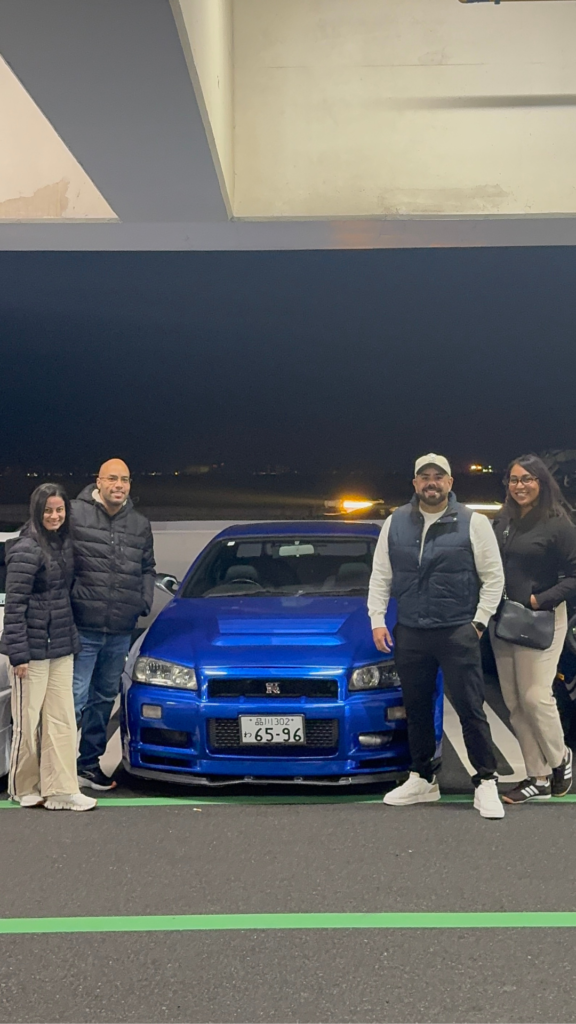
Our Services:
- Self-Drive Rentals
- Guided Tours
- Drift Experiences
Please visit the dedicated page for more details.
Related Guides
FAQ: Drift Tracks in Japan
Where can I drift legally in Japan?
Legal drifting in Japan takes place at licensed circuits and closed-course venues. The main options near Tokyo are Ebisu Circuit (Fukushima, 3 hours), Nikko Circuit (Tochigi, 2 hours), and Fuji Speedway (Shizuoka, 1.5 hours). For a guided experience without needing to travel far, operators like Samurai Car Japan in Shibuya arrange drift sessions at approved venues. All street drifting — including mountain passes — is illegal.
Can foreigners drift at Japanese circuits?
Yes. Foreign visitors can access Japanese drift circuits with an International Driving Permit (Geneva 1949 format) and valid home country license. Most major circuits have some English-language capacity, and booking through an English-friendly operator removes the language barrier entirely. Age and weight requirements apply — typically 18+, under 100kg, no serious back or neck conditions.
What is the best drift circuit near Tokyo?
For a full dedicated drift circuit experience, Ebisu Circuit in Fukushima (3 hours by car) is Japan’s best drift venue — multiple tracks, year-round access, and the spiritual home of competitive drifting. For something closer to Tokyo, Nikko Circuit (2 hours) is the best option. For beginners or those staying central, TC Kart Land’s drift kart facilities are accessible from Tokyo without needing to travel far.
How much does a track day cost in Japan?
Track day entry fees vary by circuit and session type. Drift kart sessions at TC Kart Land run ¥3,000–¥6,000. Circuit track day fees (for your own or rental car) typically range from ¥5,000 to ¥20,000 depending on the venue and duration. Guided drift experiences with a car and instructor included run ¥30,000–¥80,000. Tandem rides with a professional drifter cost ¥15,000–¥30,000.
What car should I use for drifting in Japan?
The most popular cars for drifting in Japan are the Nissan S15 Silvia (SR20DET engine, excellent balance, widely available), Toyota AE86 (light, naturally aspirated, historically significant), and Mazda RX-7 FD (rotary engine, aggressive character). For beginners, the S15 or S13 180SX are the most forgiving platforms. Guided drift operators like Samurai Car Japan provide the car — you don’t need to source one yourself for a tourist experience.
[st_af id=”862″]
[st_af id=”854″]
🇯🇵 Plan Your Japan Experience
JDM Car Rental
Drive a GT-R, Supra, RX-7, or Silvia on the roads they were built for. Hakone passes, Wangan highway, mountain touge — your dream JDM experience.
Daikoku PA Tour
Visit Japan’s most legendary car meet. Hundreds of modified cars, passionate owners, and the heartbeat of JDM culture. Guided weekend night tours available.
Photo Guide Tour
Capture stunning photos at locations only locals know. Hidden shrines, backstreet alleys, rooftop views, and golden hour spots for unforgettable shots.
Leave a Reply