Japanese Convenience Store Guide: Everything You Need to Know About Konbini (2026)
Walk into a Japanese convenience store for the first time and you will wonder why every other country got it so wrong. A Japanese convenience store — called a konbini (コンビニ) — is not the dimly lit snack shop you are used to back home. It is a spotlessly clean, brilliantly organized micro-department store that sells restaurant-quality meals, handles your banking, prints your documents, ships your luggage, and never, ever closes.
Japan has over 56,000 konbini locations nationwide. That is roughly one for every 2,200 people. In central Tokyo, you can stand at one konbini entrance and see two more across the street. This konbini guide covers the three major chains, the services that will save your trip, the foods you absolutely need to try, and the unspoken etiquette rules that will keep you from looking like a clueless tourist.
What Makes Japanese Konbini Special
If you have only experienced convenience stores in North America, Europe, or Southeast Asia, the konbini in Japan will redefine the concept entirely. Here is what sets them apart.
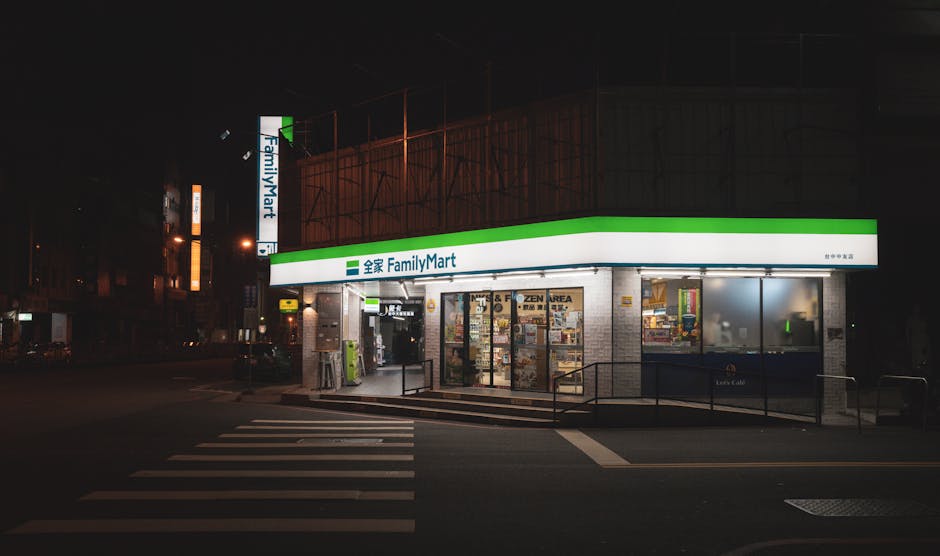
The food is genuinely good. We are not talking about gas station sandwiches wrapped in cling film three days ago. Japanese konbini receive fresh food deliveries two to three times per day. The onigiri are made with properly seasoned rice and real fillings. The egg sandwiches are soft, creamy, and would not be out of place at a cafe. The bento boxes are balanced meals with grilled fish, pickled vegetables, and perfectly cooked rice — all for 500 to 800 yen.
Everything works. The coffee machines are immaculate. The toilets are clean. The microwave actually heats your food evenly. The self-checkout reads your items without error. This is not an accident — Japanese konbini staff rotate through cleaning schedules every hour, and the supply chain logistics behind these stores are considered among the most sophisticated in the retail world.
The services go far beyond food. You can withdraw cash, pay your utility bills, buy concert tickets, ship packages across the country, print boarding passes, pick up online orders, and charge your transit card. A single konbini replaces what would require a bank, a post office, a Ticketmaster, a FedEx, and a laundromat in most other countries.
The Big Three: 7-Eleven vs Lawson vs FamilyMart
Three chains dominate the Japanese convenience store landscape. Each has its own strengths, signature products, and loyal following. Here is how they compare so you know exactly where to head depending on what you need.
7-Eleven Japan (セブン-イレブン)
7-Eleven Japan operates roughly 21,500 stores across the country, making it the largest konbini chain by store count. If you only know 7-Eleven from its American incarnation, forget everything. The Japanese version is a completely different operation run by Seven & i Holdings, and it consistently ranks as the top konbini for food quality.
Best for:
- Hot food: Their fried chicken (nanachiki), nikuman (steamed meat buns), and oden (simmered fish cake stew, seasonal) are best-in-class. The nanachiki alone sells over 100 million pieces per year.
- ATMs: Seven Bank ATMs accept virtually all international debit and credit cards, including Visa, Mastercard, Maestro, Cirrus, and UnionPay. This is your most reliable option for withdrawing Japanese yen with a foreign card.
- Coffee: The “Seven Cafe” self-serve coffee machine brews fresh drip coffee for 110 yen (R size). It is smooth, consistent, and arguably better than what many sit-down cafes charge three times as much for.
- Onigiri: 7-Eleven’s hand-rolled onigiri (temaki onigiri) are widely considered the best among the big three. The tuna mayo flavor is the best-selling konbini product in Japan.
- Egg sandwiches: Rich, creamy egg salad on impossibly soft white bread. This item alone has a cult following among tourists.
Lawson (ローソン)
Lawson Japan has approximately 14,600 stores and is the konbini of choice for anyone with a sweet tooth. Their in-house dessert brand has turned convenience store desserts into something that rivals dedicated patisseries.
Best for:
- Uchi Cafe sweets: Lawson’s premium dessert line includes the famous “Basque Burnt Cheesecake” (basuchi), premium roll cakes, and mochi-textured cream puffs. These are not afterthought desserts — they are developed by pastry professionals and rotate seasonally.
- Karaage-kun: Bite-sized fried chicken nuggets sold in a paper cup — available in regular, cheese, red (spicy), and rotating limited flavors. At about 250 yen, they are one of the best snack deals in Japan.
- ATMs: Lawson Bank ATMs also accept major international cards, making Lawson your second-best option for cash withdrawals after 7-Eleven.
- Natural Lawson: A health-focused sub-brand found primarily in Tokyo, stocking organic products, low-calorie bento, and higher-end cosmetics. Look for the green logo instead of the standard blue.
- Machi Cafe: Lawson’s coffee is ordered at the register and prepared by staff, unlike 7-Eleven’s self-serve approach. The iced cafe latte is excellent.
FamilyMart (ファミリーマート)
FamilyMart Japan runs around 16,500 locations and has carved out a strong identity through its fried food counter and smart product collaborations.
Best for:
- Famichiki: A large, juicy fried chicken breast in a paper sleeve — crispy skin, seasoned well, and just 220 yen. It has been FamilyMart’s flagship hot food item for over 20 years and outsells many fast food chains. Spicy and cheese flavors appear regularly as limited editions.
- MUJI collaboration: Select FamilyMart stores stock a curated range of MUJI products including travel toiletries, stationery, and snacks. Perfect if you forgot your toothbrush or want MUJI’s famous curry pouches without visiting a full store.
- Frappe drinks: FamilyMart’s frozen frappe line (you pour hot coffee over a frozen cup of flavor base) rivals Starbucks Frappuccinos at a fraction of the price.
- Mother’s Selection: A premium product line focused on comfort food staples like katsu sandwiches, meat buns, and cream-filled pastries.
- FamiPay app: Their loyalty app offers coupons and point accumulation, useful if you find yourself visiting FamilyMart repeatedly during your trip.
Services You Didn’t Know About
Food gets all the attention, but the services available at Japanese convenience stores are what truly set them apart. These will save you time, money, and stress throughout your trip.
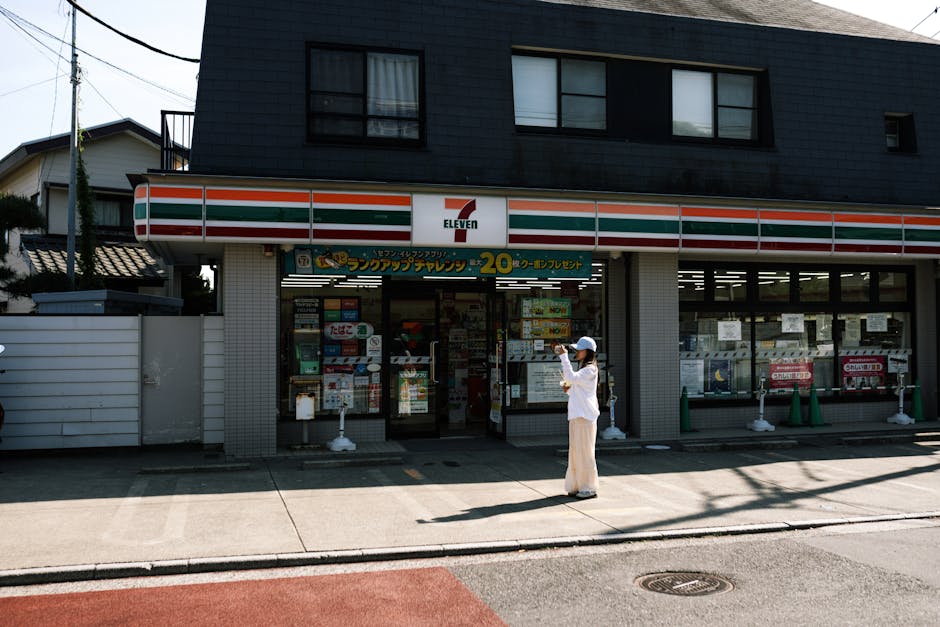
ATM and Cash Withdrawal
Japan still runs heavily on cash, especially at smaller restaurants, shrines, and rural businesses. Konbini ATMs are the most reliable way for tourists to get Japanese yen.
- 7-Eleven: Seven Bank ATMs have English-language menus and accept Visa, Mastercard, American Express, JCB, Discover, Diners Club, Maestro, Cirrus, PLUS, and UnionPay. Withdrawal limits are typically 100,000 yen per transaction.
- Lawson: Lawson Bank ATMs accept most international cards with English support. Coverage is slightly less universal than Seven Bank but still highly reliable.
- FamilyMart: E-net ATMs are available but international card compatibility can be inconsistent. Use 7-Eleven or Lawson first.
Free Wi-Fi
All three major chains offer free Wi-Fi, though the connection quality and registration process vary.
- 7-Eleven: “7SPOT” — register with an email address, 60 minutes per session, up to 3 sessions per day.
- Lawson: “LAWSON_Free_Wi-Fi” — email registration, available in 5-language support.
- FamilyMart: “Famima_Wi-Fi” — email registration required, 20 minutes per session, up to 3 times daily.
Printing, Copying, and Fax
The multifunction printers at konbini are incredibly useful. You can print documents from a USB drive, SD card, or smartphone app. Many tourists use them to print boarding passes, hotel confirmations, or event tickets.
- Black and white printing: 10-20 yen per page
- Color printing: 50-60 yen per page
- Photo printing (L size): 30-40 yen
- Scanning to USB: 30 yen per page
Each chain has a corresponding app (e.g., “netprint” for 7-Eleven, “PrintSmash” for Lawson and FamilyMart) that lets you upload files from your phone and print them at the store. The printer interface supports English on most machines.
Ticket Purchases
Konbini ticket machines — Loppi at Lawson, Famiport at FamilyMart, and the multi-copy machine at 7-Eleven — let you purchase tickets for concerts, theme parks, highway buses, sporting events, and more. This is how many locals buy tickets to events that sell out online.
Highway bus tickets are particularly useful for tourists. Services like Willer Express and JR Bus sell discounted seats through konbini terminals, often cheaper than booking online with a foreign credit card that might get rejected.
Package Pickup and Delivery
Japan’s two major delivery services — Yamato Transport (Kuroneko) and Sagawa Express — both allow you to send and receive packages at konbini locations. This is useful for:
- Shipping luggage ahead to your next hotel (takkyubin service) so you can travel light on trains
- Picking up online orders from Amazon Japan or other retailers
- Mailing souvenirs home (though international shipping requires a post office)
Bill Payment
You can pay utility bills, insurance premiums, online shopping invoices, and even local taxes at any konbini register. If you are staying in Japan long-term or at a rental apartment and receive a paper bill, just bring it to the register and pay in cash. The cashier scans the barcode and you are done.
Tax-Free Shopping
Since 2023, select konbini locations — particularly in tourist-heavy areas like Shinjuku, Shibuya, Asakusa, and airport terminals — offer tax-free shopping for foreign visitors. You need your passport, and the minimum purchase for consumable goods (food, drinks, cosmetics) is 5,000 yen at a single store in a single transaction. The 10% consumption tax is deducted at the register.
Best Konbini Foods to Try
Konbini food deserves its own article — and we have written one — but here is a quick rundown of the items you should not leave Japan without trying. Think of this as your starter checklist.
Onigiri (Rice Balls)
The single most important konbini food item. Triangular rice balls wrapped in crispy nori seaweed with fillings ranging from salmon (sake) to pickled plum (umeboshi) to spicy cod roe (mentaiko). Priced at 120-250 yen, they are the perfect grab-and-go meal at any hour. The packaging is engineered so the nori stays crispy until you open it — pull the numbered tabs in order (1, 2, 3) and the wrapper separates perfectly.
Egg Sandwich (Tamago Sando)
Fluffy, crustless white bread filled with creamy egg salad. 7-Eleven’s version is the most famous, but each chain has its own take. Around 250-350 yen. If you see the Lawson version with a thick, slightly runny egg filling, grab it immediately — it sells out fast.
Nikuman (Steamed Meat Buns)
Available from autumn through spring at the hot food counter near the register. The standard pork bun (niku-man) is the classic, but pizza-man (pizza-flavored) and an-man (sweet red bean) are worth trying. About 150-200 yen each.
Oden
A simmered hotpot served from large pots behind the counter during colder months (roughly October through March). Point at what you want — daikon radish, boiled eggs, fish cakes, konnyaku — and the staff will ladle it into a container. Each piece is typically 80-150 yen. It is comfort food at its most accessible.
Desserts
Lawson’s Basque Burnt Cheesecake. 7-Eleven’s Italian Pudding. FamilyMart’s cream puffs. Japanese konbini desserts are developed with the seriousness of a pastry kitchen. The chilled dessert section is usually near the drinks, and items range from 150 to 400 yen. Seasonal flavors (matcha in spring, sweet potato in autumn, strawberry in winter) are worth hunting for.
Bento Boxes
Full meals in a compartmentalized tray — grilled salmon, hamburg steak, chicken katsu, or mapo tofu over rice, all for 450-800 yen. Ask the cashier to heat it up (they will ask “atatamemasu ka?” — “shall I heat it?”). The quality-to-price ratio beats most fast food restaurants.
Konbini Etiquette and Practical Tips
Japanese convenience stores are efficient, but there are some unwritten rules and practical details that will make your experience smoother.
How to Use Self-Checkout
Self-checkout machines are increasingly common, especially in urban areas. Most have an English language option — look for a small flag icon or “English” button on the touch screen. The process is straightforward:
- Scan each item’s barcode
- Place the item in the bagging area
- When finished, select your payment method
- Pay and collect your receipt
For hot food items from the counter (fried chicken, nikuman, oden), you will still need to order at the manned register. Self-checkout is for pre-packaged items only.
Heating Your Food
When you buy a bento, pasta, or other meal, the cashier will ask “atatamemasu ka?” (温めますか?), meaning “shall I heat this up?” If you want it heated, say “hai, onegaishimasu” (yes, please). If not, simply say “daijoubu desu” (I’m fine) or shake your head. The microwave behind the counter is high-powered — your meal will be piping hot in 60 to 90 seconds.
Chopsticks, Utensils, and Oshibori
Chopsticks (ohashi) are provided free with any meal purchase. If you buy a bento or noodles, the cashier will include a pair automatically. For items like curry or pasta, a plastic spoon and fork are available — just ask if they are not included. Many stores also provide an oshibori (wet wipe towel) with meal purchases, which is a small luxury you will quickly come to appreciate.
Trash Disposal Rules
Japan has very few public trash cans, but konbini are one of the rare places where you can dispose of garbage. Trash bins are typically located near the entrance or outside the store, separated into categories:
- Burnable (可燃): Paper, food waste, plastic film
- Plastic bottles (ペットボトル): Remove the cap and label first
- Cans (缶): Aluminum and steel cans
- Glass bottles (びん): Less common at konbini
Payment Methods
Japanese konbini accept a wide range of payment options:
- Cash: Always accepted. Japan is still a cash-heavy society, so keep some yen on hand.
- IC cards (Suica, Pasmo, ICOCA): Tap-to-pay transit cards that work at all konbini. The fastest payment method — just tap your card or phone on the reader.
- Credit cards: Visa, Mastercard, JCB, and American Express are accepted at all major chains. Contactless payments (tap-to-pay) work as well.
- QR code payments: PayPay, LINE Pay, d-barai, and others. If you set up PayPay (available to tourists), you can earn cashback rewards.
- Apple Pay / Google Pay: Supported at most locations through the contactless terminal.
Konbini for Road Trips
If you are driving in Japan, konbini become your most essential stops. Unlike North American road trips where gas stations and fast food are your only options, Japanese highways and rural roads are dotted with konbini that serve as your fuel stop, restaurant, restroom, and rest area all in one.
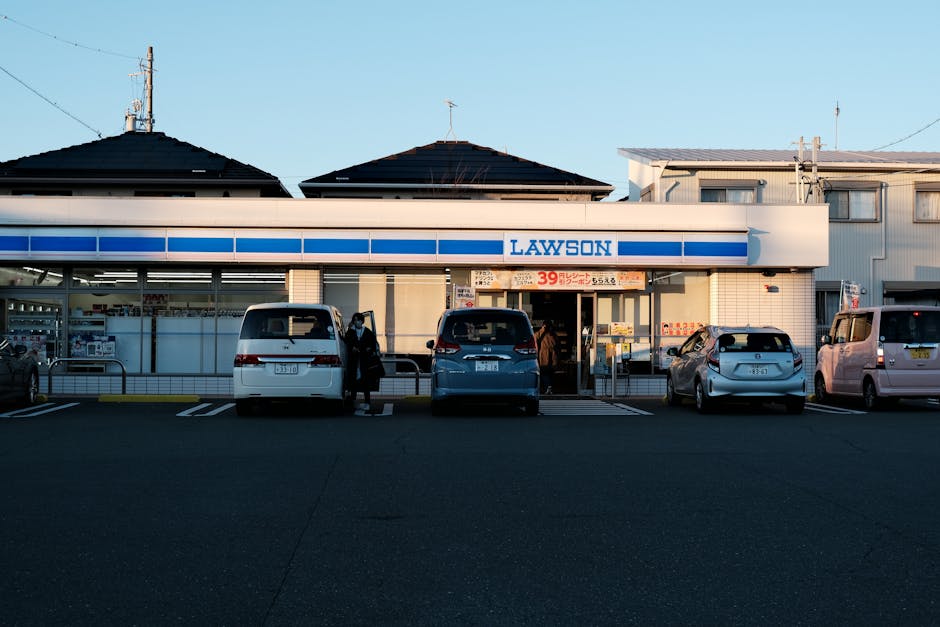
Highway Rest Stops and Service Areas
Japan’s expressways feature service areas (SA) and parking areas (PA) at regular intervals, many of which contain full konbini locations. Between these, you will find standalone konbini along national routes and prefectural roads in even the most rural areas. A konbini is rarely more than 15 to 20 minutes away on any major route.
Why Konbini Are Perfect for Road Trips
- Clean restrooms: Always free, always maintained. This alone makes them invaluable on long drives.
- Hot coffee: 7-Eleven’s drip coffee at 110 yen keeps you alert on mountain passes and midnight expressway runs.
- Fresh food at any hour: Driving through Hokkaido at 2 AM? Your konbini bento is still fresh, still being restocked.
- Phone chargers and cables: Forgot your car charger? A konbini has you covered.
- Road maps and local guides: Some rural konbini stock area maps and tourism leaflets.
Konbini are especially critical when exploring regions like Hokkaido, the Japanese Alps, or rural Kyushu where restaurants close early and options thin out after dark. If you are planning a Hokkaido road trip, you will quickly learn to spot the Seicomart chain (Hokkaido’s local konbini with excellent hot food) alongside the usual big three.
The 24-Hour Culture: Why Konbini Never Close
Japanese konbini operate 24 hours a day, 365 days a year. Typhoon? Open. New Year’s Day? Open. National holiday at 3 AM? Open and fully stocked. This is not just a business decision — it is a cultural expectation that reflects Japan’s service-oriented society.
The 24-hour model works because of several factors unique to Japan:
- Safety: Japan’s exceptionally low crime rate means operating overnight carries minimal security risk. Solo staff members routinely run stores through the night without incident.
- Demand: Late-night workers, early-morning commuters, and the Japanese culture of after-hours socializing (nomikai) create genuine round-the-clock demand. The 2 AM rush at a Shinjuku konbini is real.
- Logistics: Deliveries happen in the early morning hours, meaning the freshest onigiri and bento arrive between 4 and 6 AM. Early risers get the best selection.
- Cultural anchor: Konbini serve as community hubs, especially in rural areas where they may be the only business open after 8 PM. They provide a sense of security and reliability that extends beyond commerce.
For tourists, the 24-hour availability is a lifesaver. Arriving at your hotel at midnight after a delayed flight? Your konbini has a hot meal waiting. Heading to the Tsukiji fish market at 4 AM? Grab a coffee and onigiri on your way. Want a late-night snack after drinking in Tokyo’s nightlife districts? The konbini glows like a beacon on every corner.
Regional and Specialty Konbini
Beyond the big three, Japan has regional convenience store chains worth knowing about, especially if you are traveling outside of Tokyo.
Seicomart (Hokkaido)
Hokkaido’s homegrown konbini chain — and consistently rated the highest in customer satisfaction surveys, often beating 7-Eleven. They are known for “Hot Chef” items (made fresh in-store, including katsu-don and croquettes) and their excellent wine and dairy selection sourced from Hokkaido producers. If you are on a Hokkaido road trip, Seicomart is a mandatory experience.
Ministop
A smaller chain with about 1,900 stores, Ministop is known for its soft-serve ice cream and made-to-order fast food. Their “Halo-Halo” shaved ice dessert is a summer staple. You will find them scattered throughout Honshu and Shikoku.
Daily Yamazaki
Run by Japan’s largest bread manufacturer, Daily Yamazaki focuses on fresh-baked goods. Their in-store bakery items — croissants, curry bread, melon pan — are a step above what other konbini offer in the bread category. About 1,300 locations nationwide.
Konbini FAQ
Can I use my foreign credit card at Japanese convenience stores?
Yes. Visa, Mastercard, JCB, and American Express are accepted at all major konbini chains (7-Eleven, Lawson, FamilyMart). Contactless payments via Apple Pay and Google Pay also work. For ATM cash withdrawals, 7-Eleven and Lawson ATMs are the most reliable for international cards.
Do konbini staff speak English?
Basic English is hit or miss, especially outside of major cities. However, the entire konbini experience is designed to be intuitive and self-explanatory. Prices are displayed digitally, self-checkout machines have English options, and the transaction flow requires minimal verbal communication. A simple “sumimasen” (excuse me) and pointing goes a long way.
Is konbini food healthy?
It can be. Alongside fried chicken and sweet desserts, konbini stock salads, grilled fish bento, natto (fermented soybeans), yogurt, cut fruit, and soup. Lawson’s “Natural Lawson” sub-brand specifically caters to health-conscious customers with lower-calorie, additive-reduced options. You can absolutely eat well and relatively healthy from konbini alone.
Can I eat inside the konbini?
Some konbini have a small eat-in area (usually a counter with stools near the window), called an “eat-in corner” (イートインコーナー). If you plan to eat inside, let the cashier know — the tax rate is slightly higher for eat-in (10%) versus takeout (8%). Not all locations have seating, especially in space-constrained urban areas.
Are there vegetarian or vegan options at konbini?
Options exist but require some effort. Plain onigiri (like kombu seaweed or pickled plum), inari sushi (sweet tofu pouches), edamame, salads, fruit, natto, and some noodle dishes are vegetarian. Strict vegan options are more limited since dashi (fish stock) is used in many items. Natural Lawson tends to have the most plant-based options. Always check ingredient labels or use a translation app if you have dietary restrictions.
What time does konbini food get restocked?
Fresh deliveries arrive two to three times daily, typically in the early morning (4-6 AM), midday (11 AM-1 PM), and evening (5-7 PM). The early morning delivery brings the freshest selection. Late at night (after 11 PM), the shelves may be thinner, and some items will be marked down with discount stickers — a great way to save money on bento if you are not picky about the menu.
Can I return items to a konbini?
Generally, no. Konbini do not accept returns on food or most purchased items. If there is a genuine defect or error, the staff may make an exception, but standard returns are not part of the system.
Is there a konbini loyalty program for tourists?
7-Eleven’s app and FamilyMart’s FamiPay app are available to tourists but require a Japanese phone number for full registration. The practical alternative is using a Suica or Pasmo card — while not a loyalty card, the convenience of tap-to-pay means you spend less time at checkout. Some stores participate in the dPoint or Ponta loyalty programs, where you can earn points by scanning a card or app at purchase.
Making the Most of Japanese Convenience Stores
The konbini is not just a store — it is a fundamental part of the Japan travel experience. Seasoned visitors to Japan often say that konbini alone are worth the plane ticket. Where else can you get a Michelin-guide-worthy egg sandwich at 3 AM for the equivalent of two dollars?
Start your mornings with a 7-Eleven onigiri and coffee. Stock up on Lawson desserts for the hotel room. Grab a Famichiki and a Strong Zero tall can for a cheap, satisfying dinner. Use the ATM, print your boarding pass, and ship your luggage ahead to your next city — all without leaving the building. The Japanese convenience store is the single most useful institution you will encounter as a tourist in Japan, and the sooner you learn to rely on it, the smoother your entire trip will be.
Whether you are on a day trip from Tokyo or embarking on a multi-week road trip across the country, the konbini will always be there — bright, clean, stocked, and open — exactly when you need it.