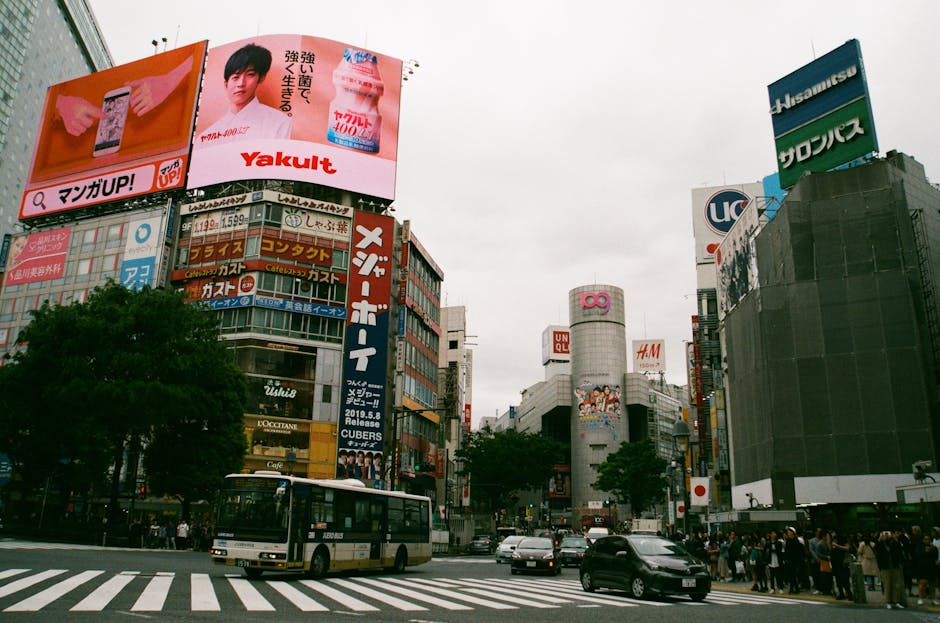
There is no better introduction to Tokyo than the walk from Harajuku to Shibuya. In just two kilometers, you travel through some of the most distinct and iconic neighborhoods in the world — from the sugar-fueled kawaii chaos of Takeshita Street to the polished luxury of Omotesando, then into the underground cool of Cat Street, and finally arriving at the world-famous Shibuya Crossing. No other city packs this much variety into such a short distance.
Whether you have a full afternoon or just a couple of hours, this walk gives you a genuine cross-section of Tokyo’s personality. It’s free, it’s easy to navigate, and every stretch feels different from the last. This guide covers every stop, every shortcut, and every thing worth pausing for along the way.
Overview: The Harajuku to Shibuya Walk
The route from Harajuku Station to Shibuya Station covers roughly 2 kilometers as the crow flies, but with all the interesting streets and detours in between, most visitors walk somewhere between 3 and 5 kilometers total. Non-stop, you could cover it in 25 minutes. Realistically, with stops, photos, shopping, and food, plan on anywhere from 2 to 4 hours.
Starting points:
- Harajuku Station — JR Yamanote Line (Harajuku stop). Exit toward Takeshita Street (竹下口). This is the most convenient option if you’re coming from Shinjuku, Ikebukuro, or Shibuya on the Yamanote loop.
- Meiji-Jingumae Station — Tokyo Metro Chiyoda or Fukutoshin Line. This exit puts you right at the top of Takeshita Street or at Omotesando, depending on which exit you use.
The walk at a glance:
- Harajuku Station → Takeshita Street (5 min walk)
- Takeshita Street → Omotesando (10 min walk through the side streets)
- Omotesando → Cat Street (Ura-Harajuku) (5 min)
- Cat Street → Shibuya Station (15 min walk south)
Google Maps is perfect for navigating this route. Just search each stop in sequence and follow the walking directions. Most street signs in this area have English translations.
Stop 1: Takeshita Street (竹下通り)
Takeshita Street is where you start, and it is like nowhere else on earth. This narrow pedestrian alley — about 350 meters long — is the birthplace and continuing capital of Tokyo’s kawaii (cute) culture. Even if you’ve seen photos, the density of it is something you have to experience in person.
The street runs parallel to and just north of the JR tracks. From Harajuku Station’s Takeshita exit, you walk straight in. On weekends especially, the crowd is thick from the first meter to the last. The shops are a relentless parade of pastel clothing, plush toys, lolita fashion, cosplay accessories, streetwear, and every variety of Japanese pop culture merchandise imaginable.
What to do on Takeshita Street:
- Crepes — Takeshita Street is famous for its crepe shops. Marion Crepes is one of the most recognizable, but the local independent stands often have the most creative fillings. Expect strawberry, Nutella, matcha, and combinations you wouldn’t find anywhere else. Budget around ¥600–900.
- Gothic Lolita fashion — Shops like Jesus Diamante and multiple vintage-style boutiques sell the extreme fashion that Harajuku is internationally famous for. Even if you’re not buying, these shops are worth a look.
- Cheap souvenirs — Some of the most affordable and genuinely fun Tokyo souvenirs are found here. Novelty stationery, character goods, quirky fashion accessories — budget ¥500–2000 for a good haul.
- Purikura photo booths — The Japanese photo booth experience, with elaborate digital filters and sticker customization. The arcades near Takeshita Street are a Tokyo institution.
Time estimate: 10–15 minutes at a brisk pace, 30–45 minutes if you browse shops and stop for crepes.
Best time to visit Takeshita Street: Weekends bring more energy, more cosplay outfits, and more of the colorful crowd that makes the street so photogenic. Weekdays are noticeably less crowded and make the shopping experience more comfortable.
Optional Detour: Meiji Shrine (明治神宮)
Before heading down Omotesando, consider a 5-minute detour to the entrance of Meiji Shrine. The contrast from Takeshita Street is almost surreal — you step through a giant wooden torii gate and the noise of the city disappears almost immediately. The path into the shrine is lined with towering trees, and even the first few hundred meters of the forested approach feels like a different world.
The main shrine itself is a 10-minute walk inside, but even a quick visit to the torii gate and the forest entrance is worthwhile as a moment of calm before the rest of the walk. The full grounds are free to enter.
Pro Tip
Stop 2: Omotesando (表参道)
From Takeshita Street, walk south through the network of smaller streets (or take the direct route down Meiji-dori) until you reach Omotesando — the wide, tree-lined boulevard that functions as Tokyo’s answer to the Champs-Élysées. The shift in character from Takeshita Street is immediate and dramatic.
Omotesando is defined by its keyaki (zelkova) trees that form a canopy over the road, and by the extraordinary concentration of architectural flagship stores on either side. This is where the world’s biggest luxury brands have invested in their most striking Japanese outposts. The buildings themselves are worth looking at even if you have no intention of shopping inside.
Notable buildings and landmarks on Omotesando:
- Louis Vuitton Omotesando — Designed by Jun Aoki, the facade references the stacked-trunk motif of LV’s heritage.
- Prada Aoyama — Herzog & de Meuron’s glass-faceted structure, one of the most photographed buildings in Tokyo.
- Tod’s Omotesando — Toyo Ito’s tree-inspired concrete exterior is genuinely striking.
- Omotesando Hills — The major shopping complex that deserves its own stop (see below).
Beyond shopping, Omotesando is excellent for people-watching. The wide sidewalks make it comfortable to stroll, and the mix of fashionably dressed locals, international tourists, and the occasional street photographer creates a relaxed, cosmopolitan atmosphere. There are also several excellent cafes along the boulevard and on the side streets.
Time estimate: 20–30 minutes to walk the main stretch, longer with shopping or a cafe stop.
Stop 3: Omotesando Hills
Halfway along the main Omotesando boulevard, you’ll find Omotesando Hills — a shopping complex designed by architect Tadao Ando that opened in 2006. It’s worth stepping inside even if only to see the architecture.
The defining feature of Omotesando Hills is its central spiral walkway, which descends six levels in a continuous gentle ramp. Ando designed it to evoke the experience of walking down the zelkova-lined street outside, translated into an interior space. Natural light filters in from skylights above. The result is one of the more elegant indoor shopping experiences in Tokyo.
The tenant mix leans toward Japanese designer brands, homeware, and restaurants. The basement levels have particularly good food options including a branch of the popular Maison Kayser bakery and several Japanese restaurant options. If you need a lunch stop on the walk, this is a strong choice.
Stop 4: Cat Street (キャットストリート)
Cat Street — officially called Ura-Harajuku (the back streets of Harajuku) — is the section of this walk that most tourists miss, and it is arguably the most interesting stretch of all.
Running roughly parallel to Omotesando but through the quieter residential-commercial zone between Harajuku and Shibuya, Cat Street is where Tokyo’s creative class actually shops and hangs out. The street is narrow and winding, following an old waterway that was covered over. It has a distinctly different energy from both the spectacle of Takeshita and the polish of Omotesando — more relaxed, more local, and more genuinely cool.
What you’ll find on Cat Street:
- Vintage and second-hand clothing — Cat Street has some of the best vintage shops in Tokyo. Brands like Beams, United Arrows, and Nano Universe all have outposts here, alongside independent curated vintage stores with serious selections.
- Independent Japanese streetwear — Labels that are huge in Japan but not widely exported. If you want something genuinely Japanese in terms of streetwear, this is the street.
- Cafes and small restaurants — The coffee culture on Cat Street is strong. Small independent cafes with outdoor seating, specialty espresso bars, and creative food spots are scattered throughout.
- Concept stores — Dover Street Market (Ginza) isn’t here, but the spirit is. There are several multi-brand stores with thoughtful curation.
Cat Street is accessible from Omotesando by walking south on the side streets. Google Maps makes it easy — search for “Ura-Harajuku” or “Cat Street Shibuya” and follow the path south toward Shibuya. The street eventually connects to the areas near Shibuya.
Time estimate: 20–30 minutes walking through, 1–2 hours if you’re shopping seriously.
Optional: Daikanyama and Nakameguro Detour
Pro Tip
Stop 5: Arriving at Shibuya
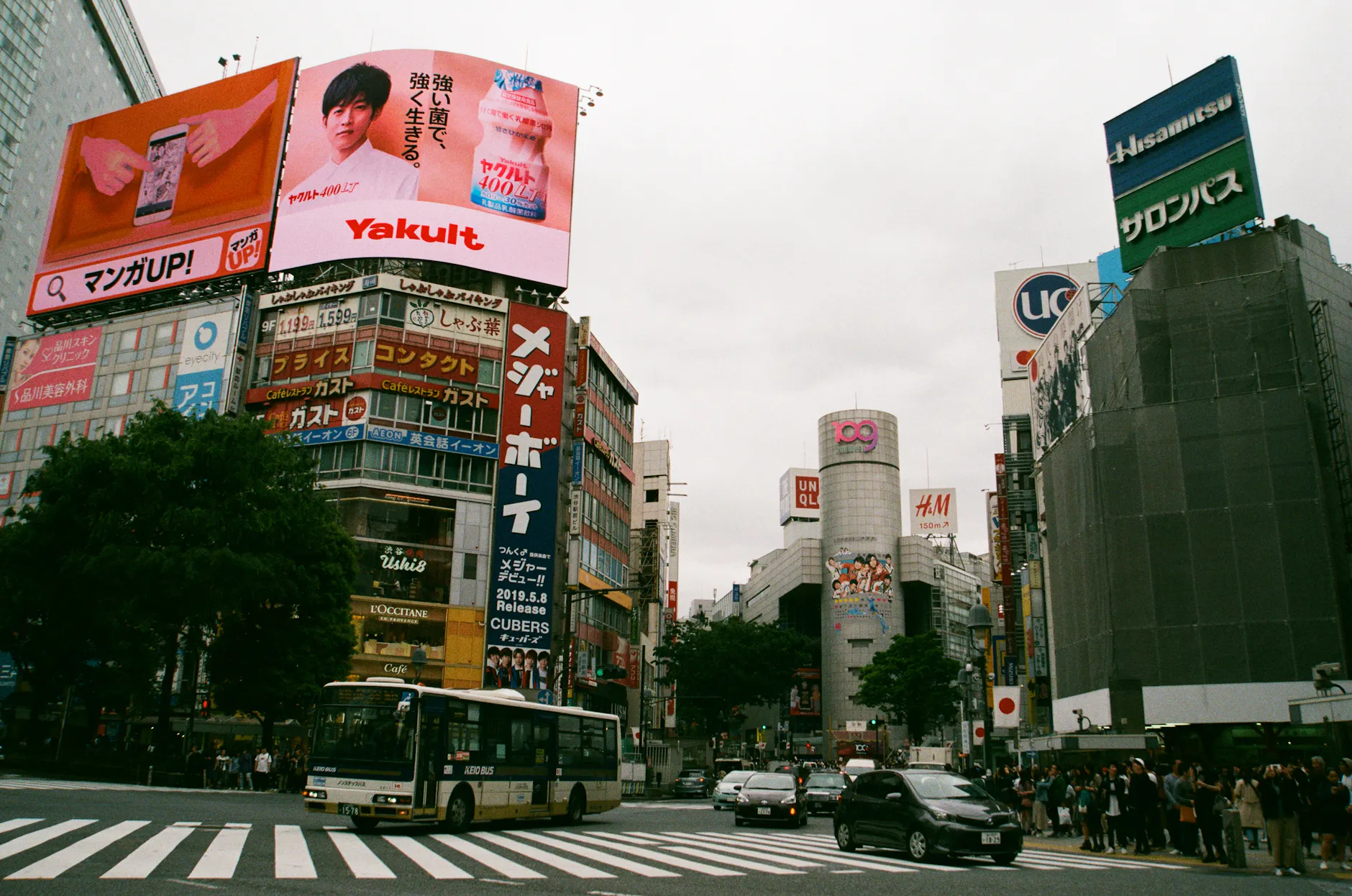
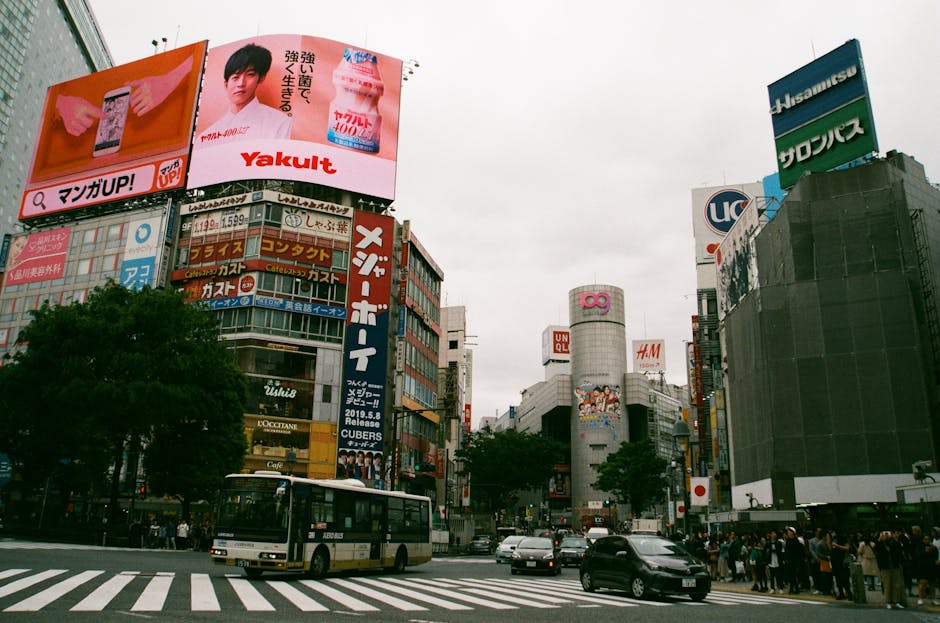
The walk from Cat Street to Shibuya Station takes about 15 minutes heading south. You’ll emerge into the organized chaos of central Shibuya, and within a short walk you’ll be standing at the Shibuya Scramble Crossing — the most famous intersection in the world, where up to 3,000 people cross simultaneously from all directions when the lights change.
The best spot to watch the crossing is from the second-floor Starbucks on the corner (arrive before opening time on busy days to get a window seat, or accept you’ll be standing). The overpass walkway that connects to the Mag’s Park area also gives an excellent elevated perspective.
What to do after arriving in Shibuya:
- Shibuya 109 — The iconic fashion tower just steps from the crossing, aimed at a young Japanese female demographic. Ten floors of fast fashion, cosplay, accessories.
- Shibuya Parco — The redesigned Parco is one of Tokyo’s best multifunctional spaces. Nintendo Tokyo is on the sixth floor. The basement food floor is excellent.
- Shibuya Stream and Scramble Square — The newer developments have excellent rooftop views, restaurants, and the Shibuya Sky observation deck at the top of Scramble Square (advance tickets recommended).
- Dinner and nightlife — Shibuya has restaurants for every budget and a nightlife scene anchored by venues like WOMB, Club Asia, and Camelot, as well as the atmospheric izakaya alleys near the station.
Tips for the Walk
Important
Best time of day: 10am–2pm is ideal. Shops open by 10am, the afternoon crowds haven’t peaked yet, and you’ll finish in Shibuya with time for dinner. Avoid arriving at Takeshita Street on a weekend afternoon if you’re crowd-sensitive.
Footwear: Wear comfortable walking shoes. The route is entirely flat and paved, but you will be on your feet for 2–4 hours.
Cash: Many small shops on Takeshita Street and Cat Street are cash-only. Have at least ¥5,000 in coins and small notes. ATMs are available at the 7-Eleven on Takeshita Street and the convenience stores along Omotesando.
Navigation: Google Maps handles this walk perfectly. English signage is widespread in all these areas. You do not need to speak any Japanese to navigate this route comfortably.
Extend Your Adventure With Samurai Car Japan
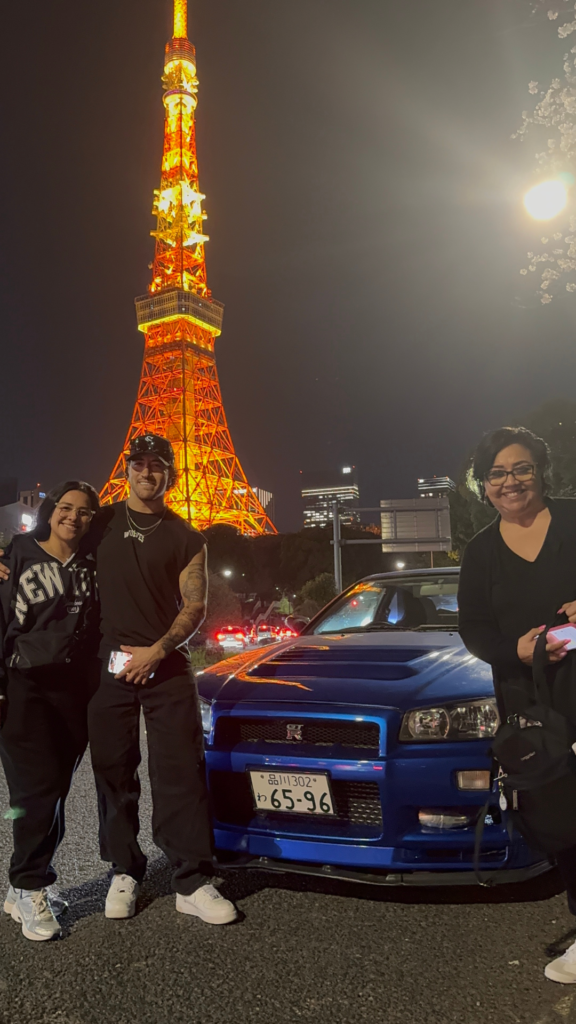
After exploring these iconic neighborhoods on foot, consider seeing more of Tokyo — and beyond — from behind the wheel of a JDM legend. Samurai Car Japan is based right here in Shibuya, offering rental of genuine Japanese performance cars including the Nissan GT-R, Toyota Supra, and other icons of JDM culture.
Pick up your car from our Shibuya base at the end of your walk and head to Hakone for mountain roads and views of Mount Fuji, take the coastal Shonan highway toward Kamakura, or explore Tokyo’s famous expressway network after dark. There is no better way to experience the speed and engineering that Japan is famous for.
View JDM car rental options and availability →
JDM tour guide!
Step into the world of “Fast & Furious” with our exclusive Daikoku Tour!
Experience the legendary car meet atmosphere for yourself. Make it the ultimate highlight of your Tokyo trip!
Frequently Asked Questions
How long does the Harajuku to Shibuya walk take?
The direct walking distance is about 2 kilometers, which takes roughly 25 minutes at a brisk pace. However, with stops at Takeshita Street, Omotesando, and Cat Street, most visitors spend 2 to 4 hours on the full route. If you add Meiji Shrine and a longer browse through the shops, a full half-day is reasonable.
Is it easy to navigate the Harajuku to Shibuya walk without speaking Japanese?
Yes, completely. This is one of the most foreigner-friendly areas in Tokyo. Most storefronts have English translations or are self-explanatory. Google Maps navigates perfectly throughout. ATMs at major convenience stores (7-Eleven, Lawson, FamilyMart) accept international cards and display English menus. You will encounter English-speaking staff in many shops, especially on Omotesando and Cat Street.
What are the must-eats on Takeshita Street?
Crepes are the signature food of Takeshita Street — most visitors stop for one within the first 50 meters. The cotton candy (in elaborate rainbow formations and character shapes) is also uniquely Harajuku and makes for great photos. Further into the street, look for Japanese curry bread, taiyaki (fish-shaped pastry filled with red bean or custard), and the various themed dessert cafes that open on the side streets.
Can I walk back from Shibuya to Harajuku?
Absolutely — the walk works in both directions. Some people prefer starting at Shibuya when they’re fresh and finishing the walk in the calmer atmosphere of Harajuku and Meiji Shrine. The distance and stops are the same either way. The JR Yamanote Line and Tokyo Metro also run between Harajuku and Shibuya in about 2 minutes if you want a one-way walk.
What is the best time to visit Takeshita Street?
Weekday mornings (before noon) are the calmest, which makes shopping and browsing easier. Weekend afternoons between 1pm and 4pm are the most crowded and also the most energetic — more people in cosplay, more street performance, more of the spectacle. Sunday morning around 10am is a good compromise: the shops are open, the crowds haven’t peaked, and you still get some of the weekend atmosphere.
[st_af id=”862″]
[st_af id=”854″]
🇯🇵 Plan Your Japan Experience
JDM Car Rental
Drive a GT-R, Supra, RX-7, or Silvia on the roads they were built for. Hakone passes, Wangan highway, mountain touge — your dream JDM experience.
Daikoku PA Tour
Visit Japan’s most legendary car meet. Hundreds of modified cars, passionate owners, and the heartbeat of JDM culture. Guided weekend night tours available.
Photo Guide Tour
Capture stunning photos at locations only locals know. Hidden shrines, backstreet alleys, rooftop views, and golden hour spots for unforgettable shots.