Samurai History & Volcanic Peaks: The Ultimate Aizu Road Trip from Shibuya, Tokyo
There’s a drive in Japan that takes you from the electric chaos of Tokyo to the edge of a volcanic crater, through mystical rainbow-colored lakes, and finally into the heartland of samurai history — all in one extraordinary journey. This route connecting the Bandai-Azuma Skyline, Goshikinuma, Tsuruga Castle, and the historic streets of Aizu-Wakamatsu is one of the most dramatic and culturally rich drives you can do in the entire country. It’s got everything: jaw-dropping mountain scenery, otherworldly natural landscapes, and a deeply moving samurai legacy that feels like it never fully faded.
What makes this trip so satisfying is how perfectly it flows. You start by picking up your rental car in Shibuya — right in the thick of Tokyo — and within a couple of hours you’re leaving the city behind and climbing into the volcanic highlands of Fukushima Prefecture. The road just keeps rewarding you. Every bend reveals something new: a sulfurous moonscape at altitude, a cobalt-blue lake tucked between cedar forests, a red-roofed castle standing proud against the mountains just as it did when samurai fought and died to defend it.
Whether you’re a history nerd, a landscape photographer, or someone who simply loves putting a great road behind them, this drive hits differently. It’s roughly 300km from Shibuya to Aizu-Wakamatsu, and it’s the kind of route you’ll be telling people about for years. Let’s get into it.
Route Overview
This route is designed as a 2-day drive, though ambitious travelers could push it into a long single day. We recommend taking your time — spending a night in Aizu-Wakamatsu lets you explore the castle town properly and soak in some of the incredible local food and atmosphere after dark. Here’s the full breakdown:
- Pick up your rental car at Samurai Car Japan in Shibuya, Tokyo — your adventure starts here
- Shibuya → Fukushima City area (Expressway) — approx. 270km, 3 to 3.5 hours via the Tohoku Expressway (東北自動車道, E4). Estimated toll: ¥4,000–¥5,500 one way with ETC card
- Fukushima City → Bandai-Azuma Skyline — approx. 20km, 30–40 minutes via Route 115 and the Azuma-Bandai Toll Road
- Bandai-Azuma Skyline → Goshikinuma — approx. 35km, 45–60 minutes descending via Route 115 and Route 459
- Goshikinuma → Ouchi-juku — approx. 50km, 55–70 minutes via Route 49 and Route 121
- Ouchi-juku → Tsuruga Castle, Aizu-Wakamatsu — approx. 30km, 35–40 minutes via Route 121
🗺️ Open This Route in Google Maps
Opens in Google Maps app on mobile
Stop 1: The Tohoku Expressway — Tokyo to Fukushima
Once you grab your keys in Shibuya and get the GPS set, head for the Tohoku Expressway (E4). From central Tokyo it typically takes about 30–45 minutes just to clear the metropolitan area, so patience here is a virtue. Once you’re through Saitama and the urban sprawl begins to fall away, the drive opens up beautifully. The Kanto Plain gives way to rolling green hills, and by the time you’re through Tochigi Prefecture, you’ll start seeing proper mountains on the horizon.
This expressway stretch is well-maintained, wide, and easy to drive — perfect for getting comfortable with your rental car before the mountain roads ahead. Speed limits are 100–120 km/h in most sections. Keep your ETC card active — you’ll pass through several toll gates, and the total one-way toll from Tokyo to Fukushima Nishi IC is roughly ¥4,200–¥5,500 depending on your exact exit and time of travel. Using an ETC card gets you the discounted rate automatically.
Exit at Fukushima-Nishi IC for the most direct approach to the Bandai-Azuma Skyline. From the exit, you’ll pick up Route 115 heading west and southwest toward the mountains. The road starts climbing almost immediately, and within 15–20 minutes you’ll be winding upward through dense mixed forest, the city of Fukushima shrinking in your mirrors.
Stop 2: Bandai-Azuma Skyline — Driving on Another Planet
If you only drive one mountain road in Tohoku, make it this one. The Bandai-Azuma Skyline (磐梯吾妻スカイライン) is a 29-kilometer toll road that climbs to an elevation of approximately 1,600 meters, crossing the volcanic plateau of Mount Azuma and passing through some of the most alien, dramatic scenery in all of Japan. I’ve driven dozens of mountain roads across this country, and this one genuinely stops me in my tracks every single time.
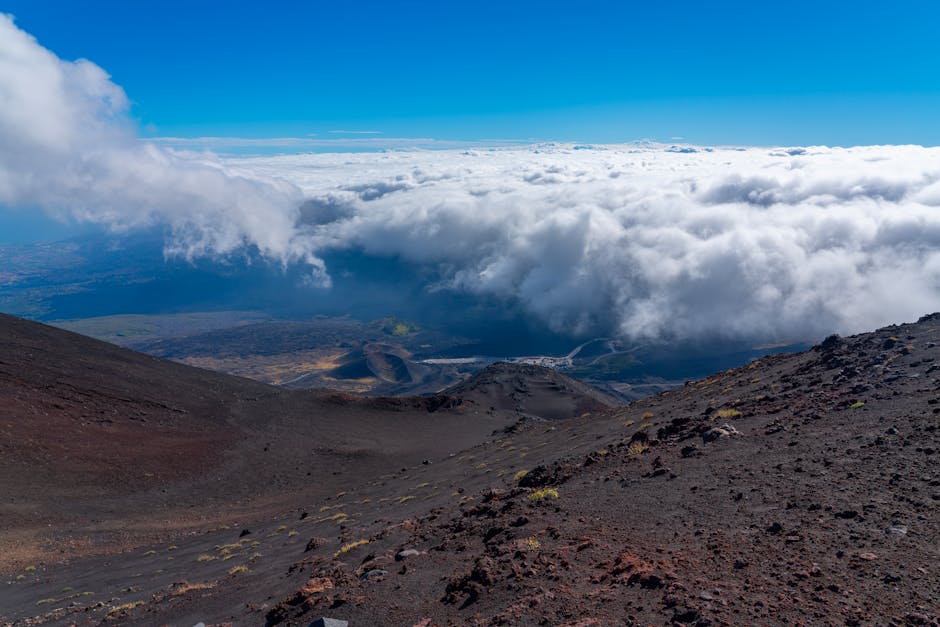
The approach from the Fukushima side via Route 115 transitions onto the Skyline proper at the Takayu Toll Gate. The toll is ¥550 per car (regular passenger vehicles) — pay at the gate in cash or with some IC cards. Once through, the road starts climbing in earnest. The forest closes in on both sides as you gain altitude, and then — almost without warning — the trees disappear entirely and you’re in a world of grey volcanic rock, sulfur-stained earth, and ghostly dead trees bleached white by volcanic gases.
The most iconic section is the Jododaira area, the high plateau near the center of the road. Pull over at the large parking area here (free, spacious, well-signed) and step out of the car. You’ll immediately smell sulfur. Steam vents from cracks in the earth. The landscape is a palette of rust, ash-grey, and mustard yellow, and on clear days you can see for miles across the Fukushima basin below. It genuinely looks like the surface of another world — the “moon drive” nickname that gets attached to this road is completely earned.
The road itself is smooth and well-maintained, with a double yellow center line for most of its length. Corners are sweeping rather than hairpin-tight, and the gradients are manageable for any regular car. That said, take your time — the views deserve your attention and there are several designated pull-off points and observation areas. Don’t rush through this one. Budget at least 1.5 to 2 hours to drive it properly, with stops.
After Jododaira, the road continues west and begins its descent toward Lake Bandai-ko and the Bandai Plateau. This western descent side is arguably even more dramatic — the road snakes down through volcanic ridgelines with sweeping views opening up across the broad plateau below. Watch for the Magosaka Pass viewpoint just before the descent begins — this is one of the best photography spots on the entire route, looking back across the volcanic high country you’ve just crossed.
- Road: Bandai-Azuma Skyline Toll Road (from Route 115)
- Toll: ¥550 per passenger car (Takayu Gate)
- Parking: Multiple free pull-offs; main Jododaira parking area is large and free
- Time to spend: 1.5–2 hours minimum including stops
- Best for: Volcanic landscapes, unique photography, high-altitude driving
Stop 3: Goshikinuma — Five Lakes, Five Impossible Colors
Coming down off the Bandai-Azuma Skyline and through the Bandai Plateau, your next destination is one of Japan’s most quietly magical natural wonders. Goshikinuma (五色沼) — literally “Five Colored Swamps” — is a series of lakes and ponds scattered through the forests at the foot of Mount Bandai, each one a strikingly different color. Turquoise. Cobalt blue. Emerald green. Milky aquamarine. Deep forest-shadow grey. The colors come from varying concentrations of minerals and volcanic compounds in each lake, and on a still day the reflections are absolutely breathtaking.
To get here from the Skyline’s western descent, follow Route 459 east along the northern shore of Lake Hibara, then look for signs for Goshikinuma Shizen Tansakuro (自然探勝路) — this is the main nature trail that connects the lakes. The drive from the base of the Skyline descent to the Goshikinuma parking area takes about 20–30 minutes.
Park at the Goshikinuma Visitor Center parking lot on the eastern end of the trail (free parking, around 100 spaces). From here, the classic walk runs approximately 3.6km west to Bishamon-numa, the largest and most famous of the lakes. You can do this as a one-way walk to a second parking area near Bishamon-numa, or simply walk in and turn around at your leisure. Most people spend 1.5 to 2 hours here, and I’d recommend not rushing it — the trail is flat and easy, winding through birch and cedar forest with lake viewpoints appearing at every turn.
The standout lakes are Bishamon-numa (the largest, with rowboat rentals available from spring through autumn — about ¥600 for 30 minutes), Midoro-numa with its intense emerald-green surface, and Ao-numa, which glows with an almost surreal cobalt blue even on overcast days. Don’t just look at the first lake and leave — each one is genuinely different, and the trail between them through the quiet forest is lovely in its own right.
- Access road: Route 459 from Bandai Plateau area
- Parking: Free at Visitor Center parking lot (east trailhead)
- Trail length: 3.6km one-way (flat, easy walking)
- Time to spend: 1.5–2 hours
- Rowboat rental: Approx. ¥600/30 min at Bishamon-numa (seasonal)
Driving this route? We’ve got you covered.
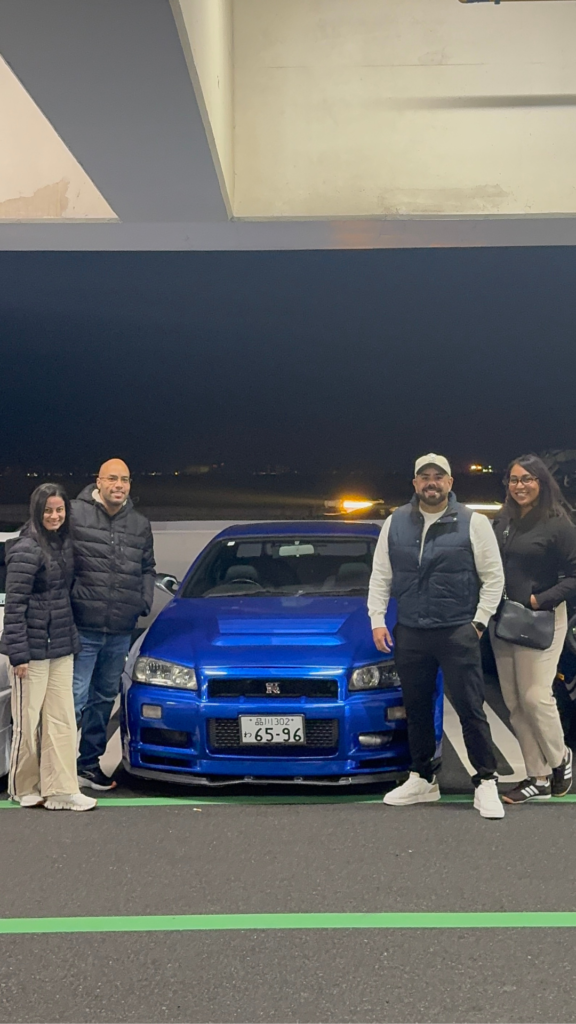
Hundreds of international visitors have driven this route with a car from Samurai Car Japan. Our team will brief you on road conditions, tolls, and the best stops before you set off.
Stop 4: Ouchi-juku — The Edo Period Frozen in Time
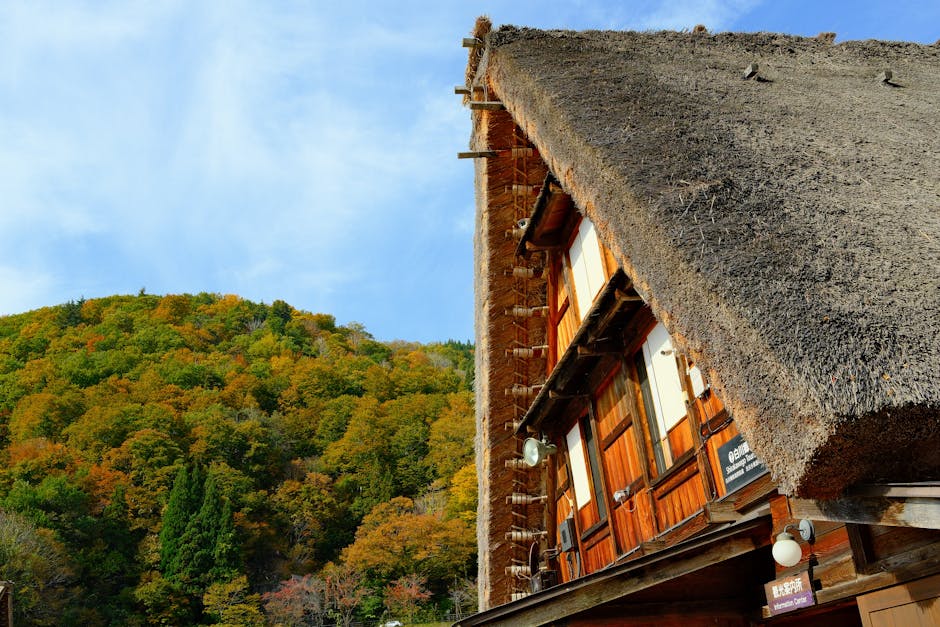
Few places in Japan manage to feel as genuinely transported in time as Ouchi-juku (大内宿). This is a former post town on the old Aizu-Nishi Kaido highway, and it looks almost exactly as it did during the Edo period (1603–1868). A single main street is lined on both sides with deep-eaved thatched-roof farmhouses — around 30 of them — that now function as restaurants, souvenir shops, and small guesthouses. It’s one of Japan’s most atmospheric historical streetscapes, and arriving here by car through the surrounding cedar-forested valley makes the discovery feel all the more dramatic.
From Goshikinuma, the drive to Ouchi-juku takes you southwest along Route 49, then south onto Route 121 (Aizu-Nishi Kaido) — the same mountain highway that once connected the Aizu domain to Nikko and beyond. The road through the Aga River gorge along Route 121 is beautiful in itself: the river runs turquoise through a narrow mountain valley, and in autumn the surrounding slopes erupt in red and gold. From Goshikinuma to Ouchi-juku is about 50km and 55–70 minutes.
For parking, follow signs to the Ouchi-juku parking area (大内宿駐車場) located just before the main street — it’s a large lot that costs ¥500 per car. From the lot it’s a short 5-minute walk down to the main street. The village itself is best explored on foot and deserves at least 1 to 1.5 hours of your time. Walk the full length of the street, look back from the hilltop shrine at the end for the famous postcard view overlooking the whole village, and make sure you try the local specialty: negi soba, a hearty buckwheat noodle dish that you eat using a whole long green onion as a chopstick. Yes, really. It’s delicious.
Ouchi-juku can get busy on weekends and during autumn color season — if you arrive and the parking lot is full, there’s overflow parking slightly further up the approach road. Morning visits tend to be quieter before the tour groups arrive around midday.
- Access: Route 121 south from Route 49 junction, look for Shimogo Town signs
- Parking: ¥500 per car at main lot
- Time to spend: 1–1.5 hours
- Don’t miss: The hilltop shrine overlook and negi soba lunch
Stop 5: Tsuruga Castle & Aizu-Wakamatsu — The Samurai’s Last Stand
The final leg of this drive brings you into the beating heart of Japan’s samurai legacy. From Ouchi-juku, it’s a straightforward 30km, 35–40 minute drive north on Route 121 into the city of Aizu-Wakamatsu. The road descends from the mountains into the broad Aizu Basin, and the city opens up before you with the distinctive red-tiled tower of Tsuruga Castle (鶴ヶ城) visible from a distance as you approach the center.
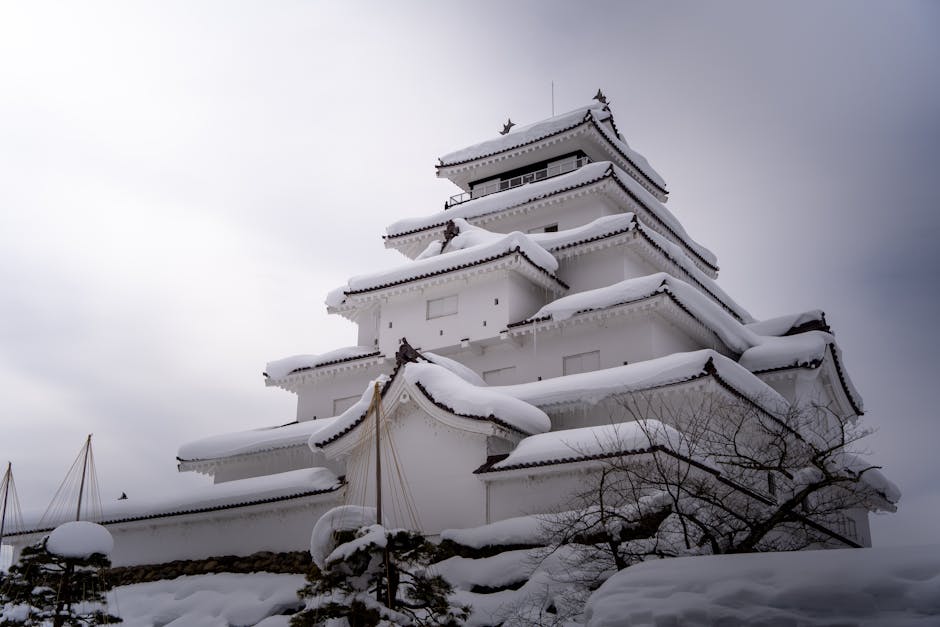
Tsuruga Castle — also known as Wakamatsu Castle or Aizu Castle — is one of Japan’s most historically charged fortresses. During the Boshin War of 1868, the last civil conflict before the Meiji modernization of Japan, the Aizu domain made its final stand here against the Imperial forces. The castle held out under siege for over a month. The most heartbreaking chapter of this story involves the Byakkotai (White Tiger Corps) — a unit of teenage samurai boys, mostly 16 and 17 years old, who saw smoke rising over the city and believed the castle had fallen. In an act of ultimate samurai loyalty, twenty of them took their own lives on the hill of Iimori-yama overlooking the castle. It turned out the castle was still standing. The grave of the Byakkotai is now a national monument, and visiting it alongside the castle is one of the most emotionally powerful historical experiences I’ve had in Japan.
The castle tower was reconstructed in 1965 and renovated in 2011, when its famous red ceramic roof tiles — unique among Japanese castles — were restored to their original appearance. The interior houses a fascinating museum covering Aizu domain history, the Boshin War, and samurai culture across seven floors. Plan on 1.5 to 2 hours for the castle and its surrounding park. Admission is ¥410 for adults.
After the castle, it’s worth visiting Iimori-yama Hill (about 2km from the castle by car) to pay respects at the Byakkotai memorial. There’s parking at the base of the hill (¥500 per car), and an escalator-assisted path climbs to the graves and viewpoint above. The view back across the basin toward the castle from here is deeply moving when you know the story.
- Tsuruga Castle: Admission ¥410 adults; parking ¥500 in castle park lot
- Iimori-yama: Parking ¥500; free to visit the memorial site
- Time to spend in Aizu-Wakamatsu: Half day minimum; overnight strongly recommended
- Castle hours: 8:30 AM – 5:00 PM (last entry 4:30 PM)
Driving Tips for This Route
Road Conditions
The expressway sections (Tohoku E4) are in excellent condition year-round when open. The Bandai-Azuma Skyline is a smooth toll road but requires attentiveness — watch for oncoming traffic on the narrower sections near viewpoints. Route 115, Route 459, and Route 121 are all national routes in good condition, but they are mountain roads with curves, varying gradients, and occasional gravel on corners after rain. Drive at a comfortable, controlled pace.
International Driving License
Foreign visitors must carry a valid International Driving Permit (IDP) based on the 1949 Geneva Convention, along with their home country driver’s license. Licenses from some countries (including those with Geneva 1968 Convention IDPs) may require additional documentation — check with your rental provider before the trip. Samurai Car Japan’s team can advise you specifically based on your license country.
ETC Cards and Tolls
Always use an ETC card in Japan — it gets you significant discounts on expressway tolls compared to paying cash at the gate, and it means you can pass through gates without stopping. Your rental from Samurai Car Japan comes with an ETC card included. Total expressway tolls for this route (round trip) are approximately ¥8,000–¥11,000 depending on exact entry/exit points and time of travel.
Fuel
Fill up before the mountain sections. Good fuel options are available at Fukushima City, near Route 49 heading into the mountains, and in Aizu-Wakamatsu itself. Regular unleaded (レギュラー) is the standard. Expect prices around ¥165–¥180 per liter in this region.
Best Time of Day to Drive Each Section
- Tokyo to Fukushima expressway: Early morning (before 7 AM departure) to avoid traffic
- Bandai-Azuma Skyline: Mid-morning (9–11 AM) for best light and visibility
- Goshikinuma: Late morning or early afternoon for still water conditions
- Ouchi-juku: Early afternoon (before 1:30 PM to beat lunch rush crowds)
- Tsuruga Castle: Late afternoon — the golden hour light on the red roof tiles is spectacular
Where to Eat Along the Route
Near Bandai-Azuma Skyline: Takayu Onsen Area
Just before the toll gate at the Fukushima approach, the Takayu Onsen area has a handful of small restaurants and onsen ryokan dining rooms. Takayu Onsen Sanso (高湯温泉山荘) serves simple mountain lunch sets (山菜定食, mountain vegetable set meals) for around ¥1,200–¥1,500. It’s unpretentious and warming, perfect for a mountain morning.
Goshikinuma: Visitor Center Café
The Goshikinuma Visitor Center has a small café and snack counter serving hot drinks, simple lunch plates, and local ice cream. Nothing fancy, but it does the job between walks. There are also a few small restaurants near the Bishamon-numa end of the trail serving soba and udon.
Ouchi-juku: Negi Soba
This is the food highlight of the whole route. Virtually every thatched-roof house on the main street serves negi soba (ネギそば) — buckwheat noodles in a rich dashi broth with a whole green onion to eat with. It’s a true local specialty. Misawaya (三沢屋) is consistently one of the best and most atmospheric spots, with a genuine old farmhouse interior. Expect to wait 15–20 minutes for a table on busy days, but it’s worth it. Negi soba sets run ¥1,300–¥1,800.
Aizu-Wakamatsu: Wappa-meshi and Local Cuisine
Aizu-Wakamatsu is a serious food town. The local specialty is wappa-meshi (わっぱ飯) — steamed rice served in a traditional round cedar-wood box, topped with local ingredients like salmon, chicken, crab, or mushrooms. Mitsuya (みつや) near the castle area is a beloved spot for this dish. Also worth seeking out is Kiriya (桐屋 権現亭) for a more upscale kaiseki-style Aizu dinner if you’re spending the night.
Best Season for This Drive
Spring (Late April – June)
The Bandai-Azuma Skyline typically reopens in late April or early May. This is a spectacular time to drive it — the high plateau is still draped in snow on either side of the cleared road, creating dramatic snow wall corridors in the early weeks. Cherry blossoms hit Aizu-Wakamatsu in mid-April to early May, and Tsuruga Castle surrounded by sakura is genuinely one of the most beautiful sights in Tohoku. Highly recommended if the timing works.
Summer (July – August)
Clear visibility days allow for panoramic views from the Skyline. Goshikinuma’s colors are vivid and the forest trails are lush green. The Aizu basin can be hot and humid in August, but the mountain sections stay pleasantly cool. A solid choice, though the mountain road can get busy on weekends with domestic tourists.
Autumn (Late September – November)
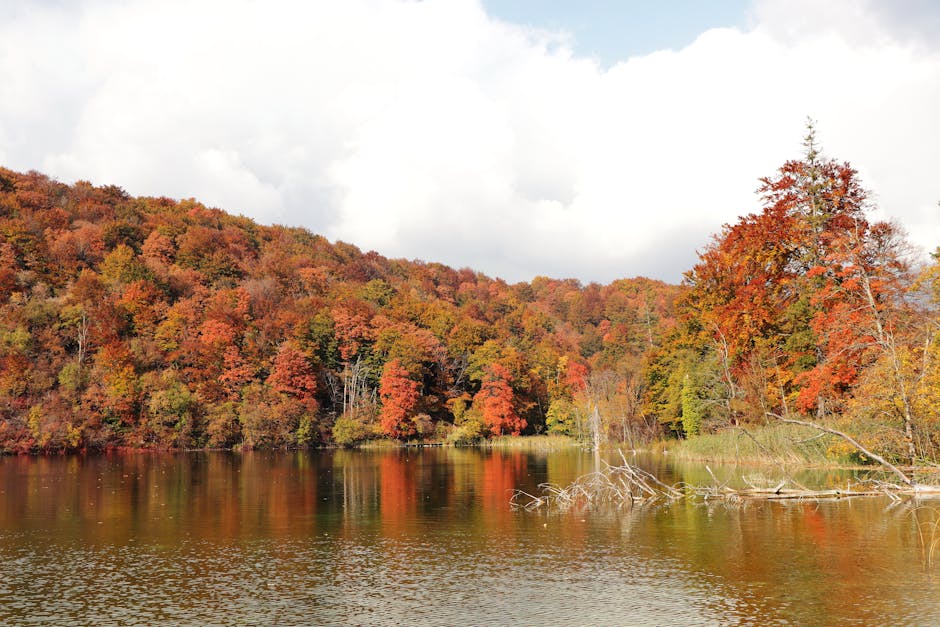
This is arguably the single best season for this route. The volcanic plateau’s contrast of grey rock against autumn-colored trees is extraordinary. Goshikinuma surrounded by red and gold foliage is one of Japan’s hidden autumn color gems. Route 121 through the Aga River gorge turns into a blazing corridor of color. Peak autumn color in this region is typically mid-October to early November. Expect higher traffic on weekends — consider weekday driving if possible.
Winter (December – April)
The Bandai-Azuma Skyline is closed during this period. Aizu-Wakamatsu itself is beautiful in winter snow, and Tsuruga Castle dusted in white is magical, but the mountain portions of the route are inaccessible. Winter-only travelers should substitute a different route through the Bandai Plateau.
Frequently Asked Questions
Where can I rent a car for this route?
The most convenient starting point is Samurai Car Japan in Shibuya, Tokyo. They specialize in serving international visitors and offer English-language navigation, ETC cards, and International Driving Permit support. You can pick up your car right in Shibuya and head straight for the Tohoku Expressway without any detours. They also have JDM sports cars available if you want to make the Bandai-Azuma Skyline even more memorable.
Do I need a special license to drive on the Bandai-Azuma Skyline?
No special license is required — a standard International Driving Permit (based on the 1949 Geneva Convention) combined with your home country driver’s license is all you need. The road itself is suitable for any passenger car in good condition. That said, it is a mountain road, so if you’re not comfortable driving on winding elevated roads, take it slowly and use the pull-offs when you need a moment.
How long should I allow for this entire route?
We strongly recommend 2 days minimum. Day 1: Tokyo → Bandai-Azuma Skyline → Goshikinuma → Ouchi-juku → overnight in Aizu-Wakamatsu. Day 2: Explore Tsuruga Castle, Iimori-yama, and the city at leisure before heading home. Trying to do everything in one day is possible but you’ll feel rushed and will miss the best of what each stop offers.
Is the Bandai-Azuma Skyline suitable for all cars?
Yes — the road is paved and well-maintained for regular passenger vehicles. Low-clearance sports cars can also navigate it comfortably. The main considerations are: check that the road is open (it closes seasonally), ensure your fuel tank is full before entry, and allow for reduced visibility in fog or cloud cover, which can occur even in summer. In early spring, carry warm layers regardless of the weather forecast.
Is Ouchi-juku worth the detour off the direct route?
Absolutely yes. Ouchi-juku adds about 30–40 minutes of driving compared to going directly from Goshikinuma to Aizu-Wakamatsu, but the village is genuinely one of the most beautifully preserved historical streetscapes in all of Japan. If you love Edo-period history and architecture — or just great food in an extraordinary setting — it’s not a detour, it’s a highlight. Don’t skip it.
Why not elevate your journey with a legendary JDM experience?
Our Services:
- Self-Drive Rentals
- Guided Tours
- Drift Experiences
Please visit the dedicated page for more details.
🇯🇵 Plan Your Japan Experience
JDM Car Rental
Drive a GT-R, Supra, RX-7, or Silvia on the roads they were built for. Hakone passes, Wangan highway, mountain touge — your dream JDM experience.
Related Articles
Daikoku PA Tour
Visit Japan's most legendary car meet. Hundreds of modified cars, passionate owners, and the heartbeat of JDM culture. Guided weekend night tours available.
Photo Guide Tour
Capture stunning photos at locations only locals know. Hidden shrines, backstreet alleys, rooftop views, and golden hour spots for unforgettable shots.
Book a Samurai Experience in Tokyo
Wield a real katana and learn samurai techniques from a master instructor. Dress in traditional armor and feel the warrior spirit. Free cancellation.