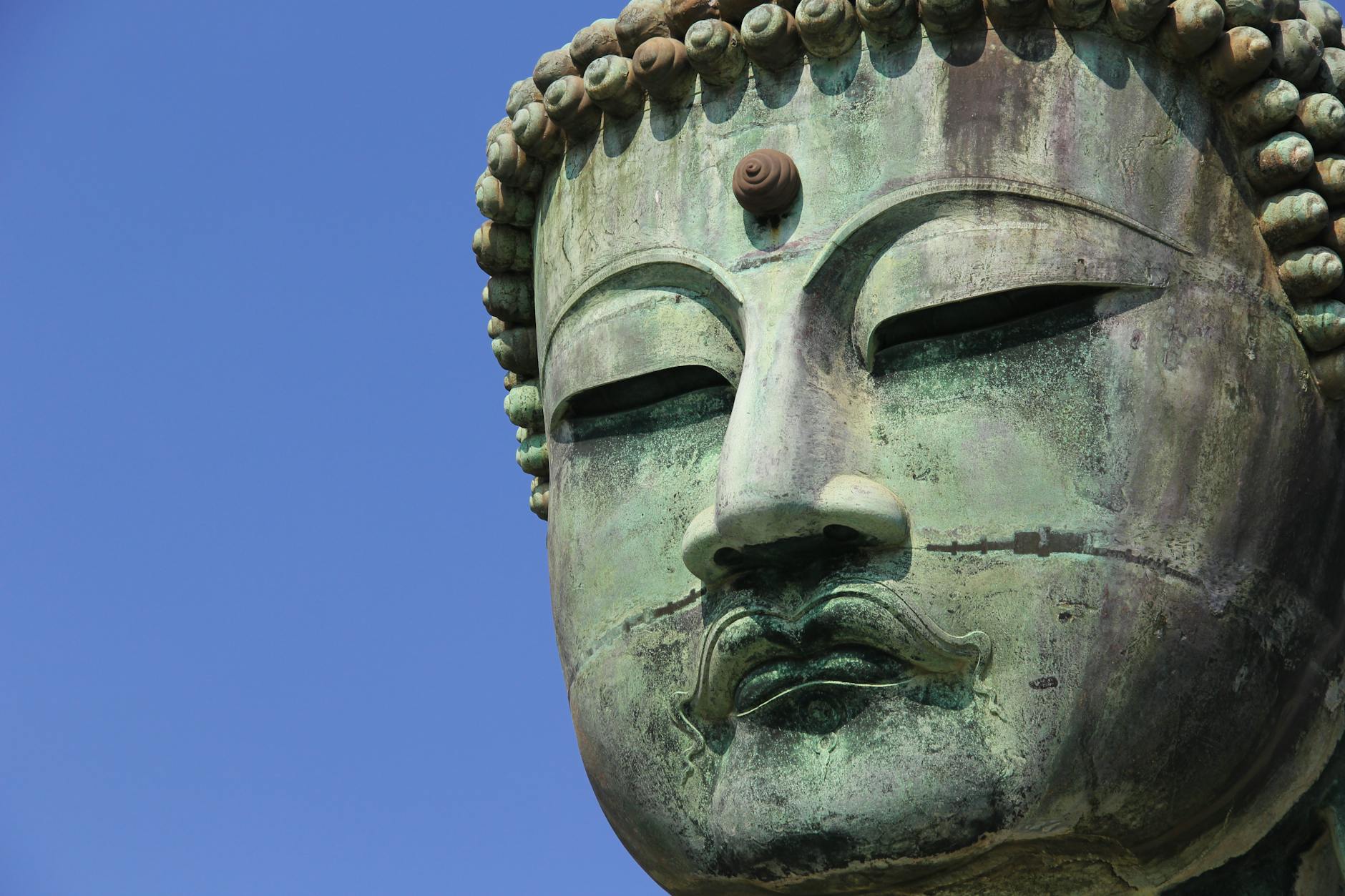
There are sights in Japan that look impressive in photos. And then there are sights that genuinely stop you in your tracks when you see them in person. The Kamakura Great Buddha is firmly in the second category.
Standing nearly 14 meters tall in an open valley surrounded by forested hills, the Kotoku-in Daibutsu (高徳院大仏) is one of Japan’s most iconic landmarks — and one of the most emotionally resonant. The sheer scale of this 773-year-old bronze colossus, combined with the serene expression on its face and the extraordinary story of how it came to sit in the open air, makes visiting the Kamakura Great Buddha an experience that stays with you long after you’ve left.
This complete guide covers everything you need to know: history, tickets, opening hours, how to go inside the statue, the best time to visit, getting there from Tokyo, photography tips, and how to combine it with the rest of Kamakura for a perfect day trip.
History of the Kamakura Great Buddha
Important
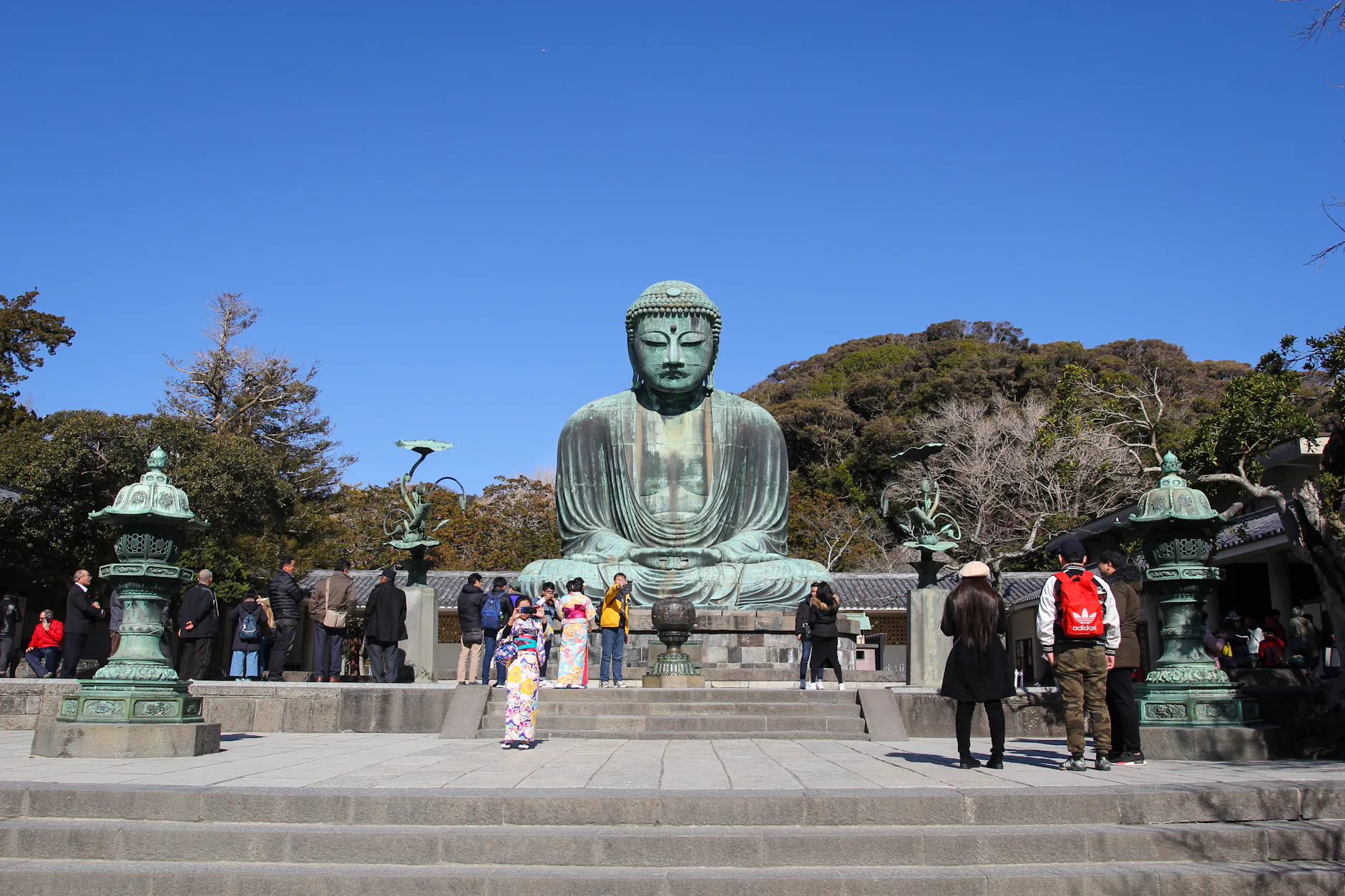
The Great Buddha of Kamakura — officially known as the Kotoku-in Daibutsu — was constructed in 1252 during the Kamakura period, commissioned as a bronze counterpart to the giant Buddha statue at Todai-ji in Nara. Originally, the statue was gilded in gold and housed inside a large wooden hall that dominated the valley.
That hall no longer exists. In 1334 and again in 1369, powerful typhoons damaged the structure. Then, in 1498, a massive earthquake and tsunami completely destroyed the wooden building. Since then — for over 500 years — the Great Buddha has sat in the open air, exposed to the elements, seasons, and centuries.
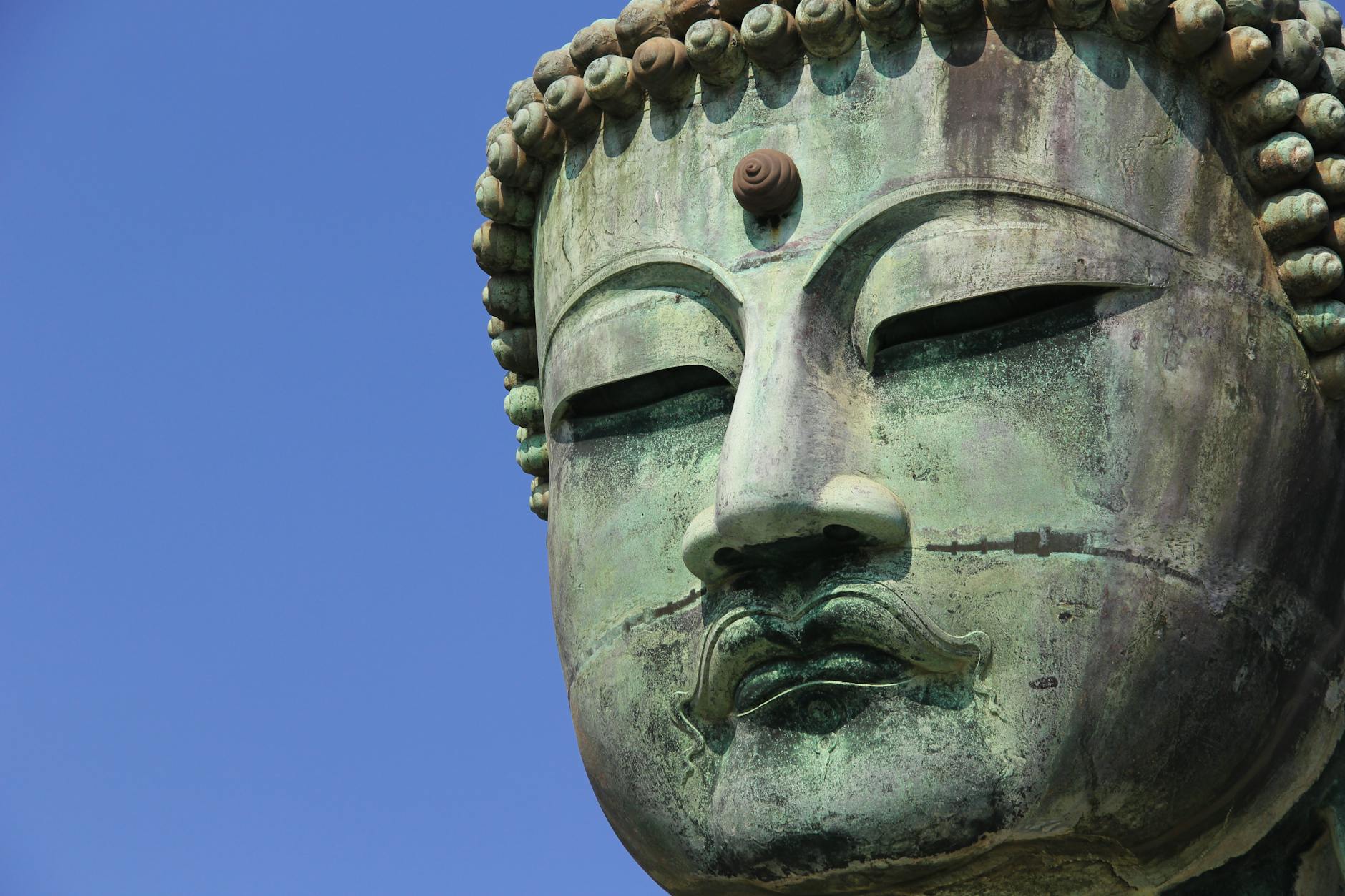
Look closely at the statue’s neck and you’ll notice a series of small holes. These were the attachment points for a decorative metal halo that surrounded the Buddha’s head — it was never replaced after the final disaster. The patina of the bronze today, a deep greenish-grey, is the natural result of five centuries of weathering. Far from diminishing its majesty, this gives the Kamakura Buddha a gravitas that the indoor statues of Nara and Kyoto simply don’t have.
The statue depicts Amida Nyorai (Amitabha Buddha), a central figure in Pure Land Buddhism. The height of the statue is 13.35 meters (approximately 43.8 feet), with the total height including the base reaching 13.4 meters — making it the second-tallest bronze Buddha statue in Japan after the Great Buddha at Todai-ji in Nara. Despite being smaller in height, many visitors find the Kamakura Buddha more striking due to its outdoor setting and the human scale of the space around it.
Visiting Kotoku-in Temple
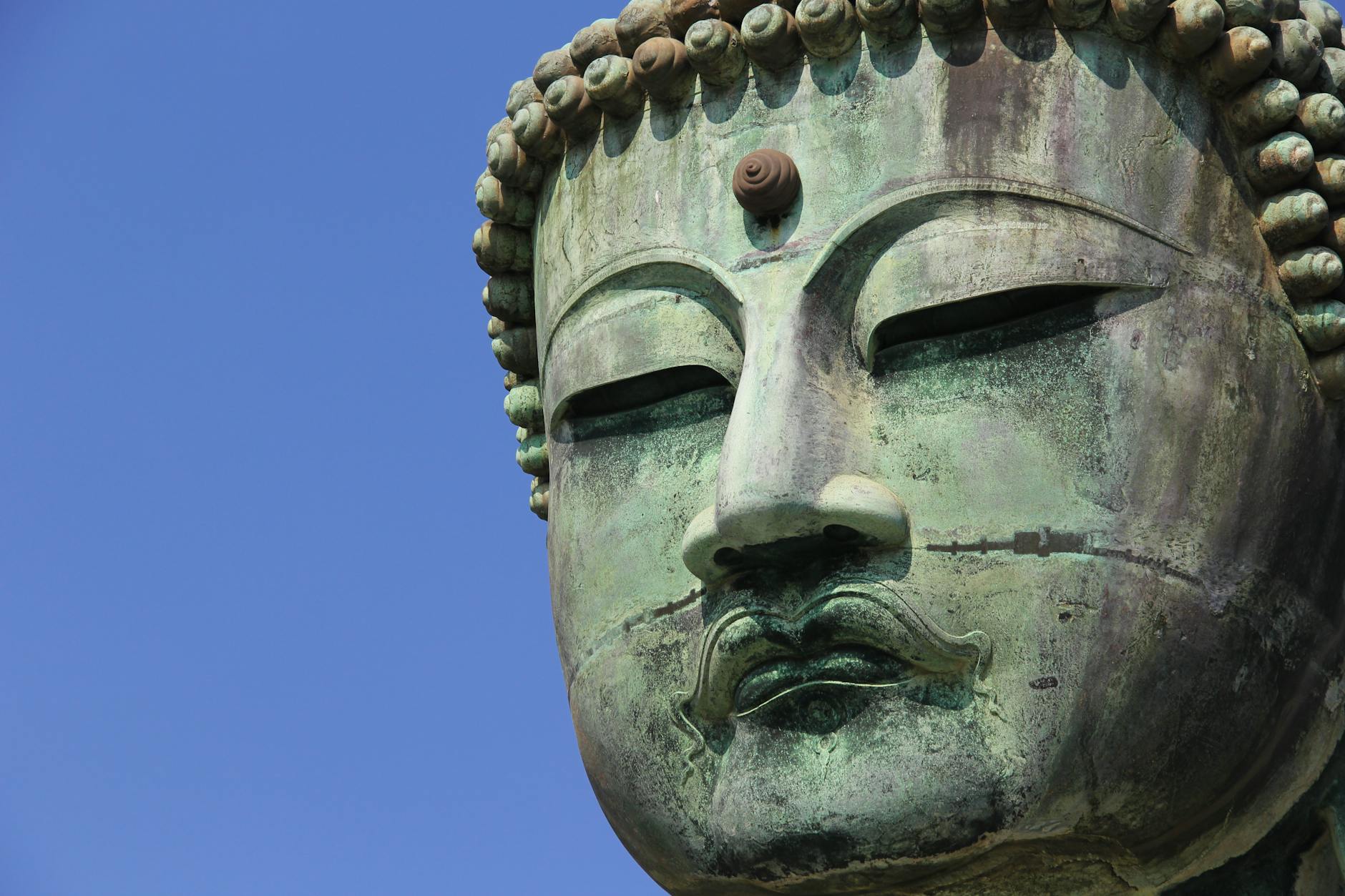
The Great Buddha is located on the grounds of Kotoku-in Temple, a Jodo (Pure Land) Buddhist temple in the Hase area of Kamakura. The grounds are relatively compact — this isn’t a sprawling temple complex — which means the full experience typically takes 45 minutes to 1.5 hours depending on how long you linger.
Admission and Opening Hours
- Adults: ¥300
- Children (elementary school age): ¥150
- Under 6 years old: Free
- Opening hours (April – September): 8:00 AM – 5:30 PM
- Opening hours (October – March): 8:00 AM – 5:00 PM
- Last entry: 15 minutes before closing
The temple grounds beyond the main gate feature two large bronze votive lanterns that flank the path leading to the Buddha. These lanterns were donated in 1924 by Japanese-American communities in the United States as a gift of goodwill — a touching detail that underscores the statue’s international cultural significance.
As you walk the main path toward the statue, you’ll pass stone walls, trees, and smaller memorial stones. Then the path opens up and the Great Buddha appears before you — and this is the moment most visitors are not quite prepared for. Even if you’ve seen hundreds of photos, the scale and presence of the statue in person is genuinely moving.
Go Inside the Great Buddha
Here’s something most visitors don’t know until they arrive: you can actually go inside the Kamakura Great Buddha. This is, without question, one of the most unique experiences you can have at any tourist site in Japan.
On the statue’s back, there are two small rectangular windows/doors that allow visitors to enter the hollow bronze interior. The inside entry costs just ¥20 per person on top of the regular admission fee. Once inside, you can see the internal structure of the statue — the ribbing and framework that has held this massive bronze form together for over 750 years. You can also look up into the interior cavity of the statue itself.
The space is narrow — you are, after all, inside a 13-meter statue — but the experience is genuinely fascinating for anyone interested in history, engineering, or simply the unusual.
Pro Tip
Only 2 people at a time can fit comfortably inside the statue. If you arrive when tour groups are present, the queue for the interior can get long. Arrive when the temple opens at 8:00 AM to go inside without waiting. Note that the interior entry closes slightly earlier than the main grounds — check at the ticket window for the latest times.
After exiting through the doors, you’ll be at the back of the statue. From here, you can walk all the way around and appreciate the scale of the casting from every angle — including views of the massive feet and the folds of the bronze robes up close.
Best Time to Visit the Kamakura Great Buddha
Getting the timing right makes a significant difference to how much you enjoy your visit.
Time of Day
Early morning is by far the best time to visit. Aim to arrive at 8:00 AM when the temple opens, or between 8:00 and 9:00 AM. At this hour, the grounds are quiet, tour groups haven’t arrived, and the morning light hits the bronze from the east in a way that makes the statue glow. By 10:00 AM on busy days, the main viewing area can be packed with tour groups, and the intimate quality of the experience is harder to find.
Day of the Week
Weekdays are strongly preferred over weekends. Kamakura as a whole is a popular weekend day trip destination from Tokyo, and the Great Buddha is its most famous spot. On summer and autumn weekends, crowds can be significant.
Season
- Spring (late March – early April): Cherry blossoms appear near the temple and throughout Kamakura, making this a magical time to visit — though also the busiest.
- Autumn (late October – November): Excellent light, comfortable temperatures, and autumn foliage in the surrounding hills.
- Winter (December – February): Fewer crowds, crisp air, and occasionally the surreal sight of the Great Buddha dusted with snow.
- Avoid: Golden Week (late April – early May) and summer weekends (July–August) when domestic Japanese tourism peaks and sites across Kamakura become extremely crowded.
Getting There: Tokyo to the Kamakura Great Buddha
By Train (Recommended)
The standard route from central Tokyo:
- Take the JR Yokosuka Line from Tokyo Station or Shinjuku Station (via the Shonan-Shinjuku Line) to Kamakura Station — approximately 55–65 minutes.
- At Kamakura Station, transfer to the Enoden Line (Enoshima Electric Railway) from the station’s west exit.
- Ride 3 stops to Hase Station — approximately 5 minutes.
- From Hase Station, walk approximately 10 minutes along a signposted route to the temple entrance.
Alternatively, buses run directly from Kamakura Station to stops near the Great Buddha if you prefer not to use the Enoden.
By Car
Driving from central Tokyo takes approximately 60–75 minutes via the Yokohama-Yokosuka Expressway (Route 16 direction). Paid parking is available near Kotoku-in Temple, though spaces fill quickly on busy days. Arriving by 8:00 AM ensures parking availability.
Photography Tips
Pro Tip
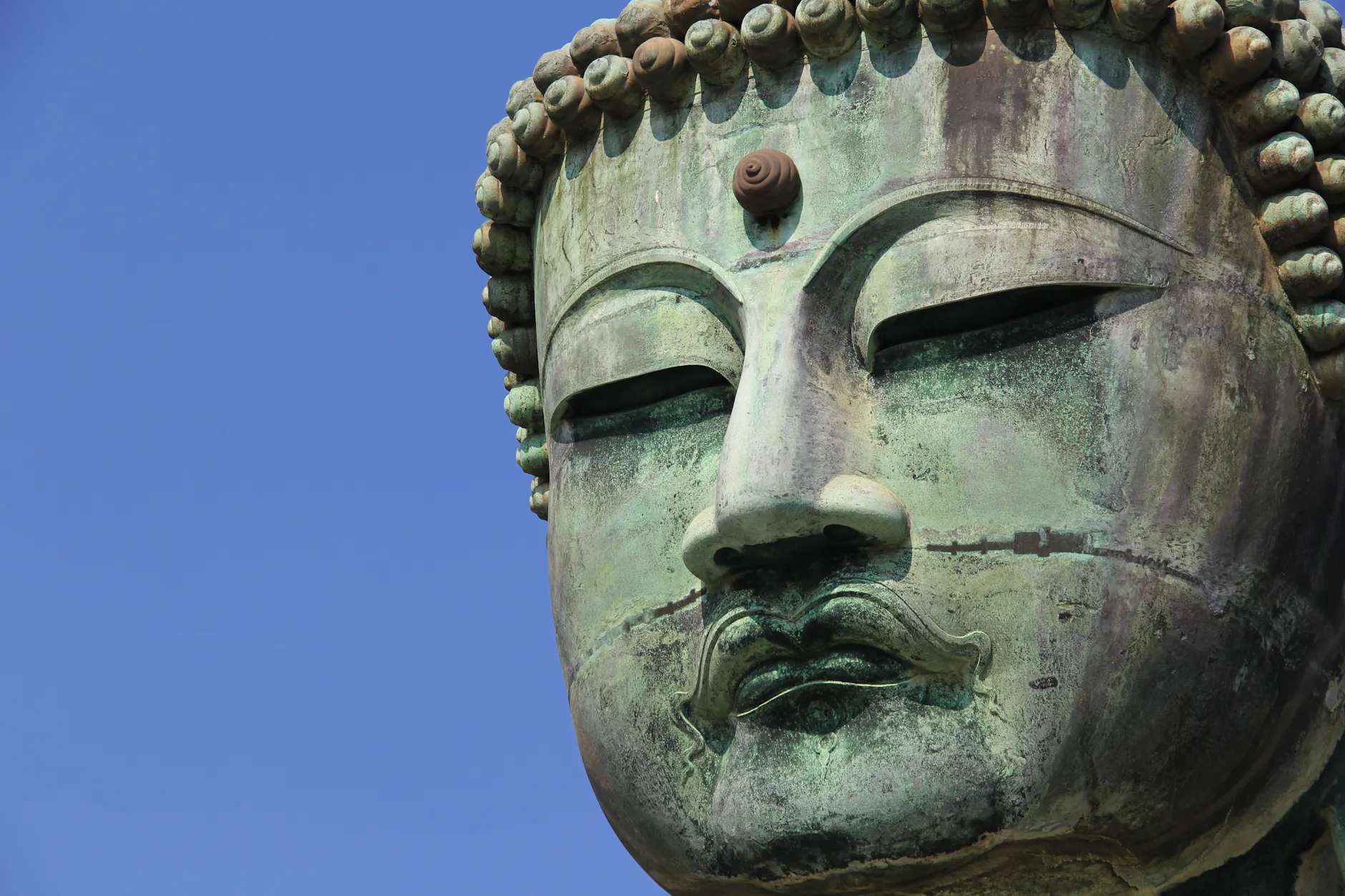
Best angle: Position yourself on the main central path, roughly 30–40 meters from the statue, for the classic straight-on shot that captures the full figure. Morning light (before 9:30 AM) comes from the east and catches the front of the statue beautifully. Include a person in the foreground of your wide shots — it’s the most effective way to convey the enormous scale of the statue. The low angle shot from just below the base looking up is also dramatic. Inside the statue, photography is permitted, but tripods are not allowed inside the interior. For exterior shots, a wide-angle lens captures the full statue plus surrounding trees.
One underrated shot: walk around to the back of the statue (where the entry doors are) and photograph the Buddha from behind with the forested Kamakura hills as backdrop. It’s a perspective most visitors never bother with, and it’s striking.
Combine With Other Kamakura Sights
Kotoku-in is located in the Hase area of Kamakura, and several excellent sights are within easy walking distance. Here’s how to build a great day around the Great Buddha:
Hase-dera Temple (5-minute walk)
One of Kamakura’s most beautiful temples, Hase-dera sits on the hillside above the Great Buddha area. It houses an 11-faced Kannon statue standing 9.18 meters tall, and the upper garden offers sweeping views of Sagami Bay and the Kamakura coastline. The grounds also feature a cave, cave shrines, and a hydrangea garden that becomes spectacular in June. Allow 45–60 minutes.
Tsurugaoka Hachimangu Shrine
Kamakura’s most important shrine, Tsurugaoka Hachimangu, is about a 20-minute walk east from the Great Buddha, or 5 minutes by bus. The grand approach lined with cherry trees leads up to the main shrine buildings on a hillside. It’s an essential stop on any Kamakura itinerary.
Komachi Street
The main pedestrian shopping street leading from Kamakura Station to Tsurugaoka Hachimangu, Komachi-dori is packed with shops selling Kamakura specialties — handmade pottery, lacquerware, shirasu (whitebait) dishes, and the local specialty sweet 鳩サブレー (hato sable pigeon cookies). A great spot for lunch or a snack break.
Kamakura’s Hiking Trails
For those with energy and comfortable shoes, Daibutsu Hiking Trail connects the Great Buddha area to central Kamakura through forested ridgeline paths. The trail offers valley views and a peaceful forest walk away from the crowds — approximately 1.5–2 hours one way.
Day Trip to Kamakura by Car — The JDM Route
The train is convenient, but the most memorable way to reach Kamakura from Tokyo is to drive the coastal route. The Kamakura–Enoshima–Shonan Coast drive is one of Japan’s great day drives — a stretch of ocean-view roads, fishing towns, and surf beaches that many visitors never get to experience because they take the train.
From our Shibuya base, the Great Buddha is roughly 1 hour away via the Yokohama-Yokosuka Expressway. Or take the scenic coastal route via National Route 134 along the Shonan coast — slower, but infinitely more enjoyable. Rent a JDM sports car from Samurai Car Japan and make the Kamakura Great Buddha a stop on a coastal driving day: Shibuya → Kamakura Great Buddha → Enoshima → Shonan coast → return to Tokyo. It’s the kind of day you’ll be talking about for years.
JDM tour guide!
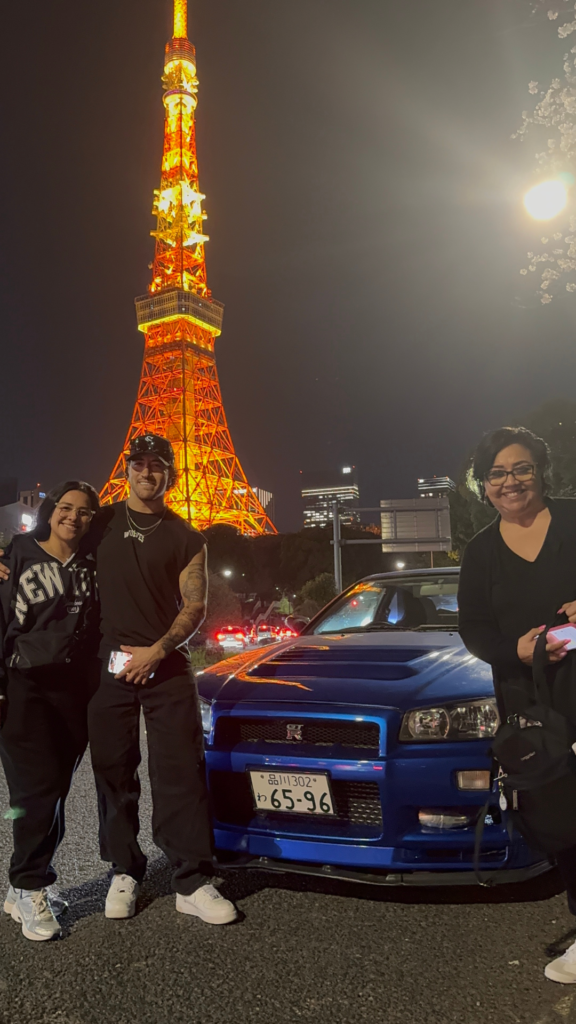
Step into the world of “Fast & Furious” with our exclusive Daikoku Tour!
Experience the legendary car meet atmosphere for yourself. Make it the ultimate highlight of your Tokyo trip!
Frequently Asked Questions
How tall is the Kamakura Great Buddha?
The Kamakura Great Buddha (Kotoku-in Daibutsu) stands 13.35 meters tall (approximately 43.8 feet), with the total height including the base reaching 13.4 meters. It is the second tallest bronze Buddha statue in Japan, after the Great Buddha at Todai-ji in Nara which stands 14.98 meters tall.
Can you go inside the Kamakura Buddha?
Yes! You can enter the hollow interior of the Great Buddha through two small doors on the back of the statue. The additional fee is just ¥20 on top of regular temple admission. The interior space is narrow, and only about 2 people can fit comfortably at one time. Arrive early to avoid queues.
How much does it cost to see the Kamakura Great Buddha?
Admission to Kotoku-in Temple (where the Great Buddha is located) costs ¥300 for adults, ¥150 for elementary school children, and is free for children under 6. Entering the interior of the statue costs an additional ¥20 per person.
How do I get from Tokyo to the Kamakura Buddha?
From Tokyo Station, take the JR Yokosuka Line to Kamakura Station (approximately 55–65 minutes), then transfer to the Enoden Line to Hase Station (5 minutes, 3 stops), and walk approximately 10 minutes to the temple. Total journey time from central Tokyo is about 75–80 minutes. By car, it’s approximately 60–75 minutes via the Yokohama-Yokosuka Expressway.
Is the Kamakura Great Buddha worth visiting?
Absolutely — and it’s one of those sights that exceeds expectations in person. The combination of the statue’s scale, age, historical story, and outdoor setting makes it genuinely unlike any other Buddhist monument in Japan. Factor in the unique experience of going inside the statue, and it’s easily one of the best half-day excursions from Tokyo. Budget at least 1.5–2 hours at the temple itself, and combine it with Hase-dera next door for a full morning.
Book a Kamakura & Enoshima Day Trip
Visit the Great Buddha, Enoshima Island, and coastal temples on a guided day trip from Tokyo. Scenic train ride included. Free cancellation.
Related Articles
- Kamakura Great Buddha Day Trip Guide
- Hakone Hot Spring Day Trip from Tokyo
- Mt Fuji Day Trip from Tokyo
[st_af id=”862″]
🇯🇵 Plan Your Japan Experience
JDM Car Rental
Drive a GT-R, Supra, RX-7, or Silvia on the roads they were built for. Hakone passes, Wangan highway, mountain touge — your dream JDM experience.
Daikoku PA Tour
Visit Japan’s most legendary car meet. Hundreds of modified cars, passionate owners, and the heartbeat of JDM culture. Guided weekend night tours available.
Photo Guide Tour
Capture stunning photos at locations only locals know. Hidden shrines, backstreet alleys, rooftop views, and golden hour spots for unforgettable shots.