Tokyo to Enoshima by Car: The Ultimate Coastal Culture Drive — Samurai & Slam Dunk Route
There’s a stretch of road south of Tokyo that packs more into a single day than most trips manage in a week. You’ve got ancient samurai capitals, a giant bronze Buddha sitting serenely in the hills, Japan’s most famous Chinatown buzzing with dumplings and incense, a bamboo grove so peaceful it feels like a different world, and finally, a beachside island that anime fans will immediately recognise from the opening credits of Slam Dunk. This is the coastal culture drive — and it’s one of the most rewarding self-drive routes you can do from Tokyo.
The best part? You don’t need to wrestle with trains and timetables. Grab your rental car in Shibuya, swing onto the expressway heading south, and within 30 minutes you’re crossing Yokohama Bay Bridge with the city skyline glittering behind you. The whole route covers roughly 80 kilometres, links together some of Japan’s most iconic sights, and gets you to Yuigahama Beach in time for sunset. Whether you’re chasing temples, anime pilgrimage spots, fresh seafood, or just the thrill of driving Japanese roads with the windows down, this drive delivers every single kilometre.
This guide walks you through the complete route from start to finish — with parking details, toll costs, driving tips, and the kind of insider knowledge that only comes from doing this drive more times than you can count. Let’s get moving.
Route Overview
This is a manageable one-day drive of around 80 kilometres total, though most people stretch it into a full day by spending quality time at each stop. Here’s the complete route broken down with estimated driving times between stops (not including sightseeing time):
- Start: Pick up your rental car at Samurai Car Japan in Shibuya, Tokyo
- Shibuya → Yokohama Chinatown: ~35–45 minutes via the Shuto Expressway (首都高速) — Route 3 (Shibuya Line) connecting to the Bayshore Route (湾岸線). Tolls approximately ¥900–¥1,200 with ETC.
- Yokohama Chinatown → Kamakura: ~40–50 minutes via National Route 16 south, then Route 134 along the coast. No tolls on this stretch if you take the scenic coastal road.
- Kamakura → Yuigahama Beach: ~10 minutes — they’re practically next door. Route 134 runs directly along the coast.
- Yuigahama Beach → Enoshima Island: ~15–20 minutes along Route 134 westward along Shonan Coast. Toll to cross the Enoshima Bridge: free (public road).
Total driving time (without stops): Approximately 2 hours
Recommended full day: 8–10 hours including sightseeing
Best start time: 7:30–8:00 AM to beat traffic out of Shibuya
🗺️ Open This Route in Google Maps
Opens in Google Maps app on mobile
Stop 1: Yokohama Chinatown — Japan’s Biggest, Boldest, Most Delicious Detour
Your first stop after leaving Shibuya is Yokohama Chinatown (横浜中華街), and the drive to get there is already a highlight in itself. From Shibuya, you’ll hop onto the Shuto Expressway Route 3 heading south — this is elevated urban expressway driving at its finest, with Tokyo’s skyscrapers framing the road as you accelerate through the city. Keep your ETC card active; the tolls are handled automatically and this stretch costs around ¥900–¥1,200 depending on your entry and exit points.
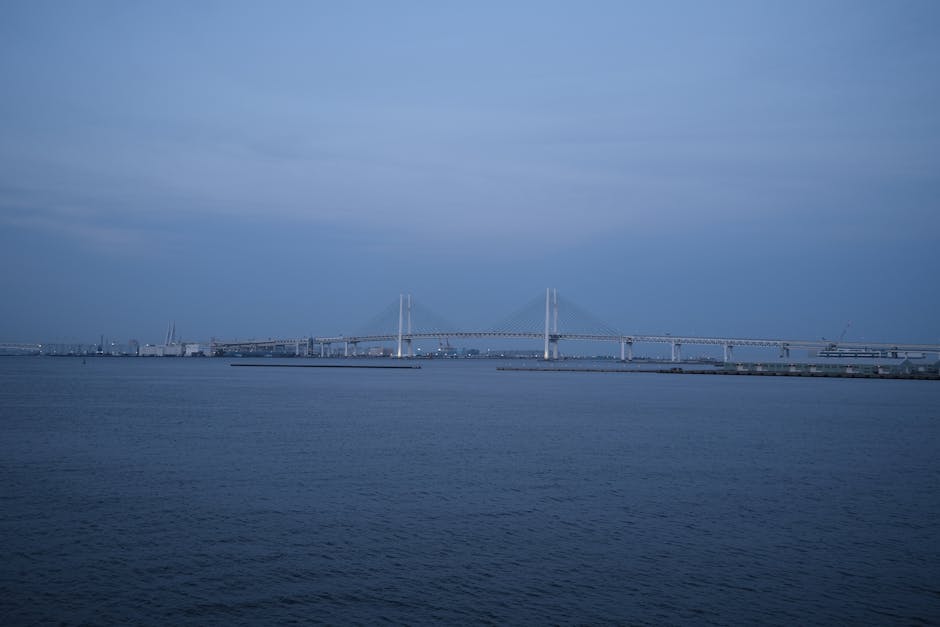
As you approach Yokohama, the route transitions to the Bayshore Route (湾岸線), and if you time it right — or if you’re doing a night version of this drive — you’ll get your first glimpse of the Yokohama Bay Bridge. This iconic cable-stayed bridge spans 860 metres across Tokyo Bay, and driving across it gives you a sweeping panoramic view of the Yokohama port, the Minato Mirai skyscrapers, and on clear days, a distant outline of Mount Fuji. At night, the entire bridge is illuminated and the reflection on the water is something else entirely. Make a mental note to drive back this way after dark if you can.
Exit at the Yokohama Chinatown area and navigate toward the Yamashita Park waterfront. The Chinatown itself is a 10-minute walk from the parking areas — there’s no driving through the narrow alleyways here, so you’ll need to park and explore on foot.
What to do at Yokohama Chinatown:
- Stroll through the four ornate pailou gates (Chinese decorative arches) marking the district’s entrances — the Zenrin Gate (善隣門) is the most photogenic
- Grab nikuman (steamed pork buns) from a street vendor — these are bigger, fluffier, and more generously filled than you’ll find anywhere else in Japan
- Explore the 500+ restaurants ranging from casual dim sum spots to elaborate banquet halls — this is genuinely the largest Chinatown in Japan
- Visit Kantei-byo Temple (関帝廟), a stunning Chinese temple dedicated to Guan Yu — the incense smoke and ornate red-and-gold interior are worth stepping inside
- Browse the souvenir shops for Chinese sweets, moon cakes, and novelty items you won’t find in Tokyo
How long to spend: 1.5–2.5 hours, including a proper sit-down lunch.
Parking: Use the Chinatown Parking Lot (中華街パーキング) on Yamashita-cho, or the larger Yamashita Park Parking nearby. Rates run around ¥300–¥400 per 30 minutes, with a daily maximum of approximately ¥2,000–¥2,500. On weekends, arrive before 10 AM or expect to queue. Google Maps will show you several nearby coin parking lots if the main ones are full — there are always options within a 5-minute walk.
Stop 2: Kamakura — Ancient Capital, Giant Buddha, and the Bamboo Temple
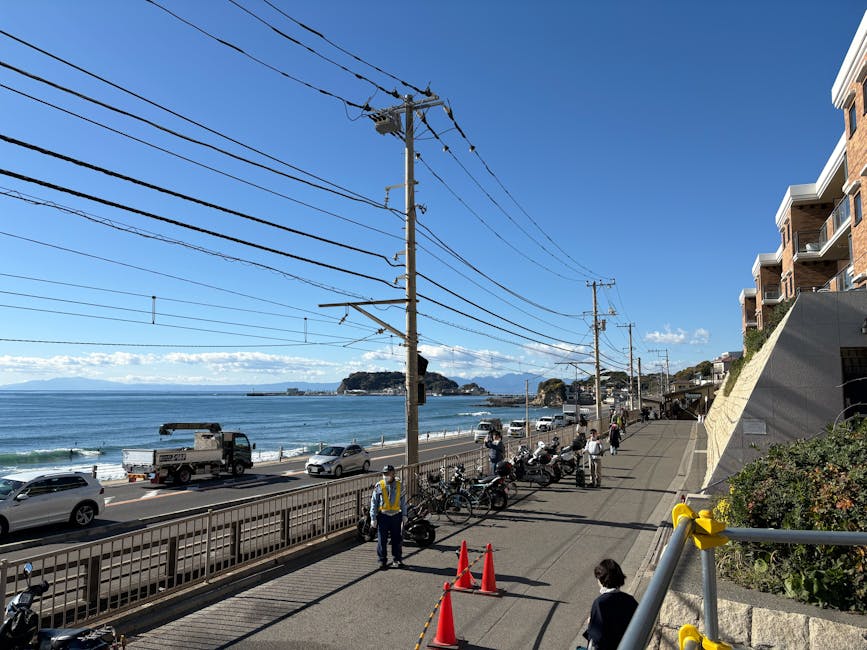
From Yokohama Chinatown, you’ll head south on National Route 16 before picking up Route 134 — this is where the drive starts to feel genuinely exciting. Route 134 is the Shonan Coast road, and it runs right along the edge of the Pacific. On your left, the ocean opens up. On clear days you can see Enoshima Island in the distance. The road is smooth, the speed limit is a reasonable 50–60 km/h, and with the windows down and the sea breeze coming in, it genuinely feels like a Japanese driving advertisement. This stretch takes about 40–50 minutes and is completely toll-free if you stay on Route 16 and 134.
Kamakura itself sits in a natural amphitheatre of hills — a geography that made it an impenetrable samurai fortress capital in the 12th and 13th centuries, and today makes it one of the most atmospheric places in all of Japan. There’s a reason every travel article about Kamakura uses words like “magical” — the combination of forested hiking trails, ancient shrines, and the extraordinary scale of the Great Buddha is genuinely hard to oversell.
The Great Buddha (Kotoku-in Daibutsu)
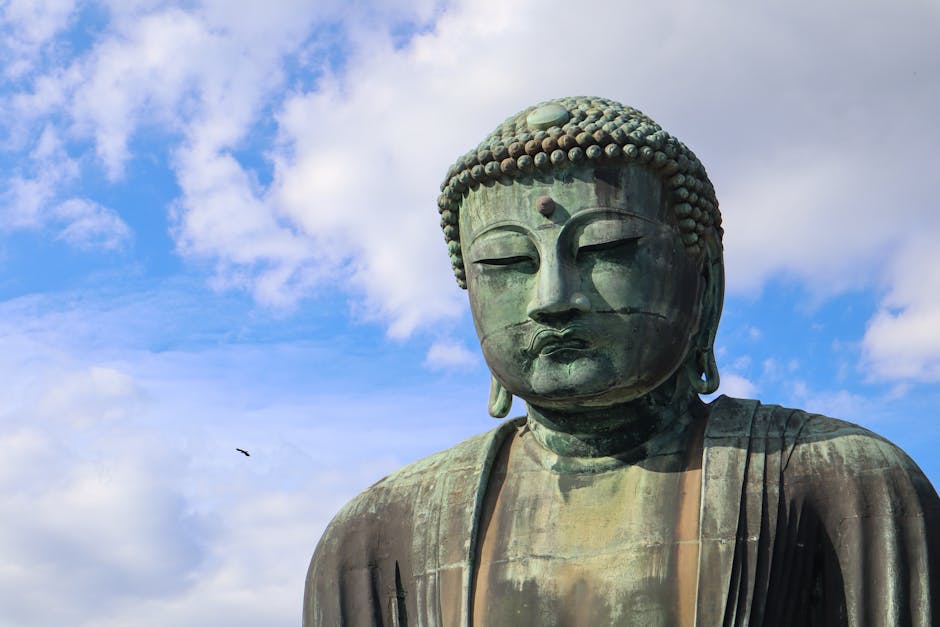
The Kamakura Great Buddha (鎌倉大仏) stands 13.35 metres tall and has been sitting in the open air since its bronze casting in 1252. Originally housed in a wooden hall that was destroyed by typhoons and tsunamis, the Buddha now sits permanently outdoors — which somehow makes it even more powerful. There’s a raw, weathered quality to this enormous figure surrounded by trees that you don’t get from indoor temple statues. You can actually walk inside the hollow bronze structure for an additional ¥20. The expression on the face — serene, slightly downward-gazing — is one of those things you keep thinking about long after you’ve driven away.
Admission: ¥300 for adults. The grounds are open 8:00 AM – 5:30 PM (5:00 PM in winter).
Hokokuji Temple — The Bamboo Temple
A 15-minute drive (or taxi from central Kamakura) east of the main sightseeing area, Hokokuji Temple (報国寺) contains one of Kamakura’s best-kept secrets: a grove of roughly 2,000 moso bamboo stalks that creates a cathedral-like tunnel of green light. Visit in the morning when the light filters through at its most dramatic. At the back of the grove there’s a traditional matcha tea house where you can sit on tatami mats, drink a bowl of frothy green tea, and listen to the bamboo clicking in the breeze. It’s one of the most genuinely calming experiences this entire route has to offer.
Admission: ¥300 for the bamboo grove, plus ¥600 for matcha tea. Open 9:00 AM – 4:00 PM. Closed Wednesdays.
Driving tips for Kamakura: The narrow streets around Kamakura’s main temples can get very congested on weekends between 10 AM and 3 PM. If you’re visiting on a Saturday or Sunday, aim to arrive before 9:30 AM. The roads around Kotoku-in (Great Buddha) are particularly tight — stay alert for pedestrians stepping off narrow footpaths.
Parking: For the Great Buddha, use the Kotoku-in Parking Lot immediately adjacent to the temple — approximately ¥500 for the first hour. For Hokokuji (Bamboo Temple), there’s a small free parking area on-site with space for about 10 cars. If it’s full, street parking is available on nearby residential roads. For Kamakura Station area, the Kamakura City Parking Lot near the station charges approximately ¥300 per 30 minutes.
How long to spend in Kamakura: 2.5–3.5 hours minimum if you want to hit both the Great Buddha and Hokokuji Temple. Allow more time if you want to walk the Daibutsu Hiking Trail or visit Tsurugaoka Hachimangu Shrine in the town centre.
Driving this route? We’ve got you covered.
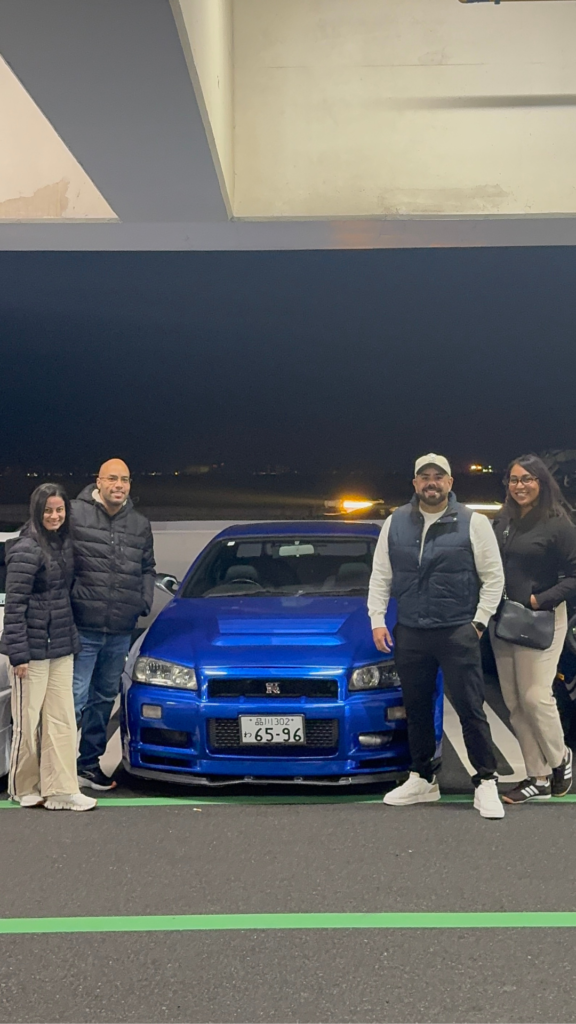
Hundreds of international visitors have driven this route with a car from Samurai Car Japan. Our team will brief you on road conditions, tolls, and the best stops before you set off.
Stop 3: Yuigahama Beach — Anime Pilgrimage and the Slam Dunk Moment
From central Kamakura it’s barely 10 minutes on Route 134 to reach Yuigahama Beach (由比ヶ浜海岸), but that short drive packs in one of the most anticipated moments on this entire route for anime fans. As you head west along the coastal road, you’ll cross the Kamakura Koko-mae level crossing — the exact spot where the opening credits of Slam Dunk were animated. This railway crossing, with the Enoden tram line running parallel to the sea, is one of the most photographed anime pilgrimage sites in Japan. You can’t stop on Route 134 itself (it’s a live road), but there’s a small parking area and viewing spot nearby where you can get out, walk to the crossing, and take your photos.
Yuigahama Beach itself is a wide, gently curving stretch of sand that serves as Kamakura’s main beach. In summer it’s packed with sun-seekers and surfers. In the off-season — spring or autumn — you often get the beach almost to yourself, with just the sound of waves and the faint outline of Enoshima Island sitting on the horizon to the west. The beach snack shacks (海の家, “umi no ie”) serve cold drinks, yakisoba, and shaved ice from July through August. Outside summer, the vibe is quieter and honestly more beautiful.
What to do at Yuigahama:
- Walk the full length of the beach heading west toward Enoshima — the views get progressively better
- Find the Kamakura Koko-mae crossing (about 1.5 km west of Yuigahama Station) and wait for the bright green Enoden tram to pass through — this is the Slam Dunk shot
- Watch the sunset over the water — on clear days, Mount Fuji appears behind Enoshima like a painting
- Rent a surfboard from one of the local surf shops if you’re visiting in warmer months
Parking at Yuigahama: The main Yuigahama Parking Lot (由比ガ浜地下駐車場) is an underground facility accessed from Route 134 with capacity for around 200 cars. Rates are approximately ¥300 per 30 minutes, with a daily maximum of ¥2,000. In summer (July–August), this lot fills up by 9 AM on weekends — arrive early or use one of the overflow lots near Kamakura Station.
How long to spend: 1–1.5 hours, or longer if you’re a Slam Dunk fan who wants to photograph every angle of that level crossing.
Stop 4: Enoshima Island — Shrines, Sea Caves, and Skyline Views
The final destination on this route is one of Japan’s most enchanting small islands, and the drive to reach it along Route 134 is the best 15–20 minutes of coastal motoring you’ll do all day. The road hugs the Shonan shoreline, and as you drive westward from Yuigahama, Enoshima grows larger on the horizon — first a dark silhouette, then a tree-covered lump with a white observation tower poking above the canopy, and finally the full island connected to the mainland by its 600-metre causeway bridge.
You cross onto the island via the Enoshima Benten Bridge (弁天橋) — a wide public road that’s completely free to cross. There’s something genuinely thrilling about driving across this causeway with the Pacific stretching out on both sides. Pull into the island parking facilities immediately on your right as you cross — don’t try to drive further into the island itself, as the interior paths are narrow stone pedestrian lanes.
What to do on Enoshima:
- Climb the Enoshima Escar (outdoor escalators, ¥360) or walk up the stone steps to reach the Enoshima Shrine complex — three connected shrines dedicated to the goddess Benzaiten
- Visit the Samuel Cocking Garden and ascend the Sea Candle Observatory Tower (海のキャンドル) for 360-degree views — on clear days you get the full panorama of Mount Fuji, the Miura Peninsula, and the Izu Islands
- Descend to the Iwaya Caves (岩屋洞窟) at the far western tip of the island — ancient sea caves lit by candles and torches, with Buddhist statues carved into the rock walls. Admission ¥500. Absolutely worth it.
- Browse the Benzaiten-nakamise shopping street for shirasu (whitebait) snacks, grilled squid, and Enoshima specialty sweets
- Watch the sunset from the island’s western rocks — this is one of the best sunset viewing spots in the entire Kanto region
Parking on Enoshima: The main Enoshima Island Spa Parking at the causeway entrance charges approximately ¥500 per hour with a daily maximum of around ¥2,500. There are also several municipal coin lots on the mainland side of the bridge, which are slightly cheaper at ¥300 per 30 minutes. On weekends and public holidays, parking fills quickly — the island is extremely popular. Aim to arrive by 10 AM or after 3 PM when some of the day-tripper crowd thins out.
How long to spend: 2–3 hours minimum. If you want to do the full circuit — shrines, observatory, caves, and sunset — allow 3.5 hours.
Driving Tips for This Route
Road Conditions and Navigation
The roads on this route range from smooth urban expressways to older coastal national routes with occasional rough patches. The Shuto Expressway out of Shibuya is well-maintained and clearly signed in both Japanese and English. Route 134 along the Shonan Coast is a two-lane road in most sections with a 50–60 km/h speed limit — follow it and enjoy the scenery rather than trying to rush.
Japanese roads are left-hand drive, left-hand traffic. If you’re coming from a right-hand traffic country, the main adjustment is keeping left at intersections and roundabouts. Roundabouts are rare in Japan anyway — most intersections are traffic light controlled.
Toll Costs Summary
- Shibuya → Yokohama (Shuto Expressway): Approximately ¥900–¥1,200 with ETC (slightly higher with cash)
- Yokohama → Kamakura (Route 16 + Route 134): No tolls on the coastal route
- Kamakura → Enoshima (Route 134): No tolls
- Enoshima Bridge crossing: Free (public road)
- Total toll estimate for the full route: ¥900–¥1,200 one way
Your rental car from Samurai Car Japan comes with an ETC card included, which means tolls are automatically deducted at highway gantries — no stopping, no cash, no fumbling at booths. This is how most Japanese drivers handle tolls and it makes the expressway experience genuinely seamless.
Fuel Stations
Fuel is readily available throughout this route. There are multiple ENEOS and Idemitsu stations along Route 16 between Yokohama and Kamakura, and several in central Kamakura itself. Enoshima has limited fuel options — fill up in Kamakura before heading to the island. Current regular petrol (レギュラー) prices typically run ¥170–¥185 per litre.
Best Time of Day
Leave Shibuya between 7:30 AM and 8:00 AM to avoid the morning rush hour, which peaks between 8:00 and 9:30 AM. The expressway heading south is generally clearer than the inbound lanes at that time. Return trips on Sunday evenings can be congested on the Shuto Expressway from around 5:00 PM — either leave Enoshima before 3:30 PM or wait until after 7:00 PM for the traffic to clear.
Driving Licence Requirements for Foreigners
You will need a valid International Driving Permit (IDP) issued in your home country, along with your original national driving licence. The IDP must be from a country that has signed the 1949 Geneva Convention — most Western countries, Australia, and many Asian nations qualify. Note that Swiss, German, and French licences may have different requirements — check with the Japan Automobile Federation (JAF) before your trip. Chinese driving licences are not accepted in Japan — Chinese visitors need to obtain an IDP before arriving.
Where to Eat Along the Route
Yokohama Chinatown
- Heichinrou (聘珍楼): One of the oldest and most respected Chinese restaurants in Chinatown — their dim sum lunch sets are legendary. Expect to spend ¥2,000–¥4,000 per person.
- Manchinrou (萬珍樓): Another institution known for authentic Cantonese cuisine. The glazed roast duck is exceptional.
- Street food vendors: For a quick bite, grab nikuman (steamed buns) from any of the stalls near the main gate — ¥200–¥400 per bun. The black-sesame flavoured ones are worth trying.
Kamakura
- Raitei (らい亭): A beautiful traditional restaurant set in a hillside garden near Hokokuji Temple — soba noodles in a tatami room. Lunch sets from ¥1,800.
- Komachi-dori shopping street: The pedestrian street leading to Tsurugaoka Hachimangu is lined with snack stalls — try koshian red bean sweets, grilled senbei crackers, and matcha soft serve ice cream.
- Kamakura Pasta: A local chain that does creative Japanese-Italian fusion — popular with locals and always busy. Lunch from ¥1,200.
Enoshima
- Shirasu dishes everywhere: Enoshima is the home of shirasu (raw or cooked whitebait), and virtually every restaurant on the island serves it. Try nama shirasu-don (raw whitebait rice bowl) — it’s available from approximately April to January (not during spawning season). Around ¥1,500–¥2,000.
- Enoshima Iwaya Beer Garden (seasonal): In summer, a beer garden operates near the cave entrance with cold drinks and grilled seafood. Sunset views included at no extra charge.
- Tobiccho: A well-regarded seafood restaurant near the island entrance — fresh grilled fish sets from ¥1,800.
Best Season for This Drive
Spring (March–May) — Highly Recommended
Cherry blossom season (late March to mid-April) transforms Kamakura dramatically — Tsurugaoka Hachimangu’s approach avenue (Wakamiya-oji) is lined with cherry trees and becomes one of the most photographed spots in the Kanto region. The weather is mild, traffic is manageable on weekdays, and Yuigahama Beach has a serene off-season feel. Enoshima in spring is also excellent — clear skies mean Mount Fuji views from the observatory are at their most reliable.
Summer (June–August) — Fun but Busy
Yuigahama and Enoshima are in full summer mode — beach houses open, surfers in the water, fireworks festivals. It’s energetic and photogenic, but traffic on Route 134 can slow significantly on weekend afternoons. June brings the hydrangea season to Kamakura’s temples (particularly Meigetsu-in Temple, worth a detour), which is one of the most beautiful sights on the entire route.
Autumn (September–November) — Another Top Pick
Autumn foliage hits Kamakura’s hillside temples from mid-November through early December. The bamboo at Hokokuji is particularly beautiful surrounded by autumn colours. Crowds thin after the peak summer period, driving is easier, and the sea views along Route 134 are crisp and clear. Mount Fuji becomes more visible as the haze clears in autumn.
Winter (December–February) — Hidden Gem Season
The quietest and in some ways most magical time to do this route. Yuigahama Beach is nearly deserted. Enoshima’s narrow lanes are peaceful. The Shonan Coast has excellent visibility, and Mount Fuji views from Enoshima observatory are at their absolute clearest in January and February. The only consideration is shorter daylight hours — plan to reach Enoshima by 3:00 PM to catch the sunset before it gets dark.
Frequently Asked Questions
Where can I rent a car for this route?
The most convenient starting point is Samurai Car Japan in Shibuya, Tokyo. They specialise in car rentals for international tourists, which means they’re fully set up for visitors with International Driving Permits, provide English GPS navigation, and include an ETC card with every rental so you can handle tolls without any hassle. They also have a fleet of JDM sports cars available if you want to add some extra excitement to the coastal drive — imagine crossing Yokohama Bay Bridge in a Nissan GT-R or a Toyota Supra. The shop is in Shibuya, which puts you perfectly positioned to head straight onto the Shuto Expressway south without having to navigate complicated city roads first.
Can I do this entire route in one day?
Yes, absolutely — one full day is the standard format for this route and it works well if you start early. Leave Shibuya by 8:00 AM, spend around 2 hours in Yokohama Chinatown (including lunch), 2.5–3 hours in Kamakura, 1 hour at Yuigahama Beach, and 2.5–3 hours on Enoshima. That gets you a sunset from the island around 4:30–5:30 PM (depending on season) and back in Tokyo by 7:30–8:00 PM. If you want to linger longer anywhere, Kamakura and Enoshima are both excellent places to stay overnight, and there are good accommodation options at both.
Is Route 134 along the Shonan Coast a toll road?
No — Route 134 is a free national route for its entire length along the Shonan Coast from Kamakura to Enoshima. The only toll sections on this route are on the Shuto Expressway between Shibuya and Yokohama. Total expected tolls for the full route are approximately ¥900–¥1,200 with ETC. The Enoshima causeway bridge is also free to cross.
Do I need to book parking in advance for this route?
Parking cannot typically be pre-booked on this route — it’s all first-come first-served. The key advice is to arrive early at each stop, particularly in summer and on weekends. Kamakura’s main parking lots near Kotoku-in and Kamakura Station fill by 10 AM on busy weekends. Enoshima’s parking at the bridge entrance fills similarly. Both locations have multiple parking options within walking distance, so if your first choice is full, there will usually be alternatives nearby. Use Google Maps to check “parking near [location]” in real time — it often shows current availability at paid lots.
Is the Slam Dunk crossing easy to find by car?
Yes, the Kamakura Koko-mae level crossing is right on Route 134, approximately 3 kilometres west of central Kamakura. Your GPS will find it easily — just search “鎌倉高校前踏切” or “Kamakura Koko-mae Fumikiri.” You cannot stop on Route 134 itself, but there is a small viewing area on the ocean side of the road nearby, and the Kamakura Koko-mae Station platform (Enoden line) offers the iconic elevated crossing view. The Enoden tram runs frequently, so you won’t have to wait long for your perfect shot.
Final Thoughts
This coastal culture drive from Shibuya to Enoshima might cover less than 80 kilometres on the map, but it packs in a remarkable range of experiences — the cosmopolitan buzz of Japan’s largest Chinatown, the solemn power of the Great Buddha, the zen stillness of a bamboo grove, an anime pilgrimage moment that will make every Slam Dunk fan’s heart race, and finally the ancient island shrines and sea caves of Enoshima bathed in Pacific sunset light. There’s nowhere else in the world where you can drive through all of this in a single day.
Driving it yourself — rather than relying on trains and tour buses — is what makes the difference. You move at your own pace, you stop when the light looks perfect over the Shonan Coast, you arrive at the Bamboo Temple before the crowds, and you get that extraordinary feeling of crossing the Enoshima causeway in your own car with the sea on both sides. That’s not something a train timetable can give you.
Why not elevate your journey with a legendary JDM experience?
Our Services:
- Self-Drive Rentals
- Guided Tours
- Drift Experiences
Please visit the dedicated page for more details.