What Is a Maiko Makeover Experience?
Imagine walking through the ancient stone lanes of Kyoto’s Gion district, dressed in a stunning silk kimono, your face painted in the iconic white oshiroi makeup of a maiko, with elaborate kanzashi hairpins adorning your styled wig. This is exactly what a maiko makeover experience offers — a deeply immersive glimpse into one of Japan’s most enduring and visually striking cultural traditions.
Maiko transformation studios have become one of Kyoto’s most sought-after tourist experiences, and for good reason. Within just a couple of hours, trained professionals can transform you into a living image of a maiko — the apprentice geisha that Kyoto has long been famous for. Whether you’re traveling solo, as a couple, or with children, this experience offers memories that last a lifetime and photographs you will treasure forever.
In this comprehensive guide, we cover everything you need to know before booking your maiko makeover in Kyoto: the difference between geisha and maiko, what happens during the transformation, the best studios to choose from, pricing, timing, what to wear, the best outdoor photo spots, and insider tips to make the most of your experience.
Geisha vs. Maiko: Understanding the Difference
Before diving into the makeover experience itself, it helps to understand the distinction between geisha and maiko — two terms that are often used interchangeably in the West but carry very different meanings in Japanese culture.
A geisha (also called geiko in the Kyoto dialect) is a fully trained and licensed female entertainer who has mastered traditional Japanese arts including classical music, dance, tea ceremony, poetry, and sophisticated conversation. Geisha wear understated, elegant makeup with red and black touches on a white base, and their hairstyles use their own natural hair. They represent the pinnacle of a long and rigorous artistic training journey.
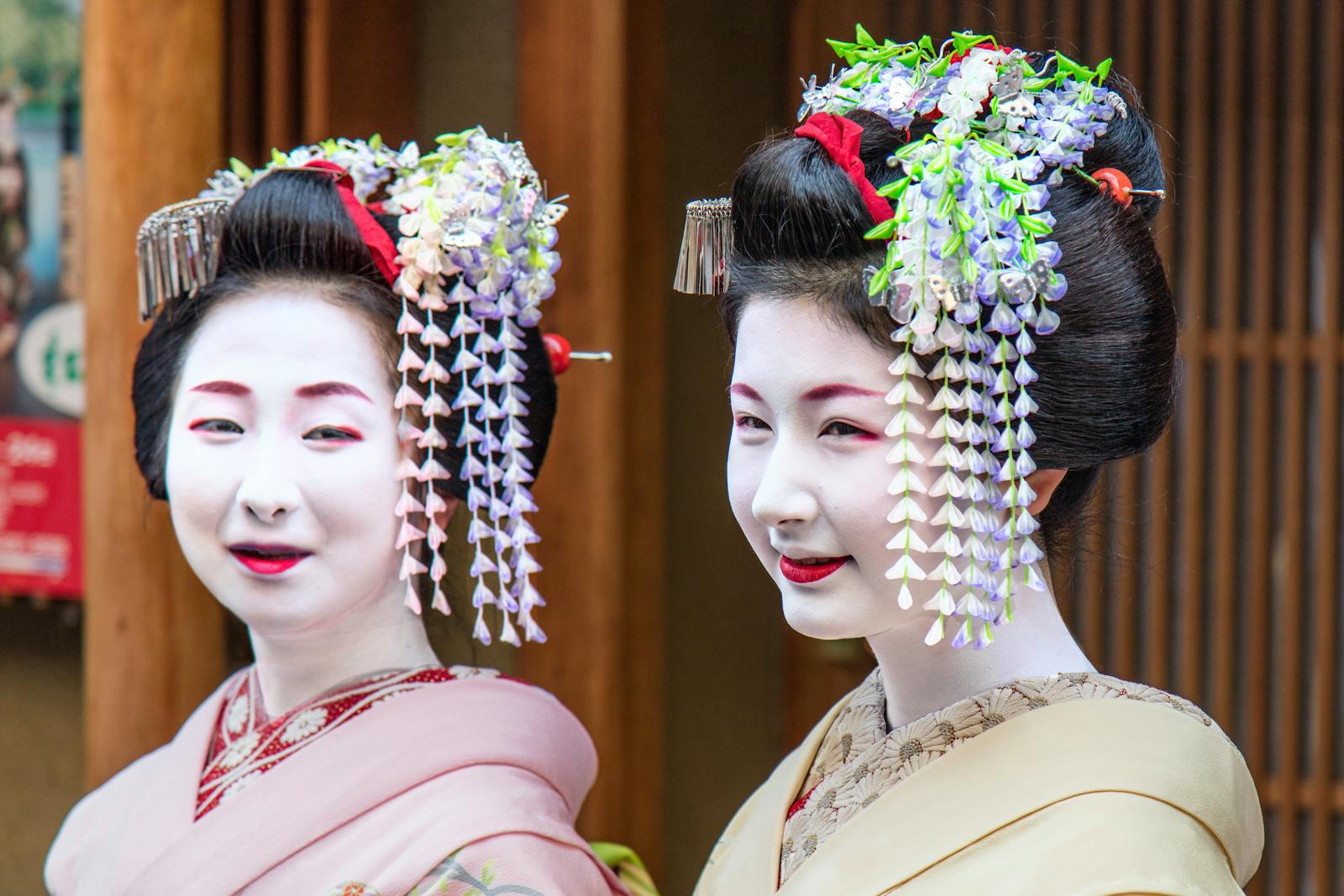
A maiko, by contrast, is an apprentice geisha — typically a young woman aged 15 to 20 who is in the early years of her training. Maiko are visually much more flamboyant than geisha: their makeup is more dramatic (with bright red lipstick and vivid blusher), they wear elaborate silk kimonos with long trailing obi sashes, and their hair — their own natural hair, set into traditional styles — is decorated with spectacular seasonal kanzashi hairpins. In fact, the word “maiko” literally means “dancing child,” reflecting their central role in learning classical Japanese dance.
When you visit a maiko transformation studio in Kyoto, it is almost always the maiko look that is recreated — because it is the more visually striking and photogenic of the two. The dramatic white face paint, the vivid colors, the elaborate wig with ornate hairpins: this is the iconic image most visitors have in mind when they dream of becoming a geisha in Japan.
What the Maiko Makeover Experience Includes
The maiko transformation is a carefully choreographed process handled by professional dresers and makeup artists who have been trained in traditional techniques. Here is a step-by-step breakdown of what you can expect.
Step 1: Oshiroi White Base Makeup
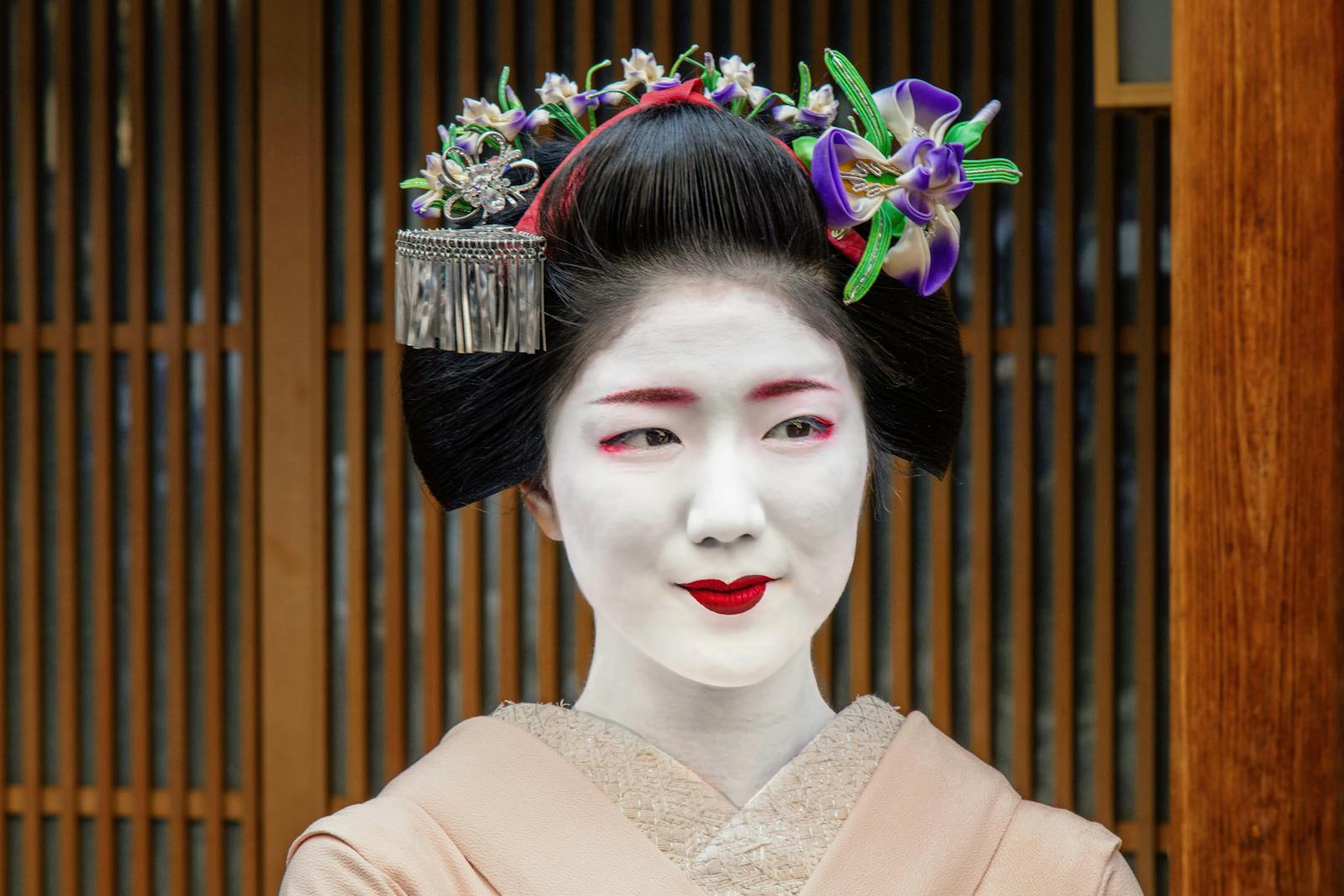
The transformation begins with the face. You’ll sit in front of a mirror while a makeup artist applies the signature oshiroi — a thick white foundation traditionally made from powdered nightingale droppings and rice bran (though modern studios use safe cosmetic-grade versions). This white base is applied carefully to the face, neck, and the back of the neck, leaving a small unpainted V-shape at the nape — a feature considered especially sensual in traditional Japanese aesthetics.
Over the white base, the artist applies precise red and black detailing around the eyes and eyebrows. Maiko typically wear red on the lower lip only (or a small red touch on the upper lip for younger maiko) and bold red blusher on the cheeks, creating the characteristic wide-eyed, doll-like appearance that makes the maiko look so instantly recognizable.
Step 2: Wig and Hair Styling
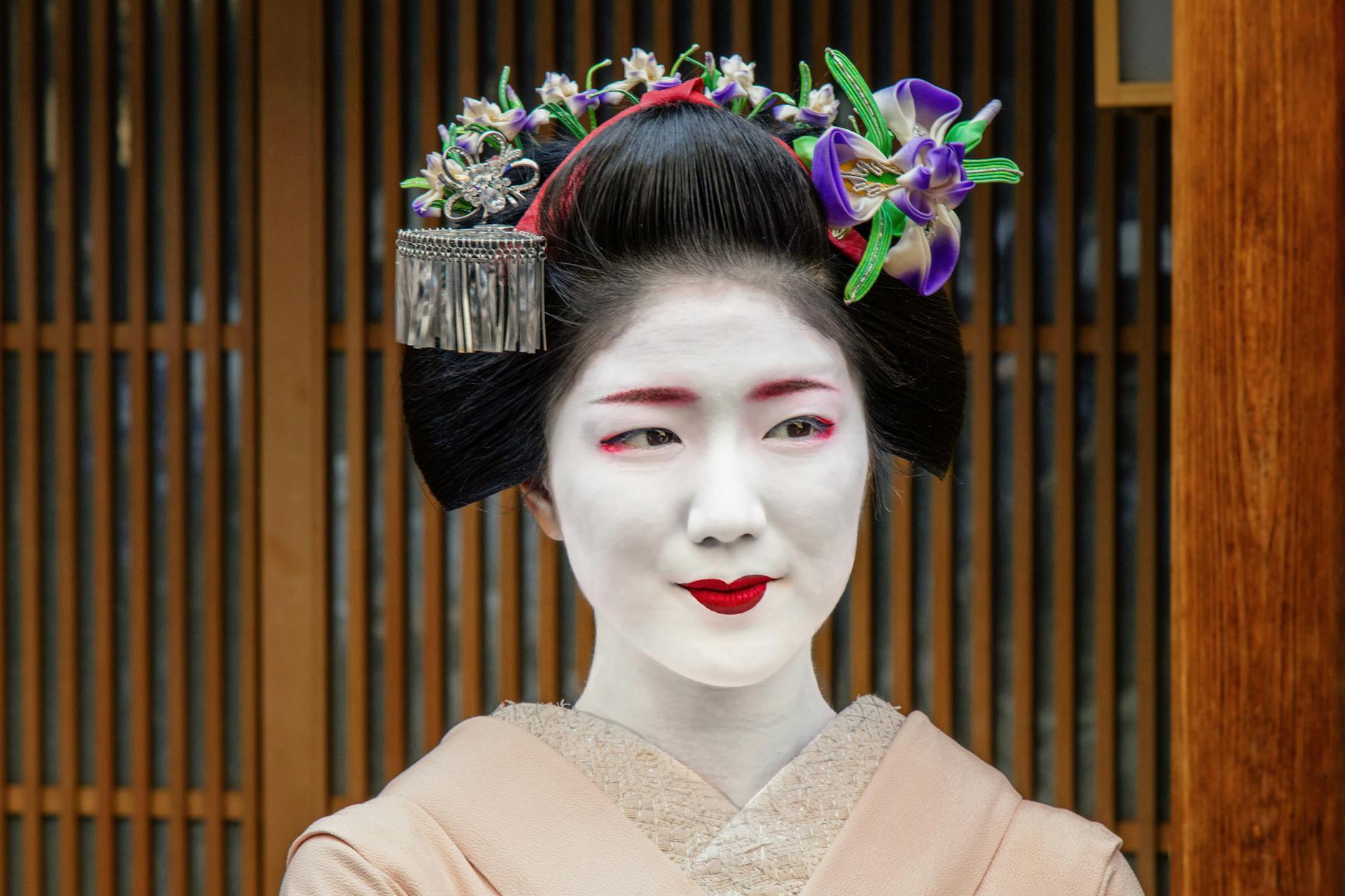
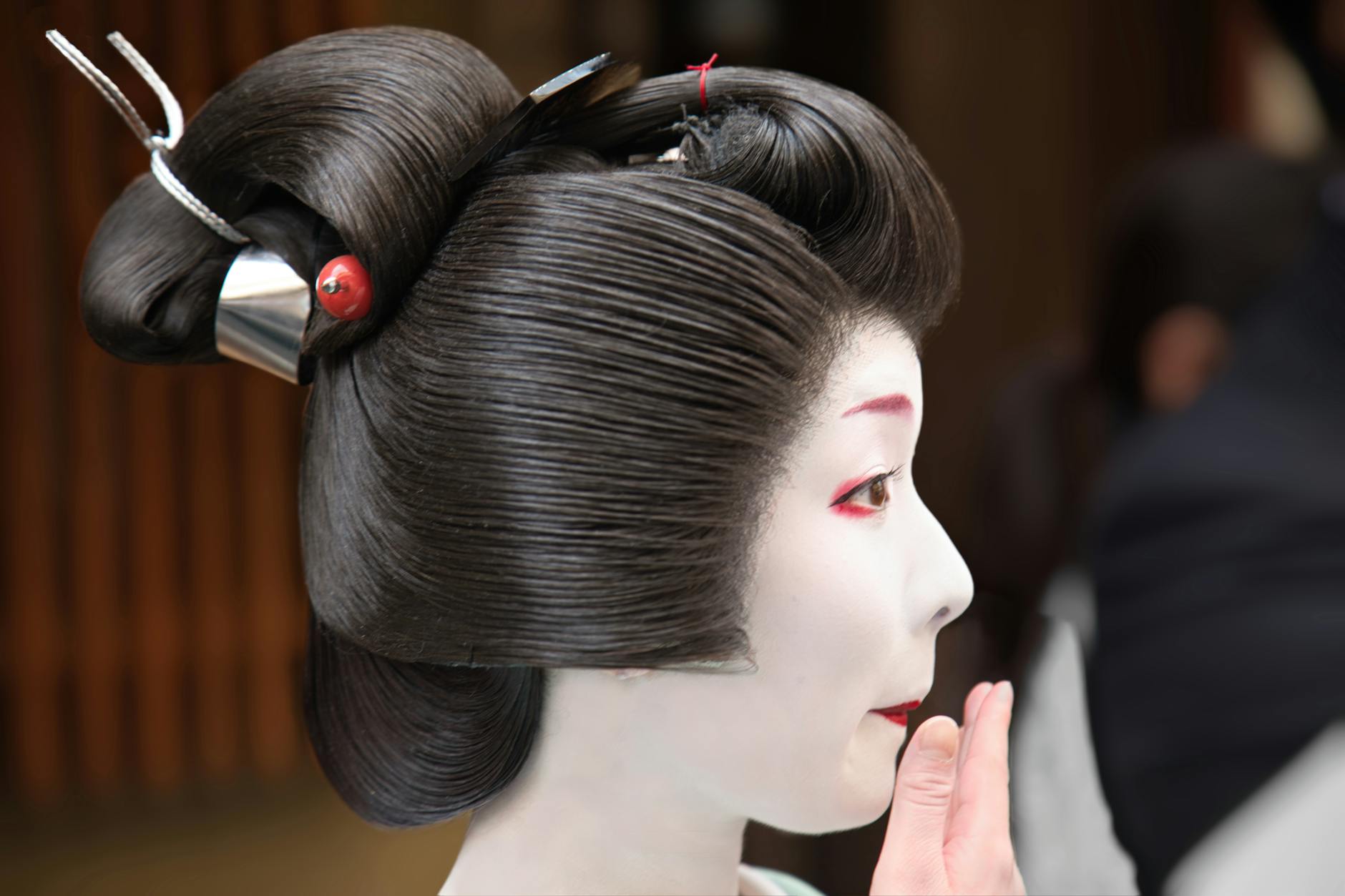
Rather than attempting to style your own hair into an elaborate traditional updo, studios use a high-quality silk wig styled in one of the classic maiko hairstyles. The most popular is the wareshinobu — a style worn by younger maiko featuring a distinctive split at the top and a large red silk ribbon woven through the center.
Once the wig is fitted and secured, the makeup artist or a dedicated hair stylist adds the kanzashi hairpins — elaborate floral ornaments made from silk flowers, tortoiseshell, lacquered wood, or precious metals. Kanzashi change with the seasons: cherry blossom pins in spring, wisteria in early summer, maple leaves in autumn, and camellia in winter. The kanzashi adorning your wig will reflect the season of your visit, adding a lovely layer of cultural authenticity to the experience.
Step 3: Kimono Dressing
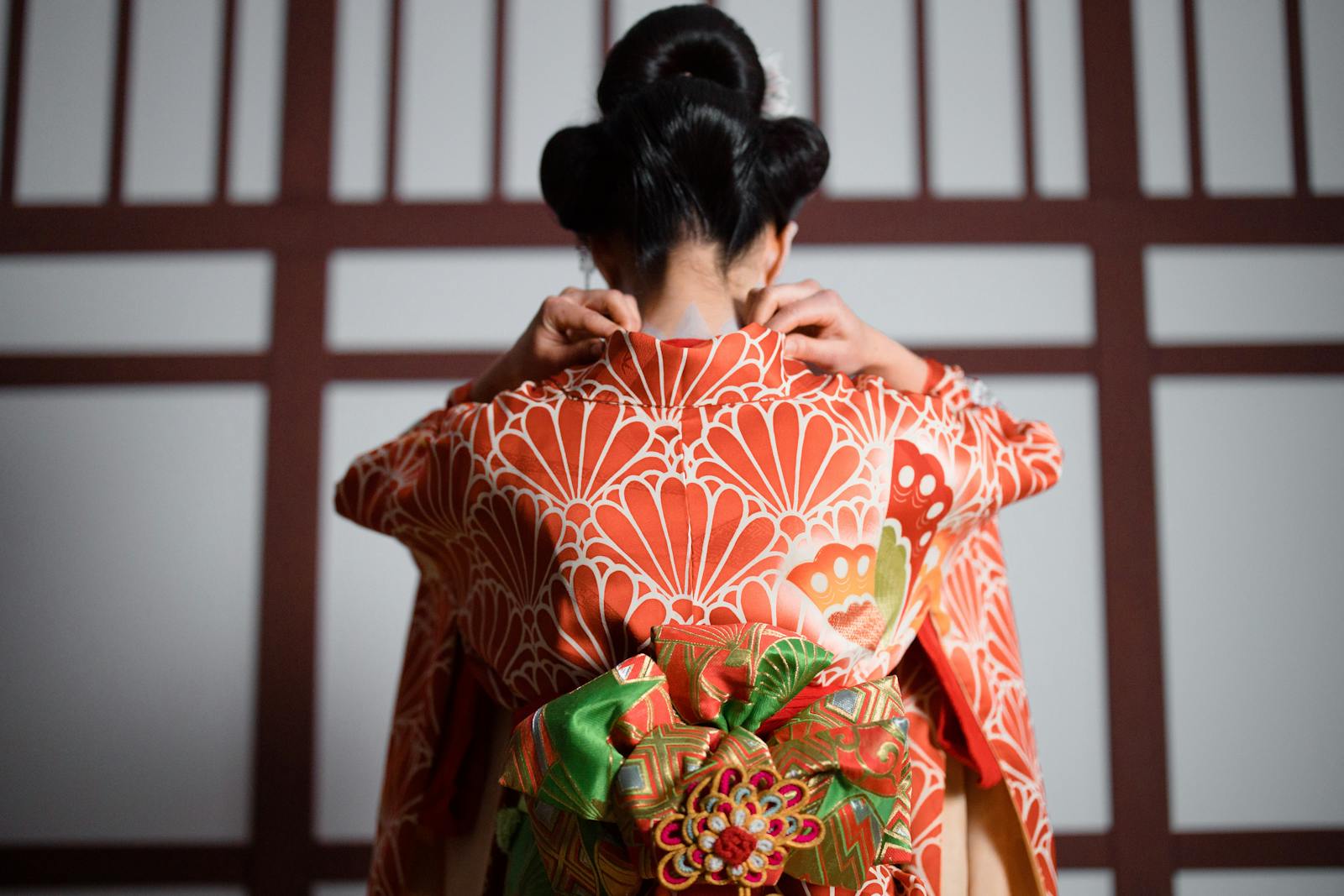
With hair and makeup complete, you move on to the most complex part of the transformation: putting on the kimono. A maiko’s kimono (called a hikizuri) is not like a simple casual yukata — it is a full-length, trailing silk garment with a dramatically long hem and extra-long sleeves (furisode). The intricate process of wearing it correctly involves multiple layers of undergarments, a special collar, and binding techniques that ensure the garment drapes perfectly.
The obi belt — the wide decorative sash wrapped around the waist — is one of the most distinctive elements of the maiko look. Unlike the formal drums-tied obi worn by geisha, a maiko’s obi is tied in an extremely long, flowing style called darari no obi that trails behind as she walks. Tying this correctly takes skill, and the studio’s dresser will handle the entire process for you while you stand still and enjoy the transformation.
Step 4: The Photo Session
Once fully dressed, it is time to capture the moment. Most studios include an in-studio photo session as part of the base package, where a professional photographer takes portraits in front of carefully designed traditional backdrops — bamboo gardens, shoji screens, lantern-lit corridors, and tatami rooms. The photographer is experienced in posing guests to look natural and elegant, guiding your hands, fan placement, and gaze to create the most authentic images possible.
Many studios offer digital images included in the package price, while printed photographs or photo books are available as add-ons. A small number of studios also offer professional-quality photo albums as luxury upgrades.
Indoor Studio vs. Outdoor Walk: Which Should You Choose?
This is one of the most important decisions you’ll make when booking your maiko experience. Many studios offer an optional outdoor walk — sometimes called a “street walk” or “outdoor photo course” — where, after dressing, you are accompanied by a guide or photographer through the historic streets of Gion or Higashiyama. This option typically costs an additional ¥3,000 to ¥8,000 depending on the studio and duration.
So, is the outdoor walk worth it? For most visitors, the answer is an enthusiastic yes — with some caveats.
The case for outdoor photos: The cobblestone lanes of Ninenzaka and Sannenzaka, the vermillion gates and stone lanterns of the Yasaka Shrine area, and the wooden machiya townhouses of Gion Shirakawa canal form a backdrop that simply cannot be replicated in a studio. Photographed against these settings, a well-dressed maiko looks as though she stepped directly out of the 18th century. These are the images that will stop people in their tracks on Instagram.
The caveats: First, outdoor walks require comfortable walking in traditional wooden geta sandals and an elaborate kimono, which takes some adjustment. Second, you will attract considerable attention from other tourists — some of whom may ask to photograph you, which can be flattering but also takes time. Third, outdoor walks are weather-dependent; rainy days can make the experience less enjoyable (though a studio-provided umbrella in a matching style is often available). Finally, bear in mind that real geisha and maiko dislike being photographed on the street, so if you encounter actual maiko while on your walk, please be respectful and do not chase or photograph them without permission.
Our recommendation: If your budget allows, add the outdoor walk — particularly if you visit during cherry blossom season (late March to early April) or autumn foliage season (mid-November), when the backdrop of Kyoto’s historic streets is at its most spectacular. Book an early morning slot to avoid afternoon crowds, especially on weekends and public holidays.
Best Maiko Makeover Studios in Kyoto
Kyoto has dozens of studios offering maiko and geisha transformation experiences, but not all are created equal. Here are the most reputable options, covering a range of budgets and styles.
Maica (舞香) — Most Popular Overall
Maica is widely considered the best all-around option for first-time visitors, particularly those who want an authentic experience with excellent photography. Located in the heart of Gion, Maica’s staff are highly professional and experienced in working with international visitors of all backgrounds. Their English-language support is solid, their kimono collection is extensive, and their photographers have a real eye for composition.
Maica offers multiple packages starting from around ¥8,000 for an indoor studio session and climbing to ¥20,000 or more for premium outdoor walk experiences with additional photo prints. Advance booking is essential — Maica’s weekend slots often sell out weeks in advance, especially during peak spring and autumn travel seasons.
Shiki Studio (四季スタジオ)
Shiki Studio offers a slightly more luxury-oriented experience, with a focus on high-end kimono and impeccable makeup artistry. Their studio sets are particularly beautiful, featuring authentic antique furniture, sliding paper screens, and garden views that photograph exceptionally well. Shiki tends to attract visitors looking for a more polished, premium experience, and their printed photo packages are among the finest available in Kyoto.
Prices at Shiki start at around ¥10,000 for a basic studio package. Their outdoor walk option takes guests through the Gion Shirakawa area, one of Kyoto’s most scenic canal-side streets. English service is available, and online booking is straightforward via their website.
Gion Hatanaka (祇園はた中)
For visitors who want not just a photo experience but a genuine cultural immersion, Gion Hatanaka offers something truly special. This establishment operates as both a traditional Kyoto inn (ryokan) and a venue where guests can experience authentic maiko entertainment — watching real maiko perform traditional dances, play shamisen, and engage in conversation during a formal kaiseki dinner.
Gion Hatanaka also offers maiko transformation experiences, but they are particularly noted for their deep cultural context: guides explain the history and significance of each element as you dress, making it as educational as it is beautiful. Prices here are higher — expect to pay ¥15,000 to ¥25,000 — but the depth of the experience justifies the cost for culturally curious travelers.
Budget Options: Studios Under ¥5,000
Several studios in the Higashiyama district offer streamlined maiko experiences starting from as low as ¥5,000. These typically include a faster transformation process, a slightly simpler kimono selection, and an in-studio photo session with digital images provided. While the premium studios offer more attention to detail, budget options can still yield beautiful results and are an excellent choice for travelers who want the experience without spending heavily. Look for studios near Kiyomizudera Temple, where competition keeps prices competitive.
Price Guide: How Much Does It Cost?
| Package Type | Approximate Price | What’s Included |
|---|---|---|
| Budget Indoor Studio | ¥5,000 – ¥8,000 | Full transformation, studio photos (digital) |
| Standard Indoor Studio | ¥8,000 – ¥12,000 | Full transformation, studio photos, printed photo set |
| Indoor + Outdoor Walk | ¥12,000 – ¥18,000 | Full transformation, outdoor walk with guide/photographer, digital images |
| Premium Full Experience | ¥18,000 – ¥25,000 | Full transformation, extended outdoor walk, premium printed album, extended photo session |
| Children’s Package | ¥4,000 – ¥8,000 | Child-sized kimono, full transformation, studio photos |
| Samurai/Men’s Package | ¥6,000 – ¥12,000 | Samurai armor or kimono for men, studio photos |
Note: Prices vary between studios and are subject to change. Peak season surcharges may apply during cherry blossom (late March to early April) and autumn foliage (November) periods. Most studios accept major credit cards as well as cash.
Who Is This Experience For?
The maiko makeover is primarily marketed toward women, and women do make up the majority of participants — but the experience has expanded significantly in recent years to welcome a much broader audience.
Women traveling solo or in groups are the most common participants, and the experience can be made even more enjoyable by booking alongside friends. Some studios allow groups of four or six to be transformed simultaneously, with all photos taken together afterward.
Couples will find that many studios now offer complementary samurai or male kimono packages, allowing partners to be photographed together — one as a maiko, one as a samurai or in formal Japanese menswear. This has become an enormously popular option for engagement photos, anniversary trips, and honeymoon memories.
Children are warmly welcomed at most studios, with child-sized kimono available for girls and young boys. The makeup for children is typically lighter and adapted for their age, and the experience moves faster to accommodate shorter attention spans. Children who have experienced a maiko transformation often call it one of their top memories of visiting Japan.
LGBTQ+ visitors will find that the majority of reputable studios in Kyoto are welcoming and supportive, allowing guests of any gender identity to choose from any costume style they prefer — whether maiko, geisha-style, or samurai. It is always worth contacting your chosen studio in advance to confirm their policies and ask any specific questions.
How Long Does a Maiko Makeover Take?
For first-time visitors, one of the most common questions is how much time to set aside for the experience. Here is a realistic timeline:
- Check-in and consultation: 10–15 minutes. You’ll choose your kimono color and style, discuss the package details, and sign any waivers or release forms for photography.
- Makeup application: 20–30 minutes. This is the most time-consuming part, as the oshiroi white base must be applied meticulously and allowed to set before the colored detailing is added.
- Wig fitting and kanzashi placement: 10–15 minutes.
- Kimono dressing: 15–20 minutes. The dresser will work quickly but carefully to ensure every layer is perfectly aligned.
- Indoor photo session: 20–30 minutes.
- Outdoor walk (optional): 30–60 minutes additional.
- Undressing and makeup removal: 15–20 minutes. Studios provide makeup remover and assistance.
In total, budget approximately 1.5 to 2 hours for an indoor-only experience, and up to 3 hours if you add an outdoor walk. Plan your Kyoto itinerary accordingly — avoid booking other activities immediately before or after, as transformation times can run slightly over schedule, especially during busy periods.
What to Wear Underneath: Practical Tips
One of the most frequently asked practical questions is: what should I wear to the studio? The good news is that you don’t need to overthink it — studios provide everything from the undermost layer outward. Here is what you need to know:
- Wear form-fitting, modest undergarments. The dresser will dress you over your existing underwear, so wear something plain and close-fitting that won’t show through the kimono collar.
- Avoid bulky clothing. Since you’ll be completely undressed and re-dressed in traditional layers, don’t wear anything with complicated fastenings, thick jumpers, or voluminous skirts. Simple jeans and a t-shirt, or a slip dress, are ideal.
- No strapless tops or backless clothing. The kimono dressing process requires access to your nape and upper back, so strapless clothing can complicate the process.
- Keep jewelry minimal. You’ll be removing all jewelry before makeup application and dressing, so leave valuable pieces at your hotel or carry them in a secure bag.
- No body lotion on the face or neck on the day. Moisturizer can prevent the oshiroi from adhering properly, leading to uneven coverage. Save your skincare routine for after the experience.
- Wear shoes that slip on and off easily. You will remove your shoes before entering the studio (Japanese custom) and will be given geta sandals or tabi socks for the transformation. Easy slip-on footwear saves time.
How to Book: Essential Advance Planning
Booking your maiko makeover in advance is not just recommended — for many studios, it is essential. Here is why: the most popular studios have limited slots per day (often just 4–8 simultaneous transformations), and Kyoto receives millions of international visitors annually. During peak travel seasons, the best studios can be fully booked four to six weeks in advance.
Follow these booking steps for a smooth experience:
- Choose your studio. Research two or three options and check their current online reviews on TripAdvisor, Google, and travel forums like TripAdvisor and Reddit’s r/JapanTravel.
- Check availability early. Most studios have online booking systems; check availability as soon as your travel dates are confirmed.
- Select your package. Decide between indoor-only and outdoor walk packages before booking, as switching on the day may not be possible.
- Book directly through the studio website. This is usually the most affordable option and avoids agency commission fees. Some studios also book through major travel platforms like Viator or Klook, which can be convenient but slightly pricier.
- Confirm language support. If you require English-language service, confirm this explicitly at the time of booking — most major studios offer it, but smaller budget studios may be Japanese-only.
- Arrive 5–10 minutes early. Studios run on tight schedules, especially when multiple guests are being transformed simultaneously. Late arrivals can result in a shortened session.
Best Outdoor Photo Spots Near Maiko Studios
If you opt for the outdoor walk or simply want to know the best locations for independent photos after your transformation, here are Kyoto’s top spots for maiko photography.
Ninenzaka and Sannenzaka
These two connected stone-paved lanes — literally “Two-Year Slope” and “Three-Year Slope” — are arguably the most photographed streets in all of Kyoto. Lined with two and three-story wooden buildings housing traditional tea houses, craft shops, and restaurants, they wind uphill from the foot of Kiyomizudera Temple through the heart of the Higashiyama sightseeing district. A maiko photographed on these lantern-hung lanes at dawn or dusk creates an image that belongs in a coffee table book. Most studios in the Higashiyama area include Ninenzaka and Sannenzaka in their outdoor walk routes.
Yasaka Pagoda (Hokanji Temple)
The five-story Yasaka Pagoda, rising above the rooftops of Higashiyama, is one of Kyoto’s most iconic silhouettes. The street leading up to it — Yasakadori — is also beautiful, with traditional wooden buildings on both sides. Getting the pagoda in the background of your maiko photos is a classic composition that never fails to impress. Early morning visits (before 8am) offer soft light and fewer crowds.
Gion Shirakawa Canal
The narrow canal lined with weeping willows, stone bridges, and traditional ochaya teahouses in the Gion Shirakawa area is one of the most atmospheric spots in Kyoto for photography. In spring, cherry blossoms hang over the canal in breathtaking abundance. This area is particularly popular with studios in the Gion district, including Maica and Shiki, whose outdoor walk packages frequently include a stop here.
Hanamikoji Street
The main artery of Gion, Hanamikoji Street is lined with traditional okiya (geisha houses) and ochaya, many with their distinctive bamboo fencing and lanterns. While this street is the most “authentically geisha” backdrop you can find in Kyoto, a word of caution: it is also where real maiko and geisha travel to and from their engagements in the evenings. Be respectful of their privacy and do not block or chase real geisha for photographs — it is considered deeply disrespectful and has led to restrictions on photography in parts of Gion in recent years.
Tips for Getting the Best Photos
Whether your photos are taken by the studio’s professional photographer or by a traveling companion, these tips will help you get the most out of the experience:
- Book early morning slots. Light is softer, streets are emptier, and the atmosphere is more magical before the day-trip crowds arrive.
- Move slowly and deliberately. Traditional Japanese aesthetic is understated and graceful. Slow, deliberate poses with downcast eyes and subtly tilted heads photograph better than wide smiles and energetic poses.
- Use a fan as a prop. Studios almost always provide a traditional folding fan, and learning a few simple poses with it can dramatically improve your photos. Ask the studio photographer or dresser for guidance.
- Shoot in shade or overcast light. The white oshiroi makeup is extremely reflective and can wash out in direct sunlight. Shaded areas and overcast days produce the most flattering results.
- Bring your own camera or ensure your phone is charged. While studios provide professional photos, having your own images lets you capture candid moments during the transformation process itself.
Other Uniquely Japanese Experiences Worth Booking
Kyoto’s maiko makeover is one of the most uniquely Japanese experiences a visitor can have — but it’s far from the only one. If you’re looking to go beyond the typical tourist itinerary and connect with aspects of Japanese culture that most visitors never encounter, consider pairing your Kyoto cultural day with a visit to other distinctly Japanese experiences.
For car enthusiasts and those interested in Japanese automotive culture, Samurai Car Japan offers a genuinely unique window into Japan’s legendary JDM (Japanese Domestic Market) car scene — an experience as iconic and distinctly Japanese as the maiko tradition itself. Just as the maiko represents the artistic soul of historic Kyoto, Japan’s sports car culture represents the engineering soul of modern Japan.
Frequently Asked Questions
Can I keep the kimono on and walk around Kyoto freely?
Generally no — the kimono and accessories belong to the studio and must be returned at the end of the session. The outdoor walk, if included in your package, is accompanied by a studio guide or photographer. Some studios do offer “self-walk” options where guests explore independently for a set time, but this is less common and typically only available with premium packages.
Is the experience suitable for people with mobility issues?
Indoor studio experiences are accessible to most visitors regardless of mobility. The traditional geta wooden sandals used for outdoor walks can be challenging, and some studios offer softer or lower alternatives. If mobility is a concern, contact your chosen studio in advance — they are generally very accommodating and can adjust the experience accordingly.
Will the white makeup damage my skin?
Modern studios use high-quality, dermatologically tested cosmetics that are safe for most skin types. The makeup is removed at the studio after the photo session using gentle oil-based remover. If you have specific skin allergies or sensitivities, inform the studio at the time of booking and they can advise on suitable alternatives.
What if I’m taller or larger than the average Japanese woman?
Most studios maintain a range of kimono sizes and can accommodate international visitors of various heights and builds. Major studios like Maica explicitly note that they cater to international body types. It’s always worth mentioning your height and approximate clothing size when booking so the studio can prepare appropriately.
Can men do the maiko experience?
Men are typically offered samurai or male kimono packages rather than the maiko look, though some studios are open to men wanting the full maiko transformation if requested. The samurai warrior package — complete with armor, sword prop, and topknot hairstyle — has become extremely popular in its own right and produces equally dramatic and memorable photos.
Final Thoughts: Is the Maiko Makeover Worth It?
Without question, yes — the maiko makeover experience in Kyoto is one of the most memorable things you can do in Japan. It is more than a costume rental: it is a hands-on encounter with a living cultural tradition that stretches back centuries, a chance to understand from the inside what it means to be a maiko, and an opportunity to create photographs that capture something genuinely extraordinary.
Whether you choose a budget studio for a quick and beautiful studio session or invest in a premium outdoor walk through Gion’s lantern-lit streets, the experience delivers a depth of cultural connection that few other tourist activities can match. Book early, choose your studio carefully, follow the practical tips in this guide, and prepare to be transformed.
Kyoto has many faces. For a few magical hours, the maiko face can be yours.
Book a Kyoto Experience
Explore Kyoto’s most stunning temples, geisha districts, and hidden gems with a local guide. Small group, big experience. Free cancellation.
[st_af id=”87″]