Lake Biwa Scenic Drive: Samurai Castle Towns, Floating Torii & Japan’s Most Beautiful Tree-Lined Road
There’s a drive in Japan that has everything — ancient castle towns, a torii gate rising mysteriously from the water, and a two-and-a-half kilometre corridor of towering metasequoia trees that turns gold and crimson every autumn. It follows the shores of Lake Biwa, Japan’s largest lake, through a region that most international tourists completely skip. And that’s exactly what makes it so special. While the crowds are fighting for selfie spots in Kyoto, you’ll be cruising an almost-empty lakeside road with your windows down, wondering why nobody told you about Shiga Prefecture sooner.
This route runs from Shibuya, Tokyo all the way to Otsu on Lake Biwa, looping through the castle town of Nagahama, the dreamy tree-lined boulevard of Takashima, and the hauntingly beautiful Shirahige Shrine — where a massive red torii gate stands in the middle of the lake like something out of a dream. The whole thing is doable as a long weekend trip, or you can take it slowly and savour every kilometre. Either way, you’ll want to drive it, not take the train. The scenery between the stops is half the reward.
To get started, head to Shibuya and pick up your rental car before joining the expressway west. It’s one of the most straightforward getaways you can make from central Tokyo — within a couple of hours you’re already deep into the Japanese countryside, with Lake Biwa glittering on the horizon and a full itinerary of lakeside wonders ahead of you. Let’s get into it.
Route Overview
This is a one-way route that begins in the heart of Tokyo and ends at the southern tip of Lake Biwa in Otsu. The total driving distance is approximately 500–540 km depending on your exact path, with an estimated pure driving time of around 5.5 to 6.5 hours — though you’ll want to spread this over two to three days to properly enjoy each stop. Here’s the breakdown:
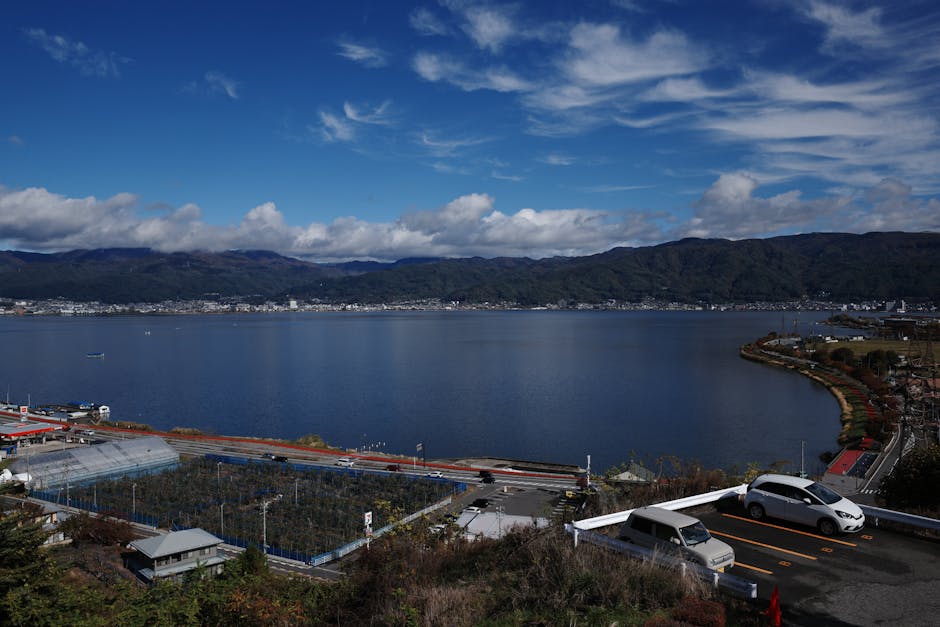
- Pick up your rental car at Samurai Car Japan in Shibuya, Tokyo — your journey starts here
- Shibuya → Hikone / Nagahama — approx. 450 km via the Tomei and Meishin expressways, roughly 4.5–5 hours driving (tolls approximately ¥8,000–¥10,000 one way with ETC)
- Nagahama → Takashima (Metasequoia Namiki) — approx. 45 km along Route 8 and Route 161, about 50–60 minutes
- Takashima → Shirahige Shrine — approx. 10 km south on Route 161, about 15 minutes
- Shirahige Shrine → Otsu — approx. 35 km south on Route 161, about 40–50 minutes
Total Route Distance: ~500–540 km | Total Drive Time (pure driving): ~5.5–6.5 hours | Recommended Trip Length: 2–3 days
🗺️ Open This Route in Google Maps
Opens in Google Maps app on mobile
Leg 1: Shibuya to Nagahama — The Highway Run West
Once you’ve grabbed your keys from Samurai Car Japan and loaded up the GPS, the first mission is simple: get out of Tokyo and onto the open expressway. From Shibuya, head north briefly toward the Shuto Expressway (首都高速) on-ramp — your GPS will guide you cleanly onto it. From there, merge onto the Tomei Expressway (E1) heading west toward Nagoya. The first stretch through the Tokyo suburbs isn’t particularly exciting, but once you clear Yokohama and start pushing into Kanagawa Prefecture, the road opens up and Mount Fuji makes a dramatic appearance on clear days — especially visible from the stretch near Ashigara.
Past Nagoya, pick up the Meishin Expressway (E1) and continue west. Around the Maibara/Hikone junction, you’ll exit onto local roads heading into Nagahama. Total highway distance from Shibuya is around 450 km. The tolls will run you approximately ¥8,000–¥10,000 each way if you’re using an ETC card (which comes included when you rent from Samurai Car Japan — a genuine lifesaver because cash toll lanes are slower and sometimes confusing for first-time drivers on Japanese highways). Without an ETC card, expect to pay around ¥12,000–¥15,000.
Stop 1: Nagahama — Samurai Castle Town on the Lake’s Northeast Shore
Nagahama sits at the northeastern tip of Lake Biwa, and it’s the kind of town that stops you in your tracks. It has that perfect old-Japan atmosphere — narrow shopping streets, wooden shopfronts, a compact castle on the lakefront, and almost no tourist crowds compared to the big-name destinations. It feels like the Japan you came to find.
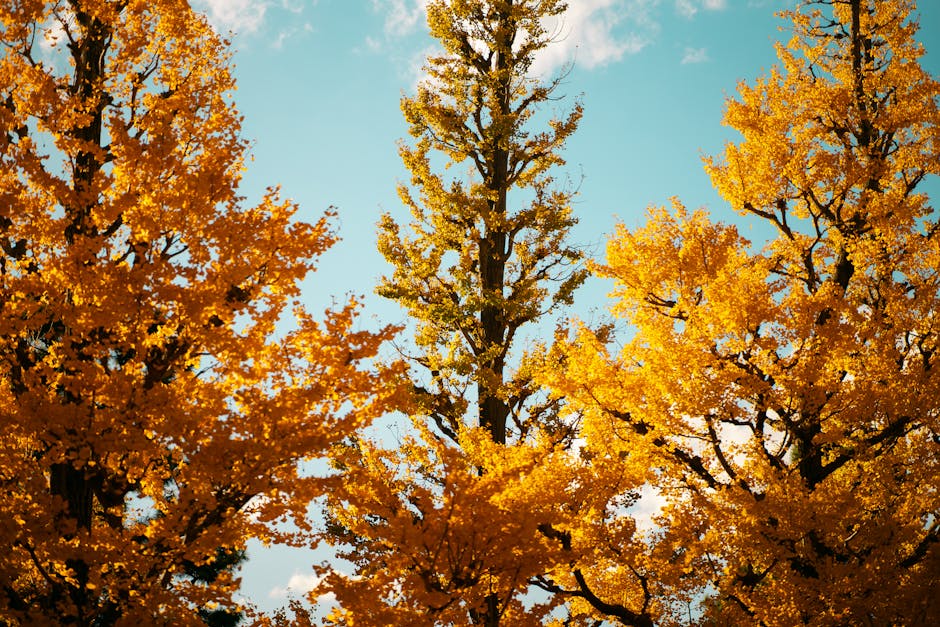
What to See and Do
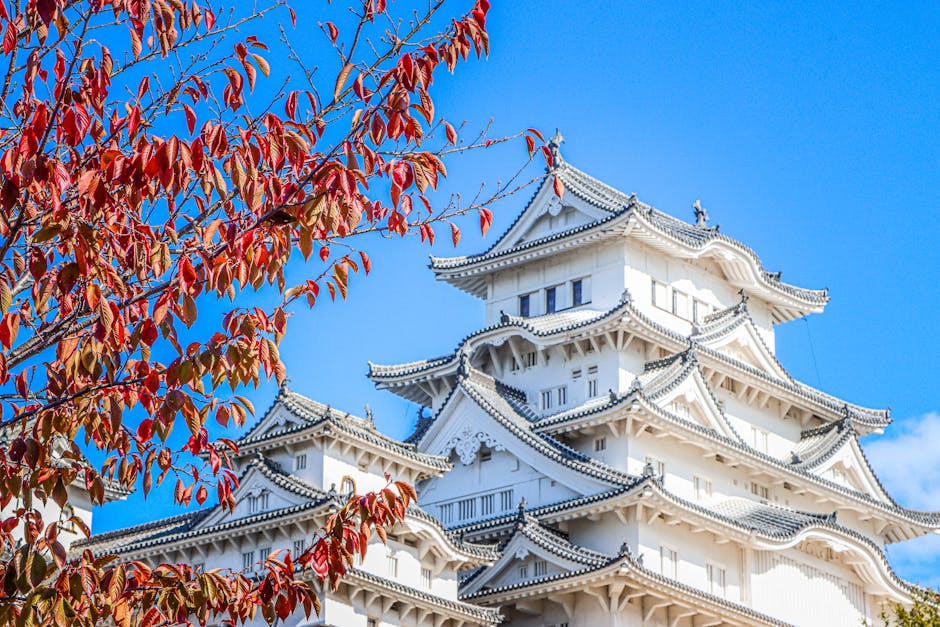
- Hikone Castle — Just 15 minutes south of Nagahama on Route 8, Hikone Castle is one of only five original Edo-period castles remaining in Japan and holds National Treasure status. The keep is completely original — no reconstruction — which makes it genuinely extraordinary. Climb to the top for sweeping views over Lake Biwa. Allow at least 1.5–2 hours. Admission is ¥800 for adults.
- Nagahama Kurokabe Square — The historic glasswork district in the heart of Nagahama. The Meiji-era former bank building has been converted into a glasswork gallery and shop, and the surrounding streets are lined with artisan boutiques, cafés, and traditional sweets shops. Great for a slow wander.
- Nagahama Castle Historical Museum — Tiny but charming castle right at the water’s edge. The lake views from the upper floors are excellent and well worth the ¥410 admission.
- Omi-Hachiman Canals — Technically a separate town (about 40 minutes south on Route 8 toward Omi-Hachiman), but worth the detour if you have time. This beautifully preserved merchant town has waterways lined with white-walled kura warehouses. In spring, the cherry blossoms fall into the canals and you can take a low wooden boat ride right through the blossoms. Utterly magical.
How Long to Spend
Budget half a day to a full day in the Nagahama/Hikone area. If you’re doing the Hikone Castle and Nagahama exploration together, a full day is ideal. This is a great place to spend your first night — there are several ryokan options and the town is very walkable in the evening.
Parking in Nagahama
Nagahama is genuinely easy to park in — a refreshing change from most Japanese cities. There’s a large municipal car park near Nagahama Station (approximately ¥100–¥200 per hour) and several free or low-cost lots near the Kurokabe Square area. For Hikone Castle, use the Hikone Castle Sannomaru Car Park, which costs around ¥500–¥700 for a few hours and puts you right at the castle gate.
Stop 2: Takashima — Driving Through the Metasequoia Namiki
From Nagahama, head south on Route 8 and then pick up Route 161 (also known as the Biwa-ko West Shore Road or Lake Biwa Western Coast Road) heading southwest. This road is the main artery hugging the western shore of Lake Biwa, and even the drive to Takashima is scenic — glimpses of the lake flashing between the trees, small fishing villages on your right, low mountains rising to your left. It takes about 50–60 minutes.
You’ll know you’re approaching the Metasequoia Namiki because the road suddenly transforms. Two and a half kilometres of perfectly aligned metasequoia trees — around 500 of them — form a cathedral-like tunnel over a gentle country road called the Makino Metasequoia Namiki, running between Makino Highland Ski Area and Route 303. This is not a famous shrine or a castle. It’s just a road. And it is, without question, one of the most beautiful drives in Japan.
What Makes This Drive Special
The metasequoia (also known as dawn redwood) is a deciduous conifer, which means it changes dramatically with the seasons. In autumn (late November), the trees turn a rich copper-orange and the fallen leaves carpet the road in gold. In summer, the canopy closes overhead and creates a cool green tunnel. In winter, bare branches frame a stark, minimalist corridor that has its own haunting beauty. Every season is worth driving.
The road itself is narrow — just about one lane wide in places — so slow down, pull over at one of the small turnouts, and just stand in it for a moment. Let a few cars pass. Take in the scale of the trees. They were planted in 1981 by the local agricultural cooperative and have grown to towering heights, creating a sense of timelessness entirely out of proportion with their age.
How Long to Spend
You can drive the full 2.5 km in five minutes, but you’ll want 30–60 minutes to walk sections of it, take photos, and simply absorb the atmosphere. There’s a small café and a few roadside stalls near the Makino Highland end — perfect for a coffee break.
Parking at Metasequoia Namiki
Park at the Makino Highland Ski Area car park at the northern end of the avenue. It’s free during non-ski season and has plenty of space. From there, you can walk the full avenue on foot for the most immersive experience, then drive back through it on your way to Shirahige Shrine.
Driving this route? We’ve got you covered.
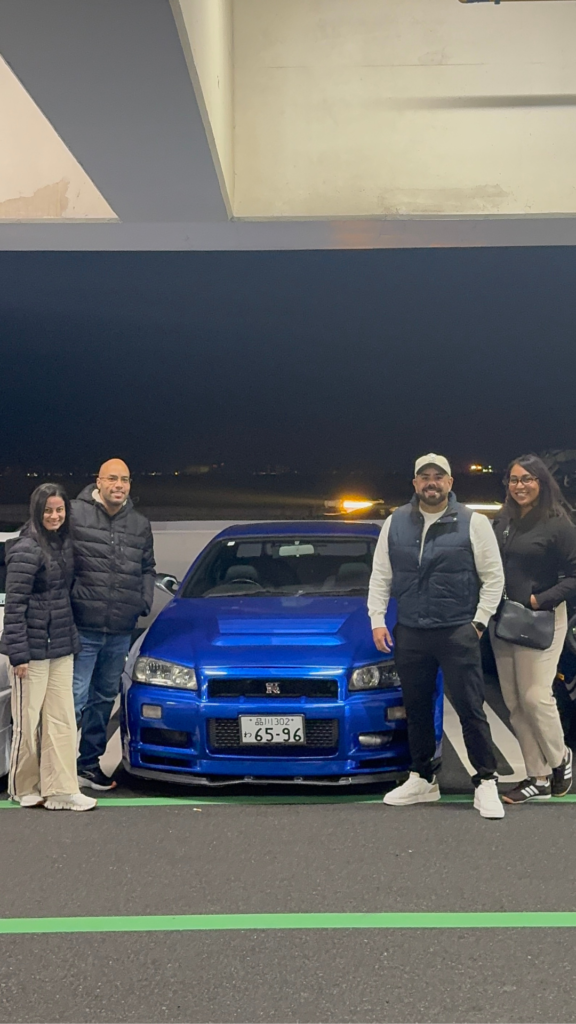
Hundreds of international visitors have driven this route with a car from Samurai Car Japan. Our team will brief you on road conditions, tolls, and the best stops before you set off.
Stop 3: Shirahige Shrine — The Floating Torii of Lake Biwa
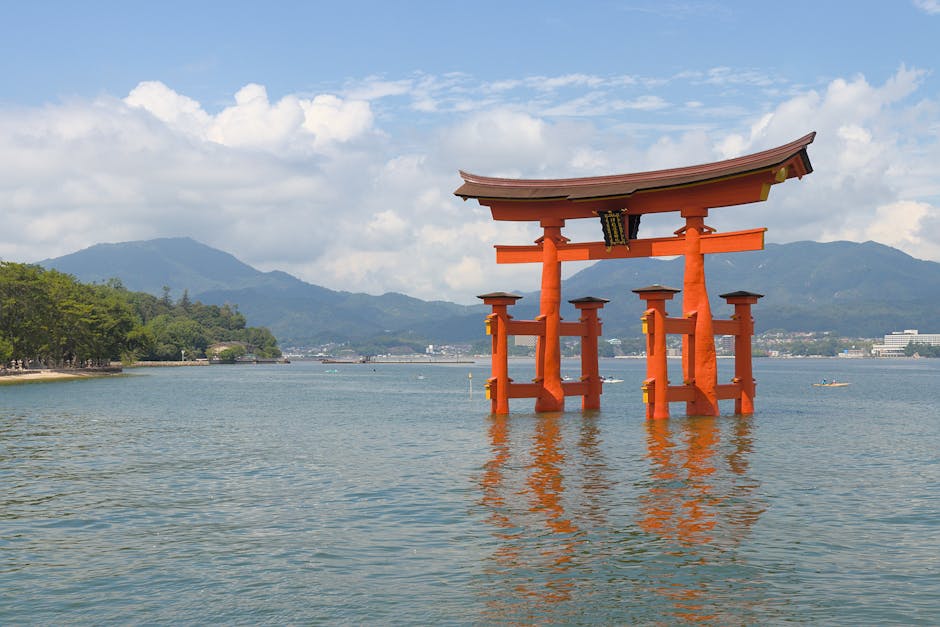
From Takashima / Makino, head south on Route 161 for about 10 kilometres. The road runs right along the western shore of Lake Biwa at this point — the lake stretching wide to your left, mountains rising to your right. It’s one of those drives where you keep wanting to pull over just to stare at the water. After about 15 minutes you’ll spot it — a massive red torii gate standing directly in the lake, with Shirahige Shrine nestled in the cliffs and trees just across the road.
Shirahige Shrine (白髭神社) is often called Shiga’s answer to Miyajima, and the comparison is well earned. The large torii rises from the shallows of Lake Biwa, and at sunrise or in the mist, it has an almost supernatural quality — this ancient red gateway standing in the water with the vast lake stretching behind it and forested hills framing it on both sides. Unlike Miyajima’s famous torii in Hiroshima, this one rarely has queues. On most mornings, you’ll share it with a handful of locals and a few photographers.
What to See and Do
- The Torii Gate from the Waterfront — The best view is from the small strip of shore directly in front of the shrine, accessible via the pedestrian crosswalk across Route 161. The road itself runs between the shrine building and the lake, so you cross it on foot to reach the waterfront. Do this carefully — Route 161 carries fast-moving traffic and there’s no overpass.
- The Shrine Itself — The main shrine building is on the inland side of Route 161, perched on a rocky hillside covered in ancient trees. It’s dedicated to Sarutahiko-no-Mikoto, a god of guidance and roads — fitting for a driving route, we’d say. There are stone steps winding up through the grounds, lanterns lining the path, and a wonderfully quiet atmosphere.
- Sunrise Photography — If you’re serious about photography, stay the night in Takashima or nearby and come back before dawn. The torii gate at sunrise, with the mist rising from the lake and the sky going pink behind the mountains, is genuinely one of the most beautiful sights in Japan. Bring a tripod.
How Long to Spend
Budget 45 minutes to 1.5 hours depending on how deeply you want to explore the shrine grounds and how many photos you take. If you’re doing a sunrise visit, plan to spend 1.5–2 hours.
Parking at Shirahige Shrine
There’s a small free car park directly at the shrine on the inland side of Route 161. It fits around 10–15 cars, so arrive early on weekends. There’s also additional roadside parking a short walk north of the shrine. The lot fills quickly on clear autumn mornings, so weekday visits are strongly recommended if your schedule allows.
Stop 4: Otsu — Where Lake Biwa Meets the Ancient Capital
From Shirahige Shrine, continue south on Route 161 for around 35 kilometres — about 40–50 minutes of beautiful lakeside driving. This southern stretch of the Lake Biwa western shore is one of the most consistently scenic drives on the entire route. The lake gets wider and wider as you head south, and on clear days the far eastern shore is barely visible, making it feel more like an inland sea than a lake.
Otsu is the capital of Shiga Prefecture and sits at the southernmost tip of Lake Biwa. It’s a city, so the approach from the north on Route 161 transitions from scenic rural driving to suburban streets fairly quickly — but the lakefront area is lovely and the city makes an excellent base for exploring the broader region.
What to See and Do in Otsu
- Lake Biwa Otsu Prince Hotel Observatory — If you want one sweeping final view of the lake that summarises the entire drive, take the lift to the upper floors of this lakefront hotel. The panorama is enormous.
- Miidera Temple (Onjoji) — One of Japan’s four great Buddhist temples, founded in the 7th century. Spectacular in autumn when the maple trees on the hillside turn scarlet. The main hall is a National Treasure. Allow 1–1.5 hours.
- Zeze Castle Ruins — Just a short walk from the lakefront, these low stone foundations and a reconstructed turret give a sense of Otsu’s strategic importance during the Edo period. Free to visit.
- Lake Biwa Canal Museum — Free entry, and surprisingly fascinating. The Biwako Canal, built in the Meiji era, connected the lake to Kyoto — an incredible feat of 19th-century engineering. The museum explains it all with great historical photos.
Parking in Otsu
Otsu has ample paid parking throughout the city centre. The Otsu Port / Biwako Plaza area has several multi-storey car parks at around ¥150–¥300 per hour. For Miidera Temple, there’s a dedicated car park at the base of the temple hill (around ¥500–¥600 flat fee).
Essential Driving Tips for This Route
Road Conditions and Navigation
The highways (Tomei and Meishin Expressways) are in excellent condition and are straightforward to drive. They’re well-signposted in both Japanese and English, and the lanes are wide. Route 161 along the western shore of Lake Biwa is a national highway — well-paved and well-maintained — but it narrows in some rural sections and passes through small villages where speed limits drop to 40–50 km/h. Always follow the posted speed limits; traffic enforcement in rural Shiga is active.
Toll Information
- Tokyo → Nagahama (one way, ETC): approximately ¥8,000–¥10,000
- Nagahama → Otsu (local roads, Route 161): No significant tolls on this stretch
- ETC vs. Cash: Always use ETC if available — cheaper rates, faster lanes, and no fumbling for change
Fuel Stations
Fill up before leaving the Nagahama/Hikone area if you’re heading onto the quieter sections of Route 161. There are ENEOS and idemitsu stations in Nagahama town and along the main Route 8 corridor. Between Takashima and Otsu on Route 161, there are a handful of stations but they can be spaced out in rural sections.
International Driving Permit (IDP)
Foreign visitors from most countries need an International Driving Permit (IDP) to drive in Japan, along with their home country driver’s licence. Japan accepts IDPs issued under the 1949 Geneva Convention only — not the 1968 Vienna Convention. This is important: many European countries’ IDPs are Vienna Convention format and are technically not valid in Japan. Check with your home country’s automobile association before travelling. When you pick up from Samurai Car Japan, the team will verify your documentation and advise accordingly.
Best Time of Day to Drive
On the expressway, early morning before 8:00 AM is best. On Route 161 along Lake Biwa, mid-morning on weekdays is ideal — light traffic, good light for photography, and all the stops are open. Avoid driving Route 161 southbound from Takashima toward Otsu on late Sunday afternoons, as local return traffic can build up.
Where to Eat Along the Route
In Nagahama
- Kura Soba Teizan — A soba restaurant housed in a converted Meiji-era warehouse near Kurokabe Square. The handmade soba with local Shiga ingredients is outstanding. Lunch only; arrive by noon to avoid a wait.
- Hamagoya — Funazushi (fermented carp sushi) is Shiga’s most famous local food and an acquired taste. This restaurant near Nagahama Station serves it properly alongside more accessible local dishes. Worth trying at least a bite for the cultural experience.
- Torokko Coffee — A charming café in a converted old house near Kurokabe. Excellent coffee, homemade cake, and the kind of quiet atmosphere that makes you want to sit for an hour.
In Takashima / Makino
- Makino Highland Restaurant — At the car park end of the Metasequoia Namiki. Simple, unpretentious food — curry rice, udon, soft-serve ice cream — but a great spot to refuel before continuing south.
- Roadside Station (Michi-no-Eki) Maki no Sato — A few minutes from the Namiki. Excellent local produce, regional snacks, and prepared foods using Takashima ingredients. A perfect place to stock up on snacks for the road.
Near Shirahige Shrine
- Katata no Ukimido Café — Small lakeside café a little south of the shrine. Simple menu, beautiful lake view, great for a post-shrine coffee stop.
In Otsu
- Hinode Udon — Legendary local udon shop near Otsu Station. Thick, chewy noodles in a clear dashi broth. Long-running institution and extremely popular with locals.
- Biwako Hotel Restaurant — Upmarket option with lake views and a strong menu of Shiga local cuisine, including Omi beef (the region’s wagyu equivalent).
Best Season for This Drive
Autumn (Mid-October to Late November) ⭐ Highly Recommended
This is the peak season for this route, and with good reason. The Metasequoia Namiki hits peak colour around the third week of November, turning the entire avenue into a tunnel of copper and gold. Hikone Castle is surrounded by autumn maples. Miidera Temple in Otsu blazes scarlet. The light over Lake Biwa is clear and golden. This is the route at its absolute best, but also its busiest — book accommodation well in advance and aim for weekdays.
Spring (Late March to Early May)
Cherry blossoms frame Hikone Castle in a way that’s practically a postcard. The Omi-Hachiman canals with cherry blossoms drifting into the water are extraordinary. The Metasequoia Namiki is just beginning to bud with fresh pale green needles — understated but lovely. Temperatures are comfortable for driving with the windows down.
Summer (June to August)
The Metasequoia Namiki forms a dense green canopy that’s genuinely cool to drive through on hot days. Lake Biwa is at its most vivid blue. Humidity is high so air-con is essential, but the scenery is lush and vibrant. Some mountain roads near Takashima may have restrictions due to summer storms — check conditions before heading off-route.
Winter (December to February)
The most dramatic and least-visited season. Bare metasequoia branches reach across a grey sky. Hikone Castle sometimes dusted with snow — extraordinarily beautiful. Route 161 can be icy north of Takashima in deep winter; winter tyres are essential and some mountain sections may close temporarily. Check road conditions via the JARTIC website before setting out. The reward for winter driving is a near-total absence of crowds.
Frequently Asked Questions
Where can I rent a car for this route?
The most convenient option for international visitors starting from Tokyo is Samurai Car Japan in Shibuya. They specialise in serving foreign drivers — with International Driving Permit support, ETC cards included, English GPS navigation, and a fleet that ranges from practical touring cars to legendary JDM sports cars if you want to make this drive even more memorable. You pick up the car in Shibuya and drive straight to the expressway. Simple, seamless, and no surprises.
Do I need an International Driving Permit to drive in Japan?
Yes, in almost all cases. Japan requires foreign visitors to hold a valid International Driving Permit (IDP) issued under the 1949 Geneva Convention, along with their home country driver’s licence. Travellers from Switzerland, Germany, France, Belgium, Monaco, Slovenia, and Taiwan are among those who may use a translated licence instead — check the Japan Automobile Federation (JAF) website for the full, up-to-date list for your country before travelling.
How long should I plan for this whole route?
At an absolute minimum, you need two full days — one day for the highway run and Nagahama/Hikone, one day for the Metasequoia Namiki, Shirahige Shrine, and Otsu. But three days is much more comfortable and lets you actually savour the stops rather than rushing between them. If you’re combining this with Kyoto or Nara (both easily accessible from Otsu), a 4–5 day trip works beautifully.
Is this route suitable for first-time drivers in Japan?
Yes — with some preparation. The expressways are straightforward, well-signposted, and have service areas every 50–80 km. Route 161 along Lake Biwa is a national highway with clear lane markings. The main adjustment for visitors from right-hand driving countries is adapting to driving on the left, which takes a day or so to feel natural. Go slowly through intersections, use your GPS, and don’t rush. Japan’s roads are exceptionally well-maintained and drivers are generally calm and courteous.
Can I do this route one-way and return by train?
Absolutely, and this is actually a great option. Otsu is on the JR Biwako Line, and from Otsu Station you can reach Kyoto Station in just 10 minutes and Osaka in about 30–40 minutes. So you could drive the full route to Otsu, drop off the rental car there (arrange a one-way rental when booking), and then continue your trip by rail. Check with your rental provider about one-way fees — some allow it, though there may be a drop-off surcharge.
Why not elevate your journey with a legendary JDM experience?
Our Services:
- Self-Drive Rentals
- Guided Tours
- Drift Experiences
Please visit the dedicated page for more details.