Shinkansen Guide for Tourists: How to Ride Japan Bullet Train
Shinkansen Guide for Tourists: How to Ride Japan's Bullet Train
The Shinkansen, Japan's bullet train, is more than just a mode of transportation; it's a symbol of efficiency, punctuality, and technological prowess. For tourists, it's often the most convenient and comfortable way to traverse the country, connecting major cities with remarkable speed and comfort. This comprehensive guide will equip you with everything you need to know to navigate the Shinkansen like a pro, from booking your tickets to understanding onboard etiquette and maximizing your travel experience.
Why Choose the Shinkansen?
Before diving into the nitty-gritty, let's understand why the Shinkansen is the preferred choice for many travelers in Japan:
Speed: Traveling at speeds up to 320 km/h (200 mph), the Shinkansen dramatically reduces travel time compared to buses or driving.
Comfort: Spacious seating, reclining chairs, ample legroom, and onboard amenities make for a relaxing journey.
Punctuality: Shinkansen trains are renowned for their on-time performance. Delays are rare, and even when they occur, they're usually minimal.
Convenience: Frequent departures connect major cities, allowing for flexible travel planning.
Scenery: Enjoy stunning views of the Japanese countryside as you whiz past mountains, rice paddies, and coastal landscapes.
Types of Shinkansen Lines
Photo by Huu Huynh / Pexels
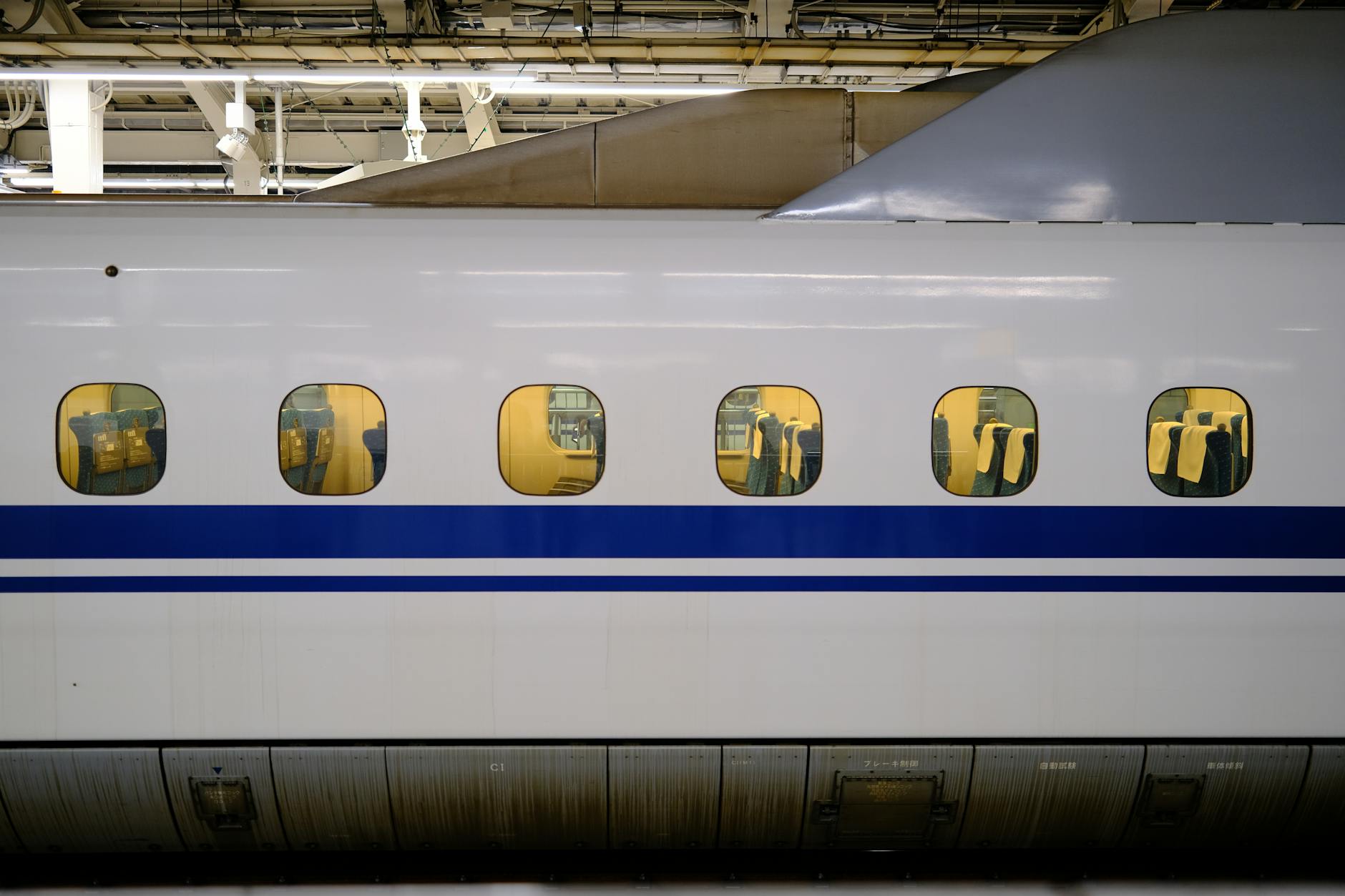
Several Shinkansen lines crisscross Japan, each serving different regions. Here's a brief overview of the major lines you're likely to use as a tourist:
Tokaido Shinkansen (Tokyo - Shin-Osaka): The oldest and busiest line, connecting Tokyo with major cities like Nagoya, Kyoto, and Osaka. Nozomi, Hikari, and Kodama are the train services on this line, with Nozomi being the fastest (and not covered by the Japan Rail Pass).
Sanyo Shinkansen (Shin-Osaka - Hakata): Extends the Tokaido line westward, connecting Osaka to cities like Hiroshima and Fukuoka. Nozomi (called Mizuho on this section), Sakura, and Kodama are the train services. Mizuho is not covered by the Japan Rail Pass.
Tohoku Shinkansen (Tokyo - Shin-Aomori): Travels north from Tokyo to the Tohoku region, connecting to cities like Sendai and Morioka. Hayabusa, Hayate, and Yamabiko are common services.
Hokuriku Shinkansen (Tokyo - Kanazawa): Connects Tokyo to the Hokuriku region, known for its traditional crafts and scenic landscapes. Kagayaki, Hakutaka, and Asama are the train services.
Kyushu Shinkansen (Hakata - Kagoshima-Chuo): Runs through the island of Kyushu, connecting Fukuoka to Kagoshima. Sakura and Tsubame are the main services.
Booking Your Shinkansen Tickets
There are several ways to book your Shinkansen tickets, each with its own advantages:
* Ticket Offices (Midori-no-madoguchi): These staffed ticket offices are located in major train stations and are ideal if you need assistance or have specific requests. Staff often speak some English, especially in larger stations.
* Ticket Vending Machines: Modern, multilingual ticket vending machines are available at most stations and allow you to purchase tickets using cash or credit cards. Follow the on-screen instructions carefully.
3. Japan Rail Pass
Photo by Justin Brinkhoff / Pexels
If you plan on traveling extensively by Shinkansen and other JR trains, the Japan Rail Pass can be a cost-effective option.
Eligibility: The Japan Rail Pass is available to tourists visiting Japan for sightseeing purposes with a "Temporary Visitor" visa.
Validity: Passes are available for 7, 14, or 21 consecutive days.
Coverage: It covers most JR trains, including Shinkansen (excluding Nozomi and Mizuho trains on the Tokaido/Sanyo Shinkansen lines, and some private railway sections).
Purchase: You must purchase an exchange order *before* arriving in Japan. You can buy it online from authorized vendors. Upon arrival, exchange the order for the actual Japan Rail Pass at a JR office.
Reservations: While not always required, especially for unreserved seating, it's highly recommended to make seat reservations, particularly during peak seasons. You can do this at JR ticket offices.
Important Considerations:
Peak Seasons: Golden Week (late April/early May), Obon Festival (mid-August), and New Year's holidays are extremely busy. Book your tickets well in advance during these periods.
Reserved vs. Unreserved Seats: Reserved seats guarantee you a specific seat. Unreserved seats are available on a first-come, first-served basis. During peak seasons, unreserved seating can be very crowded.
Seat Types:
Ordinary Car: Standard seating.
Green Car: Equivalent to first class, with wider seats, more legroom, and other amenities. Requires a Green Car Japan Rail Pass or a Green Car ticket.
Gran Class: Available on some Tohoku and Hokuriku Shinkansen lines, offering the most luxurious experience with premium seating and services.
Navigating the Train Station
Japanese train stations can seem overwhelming at first, but with a little preparation, you'll navigate them with ease:
Arrival Time: Arrive at the station at least 30 minutes before your train's departure time, especially if you need to exchange your Japan Rail Pass or make seat reservations.
Information Boards: Look for electronic information boards displaying train schedules, platform numbers, and departure times in both Japanese and English.
Gate Numbers: Find the correct Shinkansen gate (often marked with bullet train symbols).
Platform Numbers: Once through the gate, check the information boards again to confirm your platform number.
Car Numbers: Locate your car number on the platform. Car numbers are clearly marked on the sides of the train.
Queueing: Passengers typically queue in an orderly fashion at the designated boarding points for each car.
Onboard Etiquette and Amenities
Photo by Sharon Green / Pexels
To ensure a pleasant journey for yourself and other passengers, be mindful of Japanese customs and etiquette:
Quiet Conversation: Keep your voice down when talking on the phone or with companions.
Phone Calls: It's generally considered impolite to talk on the phone for extended periods. Use the vestibules between cars for longer conversations.
Luggage: Store large luggage in the overhead racks or in the designated luggage areas at the end of each car. Be considerate of other passengers when handling your luggage.
Reclining Seats: Be mindful of the person behind you before reclining your seat.
Eating and Drinking: Eating and drinking are permitted on the Shinkansen. Many passengers purchase bento boxes (lunch boxes) and drinks at the station to enjoy during the journey.
Trash: Dispose of your trash in the designated bins located throughout the train.
Smoking: Smoking is generally prohibited on the Shinkansen, except in designated smoking rooms on some trains.
Onboard Amenities:
Restrooms: Clean and well-maintained restrooms are available in each car.
Power Outlets: Most Shinkansen trains have power outlets available at each seat, allowing you to charge your electronic devices.
Wi-Fi: Many Shinkansen lines offer free Wi-Fi, although the connection can sometimes be spotty.
Vending Machines: Vending machines selling drinks and snacks are usually located in the vestibules.
Onboard Sales: On some trains, attendants offer food, drinks, and souvenirs for sale.
Practical Tips for a Smooth Shinkansen Experience
Learn basic Japanese phrases: Knowing a few basic phrases like "sumimasen" (excuse me) and "arigato" (thank you) will be helpful.
Download a translation app: A translation app can be invaluable for navigating train stations and communicating with staff.
Pack light: While there's space for luggage, it's always easier to travel with less. Consider using luggage forwarding services to send your bags directly to your destination.
Bring snacks and drinks: While you can buy food and drinks on the train, it's often cheaper and more convenient to bring your own.
Wear comfortable shoes: You'll likely be doing a lot of walking in train stations.
Stay hydrated: Bring a water bottle and refill it at water fountains in the stations.
Download entertainment: Download movies, podcasts, or e-books to keep yourself entertained during the journey.
Be aware of announcements: Announcements are usually made in Japanese and English. Pay attention to any important information regarding delays or changes.
Relax and enjoy the ride: The Shinkansen is a comfortable and efficient way to travel. Sit back, relax, and enjoy the scenery!
Beyond Transportation: Embracing the Shinkansen Culture
Photo by Hugo Sykes / Pexels
Riding the Shinkansen isn't just about getting from point A to point B; it's an opportunity to experience a unique aspect of Japanese culture. The emphasis on punctuality, cleanliness, and efficiency reflects the values of Japanese society. Observe how passengers conduct themselves, and you'll gain a deeper appreciation for the Japanese way of life. The act of purchasing an *ekiben* (a specially prepared bento box sold at train stations) and enjoying it while watching the scenery is a quintessential Shinkansen experience.
By following this guide, you'll be well-prepared to navigate the Shinkansen with confidence and ease. So, book your tickets, pack your bags, and get ready to experience the speed and comfort of Japan's incredible bullet train! Don't forget to check out GetYourGuide for exciting tours and experiences that incorporate Shinkansen travel, making your trip to Japan even more memorable.