Kyoto 2-Day Itinerary: The Perfect Schedule for Temples, Shrines & Culture (2026)
Two days in Kyoto is tight, but it is enough to experience the city that defined Japanese culture for over a thousand years. As the imperial capital from 794 to 1868, Kyoto accumulated more than 2,000 temples and shrines, 17 UNESCO World Heritage Sites, and a living tradition of geisha, tea ceremonies, and craft that no other city in Japan can match. The challenge is not finding things to see — it is deciding what to cut.
This Kyoto 2-day itinerary solves that problem by splitting the city into two logical halves: Eastern Kyoto on Day 1 and Western/Northern Kyoto on Day 2. Each day clusters the major sights geographically so you spend your time inside temples and on atmospheric streets rather than stuck on buses crossing the city. Whether you are visiting Kyoto as a standalone trip, a day trip extension from Osaka, or part of a longer Japan itinerary starting in Tokyo, this guide gives you a realistic, hour-by-hour plan that actually works.
Quick Overview: Your 2 Days in Kyoto at a Glance
| Day | Areas | Theme | Highlights |
|---|---|---|---|
| Day 1 | Fushimi Inari, Kiyomizu-dera, Higashiyama, Gion, Pontocho | Eastern Kyoto — Shrines, Temples & Geisha Culture | Thousands of torii gates, wooden temple terrace, traditional streets, geisha district |
| Day 2 | Arashiyama, Kinkaku-ji, Ryoan-ji, Nishijin | Western & Northern Kyoto — Bamboo, Gold & Zen | Bamboo grove, monkey park, Golden Pavilion, rock garden |
Day 1: Eastern Kyoto (Higashiyama) — Shrines, Temples & Geisha Culture
Eastern Kyoto, centered on the Higashiyama district, is where the city’s oldest and most iconic sights sit against the forested hills on the city’s eastern edge. This is postcard Kyoto — vermilion torii tunnels, wooden temple stages overlooking the city, cobblestone lanes lined with machiya townhouses, and the quiet elegance of the geisha quarter. Start early to beat the crowds at Fushimi Inari, then work your way north through the day.
Morning: Fushimi Inari Shrine (7:00 AM – 9:30 AM)
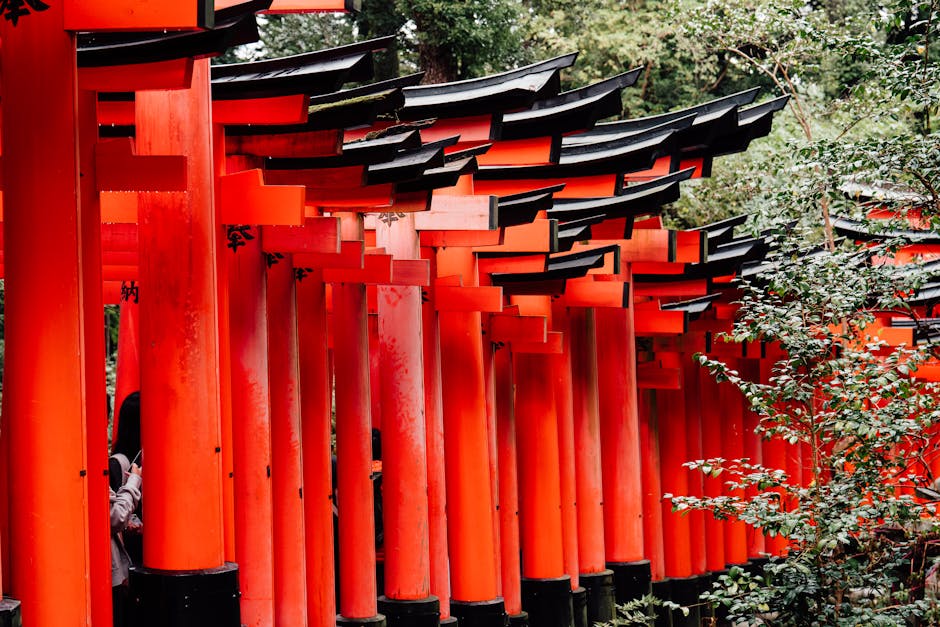
Start your Kyoto trip at Fushimi Inari Taisha, the most visited shrine in Japan and one of the most photographed places on earth. The shrine is dedicated to Inari, the Shinto god of rice and prosperity, and its main attraction is a seemingly endless tunnel of over 10,000 vermillion torii gates winding up the 233-meter Mount Inari behind the shrine.
The full loop to the summit and back takes about 2 to 3 hours, but you do not need to complete the entire trail to get stunning photos and a meaningful experience. Most visitors only walk the first 20 to 30 minutes, through the densely packed torii tunnels that produce the famous orange corridor effect. If you continue past the halfway point, you will find far fewer people and several small sub-shrines with views over the city.
The shrine is open 24 hours and there is no admission fee. Arriving by 7:00 AM — or even earlier — is the single best decision you will make in Kyoto. By 10:00 AM on any day of the year, the torii tunnels are shoulder-to-shoulder with tour groups. At 7:00 AM you will have long stretches entirely to yourself.
On your way back down, stop at one of the small stalls near the lower gates for kitsune udon (fox udon, named after the fox messengers of Inari) or inari sushi — sushi rice stuffed inside sweet fried tofu pockets. Both are traditional foods associated with this shrine and make an excellent light breakfast.
Estimated cost: Free admission / 150 yen train fare / 400-700 yen breakfast
Midday: Kiyomizu-dera Temple & Higashiyama Streets (10:00 AM – 1:00 PM)
From Fushimi Inari, take the JR Nara Line one stop back to Tofukuji Station, then transfer to the Keihan Line heading north. Get off at Kiyomizu-Gojo Station and walk uphill (about 15 minutes) to Kiyomizu-dera, one of the most celebrated temples in all of Japan.
Founded in 778 — older than Kyoto itself — Kiyomizu-dera sits on a hillside in eastern Kyoto and is most famous for its enormous wooden stage that juts out 13 meters over the valley below, supported by 139 pillars and built entirely without nails. The panoramic view from this stage, looking out over cherry trees or autumn maples (depending on the season) toward the Kyoto skyline, is one of the defining images of Japan.
The temple complex includes several other notable features: the Otowa Waterfall at the base of the main hall, where visitors use long-handled cups to drink from three streams believed to grant longevity, academic success, and romantic fortune (pick just one — drinking from all three is considered greedy); and the Jishu Shrine within the temple grounds, dedicated to the deity of love and featuring two “love stones” set 18 meters apart. If you can walk between them with your eyes closed, your love wish will be granted.
Admission is 400 yen. Plan to spend about 45 minutes to an hour at the temple itself.
After the temple, walk downhill through two of the most atmospheric streets in Kyoto. Sannenzaka (Three-Year Slope) and Ninenzaka (Two-Year Slope) are narrow, stone-paved lanes lined with traditional wooden buildings now housing tea shops, pottery studios, sweet shops, and souvenir stores. The buildings are preserved by strict regulations, so the streetscape looks much as it did in the Edo period.
Stop at a traditional matcha cafe along Ninenzaka for whisked matcha and wagashi (Japanese confections). This area is perfect for browsing without a fixed agenda — duck into a ceramic shop, try yatsuhashi (Kyoto’s signature cinnamon-and-mochi sweet), and photograph the Yasaka Pagoda peeking above the rooftops from a dozen different angles.
For lunch, head to the base of the Higashiyama district. Omen Kodai-ji serves excellent handmade udon in a beautiful traditional building, or try Gion Kappa for affordable obanzai (Kyoto-style home cooking served as small dishes). A proper lunch here costs between 1,000 and 2,000 yen.
Estimated cost: 400 yen (Kiyomizu-dera) / 500-1,000 yen (matcha and snacks) / 1,000-2,000 yen (lunch)
Afternoon: Gion District (1:30 PM – 4:30 PM)
Continue north on foot into Gion, Kyoto’s most famous geisha district. Gion is divided into two areas: Gion Kobu (the larger, more formal district) and Gion Higashi (smaller and quieter). Both are characterized by dark wooden machiya (traditional townhouses) with bamboo screens and paper lanterns — the kind of streetscape that makes you feel like you have walked into a woodblock print.
The main attraction in Gion is Hanamikoji-dori, the street that forms the spine of the district. Walk its entire length from Shijo-dori south to Kennin-ji Temple. Both sides of the street are lined with exclusive ochaya (tea houses) and high-end kaiseki restaurants, many of which have been operating for centuries. You may spot maiko (apprentice geisha) or geiko (the Kyoto term for geisha) heading to evening appointments, especially between 5:00 PM and 6:00 PM.
While in the area, visit Kennin-ji Temple at the southern end of Hanamikoji-dori. Founded in 1202, it is the oldest Zen temple in Kyoto and is far less crowded than Kiyomizu-dera. The highlight is the magnificent Twin Dragons ceiling painting in the Dharma Hall — a massive ink painting spanning the entire ceiling, completed in 2002 to celebrate the temple’s 800th anniversary. Admission is 600 yen.
For a tea experience, book a session at Camellia Garden near Kennin-ji, where you can participate in a simplified tea ceremony with English explanation (about 2,000 yen for 30 minutes). This is one of the most accessible ways to experience the tea tradition without committing to a formal multi-hour ceremony.
Also consider walking to Yasaka Shrine at the northern end of Gion, right at the intersection with Shijo-dori. This vermilion shrine is free to enter and is particularly photogenic with its large stone torii gate and traditional lanterns. The attached Maruyama Park is Kyoto’s most popular cherry blossom spot in spring and a pleasant place to rest any time of year.
Estimated cost: 600 yen (Kennin-ji) / 2,000 yen (tea ceremony, optional) / free (Yasaka Shrine, Maruyama Park)
Evening: Pontocho Alley & Nishiki Market (5:00 PM – 8:30 PM)
Finish Day 1 with dinner in one of Kyoto’s most atmospheric dining streets, then explore the city’s famous food market.
Pontocho is a narrow alley running parallel to the Kamo River between Shijo-dori and Sanjo-dori. Barely wide enough for two people to pass, it is lined on both sides with restaurants, izakayas, and bars — many with kawadoko (riverside terrace seating) that extends out over the river from May through September. Eating on a wooden platform above the Kamo River as the sun sets is one of the quintessential Kyoto experiences.
For dinner, look for restaurants displaying their menus outside. Pontocho Robin is a reliable mid-range option for Kyoto-style cuisine. If you want something more casual, several yakitori and izakaya spots line the alley with prices starting around 2,000 yen for a full meal with a drink. For a splurge, Pontocho has kaiseki restaurants where multi-course dinners start around 8,000 yen.
After dinner, walk south to Nishiki Market, a 400-meter covered shopping street known as “Kyoto’s Kitchen.” While primarily a morning market, many stalls stay open until 6:00 PM or 7:00 PM. Even in the evening, you can browse the remaining shops and try street snacks like tsukemono (Kyoto pickles, an art form here), grilled mochi, soy milk donuts, and dashimaki tamago (rolled omelet). If you arrive before stalls close, look for Kyoto-specific ingredients like fu (wheat gluten), yuba (tofu skin), and kyoyasai (traditional Kyoto vegetables).
Estimated cost: 2,000-8,000 yen (dinner at Pontocho) / 500-1,000 yen (Nishiki Market snacks)
Day 1 Total Estimated Cost: 5,500 – 14,500 yen (approximately $37 – $97 USD)
Day 2: Western & Northern Kyoto — Bamboo, Gold & Zen
Day 2 takes you to the opposite side of the city, where Kyoto’s most visually striking sights sit among the western and northern foothills. The Arashiyama district offers natural beauty — bamboo forests, riverside scenery, and mountain views — while northern Kyoto delivers two of Japan’s most famous Zen landmarks. The sights are more spread out today, so plan your transport carefully.
Morning: Arashiyama Bamboo Grove & Tenryu-ji Temple (7:30 AM – 10:30 AM)
Start your second day at the Arashiyama Bamboo Grove, a pathway cutting through a dense forest of towering bamboo stalks that reach 20 meters or more above your head. The light filtering through the bamboo canopy creates an otherworldly green glow, and the sound of the wind rustling through the stalks was voted one of the “100 Soundscapes of Japan” by the Ministry of Environment.
The grove path is short — about 500 meters — and there is no admission fee. It connects from the northern edge of Tenryu-ji Temple to Okochi Sanso Villa. The experience is entirely about atmosphere, and that atmosphere is destroyed by crowds. Arrive by 7:30 AM or earlier. By 9:00 AM, the narrow path will be packed with tour groups and selfie sticks, and the magical silence will be replaced by the roar of conversation.
After walking through the bamboo grove, circle back to Tenryu-ji Temple, a UNESCO World Heritage Site and the most important Zen temple in Arashiyama. Founded in 1339 by the first Ashikaga shogun, Tenryu-ji is celebrated for its Sogen-chi Garden, one of the oldest and finest landscape gardens in Japan. Designed by the legendary monk Muso Soseki, the garden uses the technique of “borrowed scenery” — the Arashiyama mountains behind the garden are incorporated into the composition, making it appear as though the garden extends infinitely into nature.
Admission to the garden is 500 yen (an additional 300 yen to enter the temple buildings). The garden alone is worth the visit and takes about 30 minutes to appreciate fully. Exit through the temple’s north gate, which leads directly into the bamboo grove — useful if you want a second walk through.
Estimated cost: 240 yen (train) / 500-800 yen (Tenryu-ji) / free (bamboo grove)
Midday: Monkey Park & Togetsukyo Bridge (10:30 AM – 1:00 PM)
Walk south from the bamboo grove through the main Arashiyama tourist street toward the river. Along the way you will pass shops selling matcha soft serve, handmade crafts, and Kyoto souvenirs. Take your time browsing — Arashiyama’s shopping street is more charming and less commercial than most tourist areas.
At the south end of the street, cross the road to reach Iwatayama Monkey Park. Despite the name, this is not a zoo — it is a hillside nature reserve where approximately 120 Japanese macaques roam freely. You climb a steep trail for about 20 minutes to reach the summit, where the monkeys live. There is a small shelter at the top where you can feed the monkeys peanuts and apple slices through a wire fence (you are in the cage; they are free). The summit also offers one of the best panoramic views of Kyoto.
After descending, walk to the Togetsukyo Bridge, the iconic 155-meter bridge spanning the Oi River. The current bridge is modern, but a crossing has existed at this spot since the 9th century. The name means “Moon Crossing Bridge,” and the mountain and river scenery from the bridge is particularly beautiful in cherry blossom season (late March to early April) and during autumn foliage (mid-November to early December).
Have lunch in the Arashiyama area before heading to northern Kyoto. Yoshimura serves handmade soba noodles with views of the Togetsukyo Bridge, and Arashiyama Musubi offers affordable set meals featuring local tofu and seasonal vegetables. Kyoto is famous for its tofu, and Arashiyama is one of the best places to try yudofu (simmered tofu) — a deceptively simple dish that showcases the quality of Kyoto’s soft water.
Estimated cost: 550 yen (Monkey Park) / 1,000-2,000 yen (lunch)
Afternoon: Kinkaku-ji & Ryoan-ji (1:30 PM – 4:30 PM)
From Arashiyama, take the Randen tram to Ryoanji Station (about 20 minutes) or the #93 bus directly to Kinkaku-ji. If you want to visit Ryoan-ji first (which is geographically logical from the tram), start there; otherwise, head to Kinkaku-ji and work backward.
Kinkaku-ji (the Golden Pavilion) is probably the single most recognizable image of Kyoto. The three-story pavilion is covered entirely in gold leaf and sits at the edge of a mirror-still pond that reflects the building perfectly on calm days. Originally built in 1397 as a retirement villa for Shogun Ashikaga Yoshimitsu, the current structure is a 1955 reconstruction after the original was infamously burned down by a mentally disturbed monk in 1950 — an event later fictionalized by Yukio Mishima in his novel “The Temple of the Golden Pavilion.”
The visitor route is a one-way loop around the grounds that takes about 30 to 45 minutes. You cannot enter the pavilion itself, but the exterior views — especially the reflection shot from across the pond — are spectacular. The gardens behind the pavilion are also worth appreciating, with moss-covered paths, stone arrangements, and a small tea garden where you can buy matcha and a sweet for 500 yen.
Admission to Kinkaku-ji is 500 yen, and you receive a beautiful calligraphy charm as your entry ticket — one of the better temple souvenirs in Kyoto.
From Kinkaku-ji, take bus #59 or walk 20 minutes to Ryoan-ji, home to the most famous rock garden (karesansui) in Japan. The garden consists of 15 stones arranged in five groups on a bed of raked white gravel, surrounded by a low clay wall stained with age. The design is intentionally arranged so that you can never see all 15 stones simultaneously from any single vantage point — a metaphor (perhaps) for the impossibility of perceiving the complete truth from a single perspective.
Sit on the wooden veranda overlooking the garden and take your time. This is not a sight you photograph and move on from — it is a space designed for contemplation. Five minutes of sitting quietly will give you more than any amount of reading about Zen philosophy.
The temple grounds also include a large pond garden, walking paths through a wooded area, and the famous tsukubai (stone water basin) inscribed with four kanji characters that can be read as “I learn only to be contented.” Admission is 500 yen.
Estimated cost: 230-500 yen (transport) / 500 yen (Kinkaku-ji) / 500 yen (Ryoan-ji)
Evening: Nishijin Textile Area or Return to Gion (5:00 PM – 8:00 PM)
For your final evening in Kyoto, you have two excellent options depending on your interests.
Option A: Nishijin Textile District. The Nishijin neighborhood in northwestern Kyoto has been the center of Kyoto’s weaving industry for over 500 years. Visit the Nishijin Textile Center (free admission) for kimono fashion shows and live weaving demonstrations. The surrounding streets are residential and untouristy, offering a glimpse of everyday Kyoto life. Dinner options in Nishijin tend to be small, family-run restaurants serving obanzai — perfect for an authentic final meal.
Option B: Return to Gion. Head back to eastern Kyoto for another pass through Gion. The district is at its most atmospheric in the early evening, when lanterns are lit and maiko may be spotted walking between appointments. Have dinner along Shirakawa Canal in northern Gion, where willow trees drape over the water and stone bridges connect traditional tea houses. This stretch, especially along Shinbashi-dori, is arguably the single most beautiful street in Kyoto after dark.
Estimated cost: 2,000-15,000 yen (dinner) / free-500 yen (Nishijin Textile Center)
Day 2 Total Estimated Cost: 5,500 – 20,000 yen (approximately $37 – $134 USD)
How to Get to Kyoto
From Tokyo
The Tokaido Shinkansen (bullet train) connects Tokyo and Kyoto in 2 hours and 15 minutes on the Nozomi service, or 2 hours and 40 minutes on the Hikari. One-way tickets cost approximately 13,320 yen for a reserved seat. If you hold a Japan Rail Pass, you can ride the Hikari and Kodama services at no additional cost — the Tokyo-Kyoto round trip alone nearly pays for a 7-day JR Pass (50,000 yen).
Budget alternative: overnight highway buses run between Tokyo and Kyoto for 2,000 to 5,000 yen, departing around 11:00 PM and arriving around 6:00 AM — which conveniently puts you in Kyoto just in time for an early start at Fushimi Inari.
If you prefer a more adventurous approach, consider renting a car for the drive from Tokyo. The route passes through scenic areas including Hakone, the Shizuoka tea fields, and Lake Hamana. The drive takes about 5 to 6 hours via the Tomei Expressway. For JDM sports car enthusiasts, Samurai Car Japan offers rentals of iconic Japanese cars that can make the Tokyo-Kyoto road trip an experience in itself.
From Osaka
Kyoto is only 15 minutes from Shin-Osaka by shinkansen, or 30 minutes from Osaka-Umeda by the private Hankyu Railway (400 yen). The JR Special Rapid train from Osaka Station takes 29 minutes and costs 580 yen. Most visitors combining Osaka and Kyoto stay in one city and day-trip to the other, though staying one night in each gives you the early-morning advantage at places like Fushimi Inari and Arashiyama.
From Kansai International Airport (KIX)
The Haruka Express train runs directly from Kansai Airport to Kyoto Station in 75 minutes (3,640 yen, or 1,800 yen with the ICOCA & Haruka discount for foreign tourists). This is the most convenient option. Alternatively, airport limousine buses take about 90 minutes and cost around 2,600 yen.
Getting Around Kyoto
Kyoto’s layout is a grid — the city was originally modeled on the Tang Dynasty capital of Chang’an — which makes it relatively easy to navigate once you understand the main axes. However, the major sights are scattered across a wide area, so you will need to combine multiple transport methods.
City Buses
Kyoto’s bus network is the primary way most tourists get around. A single ride costs a flat 230 yen, and you can buy a Bus One-Day Pass for 700 yen at Kyoto Station or from the bus driver. If you take four or more bus rides in a day, the pass pays for itself. Enter from the rear door and tap your IC card or show your pass when exiting at the front.
Subway & Trains
Kyoto has two subway lines (Karasuma Line running north-south, Tozai Line running east-west) and several private railways. For this itinerary, the JR Sagano Line to Arashiyama and the Keihan Line along the east side are particularly useful. Use an ICOCA or Suica IC card for seamless payment on all systems.
Bicycle Rental
Kyoto’s flat grid layout makes it excellent for cycling, and renting a bicycle is one of the best ways to explore the city — especially on Day 1 when the eastern sights are relatively close together. Rental shops near Kyoto Station charge around 1,000 yen per day for a standard bicycle, or 1,500 to 2,000 yen for an electric-assist bike (recommended). Kyoto Eco Trip near Kyoto Station is a popular and reliable rental shop.
Taxis
Taxis in Kyoto start at 500 yen and are metered. They are useful for reaching Kinkaku-ji and Ryoan-ji from the nearest train station, or for getting back to your hotel late at night when buses stop running (around 11:00 PM). A taxi from Kyoto Station to Gion costs approximately 1,200 yen.
Where to Stay in Kyoto
Kyoto accommodation ranges from traditional ryokan inns to modern hotels and budget hostels. Location matters — staying in the right area can save you significant transit time.
Best Areas to Stay
- Kyoto Station area: Most convenient for transport. Direct access to JR lines, buses, and the shinkansen. Best for first-time visitors following this itinerary. Hotels range from budget business hotels (5,000 yen/night) to upscale options like Hotel Granvia (15,000+ yen/night).
- Gion / Higashiyama: The atmospheric choice. Sleep in the heart of the geisha district with traditional architecture all around you. Ideal for Day 1 of this itinerary. Expect to pay more — ryokan here start around 15,000 yen/night, but the experience is unmatched.
- Karasuma / Shijo area: Central location between the station and northern sights. Good subway access and surrounded by restaurants and shops. Mid-range hotels average 8,000 to 12,000 yen/night.
Traditional Ryokan Experience
Staying in a ryokan (traditional Japanese inn) at least one night is one of the most rewarding things you can do in Kyoto. A ryokan stay includes sleeping on futon laid on tatami mats, soaking in communal onsen or private baths, wearing yukata (cotton robes), and eating elaborate multi-course kaiseki dinners prepared with seasonal ingredients. Budget ryokan start around 8,000 yen per person per night; mid-range options with dinner and breakfast included run 15,000 to 30,000 yen; and luxury ryokan like Tawaraya or Hiiragiya (both operating for over 300 years) start at 50,000 yen.
Kyoto Budget Breakdown
Kyoto can be done on a range of budgets. Here is a realistic daily breakdown for one person:
| Category | Budget | Mid-Range | Comfort |
|---|---|---|---|
| Accommodation | 3,000 – 5,000 yen (hostel) | 8,000 – 15,000 yen (hotel) | 20,000 – 50,000+ yen (ryokan) |
| Food | 2,000 – 3,000 yen | 4,000 – 7,000 yen | 8,000 – 20,000 yen |
| Transport | 700 – 1,000 yen | 1,000 – 2,000 yen | 2,000 – 5,000 yen (incl. taxis) |
| Temple Admissions | 1,000 – 1,500 yen | 1,500 – 2,500 yen | 2,000 – 3,500 yen |
| Daily Total | 6,700 – 10,500 yen ($45 – $70) | 14,500 – 26,500 yen ($97 – $177) | 32,000 – 78,500+ yen ($214 – $523+) |
Note: Temple admissions in Kyoto are individually modest (400-600 yen each) but add up quickly when visiting five or six sites per day. There is no comprehensive temple pass, so budget accordingly.
Best Time to Visit Kyoto
Kyoto is a year-round destination, but two seasons stand above the rest — and one should be avoided if possible.
Cherry Blossom Season (Late March – Mid-April)
Kyoto in cherry blossom season is one of the most beautiful places on earth. The temples, shrines, and canals are framed by clouds of pale pink blossoms, and the entire city takes on a dreamlike quality. The peak bloom typically lasts only 7 to 10 days, usually hitting between late March and early April. Maruyama Park, the Philosopher’s Path, and the grounds of Daigo-ji Temple are among the top viewing spots.
The downside: this is the busiest time of year. Hotels book out months in advance, temple queues are long, and prices spike. If you visit during cherry blossom season, book accommodation at least 3 to 4 months ahead and arrive at every sight as early as possible.
Autumn Foliage Season (Mid-November – Early December)
Arguably even more spectacular than cherry blossoms, Kyoto’s autumn foliage transforms the city into a canvas of red, orange, and gold. The maples surrounding temples like Tofuku-ji, Eikan-do, and Kiyomizu-dera are legendary. Many temples offer special nighttime illuminations during this period, where the colored leaves are lit up against the dark sky — a sight that justifies a trip to Japan on its own.
Other Seasons
- Summer (June – August): Hot, humid, and rainy (especially during tsuyu/rainy season in June). Fewer tourists, lower prices, and lush green scenery. The Gion Matsuri festival in July is one of Japan’s three great festivals and an incredible spectacle if your timing aligns.
- Winter (December – February): Cold but manageable (rarely below freezing). The fewest tourists of any season, and the rare chance to see temples dusted in snow. A wonderful time to visit if you want a more contemplative, crowd-free experience.
- Spring (April – May) & Early Fall (September – October): Excellent shoulder seasons with pleasant weather, manageable crowds, and lower prices. Late May and October are arguably the best times for first-time visitors who want good weather without peak-season chaos.
Bonus: What to Do with a Third Day
If you can stretch your Kyoto stay to three days, the city has plenty to fill it. Here are the best options for a Day 3:
- Philosopher’s Path & Nanzen-ji: A 2-kilometer canal-side walking path connecting Ginkaku-ji (Silver Pavilion) to Nanzen-ji, one of the most important Zen temples in Japan. The path is lined with cherry trees and is best in spring, but beautiful year-round. Nanzen-ji’s massive san-mon gate and the photogenic brick Suirokaku aqueduct within the grounds are highlights.
- Nara Day Trip: Only 45 minutes from Kyoto by train, Nara was Japan’s capital before Kyoto and is home to Todai-ji Temple (housing the world’s largest bronze Buddha), the ancient Kasuga Grand Shrine, and approximately 1,200 freely roaming deer in Nara Park. Easily combined with a half-day back in Kyoto.
- Fushimi Sake District: Kyoto’s Fushimi district is one of Japan’s premier sake-brewing regions. Visit the Gekkeikan Okura Sake Museum (400 yen, includes tasting) and stroll along the photogenic canal lined with historic sake breweries.
- Outer Kyoto Temples by Car: Some of Kyoto’s most rewarding temples — like Daigo-ji, Kozan-ji, and Ohara’s Sanzen-in — sit in the mountains outside the city center and are difficult to reach by public transport. Renting a car through Samurai Car Japan lets you explore these quieter, less-visited sites at your own pace, and the mountain roads around northern Kyoto are genuinely enjoyable to drive. Check our driving in Japan guide for everything you need to know about Japanese road rules and international driving permits.
Frequently Asked Questions
Is 2 days enough for Kyoto?
Two days is enough to see the major highlights — Fushimi Inari, Kiyomizu-dera, Gion, Arashiyama, and Kinkaku-ji — if you follow an efficient itinerary like this one. However, Kyoto has enough depth for a week or more. If your schedule allows, adding a third day lets you visit the Philosopher’s Path, take a day trip to Nara, or explore the quieter outer temples. That said, a focused 2-day visit following this itinerary will give you a rich and complete introduction to the city.
Where should I stay for a 2-day visit?
Stay near Kyoto Station for the most convenient transport access, or in the Gion/Higashiyama area for the most atmospheric experience. Kyoto Station gives you easy access to JR trains (for Fushimi Inari and Arashiyama) and bus routes to all major sights. Gion puts you in walking distance of Day 1’s afternoon and evening destinations.
Do I need a Japan Rail Pass for Kyoto?
If you are only visiting Kyoto, no. But if your trip includes Tokyo, a 7-day Japan Rail Pass pays for itself with a single Tokyo-Kyoto round trip and also covers JR trains within Kyoto (like the line to Fushimi Inari and Arashiyama). The pass does not cover Kyoto’s buses, subway, or private railways.
Can I do Kyoto as a day trip from Osaka or Tokyo?
From Osaka, absolutely — the train ride is only 15 to 30 minutes. You could cover one day of this itinerary as a day trip. From Tokyo, a day trip is technically possible (2.5 hours each way by shinkansen), but it is exhausting and limits you to about 6 hours in Kyoto. Spending at least one night is strongly recommended. If you are looking for easier day trips from the capital, check our day trips from Tokyo guide.
When do temples open and close?
Most temples and shrines in Kyoto open at 8:30 AM or 9:00 AM and close between 4:30 PM and 5:00 PM. Notable exceptions include Fushimi Inari (open 24 hours, no admission fee) and some temples that offer special early morning or nighttime illumination events during cherry blossom and autumn foliage seasons. Always check specific temple hours before visiting, as they can vary by season.
Should I rent a kimono in Kyoto?
Many visitors rent kimono for the day and walk around Higashiyama and Gion in traditional dress. Rental shops near Kiyomizu-dera and Gion offer packages starting at about 3,000 to 5,000 yen, which include the kimono, obi (belt), accessories, hair styling, and a locker for your regular clothes. It is a popular activity and the traditional streetscapes of eastern Kyoto make an ideal backdrop. If you are interested, book for Day 1 morning and plan to return the kimono by closing time (usually 6:00 PM or 7:00 PM).
Is Kyoto accessible for visitors with mobility challenges?
Kyoto is a mixed experience for accessibility. Kyoto Station, major hotels, and the subway system are generally wheelchair-accessible. However, many temples involve steep stone steps, gravel paths, and buildings without elevators. Kinkaku-ji is one of the more accessible major temples, with a mostly flat path. Fushimi Inari’s lower torii gates are manageable, but the mountain trail is not. Taxis are widely available and can help bridge gaps in accessible transport.
What about the JDM car rental experience?
If you are a car enthusiast visiting Japan, exploring Kyoto’s outer areas and the surrounding Kansai countryside by car is a unique experience. JDM car rentals let you drive legendary Japanese sports cars through mountain roads, past rural temples, and along scenic coastlines that most tourists never see. The Kyoto-to-Osaka corridor and the roads around Lake Biwa (just east of Kyoto) are particularly rewarding drives.
Final Thoughts
Two days in Kyoto is a compressed but deeply rewarding experience. You will walk through tunnels of vermilion torii gates at dawn, stand on a wooden stage overlooking a city that has been the heart of Japanese culture for 1,200 years, wander through streets that look exactly as they did when samurai walked them, sit in silence before 15 stones on raked gravel, and eat some of the most refined food in the world.
The key to making this itinerary work is starting early — by 7:00 AM or 7:30 AM both days. The first visitors at Fushimi Inari and Arashiyama get a fundamentally different experience from those who arrive at 10:00 AM. Early mornings in Kyoto are not a compromise; they are the reward.
Kyoto will make you want to come back. That is not a failing of a 2-day itinerary — it is the highest compliment a city can receive.