[st_af id=”119″]
Why Kobe Stands Apart
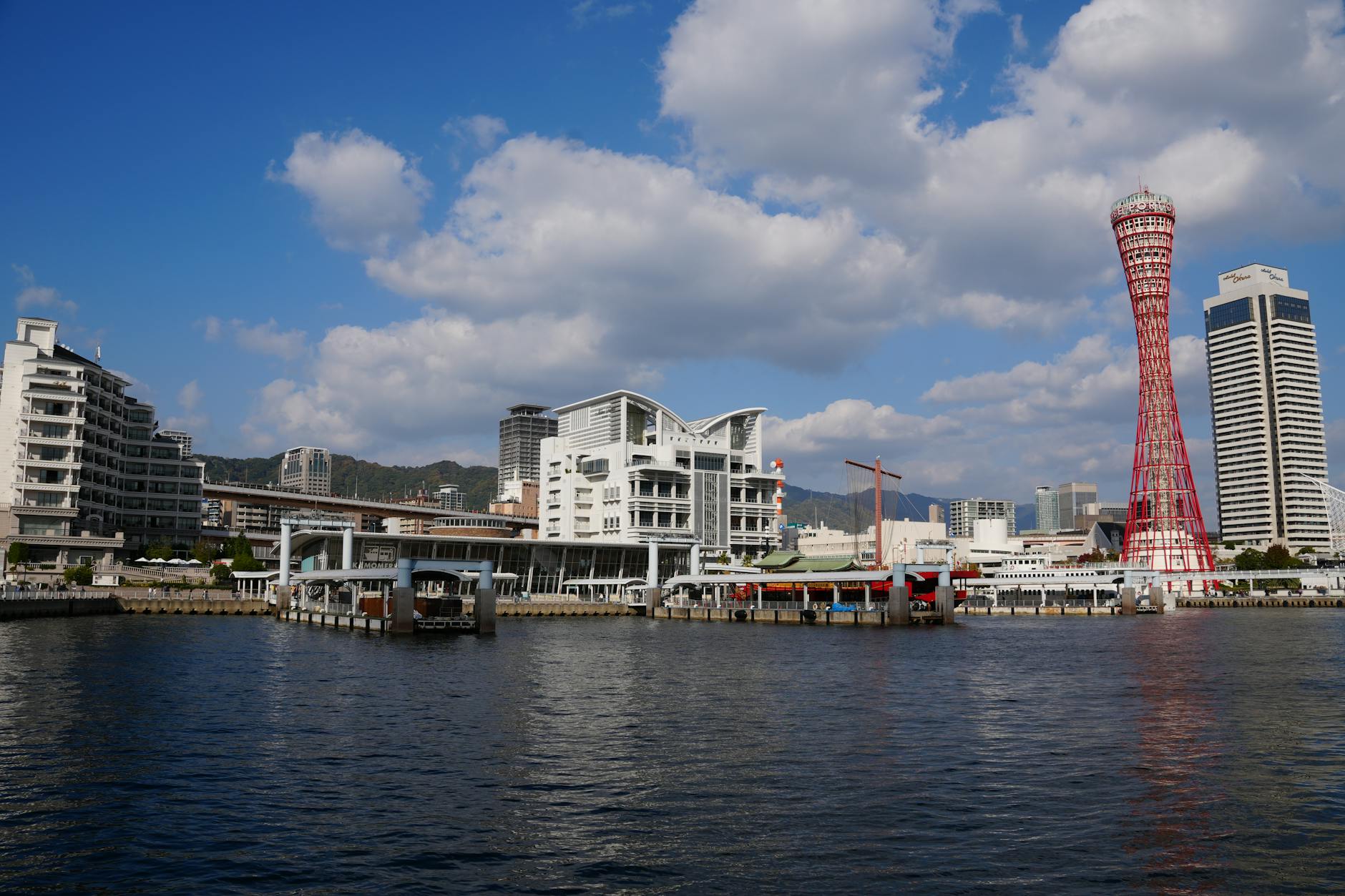
Kobe has a different character from any other Japanese city. It was one of the first Japanese ports to open to foreign trade after the end of Japan’s isolation in the 1850s, and that international history is still visible in the architecture of Kitano-cho, the menus of the city’s restaurants, and the general cosmopolitan atmosphere that Kobe residents are genuinely proud of.
Wedged between the Rokko Mountains and Osaka Bay, Kobe is compact, walkable, and exceptionally photogenic — especially at night when the harbor reflects the city’s lights. It’s also the easiest possible day trip from Osaka (just 30 minutes by express train) and one of Japan’s great underrated cities.
Harborland & Meriken Park
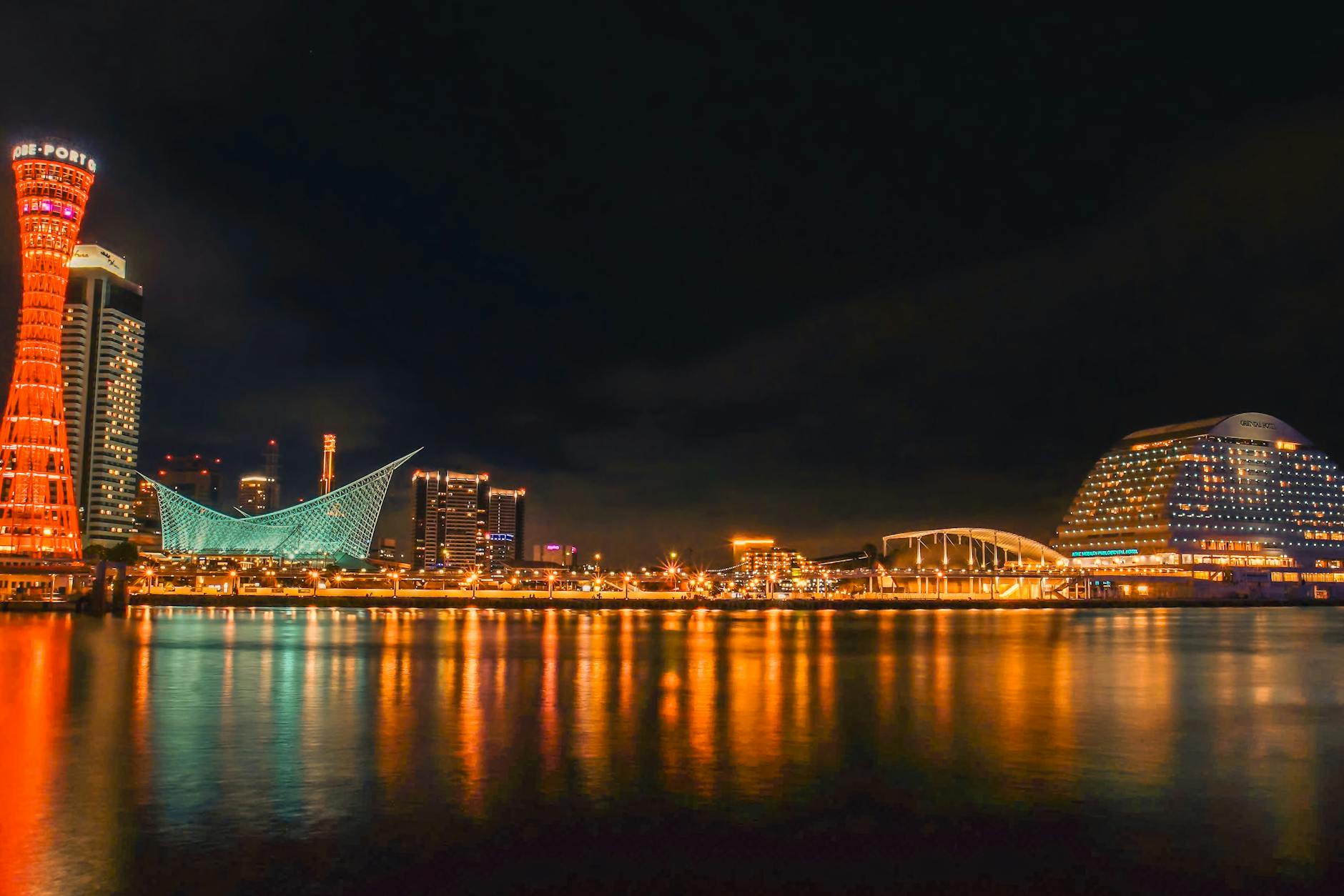
Kobe Harborland is the city’s main waterfront district — shopping malls, restaurants, a Ferris wheel, and one of Japan’s most photogenic harbor promenades. The view across the bay to the Akashi Kaikyo Bridge (the world’s longest suspension bridge) is particularly striking at dusk.
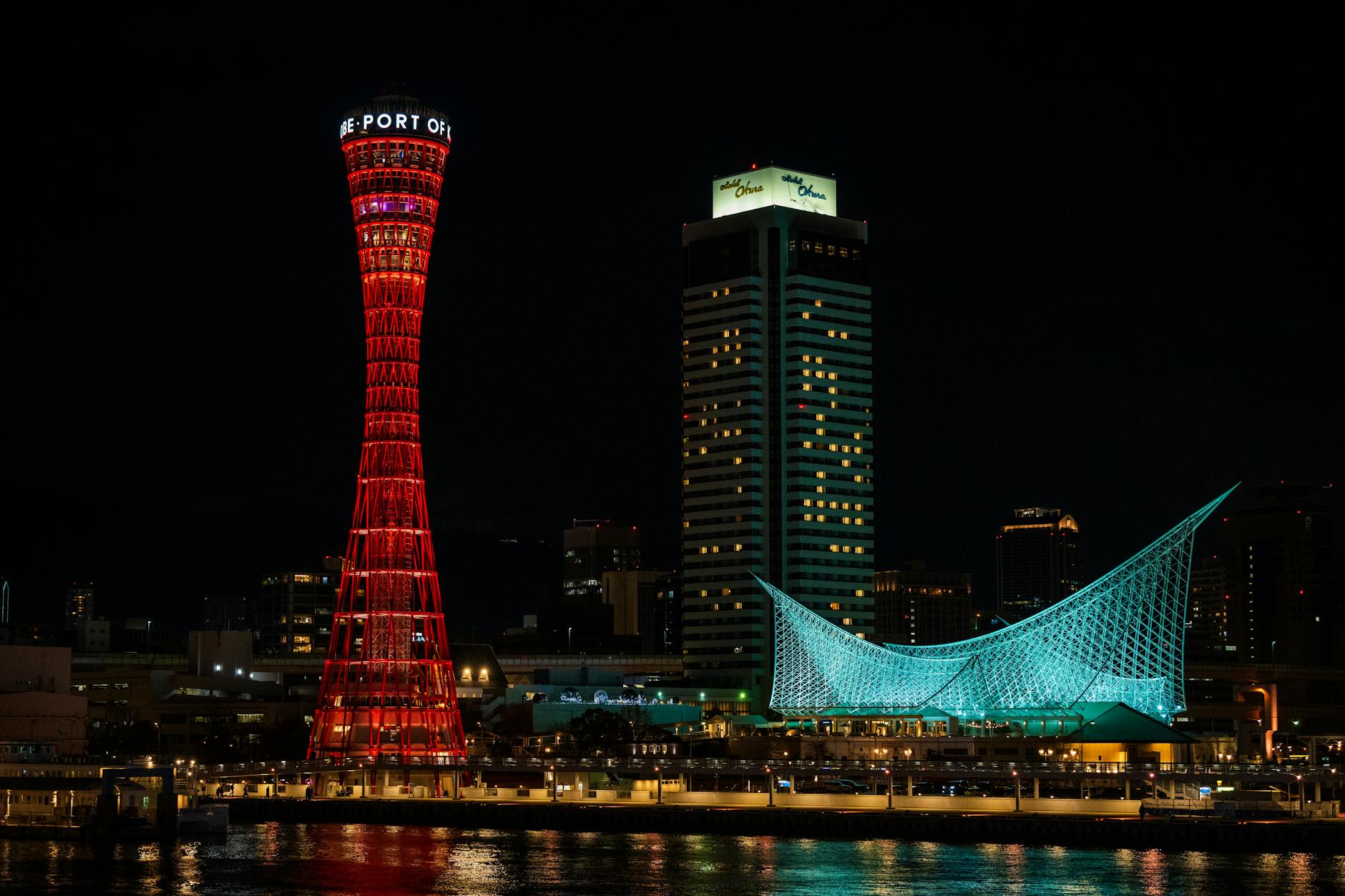
Adjacent Meriken Park contains the Kobe Port Tower (a distinctive red lattice tower, recently renovated), the Kobe Maritime Museum, and the Earthquake Memorial Park — a preserved section of quayside left in the state it was found after the Great Hanshin Earthquake of 1995.
- Kobe Port Tower: Reopened 2023 after renovation; rooftop observation deck, café, sunset views across the bay
- Earthquake Memorial: Preserved harbour damage from the 1995 quake; small, moving, and essential context for understanding modern Kobe
- Kobe Chinatown (Nankinmachi): One of Japan’s three main Chinatowns — compact but atmospheric, with baozi (steamed buns) and authentic Chinese food
Kitano-cho: European Architecture on a Japanese Hill
When foreign traders settled in Kobe after the port opened, they built their homes in the hills above the city to escape the summer heat of the harbor. The Kitano-cho district preserves these Western-style residences (called ijinkan) in remarkable condition — Gothic, Colonial American, and Victorian houses set among narrow lanes above central Kobe.
Several ijinkan are open as museums; others are still private residences. The Weathercock House (Kazamidori no Yakata) and the Thomas House (Uroko no Ie) are two of the most photogenic. The area is best explored on foot in the late afternoon when the light comes from the west.
Kobe Beef: The World’s Most Famous Wagyu
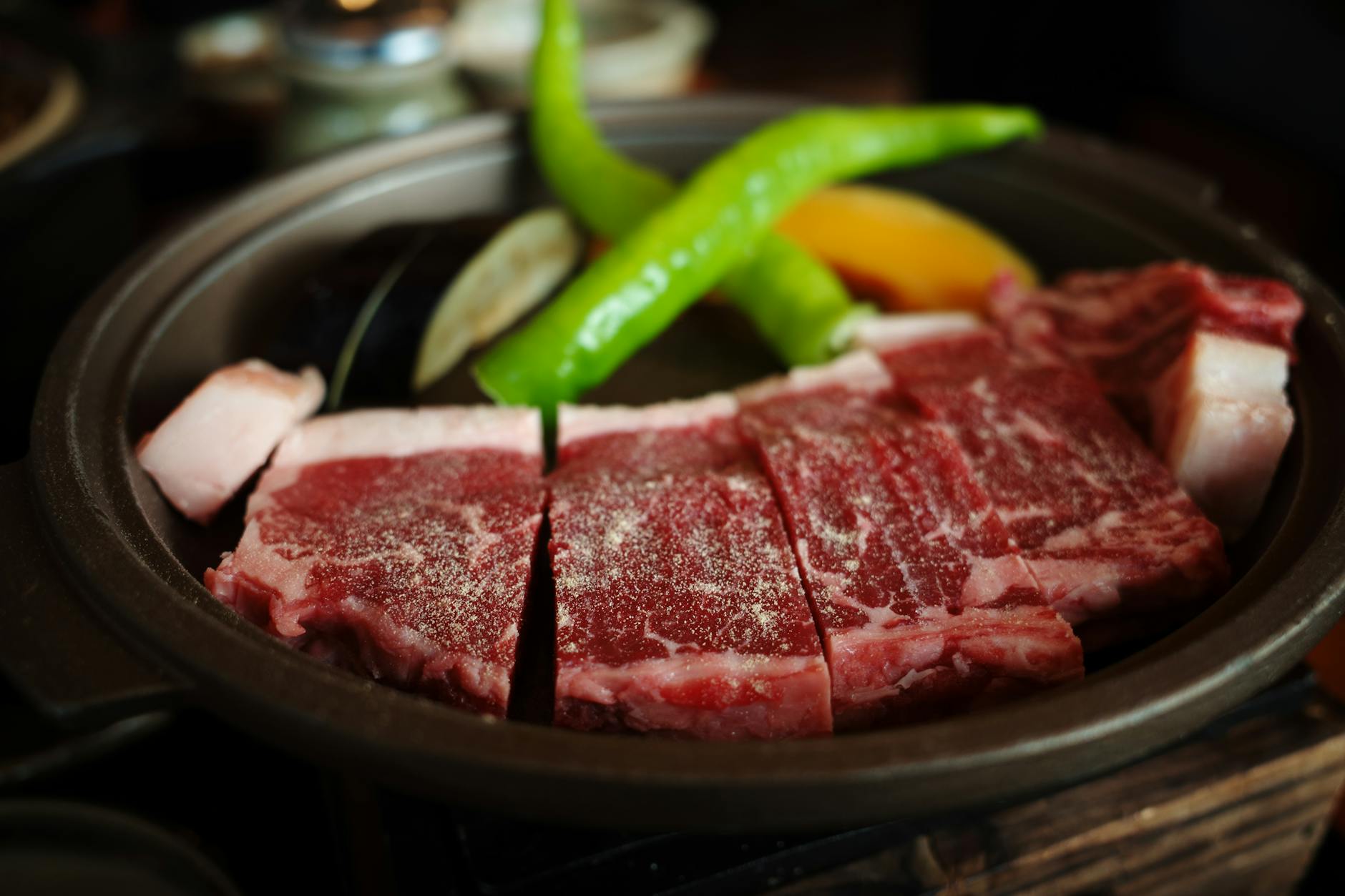
Kobe Beef (神戸牛) is a brand of Wagyu beef from Tajima cattle raised in Hyogo Prefecture under strict standards. True Kobe Beef is one of the most protected culinary designations in Japan — only cattle meeting specific genetic, raising, grading, and geographic criteria can be certified.
The marbling (fat content and distribution) of certified Kobe Beef is extraordinary — BMS (Beef Marbling Score) 6 or higher, on a scale where most international beef tops out at 4. The fat melts at body temperature, which is why Kobe Beef is often served as teppanyaki (iron griddle) or shabu-shabu rather than over high heat — preserving the characteristic buttery texture.
Where to Eat Kobe Beef
- Steakland Kobe: The most tourist-accessible certified Kobe Beef teppanyaki experience; not the most refined, but genuinely affordable and the beef is real. Lunch sets from ¥3,000.
- Mouriya: One of Kobe’s most respected Wagyu teppanyaki restaurants; Grill Mutsu is their atmospheric Meiji-era dining room. ¥15,000–30,000 per person.
- Tor Road Steak Aoyama: Excellent mid-range Kobe Beef steakhouse on the charming Tor Road shopping street
[st-midasibox myclass=”” title=”Important” webicon=”st-svg-exclamation-triangle” color=”#FF9800″ bordercolor=”#FF9800″ bgcolor=”#FFF8E1″ borderwidth=”” borderradius=”5″ titleweight=”bold”]
“Wagyu” and “Kobe Beef” are not the same thing. Wagyu is a broad category of Japanese beef cattle. Certified Kobe Beef is a specific designation — look for the Kobe Beef Marketing & Distribution Promotion Association certification and the official stamp on menus. Any restaurant selling “Kobe Beef” for ¥2,000 is selling something else.
[/st-midasibox]
Rokko Mountain: Kobe’s Touge Drive
Rising directly behind the city, Mt. Rokko (931m) offers one of Japan’s most spectacular urban mountain driving experiences. The Rokko Sanroku Road and the Rokko Mountain Road twist dramatically up from sea level, with the lights of the Kobe-Osaka conurbation spreading below in increasingly stunning panorama as you climb.
This is a genuine touge road — tight corners, elevation changes, and limited guardrails in places. The view from Rokko Garden Terrace at the summit, particularly at night, is one of the most romantic views in western Japan. Far below, you can trace the entire arc of Osaka Bay.
- By car: 30 minutes from central Kobe. Multiple route options — the Rokko Sanroku Road is the most scenic.
- By ropeway + cable car: Rokko Cable Car (from Rokko Cable Shita Station) to the summit, then ropeway to Arima Onsen on the far side
- Best time: Night driving (legally, at appropriate speed) for the city lights below; or early morning for mist and mountain atmosphere
Arima Onsen: Japan’s Oldest Hot Spring Town
Hidden in the mountains behind Rokko, Arima Onsen is one of Japan’s three oldest hot spring resorts — and one of its most atmospheric. The town’s narrow stone lanes, traditional ryokan, and two distinct spring types (kin-no-yu, iron-rich golden water, and gin-no-yu, silver carbonated water) make it a complete contrast to cosmopolitan Kobe just 30 minutes away.
Arima is excellent as a day trip from Kobe or Osaka — or for an overnight stay at a traditional ryokan with private onsen baths.
Getting to Kobe & Getting Around
- From Osaka: Hankyu Kobe Line (Hankyu Umeda to Sannomiya) — 27 minutes, ¥330. The fastest and cheapest option.
- From Kyoto: JR Shinkansen or Rapid Service — 60–80 minutes
- From Tokyo: Nozomi shinkansen to Shin-Kobe — 2 hours 45 minutes
- Within Kobe: The waterfront, Kitano-cho, and central shopping areas are all walkable from Sannomiya Station. For Rokko Mountain, a rental car or the Rokko Cable Car from the base station.
[st_af id=”77″]
🇯🇵 Plan Your Japan Experience
JDM Car Rental
Drive a GT-R, Supra, RX-7, or Silvia on the roads they were built for. Hakone passes, Wangan highway, mountain touge — your dream JDM experience.
Daikoku PA Tour
Visit Japan’s most legendary car meet. Hundreds of modified cars, passionate owners, and the heartbeat of JDM culture. Guided weekend night tours available.
Photo Guide Tour
Capture stunning photos at locations only locals know. Hidden shrines, backstreet alleys, rooftop views, and golden hour spots for unforgettable shots.
Try Tokyo’s Best Food on a Guided Tour
Go beyond the tourist spots and taste real Tokyo food with a local guide. Wagyu, sushi, and more — all in one walk. Free cancellation.